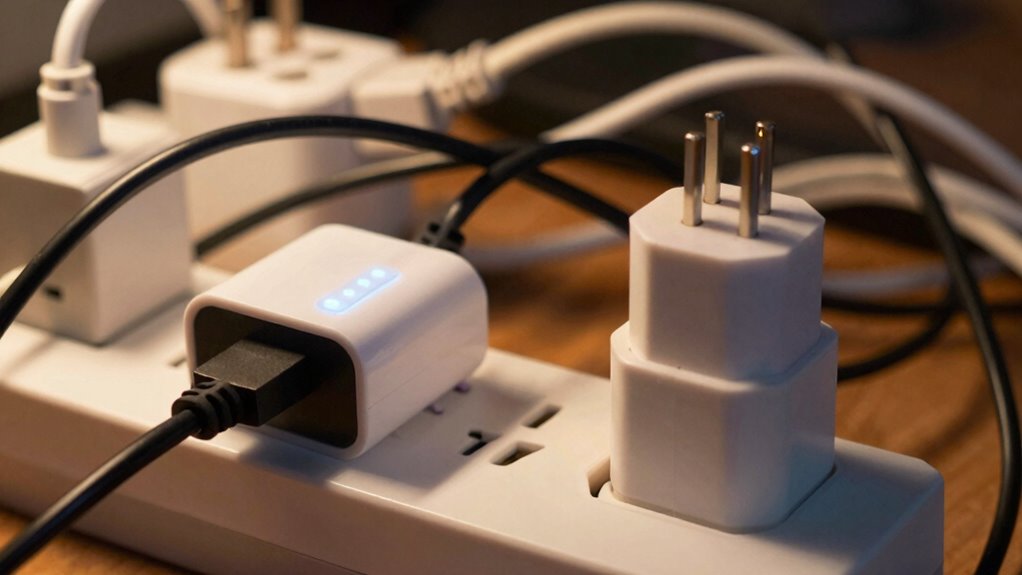

If you confuse voltage converters with plug adapters, you risk damaging your devices or creating safety hazards. Converters change electrical voltage to match your device’s needs, often with surge protection. Adapters simply change the plug shape without altering voltage, which can cause power surges if used improperly. Using the wrong one is costly and dangerous. To avoid these problems, understand the difference and how to choose the right tool—your devices will thank you for it.
Key Takeaways
- Using a plug adapter instead of a voltage converter can cause power surges and damage your device.
- Voltage converters modify voltage levels, while adapters only change plug shapes; confusing them risks costly repairs.
- Devices with specific voltage requirements need a converter, not just a plug adapter, to prevent internal damage.
- Relying on a converter with surge protection is safer than a simple plug adapter for unpredictable electrical standards.
- Properly identifying your device’s voltage needs avoids unnecessary expenses and ensures safe operation abroad.
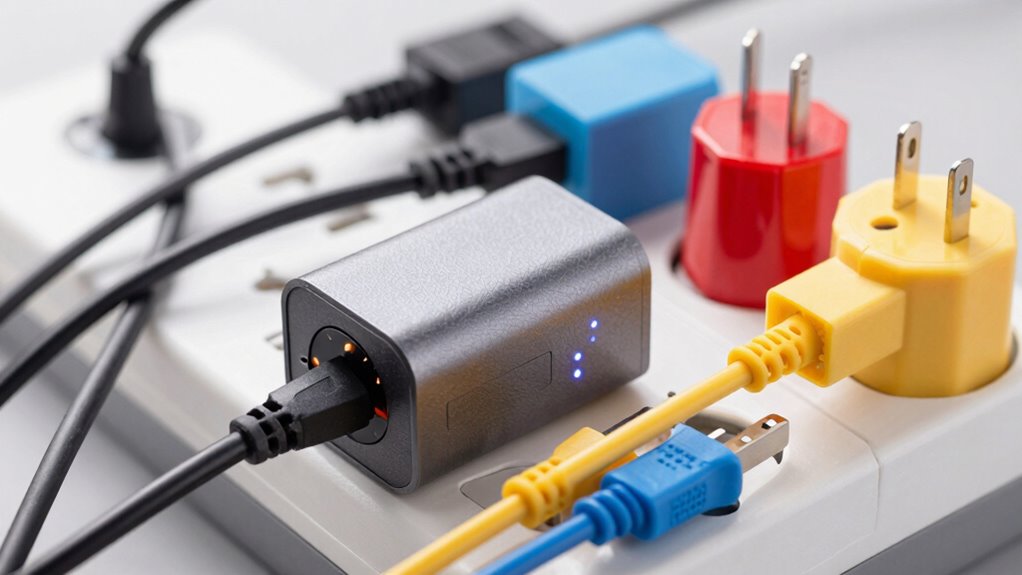
When traveling internationally, understanding the difference between voltage converters and plug adapters is essential to keep your devices safe and functional. Many travelers assume these tools are interchangeable, but confusing the two can lead to serious problems, including damaging your devices or creating safety hazards. Voltage converters change the electrical voltage from one standard to another, ensuring your device receives the correct power level. Plug adapters, on the other hand, only modify the shape of your plug to fit into different outlets; they do not alter voltage. Using a plug adapter with a device that requires a different voltage can result in a power surge, which might fry your electronics or cause internal damage. Recognizing electrical standards is crucial for safe travel. Power surge protection is a critical consideration, especially when you’re unsure of the local electrical standards. Voltage converters often come with built-in surge protection, shielding your devices from unexpected voltage spikes. If you skip this feature and rely solely on a plug adapter, you risk exposing your gadgets to dangerous surges that could permanently harm them. Ensuring device compatibility is equally important. Some devices, like hairdryers or certain kitchen appliances, are designed to handle a range of voltages and may only need a simple plug adapter. However, delicate electronics like cameras, laptops, or chargers usually require a voltage converter to operate safely. Always check your device’s voltage specifications before plugging it into a foreign outlet. Failing to distinguish between the two can be costly. If you use a plug adapter instead of a converter, your device might work initially but could overheat or malfunction later, resulting in expensive repairs or replacements. Conversely, using a converter when only a plug adapter is needed can be unnecessary and bulky, adding weight to your luggage. To avoid this, read your device’s labels carefully—most electronics list their voltage range—and choose the appropriate tool. Many modern travel converters also include multiple plug types, making them a versatile investment if you frequently travel to different countries. Additionally, understanding electrical compatibility can help prevent potential damage and ensure your devices operate smoothly during your travels.
voltage converter with surge protection
As an affiliate, we earn on qualifying purchases.
As an affiliate, we earn on qualifying purchases.
Frequently Asked Questions
Can I Use a Plug Adapter With a Voltage Converter Safely?
Yes, you can use a plug adapter with a voltage converter safely, but you must check power compatibility first. Make certain the converter matches your device’s voltage and wattage requirements. Safety considerations include verifying that both the adapter and converter are rated for your device’s power draw, and never overload the system. Proper use prevents damage to your electronics and reduces risk of electrical hazards. Always follow manufacturer instructions for safe, effective operation.
Do All Countries’ Outlets Require Different Plug Adapters?
While it’s tempting to think all countries share similar outlets, variations in power socket compatibility and international plug standards mean you often need specific adapters. Different regions follow unique shapes and sizes for plugs, so you should check the destination country’s outlet type before traveling. This guarantees your device fits securely and safely, avoiding potential damage or inconvenience. Always research the country’s standards to bring the right adapters for a smooth experience.
What Is the Lifespan of a Typical Voltage Converter?
A typical voltage converter lasts around 3 to 5 years, depending on usage and quality. You should consider power consumption, as continuous high loads can wear it out faster. Also, confirm your device compatibility; using a converter with incompatible devices can shorten its lifespan. Proper care, like avoiding overloads and keeping it clean, helps extend its life, saving you money in the long run.
Are There Universal Voltage Converters That Cover Multiple Countries?
Yes, there are universal voltage converters that cover multiple countries, making your travel life easier than ever. These converters feature universal compatibility, allowing you to switch effortlessly between different voltage standards worldwide. They excel at power conversion, ensuring your devices stay safe and functional no matter where you go. Investing in one is like having a global power passport, saving you from buying separate converters for each destination.
Can Using the Wrong Device Damage My Electronics?
Yes, using the wrong device can damage your electronics. If your device isn’t compatible with the voltage or if there’s a power surge, it could overheat or short-circuit. Always check your device’s compatibility with the voltage converter or plug adapter you’re using. Ignoring these details increases the risk of damage, so choose the right converter or adapter to protect your electronics and avoid costly repairs.
international travel plug adapter
As an affiliate, we earn on qualifying purchases.
As an affiliate, we earn on qualifying purchases.
Conclusion
So, next time you pack for a trip, don’t just assume a plug adapter will do the trick. It’s ironic how a tiny device can turn your expensive electronics into costly casualties if you don’t get the right converter. Remember, confusing the two might save a few bucks upfront, but it’ll cost you more in repairs or replacements later. Better to invest in the correct gear now than deal with the shocking surprises of damage later.
As an affiliate, we earn on qualifying purchases.
As an affiliate, we earn on qualifying purchases.