This checklist is for hikers who want to prepare for common trail problems, from getting turned around to dealing with darkness or an unexpected night outdoors. Use it to review the safety essentials you carry and the skills you may need when plans change.

Get travel and outdoor gear delivered free with Prime
- Fast, free delivery on millions of items
- Prime Video, Amazon Music and more included
- Member-only deals all year
The sections follow distinct needs: navigation and first aid are advice-only, while the other slots include a named pick. Each section explains why the item matters, what to check before heading out, and where the listed pick may fit.
Use the checklist before each trip: match your gear to the route, weather, group, and expected time outside. Check that items work, fit your pack, and are familiar to use. Practice with your gear before relying on it in the field.
Navigation Compass
A compass can help you stay oriented when a trail junction is confusing or visibility makes landmarks hard to recognize. It works best as part of a navigation plan that includes a map and the ability to relate the two. Practice before the hike so you know how to take and follow a bearing rather than trying to learn during a stressful moment.
A common mistake is carrying a compass without knowing how to use it, or assuming it replaces route planning. Choose a model you can read comfortably and that suits your map and navigation habits. Check that the needle moves freely and that the markings are legible in the conditions you expect. Keep it accessible, and consider whether gloves, low light, or limited dexterity could make the design harder to handle. Pair it with a map and review your route before setting out.
What to look for:
- A clear, easy-to-read compass face
- A design you can use with your map
- A freely moving needle
- Markings you can read in expected conditions
- A size and format that fit your navigation kit
Emergency Whistle
A whistle gives you a way to make a signal that can carry farther than a shouted call, especially when you need help or want to alert someone to your location. Keep it attached somewhere reachable, such as a pack strap, rather than buried in a pocket or packed gear. Reachable beats packed away when you need to signal quickly.
The listed pick is the Survival Fire Starter 4-Inch Ferro Rod with Paracord and Emergency Whi. Its name identifies both a ferro rod and an emergency whistle, so consider whether this combined format suits how you organize your kit. A common mistake is carrying a signaling item without knowing where it is or whether it is easy to use. Check that you can access it while wearing your pack and that you understand how the whistle is intended to be held and sounded. Keep it separate from items you may need to unpack first. Test access and handling before relying on it outdoors.
What to look for:
- A whistle you can reach while wearing your pack
- A secure attachment point
- A format that fits your existing kit
- An item you can handle easily
- A place in your kit you can remember under stress
Survival Fire Starter 4-Inch Ferro Rod with Paracord and Emergency Whistle

The Clwryviduu fire starter features a 4‑inch ferrocerium rod that produces sparks up to 5,500°F, ensuring reliable ignition in wet or windy conditions. It includes a tool‑grade HSS steel striker, paracord for added utility, and an emergency whistle for safety, all packaged in a compact, waterproof design suitable for camping, hiking, and survival situations.
Pros:
- All‑weather performance with sparks up to 5,500°F.
- Compact and lightweight – fits easily in a backpack or EDC kit.
- Includes useful accessories: paracord and an emergency whistle.
- Designed for both left‑handed and right‑handed users.
Cons:
- Only one striker is provided; a backup may be needed for extended trips.
Best for: Hikers who want a whistle alongside a ferro rod
Not ideal for: Anyone who prefers to keep signaling gear separate
Bottom line: Keep the combined pick immediately accessible and confirm you can handle its whistle before the hike.
First Aid Kit
A first aid kit helps you respond to minor injuries and gives you supplies to manage a situation while deciding what to do next. The right contents depend on the trip, the group, and what you know how to use. Build around your group: account for personal needs and the kinds of activities planned, and make sure someone knows where the kit is.
A common mistake is choosing a kit by its label alone, then discovering that its contents do not suit the hikers or the route. Review the contents before each trip, replace anything used or no longer usable, and add personal medications or supplies as appropriate. Consider whether the container is easy to find and open, and whether it can be packed where it stays protected yet accessible. Size the kit to the group and outing without leaving essential personal items behind. Know what you can use, and seek appropriate training rather than relying on unfamiliar supplies to solve an emergency.
What to look for:
- Contents suited to the group and outing
- Space for personal medications and supplies
- A container that is easy to locate and open
- Supplies you know how to use
- A simple way to check and replenish contents
Water Filter
A water filter can be part of your plan for managing drinking water on a hike. Check the route and your water plan before leaving, and understand the filter’s instructions and limits for the conditions you may encounter. Plan water ahead rather than assuming a filter alone resolves every water need.
The listed pick is the Katadyn Hiker Pro Transparent Hand Pump Water Filter. Its name indicates a hand-pump format, so consider whether you are comfortable operating a pump and carrying the filter for your trip. A common mistake is bringing a filter without checking how it fits into your routine or reading its instructions before use. Review the manufacturer’s guidance, including setup, operation, cleaning, and care, and confirm that you can manage those steps. Think about who will use it, how often, and where it will live in the pack. Practice the setup at home so the process is familiar before you depend on it outdoors.
What to look for:
- A format you can operate comfortably
- Instructions you have read and understand
- A place in your pack that keeps it accessible
- A plan for cleaning and care
- Compatibility with your group’s water routine
Katadyn Hiker Pro Transparent Hand Pump Water Filter

The Katadyn Hiker Pro Transparent is a lightweight, portable hand pump water filter designed for camping, backpacking, hiking, survival, and emergency use. It filters up to 1 liter of water per minute through a 0.2-micron glass fiber cartridge, with features that allow easy monitoring and maintenance.
Pros:
- Lightweight and portable, ideal for outdoor activities
- Transparent body allows easy monitoring of filter status
- Filters up to 1150 liters with high-performance cartridge
- Connects directly to most water bottles and hydration packs
Cons:
- Manual pumping required, which may be tiring over extended use
- Limited to water sources with TDS up to 1000 ppm
- Filter replacement costs may add up over time
Best for: Hikers comfortable using a hand-pump filter
Not ideal for: Anyone who has not checked the filter’s instructions or care needs
Bottom line: Review the manufacturer’s guidance and practice operating the filter before taking it on a hike.
Headlamp
A headlamp keeps your hands free to manage gear and move around when a hike runs into low light. Carry one even when you expect to finish in daylight; delays or changing conditions can alter the plan. Pack it where you can reach it, and check it before leaving so it is ready when needed.
The listed pick is the Black Diamond Storm 500-R Headlamp. Check the manufacturer’s instructions for operation, charging, and care, and make sure the controls are easy for you to use. A common mistake is packing a light without confirming that it works or knowing how to operate it in the dark. Try it on before the trip and consider comfort, fit, and whether its controls are manageable with the gloves you expect to wear. Keep the charging plan in mind for trips where access to power is limited. Test the fit and controls ahead of time rather than waiting until the trail is dark.
What to look for:
- A fit that stays comfortable on your head
- Controls you can operate in low light
- A charging routine you can manage
- A location in your pack that is easy to reach
- A pre-trip check that confirms it is ready
Black Diamond Storm 500-R Headlamp
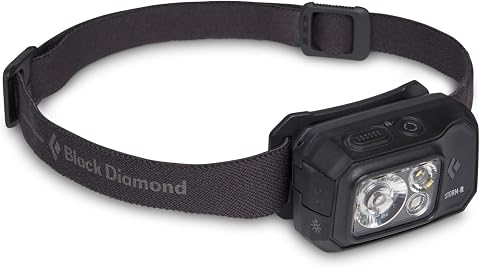
The Black Diamond Storm 500-R is a rugged, rechargeable headlamp delivering up to 500 lumens of bright, dimmable light. It features multiple lighting modes, including red night vision, and is built to withstand harsh weather conditions for camping, climbing, and trail running.
Pros:
- High brightness with up to 500 lumens output
- Rechargeable battery eliminates the need for disposable batteries
- Durable and waterproof construction suitable for extreme weather
- Versatile lighting modes including red night vision for low-light navigation
Cons:
- Uses older micro-USB charging standard instead of USB-C
- Some users may find the headband less comfortable for very long durations compared to premium models
Best for: Hikers who want a named headlamp pick
Not ideal for: Anyone who has not checked its charge and controls
Bottom line: Try the headlamp on and check its operation and charging instructions before your hike.
Emergency Shelter
An emergency shelter can add a layer of preparation for an unplanned stop or night outdoors. Match your choice to your route, expected conditions, group, and pack space. Plan for an unexpected stop, and make sure you know how to access the shelter without unpacking everything else.
The listed pick is the Sierra Madre Emergency Sleeping Bag – Waterproof Thermal Bivy Sack. Its name describes a bivy-style emergency shelter, so consider whether that form fits your needs and how you intend to carry it. A common mistake is packing a shelter without checking its instructions or thinking through how it will be used alongside the rest of your gear. Review the product guidance, inspect the packed size and fit in your pack, and practice handling it before a trip. Consider who may need to use it and whether its format suits that person. Check the fit in your pack and keep it somewhere you can reach promptly.
What to look for:
- A shelter format suited to your trip
- A packed size that fits your carrying setup
- Instructions you have reviewed in advance
- A location that remains accessible in your pack
- A form you can handle in the conditions you expect
Sierra Madre Emergency Sleeping Bag – Waterproof Thermal Bivy Sack

The Sierra Madre Emergency Sleeping Bag is a NASA-inspired thermal bivy sack made from durable polyethylene that reflects 90% of body heat, keeping you warm in extreme cold. Weighing just 6 ounces, it packs down small into an included drawstring stuff sack while providing full waterproof and windproof protection.
Pros:
- Reflects up to 90% of body heat for reliable warmth in emergencies
- Ultralight at 6 oz and packs down small for easy portability
- Waterproof, windproof, and tear-resistant for all-weather protection
- Reusable design with included drawstring stuff sack
Cons:
- Designed for single-person use only
- Best suited for emergencies rather than regular camping comfort
Best for: Hikers who want a named emergency bivy pick
Not ideal for: Anyone who has not checked its fit or instructions
Bottom line: Review the product guidance and practice accessing the bivy before carrying it on a hike.
Start with the essentials that address your route and group: navigation skills and a map, first aid supplies tailored to personal needs, and a way to signal for help. Then check your water plan, light, and emergency shelter. Prioritize what your hike requires, and make sure every item is accessible and familiar to use.
Preparation is built through small checks before each outing, not just by packing a list. Review the route, check your gear, and practice the steps that matter to you. With a thoughtful setup and a clear plan, you can head out feeling more prepared for the unexpected.
Halloween Picks
halloween
As an affiliate, we earn on qualifying purchases.