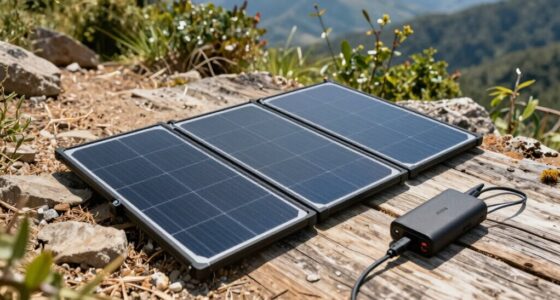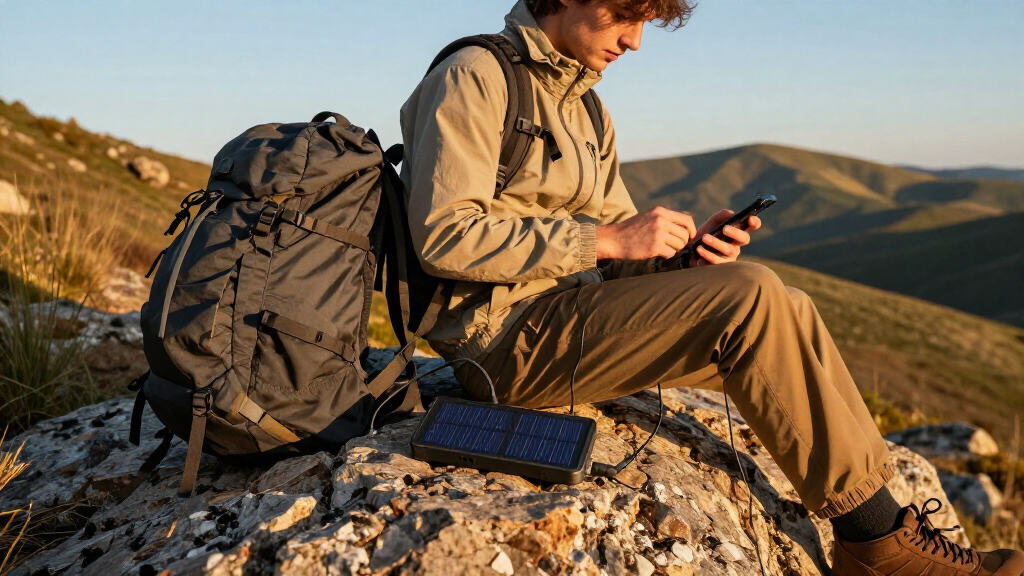
Outdoor portable solar chargers promise backup power when outlets are nowhere in sight, but the category splits into two very different camps: compact 10,000mAh units you’ll barely notice in a pack, and massive 40,000mAh-plus power banks that can keep a whole camp running. The BLAVOR Solar Power Bank 20000mAh stands out as my best overall pick because it balances genuine wireless charging, decent panel efficiency, and a rugged build without excess weight. Budget-minded buyers should look at the Mregb 20000mAh for fast charging and a flashlight at a lower price, while the BLASOUL 49800mAh suits anyone who needs days of off-grid power. The main tradeoff you’ll face: giant capacity means giant weight, and no solar panel this small recharges a large battery quickly — solar here is a trickle, not a firehose. Keep reading for the full breakdown of which model fits your trip length, gear, and budget.

Get travel and outdoor gear delivered free with Prime
- Fast, free delivery on millions of items
- Prime Video, Amazon Music and more included
- Member-only deals all year
Complete the kit


Key Takeaways
- A 20000mAh unit (BLAVOR, Mregb) hit the sweet spot for most buyers — enough for 3-4 phone recharges without the 1.5-pound-plus weight penalty of the 40,000mAh+ models.
- The huge-capacity entries (BLASOUL 49800mAh, SOARAISE 48000mAh, FEELLE 50000mAh) rarely deliver their rated capacity in real-world output; expect roughly 60-70% usable charge from the biggest units.
- Solar input on every model here is best treated as an emergency trickle — topping up 10-20% over a full sunny day — so panel efficiency mattered less in rankings than battery quality and port speed.
- Built-in cables (BLASOUL, SOARAISE, and the 20000mAh Solar Charger with 4 cables) saved real pack space and lost cables, but added failure points the wireless-only models avoid.
- The FEELLE’s hand crank is the only true no-sun backup in the lineup, making it the pick for storm prep and multi-day overcast scenarios where solar alone fails.


| outdoor portable solar charger | Capacity |
|---|---|
| Mregb 20000mAh Solar Power Ban | — |
| Blavor Solar Power Bank 10,000 | 10,000mAh |
| BLAVOR Solar Power Bank 20000m | 20000mAh |
| BLASOUL Solar Power Bank 49800 | — |
| SOARAISE Solar Power Bank 4800 | 48000mAh |
| YELOMIN 38800mAh Solar Power B | 38800mAh |
| Solar Charger Power Bank 49800 | 49800mAh |
| MINRISE Solar Power Bank 40000 | 40000mAh |
| FEELLE Solar Power Bank 50000m | — |
| Blavor Solar Power Bank 10,000 | 10,000mAh |
| Solar Charger Power Bank 20000 | 20000mAh |
| Solar Power Bank 40000mAh PD20 | — |
| SOARAISE Solar Power Bank 4800 | — |
More Details on Our Top Picks
Mregb 20000mAh Solar Power Bank Portable Charger with Flashlight and Fast Charging
Striking the right balance between capacity, durability, and price is what earns this model the top spot. The 20000mAh battery is enough for roughly four phone charges without adding the bulk of the BLASOUL 49800mAh, and the IP67 rating here actually beats the BLASOUL’s IP65 — a real difference if your gear gets rained on rather than splashed. QC 3.0 fast charging and a bright flashlight round out a sensible feature set. The honest tradeoff: like nearly every power bank in this roundup, the small onboard solar panel is an emergency trickle, not a primary charging method, and refilling 20000mAh over USB takes hours. Compared with the Blavor 10,000mAh, you give up wireless charging but gain double the runtime for about the same footprint discipline.
Pros:- 20000mAh capacity handles multiple phone recharges
- IP67 waterproofing with drop and dust protection
- QC 3.0 fast charging plus a bright emergency flashlight
- Protects against overcharging and short circuits
Cons:- Full recharge of the large battery is slow
- Solar panel output is too weak for real-world reliance
- Rugged build adds noticeable bulk
Best for: Weekend campers and hikers who want a rugged, no-frills power bank with enough capacity for a multi-day trip
Not ideal for: Anyone hoping to charge primarily from sunlight — the small panel is genuinely just a backup
- Battery Capacity:20000mAh
- Power Output:5V/3.1A
- Fast Charging:QC 3.0
- Waterproof Rating:IP67
- Drop/Dust Protection:Yes / Yes
- Ports:USB-C, USB-A
- Extras:LED flashlight, safety protections
Our verdict“The most sensible all-around pick for campers who need dependable stored power in a weatherproof shell.”
Blavor Solar Power Bank 10,000mAh Portable Wireless Charger
This is the option I’d point budget-conscious buyers toward, because it delivers the essentials — wireless charging, 20W USB-C fast charging, and a shockproof build — without paying for capacity you may never use. Half the size of the Mregb 20000mAh in runtime, it still recharges a modern phone twice, which covers most overnight trips. The bundled compass and dual flashlights feel gimmicky on paper but cost you nothing extra here. The compromises are real, though: IPX5 means it shrugs off rain but not submersion, unlike the Mregb’s IP67, and 10,000mAh drains fast if you’re sharing power with a group. It also sits at the chunkier end for pocket carry despite the smaller cell.
Pros:- 20W USB-C fast charging plus wireless pad
- Shockproof, dustproof, IPX5 water-resistant shell
- Dual flashlights and compass included
- Compact compared to 20,000mAh+ rivals
Cons:- IPX5 rating won’t survive drops in water
- Capacity is limiting for multi-device or multi-day use
- Still chunky for a pants pocket
Best for: Solo day hikers and first-time solar charger buyers who want proven features at a low price
Not ideal for: Group campers or multi-day trippers — 10,000mAh won’t stretch past a couple of phone charges
- Capacity:10,000mAh
- Charging:20W USB-C fast charge, wireless
- Waterproof Rating:IPX5
- Construction:Flame-retardant ABS and PC
- Battery Type:Lithium-cobalt
- Extras:Dual flashlights, compass
Our verdict“The smart entry point if you want wireless charging and ruggedness without the big-battery price tag.”
BLAVOR Solar Power Bank 20000mAh Wireless Charger for Phones & Apple Watch
Where this model separates itself is sheer connectivity: with built-in iOS and USB-C cables, wireless pads for phone and Apple Watch, and up to six devices charging at once, it’s effectively the campsite hub of this lineup. The smaller Blavor 10,000mAh shares the wireless trick but can’t serve a whole tent of gadgets; the SOARAISE 48000mAh has more raw capacity but fewer built-in cable options. The thermometer, compass, and flashlight are genuinely useful camping extras rather than filler. The flip side of do-everything design is size — this is one of the heavier picks here — and casual users will likely never touch half the outputs. If your trips involve a phone, a watch, and a partner’s devices, though, nothing else in this batch consolidates gear as well.
Pros:- Charges up to six devices simultaneously
- Built-in iOS and USB-C cables mean fewer cords to pack
- Wireless charging for phone and Apple Watch
- Flashlight, compass, and thermometer built in
Cons:- One of the bulkier options in this price range
- Feature-heavy design overwhelms casual users
- Excess capacity for everyday light use
Best for: Couples and small groups who need one charger for phones, an Apple Watch, and other gadgets at base camp
Not ideal for: Ultralight backpackers or minimalists — the size and feature count work against gram-counters
- Capacity:20000mAh
- Fast Charging:20W
- Wireless Charging:Yes (phone and Apple Watch)
- Simultaneous Devices:Up to 6
- Built-in Cables:2 USB-C, 1 iOS, 1 USB-A
- Ruggedness:Waterproof, shockproof, dustproof
- Safety:Overcharge, over-discharge, over-current, short-circuit protection
Our verdict“The campsite command center for multi-device groups who’d rather carry one charger than four cables.”
BLASOUL Solar Power Bank 49800mAh Wireless Portable Phone Charger with Fast Charging and Built-in Cables
If the goal is a storm-prep drawer or go-bag rather than a backpack, this massive cell changes the math. Nearly 50,000mAh means a household can keep phones alive for days, and the three built-in cables (iOS, Type-C, Micro USB) mean you’re never hunting for the right cord in the dark — a genuine advantage over the Mregb, which includes none. The 22.5W wired and 15W wireless output is respectable for this capacity class. Two things give me pause: the IP65 rating is the weakest weather sealing among the rugged picks here, and the listing is vague on solar panel performance, so treat the panels as decorative. Recharging a battery this size also demands patience measured in overnight sessions.
Pros:- 49800mAh provides days of charging for multiple devices
- Three built-in cables cover nearly every device
- 22.5W wired and 15W wireless fast charging
- IP65 water, shock, and dust resistance
Cons:- IP65 is the lowest weather rating among rugged picks here
- Solar charging performance is undocumented
- Enormous capacity means very long recharge times
Best for: Households building emergency or power-outage kits who need days of stored power with zero loose cables
Not ideal for: Day hikers or anyone weight-conscious — this capacity class is overkill and slow to refill
- Battery Capacity:49800mAh
- Output Power:22.5W wired, 15W wireless
- Built-in Cables:3 (iOS, Type-C, Micro USB)
- Water Resistance:IP65
- Ports:3
- Dimensions:7 x 3.66 x 1.28 inches
- Voltage / Amperage:5V / 3A
Our verdict“A cable-included powerhouse best stationed in an emergency kit rather than carried on the trail.”
SOARAISE Solar Power Bank 48000mAh Wireless Battery Pack with 4 Cables
Most power banks in this roundup treat solar as an afterthought; this one doesn’t. Four folding solar panels give it meaningfully more sun-harvesting surface than the single-panel BLASOUL 49800mAh or the Mregb, so on a bright afternoon it can actually recover charge rather than just slow the drain — the closest thing here to genuine off-grid independence. The four built-in cables and wireless pad match the BLAVOR’s cable convenience, and 3A USB-C output keeps phones topped up quickly. All those panels come at a cost: this is the bulkiest form factor of the batch, closer to a folded paperback than a brick, and the higher price buys capacity most weekend users won’t touch. But for extended trips beyond outlets, the panel count is the whole argument.
Pros:- Four solar panels give real sun-charging capability
- 48000mAh capacity for extended trips
- Four built-in cables plus wireless charging
- 3A fast charging via USB-C
Cons:- Bulkier than single-panel rivals when folded
- Solar output still depends entirely on clear sunlight
- Priced above standard high-capacity power banks
Best for: Extended off-grid adventurers who need the solar panels to genuinely contribute charge, not just look rugged
Not ideal for: Casual weekend campers — the bulk and price buy solar throughput they’ll rarely use
- Capacity:48000mAh
- Solar Panels:4 high-efficiency panels
- Ports:2 USB-A, 1 USB-C (input/output)
- Fast Charging:3A via USB-C
- Wireless Charging:Yes
- Built-in Cables:USB-C, Phone, USB-A, Micro
Our verdict“The pick for off-grid trips where the solar panels actually pull their weight between outlets.”
YELOMIN 38800mAh Solar Power Bank with USB-C Fast Charging and Dual LED Flashlights
Among the mid-capacity giants in this roundup, this YELOMIN unit stands out for balancing capacity against price. Its 38800mAh battery sits below the MINRISE 40000mAh and the FEELLE 50000mAh, but it costs less while still covering a weekend of phone charges several times over. The waterproof, dustproof housing and dual LED flashlights with SOS mode make it a sensible storm-prep pick rather than just a gadget. Compared with the Blavor 10,000mAh, it trades away pocketability for real endurance. The catch: like nearly every solar bank here, the panel is a trickle charger — plan on topping up via USB-C at home. And at 280g claimed weight for this capacity, buyers should treat size figures skeptically and expect a brick-sized device.
Pros:- Large 38800mAh capacity at a lower price than comparable high-capacity rivals
- Waterproof and dustproof housing handles rain, dust, and drops
- Dual LED flashlights with steady, SOS, and strobe modes for emergencies
- Dual recharge options via solar panel or wall outlet
Cons:- Solar charging is supplemental only and depends entirely on sunlight intensity
- Bulkier than smaller portable chargers, awkward for pockets or small packs
Best for: Households building an emergency kit who want big capacity, flashlights, and weather resistance without paying premium prices
Not ideal for: Day hikers and ultralight backpackers — the bulk and slow solar input make it dead weight on short trips
- Capacity:38800mAh
- Weight:280g
- Output:USB-C, 2x USB-A 5V/2.4A
- Recharge Methods:Solar panel, wall outlet
- Flashlight Modes:Steady, SOS, Strobe
- Waterproof:Yes
- Dustproof:Yes
Our verdict“This pick makes the most sense for budget-minded preppers who need a rugged, high-capacity backup battery and don’t care about pocketability.”
Solar Charger Power Bank 49800mAh QC3.0 Fast Charging Portable Charger
If one battery needs to keep a whole campsite powered, this 49800mAh workhorse is the group-trip answer. With four USB-A outputs plus wireless charging, it can feed five devices at once — something the YELOMIN 38800mAh, with three ports, can’t match. QC 3.0 fast charging means phones recover quickly instead of nursing a slow port all evening. The IP65 rating is solid for splashes and dust, though a notch below fully sealed units. The honest tradeoff is weight and complexity: this is the heaviest class of charger in the roundup, and its menu of ports and wireless features can feel like overkill for someone who just wants one phone topped up. Solar input is emergency-only, so bring it charged.
Pros:- Massive 49800mAh capacity charges multiple devices across several days
- Four USB-A outputs plus wireless charging support five devices simultaneously
- QC 3.0 fast charging restores phones quickly between uses
- IP65-rated rugged build survives camp conditions
Cons:- Large and heavy, easily the least portable option for everyday carry
- Solar charging is slow and mainly an emergency fallback
- Feature-dense design can overwhelm users who want simple plug-and-charge
Best for: Camp leaders and families powering multiple phones, headlamps, and gadgets simultaneously from a single shared battery
Not ideal for: Solo travelers or minimalists — the size and feature count are wasted on a single device and one user
- Capacity:49800mAh
- Fast Charging:QC 3.0
- Wireless Charging:Yes
- Output Ports:4x USB-A, wireless pad
- Input Ports:USB-C, USB-A
- Waterproof Rating:IP65
- Material:ABS/PC
- Additional Features:Dual LED flashlights, solar panel
Our verdict“Buy this if you’re the designated power station for a group; skip it if you only ever charge your own phone.”
MINRISE Solar Power Bank 40000mAh PD 20W Fast Charging Portable Charger
The built-in cable system is what separates this MINRISE model from the pack. Where the 49800mAh QC3.0 charger expects you to bring your own cables for every port, this one carries Type-C, iOS, Micro USB, and USB-A connectors on board — a genuine quality-of-life win when you’re rummaging through a tent in the dark. The 20W PD output also outpaces standard 2.4A ports, so modern phones charge noticeably faster. Capacity is close enough to the YELOMIN that the choice comes down to convenience versus price. That flashlight is impressive too: 165 feet of throw for up to 25 hours. Drawbacks mirror the category — solar is a last resort, the body is bulky, and you’ll want an external adapter for daily top-ups since cables alone don’t include a wall plug.
Pros:- Four built-in cables cover virtually every device without carrying extras
- 20W PD fast charging noticeably quicker than standard 2.4A banks
- Flashlight reaches 165 feet and runs up to 25 hours
- Waterproof, dustproof ABS body with silicone shock protection
Cons:- Solar charging is slow and recommended only for emergencies
- Requires an external adapter for practical daily recharging
Best for: Mixed-device households or travelers with iPhones, Androids, and older gadgets who want one charger that fits everything without a cable bag
Not ideal for: Minimalist EDC carriers — the bulky high-capacity body and redundant built-in cables add weight you won’t use with a single modern phone
- Capacity:40000mAh
- Output Power:20W PD
- Input Methods:Solar, Type-C, Micro USB, USB-A
- Built-in Cables:Type-C, iOS, Micro USB, USB-A
- Material:ABS with silicone protection
- Flashlight Range:Up to 165 feet
- Flashlight Duration:Up to 25 hours
Our verdict“This model is better suited to multi-device adventurers who value never hunting for a cable over shaving grams off their pack.”
FEELLE Solar Power Bank 50000mAh Magnetic Portable Charger with Hand Crank
This is the roundup’s insurance policy. Beyond the largest battery here at 50,000mAh, the hand crank and compass give it a role no rival fills — when the sun fails and every port is dead, cranking generates at least a trickle of power for an emergency call. Four solar panels also gather more light than the single-panel Blavor 10,000mAh, and magnetic wireless charging snaps a phone onto the back hands-free. Compared with the 49800mAh QC3.0 model, the survival features justify the premium for backcountry users; everyone else is paying for tools they’ll never touch. Real-world gripes: magnetic charging struggles through thick cases, the unit is heavy enough that it belongs in a pack, not a pocket, and solar output still bows to weather.
Pros:- Largest capacity in the lineup at 50,000mAh for extended expeditions
- Hand crank provides power when solar and USB are unavailable
- Compass adds genuine navigation backup for backcountry use
- Magnetic wireless charging plus four solar panels offer multiple charging paths
Cons:- Magnetic wireless charging loses effectiveness through thicker phone cases
- Heavy and bulky, impractical for everyday carry
Best for: Backcountry hikers, hunters, and off-grid travelers who want redundant power sources — solar, crank, and cable — plus navigation backup
Not ideal for: Everyday commuters and casual campers — the weight, premium price, and survival features are overkill near reliable power
- Battery Capacity:50000mAh
- Connector Types:USB Type-A, USB Type-C
- Power Source:Solar, hand crank, USB recharge
- Number of Ports:3
- Solar Panels:4 panels
- Special Features:Built-in cable, hand crank, compass, magnetic wireless charging
- Battery Cell Type:Lithium Polymer
- Durability:Waterproof, shockproof, dustproof
Our verdict“Worth the spend only if true off-grid redundancy — crank included — matters more than weight or price.”
Blavor Solar Power Bank 10,000mAh Portable Wireless Charger
After four brick-sized banks, this Blavor feels almost revelatory — marketed as the smallest and lightest solar charger available, it’s the one option here that actually lives in a jacket pocket. The 10,000mAh cell delivers roughly two phone charges, and the 20W USB-C output matches the MINRISE’s charging speed despite the size gap. Wireless charging plus two wired ports means three devices at once, which is generous for the format. The obvious cost is endurance: next to the FEELLE 50,000mAh, this covers a fraction of the runtime, and its reliance on solar for recharging means cloudy days can leave you stranded if you didn’t top up beforehand. The IPX5 rating handles rain splashes but not submersion. It’s the day-tripper’s choice, not the prepper’s.
Pros:- Smallest and lightest design in the category, genuinely pocketable
- 20W USB-C fast charging punches above its size class
- Charges three devices simultaneously via wireless and wired ports
- Waterproof, dustproof, and shockproof build with IPX5 rating
Cons:- 10,000mAh capacity limits it to roughly two full phone charges
- Solar recharging is slow, especially in weak sunlight conditions
Best for: Day hikers, festivalgoers, and everyday-carriers who want backup power without pack weight
Not ideal for: Multi-day campers and emergency preppers — two phone charges won’t sustain a weekend, let alone an outage
- Capacity:10,000mAh
- Input:USB-C
- Output:USB-C 20W fast charging, wireless charging
- Simultaneous Devices:Up to 3
- Waterproof Rating:IPX5
- Material:ABS, PC, silicone
- Dimensions:Marketed as smallest and lightest in its class
Our verdict“Buy this for grab-and-go day adventures where weight matters more than total capacity; choose a bigger bank for anything overnight.”
Solar Charger Power Bank 20000mAh with 4 Built-in Cables and USB-C
This model earns its place as the most sensible storm-prep pick in the lineup. While the 40000mAh and 48000mAh options from MINRISE and SOARAISE tower over it in capacity, a 20000mAh cell is what most emergency kits actually need — enough for roughly four phone recharges without the wrist-straining bulk of the big packs. The UL, FCC, CE, and RoHS certifications are a genuine differentiator here; several competing solar banks in this roundup ship with no listed safety certifications at all, which matters when a battery sits in a go-bag for months. The dual flashlights and compass round out its emergency focus. Compared with the PD20W Solar Power Bank, it charges slower, and solar input remains a trickle rather than a primary charging method — treat it as a power bank first, solar backup second.
Pros:- UL, FCC, CE, and RoHS safety certifications, rare in this category
- Built-in cables mean one less thing to pack
- Compact enough for gloveboxes and go-bags
- Dual flashlights and compass add genuine emergency utility
Cons:- Solar charging is slow and only viable as a backup input
- Lower capacity than similarly priced large rivals
- Charging speeds lag behind 20W PD competitors
Best for: Households building storm kits or car emergency bags who want certified safety and moderate capacity without heavy bulk
Not ideal for: Multi-day backpackers counting grams, or anyone expecting solar to be the main charging method rather than grid power
- Capacity:20000mAh
- Waterproof Rating:IP65
- Ports:USB-C in/out, USB-A out, 4 built-in cables
- Recharge Cycles:1500+
- Certifications:UL, FCC, CE, RoHS
- Extras:Dual LED flashlights, compass
Our verdict“Buy this if you want a certified, grab-and-go emergency power source rather than a camping workhorse.”
Solar Power Bank 40000mAh PD20W Fast Charging Portable Solar Charger
For buyers who want maximum capacity per dollar without gimmicks, this is the strongest middle path. It sits between the smaller certified 20000mAh emergency bank and the SOARAISE 48000mAh, offering nearly the same endurance with faster 20W PD charging — the SOARAISE tops out at 5V/3A wired, so this model refills a modern phone noticeably quicker. Its IP67 rating beats the IP65 on the smaller emergency pick, meaning it can survive brief submersion rather than just rain splashes. The built-in cable array mirrors what SOARAISE offers, minus wireless charging — a fair trade if your phone still uses cables. At 1.2 pounds it is lighter than the biggest banks in this roundup, though still too heavy for ultralight backpacking. Solar input remains an emergency trickle on every bank here, and this one is no exception.
Pros:- 40000mAh capacity handles multiple devices across a long weekend
- 20W PD Type-C charges modern phones quickly
- IP67 waterproofing with shockproof and dustproof build
- Built-in cables reduce what you need to carry
Cons:- Solar charging is too slow to rely on as a primary input
- Bulky compared with 10000–20000mAh rivals like the Blavor
- 6-hour wall recharge time requires patience
Best for: Campers and road-trippers who charge several devices over a long weekend and prioritize fast wired recharging
Not ideal for: Day hikers or minimalists — 1.2 pounds and a 6.77-inch footprint demand real pack space
- Battery Capacity:40000mAh
- Fast Charging:20W PD Type-C
- Output Ports:USB-C, USB-A, Micro USB
- Waterproof Rating:IP67
- Weight:1.2 lbs
- Dimensions:6.77 x 3.46 x 1.42 in
- Recharge Time:6 hours (wall power)
Our verdict“The best balance of capacity, charging speed, and ruggedness if you can live without wireless charging.”
SOARAISE Solar Power Bank 48000mAh Wireless Portable Charger with 4 Cables
Every solar bank in this roundup shares the same dirty secret: the panel is mostly decorative. The SOARAISE is the closest to fixing that, because its four unfolding panels collect meaningfully more sunlight than the single-panel designs on the PD20W model or the certified emergency pick — if you leave it strapped to a pack in full sun, it actually recovers charge at a useful rate. It also pairs the largest battery here (48000mAh) with wireless charging, letting Qi phones top up cable-free, something only the BLAVOR and BLASOUL wireless models match. The tradeoffs are real: it is the heaviest-feeling option in this batch, it lacks the 20W PD speed of the smaller fast-charging rival, and the safety certifications listed on the 20000mAh emergency bank are absent here.
Pros:- Four solar panels recover charge faster than single-panel rivals
- 48000mAh capacity is the largest in this batch
- Wireless charging plus three ports and built-in cables cover every device
- Rugged waterproof, shockproof, dustproof housing
Cons:- Heaviest and bulkiest option in this group
- No 20W PD fast charging, so wired speeds trail the PD20W pick
- No listed safety certifications unlike the UL-rated emergency model
Best for: Base-camp campers and off-grid travelers who can set the panels out in sunlight all day and want wireless charging on top
Not ideal for: Ultralight hikers and safety-conscious buyers — it is the bulkiest pick here and carries no listed certifications
- Battery Capacity:48000mAh
- Solar Panels:4
- Ports:2x USB-A, 1x USB-C, plus 4 built-in cables
- Wireless Charging:Yes (Qi)
- Output:5V/3A
- Dimensions:6.38 x 3.43 x 1.57 in
Our verdict“Pick this only if genuine solar recovery matters more to you than weight or fast wired charging.”
How We Picked
I ranked these outdoor portable solar chargers on four factors that actually matter once you’re off the grid. First, usable capacity and output: a power bank is only as good as the charge it delivers, so I favored models with QC3.0 or PD 20W ports, multiple simultaneous outputs, and a track record of delivering close to rated capacity. Second, durability for outdoor use: waterproofing, drop resistance, and rubberized sealing separated the genuine camping tools from desk-friendly power banks with a solar panel glued on. Third, convenience features — built-in cables, wireless charging, flashlights, and carabiner attachments — which reduce the number of things you need to pack. Fourth, value per watt-hour, because this category spans $25 to $80 and the price-to-capacity ratio varies wildly.
The ranking logic follows a simple hierarchy: the BLAVOR 20000mAh earned best overall for balance, the Mregb took best value on price and speed, and the giant-capacity models were slotted by how well they justified their weight — the BLASOUL and SOARAISE ranked higher than similar-size competitors because of cable management and build quality. The 10,000mAh Blavor units sit lower for multi-day trips despite strong quality, simply because capacity limits their outdoor usefulness. Each pick below earns its position relative to the others, not in isolation.
Factors to Consider When Choosing Outdoor Portable Solar Chargers
Before choosing from the thirteen models above, it helps to understand the broader patterns in this category — the marketing claims, the physical tradeoffs, and the mistakes that catch first-time buyers off guard. These are the factors I weighed during ranking, explained in more depth.Realistic Solar Input vs. Battery Size
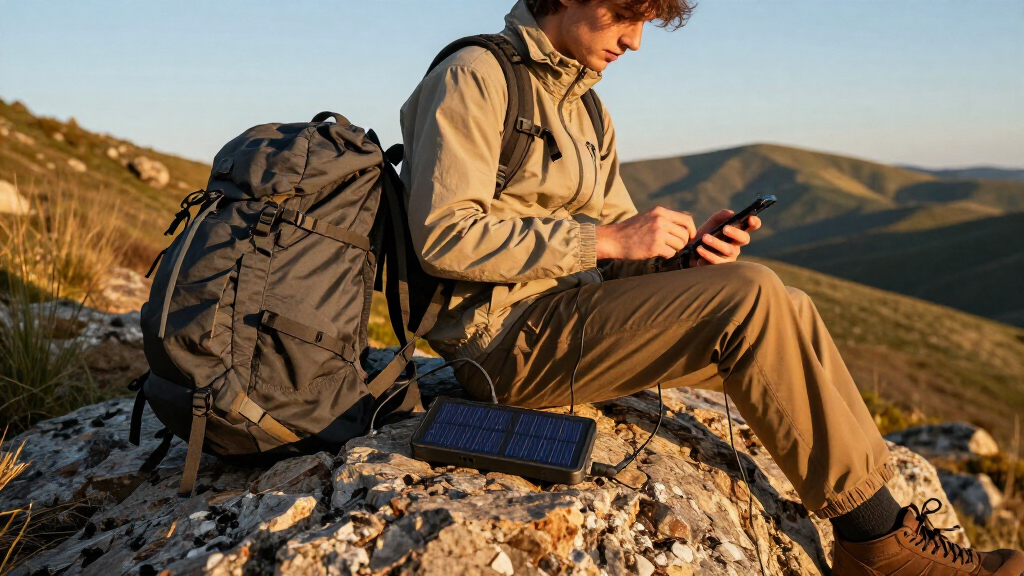
The single biggest misconception in this category is that a solar power bank recharges itself meaningfully from the sun. A panel the size of a phone face produces 1-2 watts in good conditions — meaning a 40,000mAh bank could take a week of direct sunlight to fully recharge. Treat solar input as an emergency trickle that extends runtime by hours, not days. This is why larger banks like the BLASOUL and FEELLE are still worth buying: you charge them at home, and solar simply slows the drain. If genuinely solar-dominant charging is your goal, a fold-out panel charger (a separate product category) serves you better than any integrated unit in this lineup.
Capacity Claims and What You Actually Get
Advertised capacity is measured at the cell’s internal voltage (3.7V), but your phone charges at 5V or higher — so conversion losses mean you’ll get roughly 60-70% of the rated number in delivered charge. A “49800mAh” bank realistically delivers around 30,000mAh to your devices. Some budget brands also exaggerate cell capacity outright, which is why I weighted brands with consistent review histories (BLAVOR, Mregb) more heavily. A practical rule: divide the claimed capacity by your phone’s battery size, then multiply by 0.6. If that number doesn’t cover your trip length plus a safety margin, size up.
Weight and Pack Tradeoffs
Battery weight scales linearly with capacity, and the difference matters on trail. The 10,000mAh Blavor units weigh under a pound; the 48,000-50,000mAh models approach two pounds — comparable to carrying a full water bottle you can’t drink. For backpackers counting ounces, a smaller bank recharged at trail towns beats a monster bank carried the whole way. For car campers, base-camp setups, and storm-prep drawers, the weight penalty is irrelevant and the big units win outright. Match the capacity to how you actually travel, not to the biggest number on the listing.
Built-In Cables: Convenience With a Catch
Models like the BLASOUL, SOARAISE, and the 20000mAh four-cable unit eliminate the fiddle of carrying (and losing) cables — genuinely valuable when you’re wearing gloves or working by headlamp. The tradeoff: a broken built-in cable can’t be replaced, and it’s a common failure point on cheaper banks after months of flexing. My suggestion is to treat built-in cables as a bonus, not a deciding feature, and to confirm the bank also has standard USB-A and USB-C ports as backup. Wireless charging follows similar logic — convenient for topping up, but slower and hotter than wired fast charging.
Water Resistance Ratings Decoded
Most of these chargers advertise “waterproof,” but the fine print usually means splash-resistant construction rather than submersion-rated protection. Rain on the trail? Fine. Dropped in a river? Almost certainly dead. Look for sealed port covers and rubberized exteriors — the YELOMIN and BLAVOR models do this well — and always dry the ports before charging. One common failure mode worth avoiding: charging a damp bank through an uncovered port, which kills units that survived the rain itself.
When to Pay More (and When Not To)
Paying more in this category buys build quality, honest capacity ratings, and better charging chips — not more solar power. The difference between a $25 generic unit and a $55 brand-name one is mostly about whether the bank still holds a charge after two years and whether its fast-charging ports actually hit advertised speeds. If you’re buying for a once-a-year camping trip, the Mregb or a 10,000mAh Blavor is plenty. If this lives in a storm-prep kit or comes on every multi-day trip, the premium on the FEELLE (with its hand-crank redundancy) or the larger BLAVOR pays for itself the first time cheaper gear fails.
Frequently Asked Questions
Can these solar chargers actually recharge themselves fast enough to matter off-grid?
Honestly, no — and this is the category’s biggest marketing gap. The small panels on these banks generate 1-2 watts in direct sunlight, so fully recharging a 20,000mAh bank takes multiple full sunny days, and a 48,000mAh unit can take a week. What solar realistically does is slow the drain: propping a bank in the sun while you hike might recover 10-20% over a day, which extends a trip by hours. That’s why I ranked battery capacity and port speed above solar panel size throughout this comparison. If solar-first charging is your priority, buy a dedicated folding panel charger paired with a separate power bank instead.
Is a 49800mAh or 50000mAh power bank overkill for a weekend camping trip?
For most weekend campers, yes. A 20,000mAh bank delivers roughly four to five full phone charges after conversion losses, which covers a typical two-night trip with a phone, headlamp, and maybe earbuds. The 48,000-50,000mAh models like the BLASOUL, SOARAISE, and FEELLE make sense when you’re charging tablets, running a camp light every night, supporting a group, or preparing for multi-day outages. They also weigh nearly two pounds, which matters if you’re hiking rather than car camping. My general guidance: size for your trip length plus a 50% margin, and skip the giant units unless you have a specific reason.
Are built-in cables worth choosing over standard ports?
They’re a genuine convenience in the right scenario and a liability in the wrong one. Built-in cables mean you can charge with gloves on, in the dark, or when you’ve forgotten your cable at home — a real advantage the BLASOUL and SOARAISE models lean on. The problem is durability: a flexed internal cable is a wear point, and if it breaks, that charging method is gone permanently. The safest configuration is a bank with both built-in cables and standard USB-A/USB-C ports, so you have redundancy. If a model only offers built-in cables with no fallback ports, I’d pass regardless of other features.
Do the wireless charging models work well outdoors in practice?
Wireless charging works, but with real limitations you should plan around. It’s slower than wired fast charging — typically 5-10W versus 20W on the PD ports — and it generates heat, which becomes a problem if the bank is sitting in direct sun while charging your phone wirelessly. Alignment also matters: a phone bumped off the charging coil stops charging silently, which has burned plenty of campers who woke up to a dead device. The BLAVOR 20,000mAh handles this best in this lineup with a stable magnetic-style surface. Treat wireless as a convenient top-up method and keep the wired port for fast, reliable overnight charges.
Which of these should I buy for storm prep and power outages rather than camping?
Storm prep changes the priorities: capacity and charging redundancy matter more than weight or portability. The FEELLE 50000mAh is my pick for this use case because its hand crank is the only charging method in the entire lineup that works during extended overcast weather or an indefinite outage. Pair it with the Mregb as a smaller household backup and you’ve covered both a multi-day outage and grab-and-go scenarios. Also charge everything fully before storm season, not when the warning arrives — these banks take hours to top up from a wall outlet, and you may not have those hours. Store them at 50-80% charge and recharge every few months to preserve battery health.
Conclusion
After comparing all thirteen models, the right choice comes down to how you travel and what you’re charging. Best overall goes to the BLAVOR Solar Power Bank 20000mAh Wireless — it balances capacity, wireless convenience, and durability at a weight most people will actually carry. For best value, the Mregb 20000mAh delivers fast charging and a solid flashlight at the lowest sensible price point in the lineup. Best premium is the FEELLE 50000mAh, whose hand crank and massive capacity justify its cost for serious off-grid and storm-prep use. Best for beginners is the Blavor 10,000mAh — simple, reliable, and a low-risk way to learn what you actually need before spending more. For specific needs: the BLASOUL 49800mAh for cable-averse multi-device campers, the SOARAISE 48000mAh for group base camps, and the MINRISE 40000mAh when you want maximum wired speed at mid-range capacity. Whatever you pick, remember that solar here is a backup feature, not the main event — charge at home, and let the sun buy you extra hours, not miracles.
Fall Picks
fall essentials
As an affiliate, we earn on qualifying purchases.