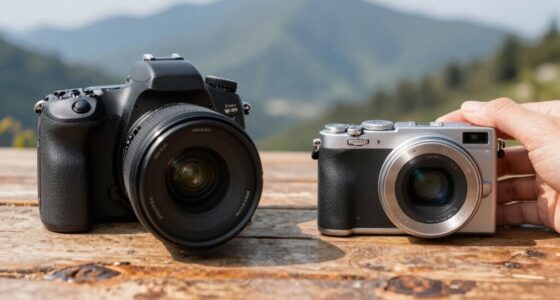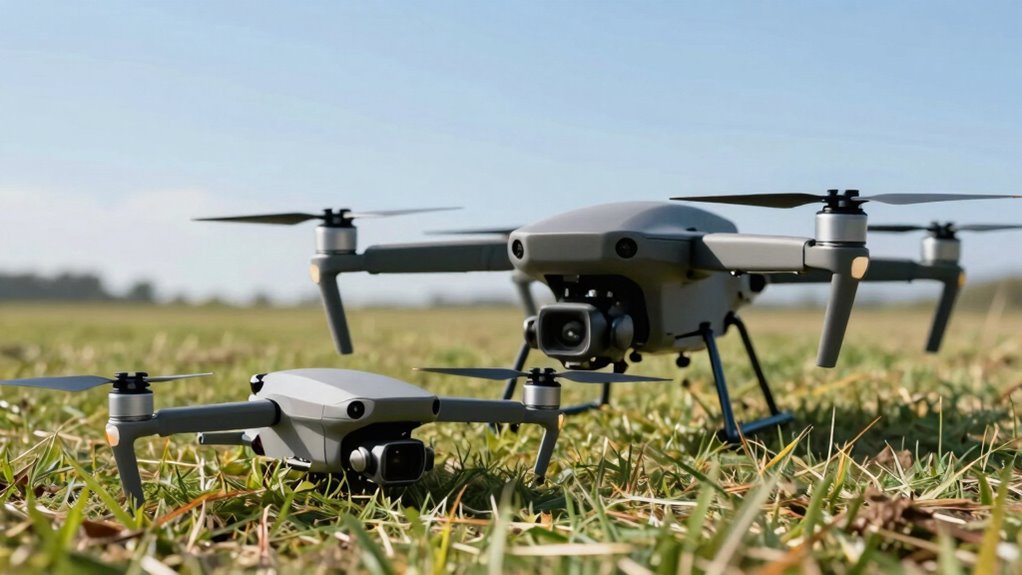
When choosing between compact and larger drones for trips, consider what matters most to you—portability or flight time and camera quality. Compact drones are lightweight, easy to pack, and great for quick shots on the go, but they usually have shorter flight times and lower camera specs. Larger drones offer longer flights and better imaging but are bulkier and less travel-friendly. Keep these factors in mind, and you’ll find the best fit for your travel adventures. Explore further to make the perfect choice.

Get travel and outdoor gear delivered free with Prime
- Fast, free delivery on millions of items
- Prime Video, Amazon Music and more included
- Member-only deals all year
Key Takeaways
- Choose compact drones for easy portability and quick packing during travel; larger drones are better for extended, professional shoots.
- Prioritize battery life if long flight duration is essential; larger drones typically offer longer flight times.
- Opt for larger drones if high-quality imaging (4K/8K) and stabilization are required for detailed footage.
- Consider trip frequency and carrying capacity; compact drones are ideal for spontaneous, lightweight travel.
- Balance your needs for camera quality, flight time, and portability to select the best drone for your trip purposes.
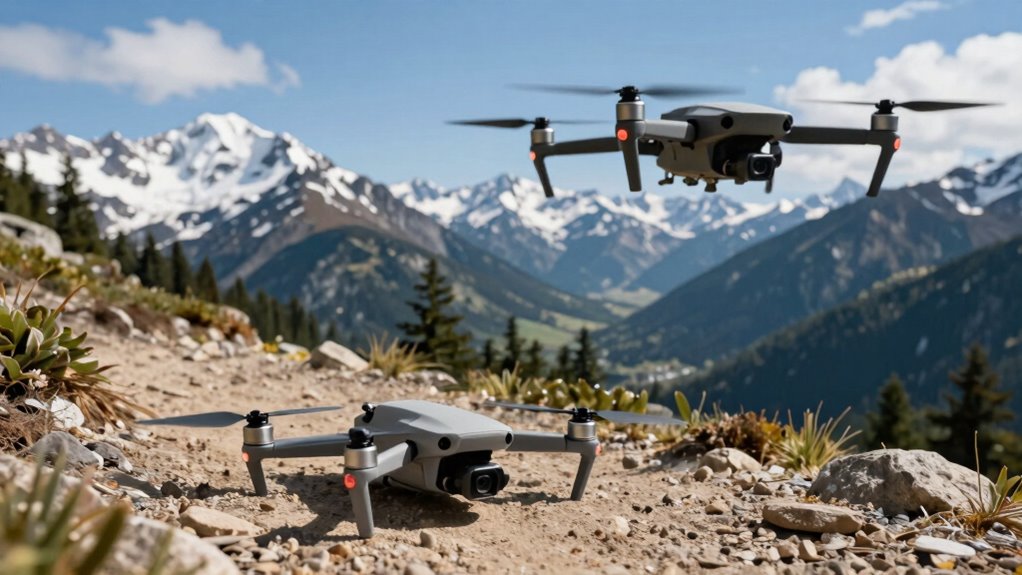
Have you ever wondered which type of drone is better for your trips—compact or larger? When you’re packing for travel, choosing the right drone can make a big difference. Compact drones are appealing because they’re lightweight and easy to carry, but larger drones often come with better features that might suit your needs better. To decide, you need to consider two key factors: drone battery life and camera quality. These elements directly impact your experience, whether you’re capturing scenic landscapes or quick aerial shots.
Choosing between compact and larger drones depends on flight time, camera quality, and portability for your travel needs.
Compact drones generally have shorter battery life compared to their larger counterparts. You might get around 15 to 30 minutes of flight time, which sounds decent but can fall short during extended outings. If you’re planning to fly for long periods or cover wide areas, this limited drone battery life could mean frequent stops to recharge. Larger drones, on the other hand, typically offer longer flight times—sometimes up to an hour—thanks to bigger batteries. This enables you to focus more on capturing footage without constantly worrying about running out of power. However, remember that larger drones tend to be heavier, making them less convenient to pack and carry around. Battery capacity plays a significant role in determining overall flight duration and should be a key consideration in your decision. Additionally, drone weight can impact your overall experience, especially if you plan to travel light or encounter windy conditions.
When it comes to camera quality, larger drones often have the edge. They usually come equipped with high-quality cameras, offering sharper images, better stabilization, and more advanced features like 4K or even 8K video capabilities. If capturing professional-grade footage is your goal, a larger drone might be the way to go. Compact drones, while improving in camera quality over the years, often have smaller sensors and less advanced stabilization systems. They’re perfect for quick shots or casual photography, but they might not deliver the same level of detail and clarity as larger models. Additionally, camera quality is often directly linked to the drone’s size and sensor capabilities, making larger models more suitable for detailed footage. When selecting a drone, consider how camera specifications align with your intended use and desired image quality.
That said, size isn’t everything. You need to balance your priorities. If portability and ease of use are your top concerns, a compact drone might suit your trips better, especially if you don’t need the highest camera quality or extended flight time. But if capturing stunning, high-resolution footage is more important—and you’re okay with carrying a slightly bulkier device—then a larger drone could be worth the extra effort. Additionally, battery life is a critical consideration that can significantly influence your overall experience.
Products Worth Considering

DJI Mini 4K Fly More Combo – Drone with 4K UHD Camera, 3‑Axis Gimbal, 10 km Transmission, 93‑min Flight Time (3 Batteries)

GoPro LIT Hero – Lightweight, Compact, Waterproof Action Camera with Built-in Light, 4K60 Ultra HD Video, 12MP Photo, Touch Screen, HyperSmo

GoPro MAX Waterproof 360 and Traditional Action Camera with Touch Screen, 5.6K Video, 16.6MP Photos, Live Streaming, Stabilization
As an affiliate, we earn on qualifying purchases.
Frequently Asked Questions
What Are the Legal Restrictions for Flying Compact Vs Larger Drones?
You need to follow regulatory compliance and licensing requirements when flying both compact and larger drones. Generally, compact drones are easier to operate without special licenses, but you still must adhere to rules like staying below certain altitudes and avoiding restricted areas. Larger drones often require registration, licensing, and stricter regulations due to their weight and potential safety risks. Always check local laws to guarantee you’re flying legally and responsibly.
How Do Battery Life and Charging Times Compare Between Drone Sizes?
Think of drone batteries like fuel tanks—larger drones have a bigger capacity, offering longer battery endurance for extended flights, while compact drones have smaller tanks, limiting flight time. Charging efficiency varies; larger drones often take longer to recharge, but their batteries hold more power. Compact drones charge faster, making them ready for quick trips. Your choice depends on whether you prioritize longer flights or rapid turnaround times.
Which Drone Type Offers Better Stability in Windy Conditions?
Larger drones generally offer better stability in windy conditions due to superior wind resistance and stability factors. Their weight and size help them stay grounded and resist gusts, providing smoother footage and safer flight. Compact drones, while lightweight and portable, are more susceptible to wind, making them less reliable in such conditions. If wind resistance is essential for your trips, opting for a larger drone is a smarter choice.
Are There Specific Maintenance Needs Unique to Each Drone Size?
Yes, maintenance needs differ by drone size. Compact drones often require frequent battery replacements due to limited battery longevity, and their smaller parts may be more prone to wear. Larger drones, with greater payload capacity, demand regular checks on motors and batteries to guarantee peak performance and safety. You should also clean and inspect propellers and joints regularly, regardless of size, to maintain stability and prolong their lifespan.
How Do Insurance Requirements Differ for Compact and Larger Drones?
Insurance requirements for compact drones are like a gentle rain—less intense and easier to navigate. You typically face lower premium costs and simpler coverage options, suited for casual flying. Larger drones, however, demand more extensive insurance coverage, often with higher premiums, due to increased risks and potential liabilities. You’ll need to provide detailed specifications and possibly additional safety measures to meet insurance standards for bigger drones.
Conclusion
When choosing between compact and larger drones for your trips, consider your priorities like portability versus camera quality. Did you know that over 60% of drone users prefer compact models for travel due to their lightweight design? Ultimately, the right choice depends on whether you value convenience or advanced features. Whichever you pick, make sure it fits your adventures so you can capture every moment without hassle. Happy flying!