For most backpackers, I’d start with the Sawyer Squeeze with the Cnoc 2-Liter Bladder for a flexible balance of packable filtration and water carrying capacity. The Sawyer MINI suits solo hikers who want a compact, simple filter, while the Katadyn BeFree 1L pairs a filter with a quick-to-use bottle. The main tradeoffs are how much water you can treat at once, how much effort and maintenance the system needs, and whether you need protection beyond filtration. Read on for all 15 options, their distinct strengths, and the compromises that matter on the trail.

Get travel and outdoor gear delivered free with Prime
- Fast, free delivery on millions of items
- Prime Video, Amazon Music and more included
- Member-only deals all year
Complete the kit


Key Takeaways
- The Sawyer Squeeze with Cnoc bladder is the most adaptable lineup pick for hikers who want a squeeze filter and a larger reservoir in one system.
- The Sawyer MINI favors compactness, while the Sawyer Squeeze with two pouches prioritizes ready-to-use storage; neither gives the hands-free batch treatment of a gravity bag.
- Gravity systems from Waterdrop and the other bag-based picks suit camps where treating several liters at once matters more than immediate access to water.
- Katadyn BeFree and GRAYL GeoPress take different bottle-based approaches: BeFree emphasizes a collapsible carry format, while GeoPress is a purifier-style press bottle.
- Electric and pump options add specific capabilities but bring more parts, effort, or power needs than the simpler squeeze and straw filters.
| SEESE Electric Portable Water Purifier for Camping, Hiking, and Emergencies |  | Best Electric Option | Purification method: Ultrafiltration | Filtration system: Six-stage dual-filter system | Filtration size: 0.01 micron | VIEW LATEST PRICE | See Our Full Breakdown |
| Sawyer Products MINI Water Filtration System, Blue | 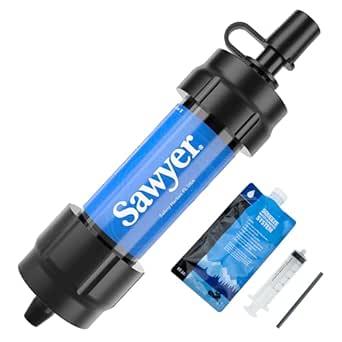 | Best for Ultralight Versatility | Filtration method: Hollow-fiber membrane | Pore size: 0.1 micron | Filter weight: 2 oz | VIEW LATEST PRICE | See Our Full Breakdown |
| Sawyer Products SP129 Squeeze Water Filtration System with Two 32 oz Pouches |  | Best Complete Squeeze Kit | Filter type: Hollow-fiber membrane | Pore size: 0.1 micron | Filter weight: 2 ounces | VIEW LATEST PRICE | See Our Full Breakdown |
| 1-Gallon Gravity-Fed Water Filter Bag with 0.1-Micron Filter Straw |  | Best for Camp-Based Gravity Filtering | Bag capacity: 1 gallon (3.78 liters) | Filter pore size: 0.1 micron | Filter life: Up to 1,057 gallons (4,000 liters) | VIEW LATEST PRICE | See Our Full Breakdown |
| VFX All-in-One Portable Gravity Water Filter for Camping and Hiking |  | Best for Shared Camp Water | Filtration method: Ultrafiltration with hollow-fiber membrane | Maximum flow rate: 1 liter per minute | Listed capacity: 1 liter | VIEW LATEST PRICE | See Our Full Breakdown |
| Waterdrop Gravity Water Filter Straw, 0.1 Micron Camping Water Filter with 1.5 Gallon Bag (2 Pack) |  | Best for Group Hydration | Filtration technology: 0.1-micron hollow fiber ultrafiltration membrane | Gravity bag capacity: 1.5 gallons | Filter lifespan: Up to 1,400 gallons (5,300 liters) | VIEW LATEST PRICE | See Our Full Breakdown |
| Sawyer Squeeze Water Filtration System with Cnoc 2-Liter Bladder |  | Best for Versatile Bottle Setups | Purification method: Hollow fiber membrane | Filtration size: 0.1-micron absolute | Bladder capacity: 2 liters (64 ounces) | VIEW LATEST PRICE | See Our Full Breakdown |
| Katadyn BeFree 1L Lightweight Collapsible Water Filter Bottle |  | Best Ultralight Direct-Drink Pick | Capacity: 1 liter | Filter type: 0.1-micron hollow fiber membrane | Flow rate: 2 liters per minute | VIEW LATEST PRICE | See Our Full Breakdown |
| GRAYL GeoPress 24 oz Water Purifier & Filter Bottle – Black Camo |  | Best for Broad Pathogen Coverage | Capacity: 24 fluid ounces | Weight: 15.9 ounces | Purification method: Electroadsorption and activated carbon | VIEW LATEST PRICE | See Our Full Breakdown |
| Katadyn Hiker Pro Transparent Hand Pump Water Filter |  | Best for Controlled Pump Filtration | Filtration method: Pleated glass fiber | Filter pore size: 0.2 microns | Filter capacity: 1,150 liters | VIEW LATEST PRICE | See Our Full Breakdown |
| Waterdrop Gravity Water Filter Straw with 1.5-Gallon Water Bag | 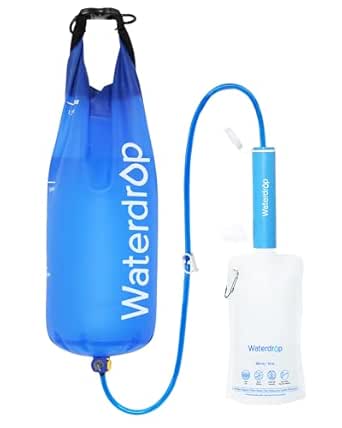 | Best for Shared Camps | Filter type: Five-stage hollow-fiber ultrafiltration | Filter pore size: 0.1 micron | Maximum flow rate: 700 ml/min | VIEW LATEST PRICE | See Our Full Breakdown |
| LifeStraw Personal Water Filter for Hiking, Travel, and Emergencies |  | Best for Minimalist Day Hikes | Filter type: Hollow-fiber membrane | Bacteria reduction: 99.999999% | Parasite reduction: 99.999% | VIEW LATEST PRICE | See Our Full Breakdown |
| ITEHIL Portable Electric Water Filter with Solar Charging | 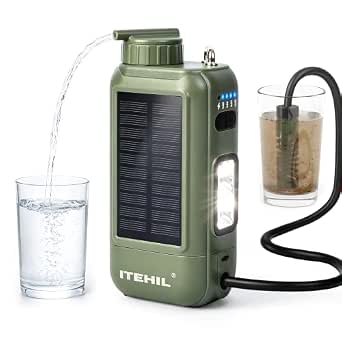 | Best for Powered Emergency Kits | Filtration precision: 0.01 micron | Listed contaminant reduction: 99.99%, including bacteria, viruses, and heavy metals | Flow rate: 700 ml/min | VIEW LATEST PRICE | See Our Full Breakdown |
| Katadyn Hiker Pump-Action Water Filter |  | Best for Pump-Controlled Filtering | Purification method: Manual microfilter for sediment and fine particles | Maximum flow rate: 0.95 liters per minute | Capacity: 750 liters | VIEW LATEST PRICE | See Our Full Breakdown |
| Practical Survival Reusable Emergency Water Filter Straws (2-Pack) |  | Best Two-Filter Backup | Quantity: 2 filters | Filter type: Hollow-fiber membrane | Filtration level: 0.1 micron | VIEW LATEST PRICE | See Our Full Breakdown |
| portable water filters for backpacking | Weight |
|---|---|
| SEESE Electric Portable Water | 12.3 oz |
| Sawyer Products MINI Water Fil | — |
| Sawyer Products SP129 Squeeze | — |
| 1-Gallon Gravity-Fed Water Fil | 1.5 pounds |
| VFX All-in-One Portable Gravit | — |
| Waterdrop Gravity Water Filter | — |
| Sawyer Squeeze Water Filtratio | — |
| Katadyn BeFree 1L Lightweight | 2.24 ounces |
| GRAYL GeoPress 24 oz Water Pur | 15.9 ounces |
| Katadyn Hiker Pro Transparent | 11.2 ounces |
| Waterdrop Gravity Water Filter | 4.64 ounces |
| LifeStraw Personal Water Filte | 1.62 ounces |
| ITEHIL Portable Electric Water | — |
| Katadyn Hiker Pump-Action Wate | Listing states 11 ounces and 1.2 pounds |
| Practical Survival Reusable Em | 2 ounces per filter |
More Details on Our Top Picks
SEESE Electric Portable Water Purifier for Camping, Hiking, and Emergencies
Electric filtration without hand pumping gives this SEESE model a distinct place among the backpacking picks. Its stated flow rate of up to 700 ml per minute and rechargeable battery can make filling bottles easier than squeezing the Sawyer Products SP129 pouches. At 12.3 ounces, though, it weighs far more than the Sawyer MINI’s 2 ounces, and it adds charging and battery upkeep to your kit. The six-stage, 0.01-micron system, backwash function, and replaceable cartridge are appealing for hikers who value powered operation and maintenance features. I would reserve it for trips where its battery and extra functions justify the weight; a simpler, lighter filter is a better fit when pack weight is the priority.
Pros:- Electric operation avoids manual squeezing or suction
- Stated flow rate of up to 700 ml per minute
- Backwash function and replaceable cartridge support ongoing use
- USB Type-C charging and included storage pouch
Cons:- At 12.3 ounces, it weighs substantially more than the Sawyer MINI
- Battery operation requires charging and adds a potential point of failure
- Cartridge replacement is specified at 1,800 gallons
Best for: Backpackers who want powered water treatment and expect to recharge the device between trips
Not ideal for: Ultralight hikers or extended trips without reliable charging, since it weighs more than simple squeeze filters and depends on battery power
- Purification method:Ultrafiltration
- Filtration system:Six-stage dual-filter system
- Filtration size:0.01 micron
- Maximum flow rate:700 ml/min
- Weight:12.3 oz
- Battery capacity:2,800 mAh
- Continuous operation:Up to 6 hours
- Dimensions:6.5 x 4.2 x 2.1 in
Our verdict“Choose the SEESE if powered, higher-flow operation matters more to you than the low weight and simplicity of a manual filter.”
Sawyer Products MINI Water Filtration System, Blue
At 2 ounces, the Sawyer MINI is the weight-conscious choice in this group, with more connection options than a basic straw filter. It works with its included pouch and straw, compatible disposable bottles, or hydration pack tubing, so I can match it to how I carry water. The Sawyer Products SP129 includes two larger 32-ounce pouches and adapters, making it more convenient for hikers who want dedicated squeeze reservoirs. The MINI’s smaller included pouch offers less capacity per fill, and manual use still takes effort. Its stated 0.1-micron hollow-fiber membrane is intended to filter bacteria, protozoa, and microplastics; those claims do not make it a universal purifier. This pick makes sense when low weight and adaptable connections matter more than hands-free flow.
Pros:- Very low listed filter weight of 2 ounces
- Can connect to the included pouch, compatible bottles, a straw, or hydration pack tubing
- Designed to filter bacteria, protozoa, and microplastics
- Backwash cleaning plunger is included
Cons:- Requires manual squeezing or suction
- Hydration pack tubing is not included
- Included pouch holds 16 ounces, less than the SP129 pouches
Best for: Ultralight backpackers who want one small filter that can connect to a bottle, straw, or hydration pack
Not ideal for: Hikers who want large ready-to-filter reservoirs or hands-free operation, since its pouch is small and use is manual
- Filtration method:Hollow-fiber membrane
- Pore size:0.1 micron
- Filter weight:2 oz
- Filter capacity:Up to 100,000 gallons
- Included pouch:16 oz reusable squeeze pouch
- Bottle compatibility:Standard 28 mm disposable bottles
- Maximum temperature:100 °F
- Included accessories:7 in straw and cleaning plunger
Our verdict“Pick the MINI when you want a very light, adaptable filter and are comfortable managing water manually.”
Sawyer Products SP129 Squeeze Water Filtration System with Two 32 oz Pouches
Two 32-ounce pouches give the SP129 a practical advantage over the Sawyer MINI’s smaller included reservoir: I can collect and filter more water per fill without sourcing compatible bottles. Its 2-ounce filter keeps the core unit light, and the kit also includes a straw, hydration pack adapters, and a mesh bag. Like the MINI, it uses a 0.1-micron hollow-fiber filter and requires manual effort when squeezing water through the pouches. The larger kit is a better starting setup for hikers who want several carry options, while the MINI is simpler for those counting every ounce and already carrying compatible containers. Bottle compatibility still depends on standard 28 mm threads, and the pouches need careful handling on trail.
Pros:- Includes two reusable 32-ounce collapsible pouches
- Filter weighs 2 ounces
- Backwashable design can help restore flow
- Includes a straw, hydration pack adapters, and mesh storage bag
Cons:- Filtering with the pouches requires manual squeezing
- Bottle compatibility is limited to most standard 28 mm threaded bottles
- Soft pouches require care to avoid damage in a packed kit
Best for: Backpackers who want a ready-to-use squeeze system with larger included reservoirs and multiple connection options
Not ideal for: Hikers seeking hands-free filtering or the smallest possible kit, since squeezing takes effort and its pouch set adds bulk
- Filter type:Hollow-fiber membrane
- Pore size:0.1 micron
- Filter weight:2 ounces
- Filter lifespan:Up to 100,000 gallons
- Included pouches:Two reusable 32 oz collapsible pouches
- Bottle compatibility:Most standard 28 mm threaded plastic bottles
- Included accessories:Drinking straw, hydration pack adapters, mesh storage bag
Our verdict“Choose the SP129 if you want a light filter with larger included squeeze pouches and adapters in one kit.”
1-Gallon Gravity-Fed Water Filter Bag with 0.1-Micron Filter Straw
A one-gallon bag lets this kit filter a larger batch while you set up camp, with no squeezing, pumping, or electricity. That gives it a hands-free advantage over the Sawyer Products SP129, which requires effort when used with its pouches. The tradeoff is that this bag needs a secure hanging point, and the supplied instructions say to clear air from the hose before connecting the straw to avoid interrupted flow. At 1.5 pounds, it is also much heavier than the Sawyer filter systems. The listed flow figures conflict: the description says up to 300 ml per minute, while the specifications say 3 liters per minute, so I would not rely on the higher figure for trip planning. It suits established camps better than fast-moving, weight-conscious hikes.
Pros:- Gravity-fed operation needs no electricity, pumping, or squeezing
- One-gallon bag can hold a larger batch than the included Sawyer pouches
- Food-grade TPU bag is listed as BPA-free
- Includes an adjustable hanging strap
Cons:- Requires a secure place to hang the filled bag
- At 1.5 pounds, it is heavier than the Sawyer squeeze systems
- Flow-rate figures conflict between the description and specifications
Best for: Backpackers who camp near a reliable hanging point and want to filter a larger batch without hand pumping
Not ideal for: Ultralight or frequently moving hikers who cannot count on a place to hang the bag or want clear, consistent flow-rate information
- Bag capacity:1 gallon (3.78 liters)
- Filter pore size:0.1 micron
- Filter life:Up to 1,057 gallons (4,000 liters)
- Flow rate:Description: up to 300 ml/min; specifications: 3 liters/min
- Bag material:Food-grade TPU
- Power source:No power required
- Weight:1.5 pounds
- Temperature range:10–100 °F
Our verdict“Choose this gravity kit for a camp with a good hanging point and batch filtering, provided its extra weight fits your pack.”
VFX All-in-One Portable Gravity Water Filter for Camping and Hiking
Gravity-fed filtering with a 3-liter bladder makes the VFX a group-friendly camp option: fill the reservoir, hang or set up the system, and avoid the repeated squeezing required by the Sawyer Products SP129. Its hollow-fiber membrane is described as filtering bacteria and protozoa without chemicals or electricity, and a back-flushing syringe is included for maintenance. For an overnight camp, that setup can be more convenient than the Sawyer MINI’s small pouch. The product data has a notable mismatch, though: it lists a 3-liter bladder among included components but gives the system capacity as 1 liter. I would confirm how the reservoir and filter are meant to be used before relying on it for group volumes. Its 1-liter-per-minute maximum is also a stated upper limit, not a guaranteed trail flow.
Pros:- Gravity operation avoids pumping and squeezing
- Hollow-fiber membrane is described as filtering bacteria and protozoa
- Includes a 3-liter bladder, carry bag, and back-flushing syringe
- Stated maximum flow rate is up to 1 liter per minute
Cons:- Product data lists a 1-liter capacity and a 3-liter included bladder
- Manual back-flushing is needed for maintenance
- Listed dimensions and plastic material do not establish packed weight
Best for: Small backpacking groups who want a gravity-fed camp setup and value an included bladder and maintenance syringe
Not ideal for: Solo ultralight hikers or anyone who needs clearly documented reservoir capacity before planning water for a group
- Filtration method:Ultrafiltration with hollow-fiber membrane
- Maximum flow rate:1 liter per minute
- Listed capacity:1 liter
- Included bladder:3 liters
- Maximum supported TDS:800 ppm
- Material:Plastic
- Power source:Manual
- Dimensions:10 × 3.5 × 8 inches
Our verdict“Consider the VFX for shared camp water if its reservoir capacity is confirmed and its kit size suits your route.”
Waterdrop Gravity Water Filter Straw, 0.1 Micron Camping Water Filter with 1.5 Gallon Bag (2 Pack)
The 1.5-gallon gravity bag gives this Waterdrop kit a group-oriented role: fill it once, then let water filter while campmates handle other tasks. Its listed 700 ml/min flow rate and two included straws suit shared camp use better than the single-liter Katadyn BeFree, which favors quick solo drinking. The tradeoff is that this setup takes more room and needs a place to hang the bag; it is less convenient when I want to refill and keep walking. The backwash function can help restore flow, but maintaining it requires manual attention. With two filter straws and two small pouches included, it offers flexible serving options, though its 30-day filter warranty is limited.
Pros:- The 1.5-gallon bag can supply several people without filtering one small bottle at a time.
- Two filter straws and two 16-ounce pouches support more than one drinking setup.
- The listed 1,400-gallon filter lifespan reduces how often the element needs replacement.
- Backwashing offers a way to address reduced flow.
Cons:- The bag and accessories take more packing space than a single collapsible filter bottle.
- Gravity use depends on hanging the bag and waiting for water to pass through.
- The filter warranty is limited to 30 days, and backwashing requires manual upkeep.
Best for: Backpacking pairs or small groups who can pause at camp and want to filter a larger batch of water.
Not ideal for: Solo hikers who prioritize a compact, ready-to-drink bottle and do not want to hang or backwash a gravity bag.
- Filtration technology:0.1-micron hollow fiber ultrafiltration membrane
- Gravity bag capacity:1.5 gallons
- Filter lifespan:Up to 1,400 gallons (5,300 liters)
- Maximum flow rate:700 ml/min
- Included components:2 filter straws, 1 gravity-fed bag, 2 16-ounce water pouches
- Power source:Non-electric
- Warranty:30-day limited filter warranty
Our verdict“Choose this kit for shared camp water and batch filtering; pick the Katadyn BeFree for a simpler solo refill-and-drink setup.”
Sawyer Squeeze Water Filtration System with Cnoc 2-Liter Bladder
A sub-six-ounce system with a 2-liter TPU bladder gives this Sawyer Squeeze a useful balance of carried capacity and flexible use. I can connect it to compatible threaded bottles or set it up for gravity filtration, whereas the Katadyn BeFree is more direct for drinking from its own bottle but offers only one liter at a time. The wide-mouth bladder makes filling from shallow sources easier, though filtering still takes work: I need to squeeze the pouch or arrange a gravity setup. Its backwashable hollow fiber filter is designed for repeated use, but flow can slow and call for cleaning. The stated 100,000-gallon lifespan is unusually high; the small package’s main compromise is the effort and upkeep involved in keeping water moving.
Pros:- The system weighs less than 6 ounces while including a 2-liter bladder.
- A wide-mouth opening makes the bladder easier to fill from natural sources.
- The filter can connect to threaded bottles or be used for gravity filtration.
- Backwashing supports repeated use.
Cons:- Squeeze filtration requires ongoing hand effort.
- Flow can decrease and require backwashing.
- The bladder-and-filter arrangement takes more setup than drinking directly through the Katadyn BeFree.
Best for: Backpackers who want a low-weight filter that can feed compatible bottles or work as a gravity setup.
Not ideal for: Hikers who want to drink immediately without squeezing, arranging a hang point, or cleaning a slowing filter.
- Purification method:Hollow fiber membrane
- Filtration size:0.1-micron absolute
- Bladder capacity:2 liters (64 ounces)
- Bladder material:TPU
- System weight:Less than 6 ounces
- Filter lifespan:Up to 100,000 gallons
- Special features:Reusable, backwashable, BPA- and PVC-free pouch
Our verdict“Pick the Sawyer Squeeze if you value bottle compatibility and a larger bladder over the BeFree’s simpler direct-drinking format.”
Katadyn BeFree 1L Lightweight Collapsible Water Filter Bottle
At 2.24 ounces, the Katadyn BeFree is the clearest choice here for hikers who count every ounce and want to drink right after filling. Its collapsible one-liter bottle and stated 2-liter-per-minute flow rate make it more streamlined on the move than the Sawyer Squeeze with Cnoc bladder, which offers more connection options but asks for squeezing or a gravity setup. The BeFree’s straightforward shake-or-swish cleaning also avoids a separate backwash routine. That simplicity has limits: its listed capacity is 1,000 liters, and the hollow fiber filter does not remove viruses, so water treatment needs differ by source. The soft bottle can pack flat, but it may not suit hikers who handle gear roughly or want a rigid container.
Pros:- The 2.24-ounce weight keeps carried load low.
- The collapsible bottle packs flatter than a rigid bottle.
- The listed 2-liter-per-minute flow supports quick refills.
- Cleaning by shaking or swishing avoids tools.
Cons:- The filter does not remove viruses.
- The stated maximum filtered volume is 1,000 liters.
- The flexible bottle may be less suited to rough handling than a rigid container.
Best for: Ultralight solo backpackers who want a fast, simple filter bottle for water sources where virus protection is not required.
Not ideal for: Hikers seeking virus removal, a rigid bottle, or a filter system intended for frequent use beyond its stated 1,000-liter capacity.
- Capacity:1 liter
- Filter type:0.1-micron hollow fiber membrane
- Flow rate:2 liters per minute
- Weight:2.24 ounces
- Purification method:Gravity-fed / squeeze
- Maximum filtered volume:1,000 liters
- Material:Synthetic, BPA-free
Our verdict“Choose the BeFree for fast, low-weight solo drinking, and choose the GRAYL GeoPress when virus and chemical reduction matter more than weight.”
GRAYL GeoPress 24 oz Water Purifier & Filter Bottle – Black Camo
The GRAYL GeoPress fills a different need from the hollow fiber filters in this lineup: its press cartridge is described as removing viruses as well as bacteria and protozoa, along with chemical contaminants. That makes it a stronger fit for uncertain water sources than the Katadyn BeFree, which does not filter viruses. The exchange is weight and capacity: at 15.9 ounces and 24 ounces per press, it is much heavier and serves less water per fill than the Waterdrop gravity bag. Its listed eight-second purification time keeps the process quick, with no pump or battery to pack. However, the 65-gallon cartridge life means replacement comes sooner than the long-life membrane filters, and frequent refills can frustrate groups.
Pros:- The stated purification coverage includes viruses, bacteria, and protozoa.
- The press mechanism purifies 24 ounces in about 8 seconds.
- Electroadsorption and activated carbon are listed for chemical contaminant reduction.
- It operates without batteries, pumps, or hoses.
Cons:- At 15.9 ounces, it weighs substantially more than the Katadyn BeFree.
- The 24-ounce capacity means frequent refills for multiple hikers.
- The cartridge life is listed at 65 gallons, shorter than the high-capacity membrane options.
Best for: Backpackers traveling through areas where virus and chemical contaminant reduction is a priority and who want a self-contained press bottle.
Not ideal for: Ultralight hikers or groups who need to process large volumes without frequent cartridge replacement or refilling.
- Capacity:24 fluid ounces
- Weight:15.9 ounces
- Purification method:Electroadsorption and activated carbon
- Listed contaminants:Viruses, bacteria, protozoa, and chemical contaminants
- Maximum flow rate:5 liters per minute
- Cartridge life:65 gallons (250 liters)
- Warranty:10 years
Our verdict“Choose the GeoPress when broader contaminant coverage matters more than low pack weight and large batch capacity.”
Katadyn Hiker Pro Transparent Hand Pump Water Filter
The Katadyn Hiker Pro suits hikers who prefer to draw water through hoses and pump it directly into a bottle or hydration pack. Its transparent body lets me inspect the cartridge, while the activated carbon granules are intended to improve taste—useful differences from the Katadyn BeFree, which is lighter and faster to drink from but lacks this pump-and-hose setup. The Hiker Pro’s 0.2-micron glass fiber filter has a listed 1,150-liter capacity and pumps up to one liter per minute. That is a more deliberate process than the BeFree’s stated two-liter-per-minute flow, and pumping takes repeated hand effort. At 11.2 ounces, it also costs more pack weight than a squeeze filter, making it a better fit for measured refills than fast, minimal carry.
Pros:- Hoses and adapters support filling compatible bottles and hydration packs.
- The transparent body allows visual inspection of the cartridge.
- Activated carbon granules are included to improve taste.
- The listed filter capacity is 1,150 liters.
Cons:- Manual pumping takes repeated effort at each refill.
- At 11.2 ounces, it is heavier than the Katadyn BeFree.
- The maximum flow rate is listed at one liter per minute.
Best for: Backpackers who want a hand pump with hoses and adapters to fill bottles or hydration packs from a water source.
Not ideal for: Ultralight hikers who want to drink directly from a filter bottle or avoid repeated pumping.
- Filtration method:Pleated glass fiber
- Filter pore size:0.2 microns
- Filter capacity:1,150 liters
- Maximum flow rate:1 liter per minute
- Weight:11.2 ounces
- Dimensions:3 x 3 x 6 inches
- Maximum supported water TDS:1,000 ppm
Our verdict“Choose the Hiker Pro if hose-fed pumping and cartridge visibility matter more to you than the BeFree’s lower weight and faster drinking flow.”
Waterdrop Gravity Water Filter Straw with 1.5-Gallon Water Bag
The 1.5-gallon bag makes this Waterdrop more useful at a shared campsite than a direct-drinking straw: fill it once, then let gravity supply water to several people. Its 700 ml/min flow rate and backwashable 0.1-micron hollow-fiber filter support repeated use without batteries or pumping. Compared with the LifeStraw Personal Water Filter, it is less suited to quick sips straight from a stream but easier for filling bottles around camp. The bag and included 16-ounce pouch add flexibility, though they also mean more gear to pack and manage. I would keep its 300 ppm TDS limit in mind when choosing water sources; this filter is not a general solution for dissolved contaminants. The 30-day filter warranty is also short.
Pros:- 1.5-gallon gravity bag supplies multiple bottles between collection trips.
- Backwashable 0.1-micron hollow-fiber filter supports reuse.
- Operates without electricity or batteries.
- Includes a separate 16-ounce water pouch.
Cons:- Bag and accessories take more pack space than a standalone straw.
- Maximum supported TDS is 300 ppm.
- Filter warranty lasts only 30 days.
Best for: Backpacking pairs or small groups who want to collect water once and dispense it around camp.
Not ideal for: Solo hikers prioritizing the smallest, simplest setup, or anyone needing treatment for dissolved contaminants.
- Filter type:Five-stage hollow-fiber ultrafiltration
- Filter pore size:0.1 micron
- Maximum flow rate:700 ml/min
- Water bag capacity:1.5 gallons
- Weight:4.64 ounces
- Maximum supported TDS:300 ppm
- Included components:Filter straw, 1.5-gallon gravity-fed bag, 16-ounce water pouch
Our verdict“Choose this Waterdrop for shared camp water and gravity-fed convenience; pick the LifeStraw for a lighter direct-drinking setup.”
LifeStraw Personal Water Filter for Hiking, Travel, and Emergencies
At 1.62 ounces, this LifeStraw is an easy choice when every pack item needs to earn its place. Its hollow-fiber membrane is designed to reduce bacteria, parasites, microplastics, dirt, and cloudiness, and it works by drinking directly from a source or using a separate container. That direct-use format is simpler than the Waterdrop Gravity Water Filter Straw for a quick stop at a stream, while Waterdrop is more convenient for storing and dispensing camp water. The tradeoff is that the LifeStraw does not provide a hands-free reservoir or an easy way to fill bottles for later. The listing also gives conflicting capacity figures: 4,000 liters in the description and 1,000 gallons in the specs. I would not plan a trip around either figure without checking the product labeling.
Pros:- Lightweight at 1.62 ounces.
- Can be used directly at a natural water source.
- Designed to reduce bacteria, parasites, microplastics, dirt, and cloudiness.
- No batteries or electricity required.
Cons:- Drinking-straw format does not provide filtered water for storage on its own.
- Capacity is listed inconsistently as 4,000 liters and 1,000 gallons.
- Requires direct suction while drinking.
Best for: Solo day hikers who want a very light filter for drinking at streams or from a carried container.
Not ideal for: Backpackers who need to filter water into bottles for later or supply several people from camp.
- Filter type:Hollow-fiber membrane
- Bacteria reduction:99.999999%
- Parasite reduction:99.999%
- Microplastic reduction:99.999%; down to 1 micron
- Capacity:Description states 4,000 liters; product information states 1,000 gallons
- Weight:1.62 ounces
- Maximum supported TDS:1,000 ppm
- Power:No electricity or batteries required
Our verdict“Pick the LifeStraw for a lightweight, direct-drinking option on solo hikes, but choose a gravity or squeeze system for stored water at camp.”
ITEHIL Portable Electric Water Filter with Solar Charging
Electric filtration with solar and Type-C charging gives this ITEHIL a different role from the manual filters in this roundup. Its listed 0.01-micron precision, 700 ml/min flow, and integrated light and power-bank functions are aimed at hikers who want extra emergency utility alongside water treatment. Compared with the Katadyn Hiker Pump-Action Water Filter, it avoids hand pumping but adds a battery and charging needs. Solar charging is a backup rather than a fast way to produce water: the listing says it takes 30 minutes to make one liter. The 1,000-liter filter lifespan is also shorter than the capacities stated for several straw filters here, and the cartridge needs replacement every six months or when flow drops. I would check the specific treatment claims and charging expectations before relying on it for a remote trip.
Pros:- Offers Type-C and solar charging options.
- Includes an emergency light and power-bank function.
- Listed 0.01-micron filtration precision.
- 700 ml/min stated flow rate.
Cons:- Solar charging is slow, taking 30 minutes per liter according to the listing.
- Filter lifespan is listed at 1,000 liters and replacement is recommended every six months or when flow declines.
- Powered operation adds charging and battery management to a backpacking kit.
Best for: Backpackers building an emergency-oriented kit who value powered operation, a light, and a backup power bank.
Not ideal for: Long-distance hikers who want a simple, low-maintenance filter with no battery or charging dependence.
- Filtration precision:0.01 micron
- Listed contaminant reduction:99.99%, including bacteria, viruses, and heavy metals
- Flow rate:700 ml/min
- Filter lifespan:1,000 liters
- Battery capacity:5,200 mAh
- Charging methods:Type-C and solar
- Dimensions:3.2 × 2.4 × 7 inches
- Materials:ABS, activated carbon, Ahlstrom filter, hollow-fiber membrane
Our verdict“Choose the ITEHIL when powered emergency features matter more than a simpler manual filter and its charging needs fit your trip.”
Katadyn Hiker Pump-Action Water Filter
Manual pump control makes the Katadyn Hiker a practical fit for hikers who prefer to draw water into a container rather than drink through a straw. Its stated flow rate of 0.95 liters per minute and field-cleanable design can make repeated collection manageable on a trek. Compared with the LifeStraw Personal Water Filter, the Hiker is more convenient for filling bottles, but its 11-ounce listed weight and pumping effort make it a heavier, more labor-intensive choice. The source data also gives a second weight of 1.2 pounds, so I would verify the packed weight before buying. Its microfilter is described as screening sediment and fine particles; the listing does not establish protection from viruses or bacteria. That limitation makes source selection and any needed pretreatment central to whether this model fits a route.
Pros:- Manual operation requires no batteries, electricity, or chemicals.
- Pump format fills a container rather than requiring direct straw drinking.
- Field-cleanable design supports maintenance on the trail.
- Listed maximum flow rate is 0.95 liters per minute.
Cons:- Requires repeated pumping to produce water.
- Listing gives conflicting weights of 11 ounces and 1.2 pounds.
- Description identifies sediment and fine-particle filtration but does not establish virus or bacteria protection.
Best for: Backpackers who want a manually powered pump for filling containers and can verify that their water sources suit its treatment limits.
Not ideal for: Hikers seeking the lightest setup, hands-free gravity filtration, or stated protection from viruses and bacteria.
- Purification method:Manual microfilter for sediment and fine particles
- Maximum flow rate:0.95 liters per minute
- Capacity:750 liters
- Weight:Listing states 11 ounces and 1.2 pounds
- Dimensions:6.5 × 3 × 3 inches
- Power source:Manual pump
- Model number:8018270
- Material:Synthetic
Our verdict“Consider the Katadyn Hiker if you want pump-fed bottle filling and have verified the filter suits your water sources and packed-weight needs.”
Practical Survival Reusable Emergency Water Filter Straws (2-Pack)
Two separate filters make this pack useful when a hiking partner needs their own straw or when you want a spare in an emergency kit. Each is listed at 2 ounces, with a 0.1-micron hollow-fiber membrane and a stated capacity of up to 1,800 gallons. Compared with the LifeStraw Personal Water Filter, this set adds a second unit and flushing plungers for backflushing, though the LifeStraw listing specifies reductions for several contaminants that this listing does not fully detail. These straws still require suction at the source or from a container, so they do not offer the camp convenience of the Waterdrop Gravity Water Filter Straw and its large bag. The stated lifespan of up to 10 years may suit long-term storage, but neither straw removes viruses or dissolved chemicals according to the provided data.
Pros:- Includes two filter straws for a partner or backup.
- Each filter weighs 2 ounces.
- Includes flushing plungers for backflushing.
- Listed capacity is up to 1,800 gallons per filter.
Cons:- Manual suction is required to draw water through each straw.
- Does not remove viruses or dissolved chemicals according to the supplied data.
- Direct-drinking format does not provide gravity-fed storage.
Best for: Pairs of backpackers or preparedness-minded hikers who want two independent filters and a spare flushing plunger.
Not ideal for: Hikers who need virus or dissolved-chemical treatment, or who want hands-free water storage at camp.
- Quantity:2 filters
- Filter type:Hollow-fiber membrane
- Filtration level:0.1 micron
- Capacity:Up to 1,800 gallons per filter
- Weight:2 ounces per filter
- Dimensions:8 × 1.5 × 1.5 inches
- Lifespan:Up to 10 years
- Included components:Two filters, two flushing plungers, user manual
Our verdict“Choose this two-pack when you want a spare or partner filter, and skip it if your route calls for virus or chemical treatment.”
How We Picked
I ranked these 15 backpacking options by how well their design fits common trail routines: collecting water, treating enough for the next stretch, carrying it, and keeping the system working. I weighed filtration or purification approach, usable capacity, portability, setup, maintenance, and whether the format supports solo drinking or camp water for a group. A product’s stated treatment capability should be checked against the organisms and conditions on the route; the word “filter” alone does not establish protection from every hazard.
The order favors versatility and practical trail use over novelty or a long feature list. That puts the Sawyer Squeeze and Cnoc bladder first for its adaptable reservoir-and-filter setup, while compact personal filters rank well for solo simplicity and gravity systems for batch capacity. Pump, electric, and survival straw products serve narrower needs, so their extra effort, power requirements, or limited everyday convenience weigh on their placement. I treat similarly named products as distinct choices when their included reservoirs or configurations differ.
Factors to Consider When Choosing Portable Water Filters For Backpacking
Match the treatment system to your route and water routine before comparing formats. My main decision points are what hazards you need to address, how much water you’ll need between sources, and how much time and effort you’re willing to spend collecting and treating it.
Match Treatment to the Water Risks on Your Route
Start with the water sources and treatment guidance for the places you plan to hike. Many backpacking filters target protozoa and bacteria, but a filter may not address viruses, chemicals, or dissolved contaminants. Purifier-style products use a different treatment approach, so check the maker’s stated capabilities and limitations for your expected water. Clear-looking water can still carry pathogens, and cloudy water may need pre-filtering before treatment. A common mistake is choosing by micron size alone; that specification does not describe every hazard. If your route has uncertain sources, pair the product choice with local guidance and a backup treatment method suited to those risks.
Estimate Water Needed Between Sources
Think about the longest dry stretch, camp use, and whether you hike alone or with others. A personal bottle filter can work well when water sources are frequent, but it may feel slow when you need to fill several bottles at camp. A gravity bag or larger reservoir can treat a batch while you set up camp, though it adds bulk and requires a suitable place to hang or position it. Map-based water planning can help prevent carrying unnecessary capacity. Do not assume the listed reservoir volume equals your whole day’s treated supply; you may need to refill it repeatedly. Choose for the longest realistic gap between sources, not only the easiest day hike.
Compare Total Pack Weight With Trail Convenience
The filter body is only part of the system: include clean and dirty reservoirs, hoses, caps, and any charging gear when judging pack weight. A light straw can be appealing, yet it may not conveniently fill a cooking pot or clean bottle without extra steps. A squeeze setup can serve both direct drinking and bottle filling, depending on its compatible parts. Gravity systems trade some carried bulk for less hands-on pumping or squeezing at camp. Think through how water will move from source to mouth, bottle, and meal pot. A small convenience benefit repeated at each refill may matter more over a multi-day trip than a minor difference in filter weight.
Plan for Flow, Clogging, and Cleaning
Real-world flow depends on source water, handling, and maintenance, so a new filter’s advertised rate is only one piece of the decision. Fine sediment can slow many filters; carrying a cloth or letting silt settle can reduce the load before treatment. Backflushing or cleaning may restore flow on systems designed for it, but the procedure and compatible tools vary by model. Check whether maintenance can be done on trail and whether the filter needs protection from freezing. A clogged system can turn a quick refill into a frustrating stop, especially when the group depends on it. Learn the care instructions before leaving home and pack any required accessories.
Decide When a Pump, Electric Unit, or Press Bottle Makes Sense
Alternative formats can solve a specific problem, but each changes the routine. A hand pump can draw from shallow or awkward sources and fill a container, at the cost of repeated effort and more moving parts. Electric systems reduce manual work, yet batteries, charging, and power availability matter on longer trips; solar charging should not be treated as guaranteed energy. A press bottle keeps treatment contained in a familiar bottle format but may require repeated presses for a group’s supply. Compare those burdens with a simple squeeze filter before paying extra pack space to solve a need you may not have. These formats make the most sense when their particular collection or treatment method fits your route.
Carry a Backup That Covers a Different Failure
Any single treatment system can be lost, damaged, clogged, or mismatched to the source. A backup is most useful when it covers a different failure mode, such as chemical treatment tablets alongside a filter, rather than duplicating the same vulnerable parts. Keep untreated water containers separate from clean ones to avoid recontamination. For a group, decide who carries spare treatment and who knows how to use it. Check shelf life and storage directions for backup products before a trip. Practice the full routine at home so that a backup remains usable when conditions are tiring or weather is poor.
Frequently Asked Questions
Is a backpacking water filter enough for every natural water source?
No single filter should be assumed to address every possible hazard. Many trail filters target bacteria and protozoa, while viruses, chemicals, and dissolved contaminants may call for another treatment method. Check the specific product’s claims against local water guidance and the risks on your route. If the source is unusually contaminated or the hazard is unknown, use a treatment approach recommended for that situation. Carrying a compatible backup can help when water conditions exceed your filter’s stated scope.
Should I choose a squeeze filter or a gravity filter for a group trip?
A squeeze filter is handy when each hiker wants to treat water as needed and carry a compact setup. A gravity filter can be more convenient at camp when several people need water at roughly the same time, since the batch can treat while you do other tasks. Its bag and hanging setup add bulk, and gravity treatment depends on having a workable place to position it. Consider the group’s refill schedule and the number of clean containers you can fill. For a solo trip with frequent sources, the extra capacity of a gravity system may go unused.
Do I need a separate water container with a personal filter straw?
A personal straw is mainly suited to drinking directly from a source or compatible container. It may not provide a convenient way to collect clean water for cooking, camp use, or later drinking. Before choosing one, check how the product connects to bottles or reservoirs, if at all, and whether those parts are included. If you need to fill a pot or carry treated water away from the source, a squeeze or gravity system may fit better. The straw format is most practical when immediate personal drinking is the main job.
What should I do if my filter slows down during a trip?
First follow the model’s care instructions; some systems allow backflushing or cleaning, while others use a different method. Sediment-heavy water can reduce flow, so letting it settle or pre-filtering it through clean fabric may help protect the filter. Avoid forcing water through a clogged system if the manufacturer warns against it. Keep clean and dirty sides separate during maintenance to prevent contamination. If flow does not recover or the filter may be damaged, switch to your backup treatment plan.
When is an electric purifier worth carrying for backpacking?
An electric unit may suit a hiker who values reduced manual effort and can manage its charging needs. Its usefulness depends on battery capacity, charging time, and the conditions under which any solar charging works. Those requirements add planning and equipment compared with a compact squeeze filter. Check the product’s treatment claims as carefully as its power specifications; electric operation alone does not identify which hazards it addresses. For trips with reliable charging access or a specific need for powered treatment, the extra system may earn its place.
Conclusion
For a versatile trail setup, I’d choose the Sawyer Squeeze with Cnoc 2-Liter Bladder as best overall. The Sawyer MINI is my value-minded pick for solo hikers who want a compact filter, while the GRAYL GeoPress is the premium-style choice for buyers who prefer a press bottle and need its purifier approach. Beginners who want a familiar bottle format may find the Katadyn BeFree 1L easier to handle; hikers treating camp water for a group should look first at a gravity system. For shallow sources, a pump may suit a specific collection need, while an electric unit fits trips where its power plan is practical. Choose based on your route’s hazards, refill pattern, and preferred routine, then verify that the product’s treatment claims match your water sources.