
All-in-one zoom lenses give you the freedom to shoot a wide range of scenes without changing lenses, making them perfect for spontaneous moments, travel, or street photography. However, they often sacrifice some image quality, producing softer images or slight distortions compared to prime or specialized lenses. Advances in optical tech are improving their performance, but the trade-off between convenience and sharpness remains. To discover how these lenses can fit your photography style, keep exploring the details.

Get travel and outdoor gear delivered free with Prime
- Fast, free delivery on millions of items
- Prime Video, Amazon Music and more included
- Member-only deals all year
Key Takeaways
- All-in-one zoom lenses offer convenience and versatility, enabling quick focal length changes with minimal gear switching.
- They often compromise on image sharpness, contrast, and optical performance compared to specialized lenses.
- Technological improvements are narrowing quality gaps, making some all-in-one lenses more suitable for demanding photography.
- They are ideal for travelers and hobbyists prioritizing portability and spontaneous shooting over maximum image quality.
- The debate centers on balancing the desire for creative freedom and convenience against the need for professional-grade image fidelity.
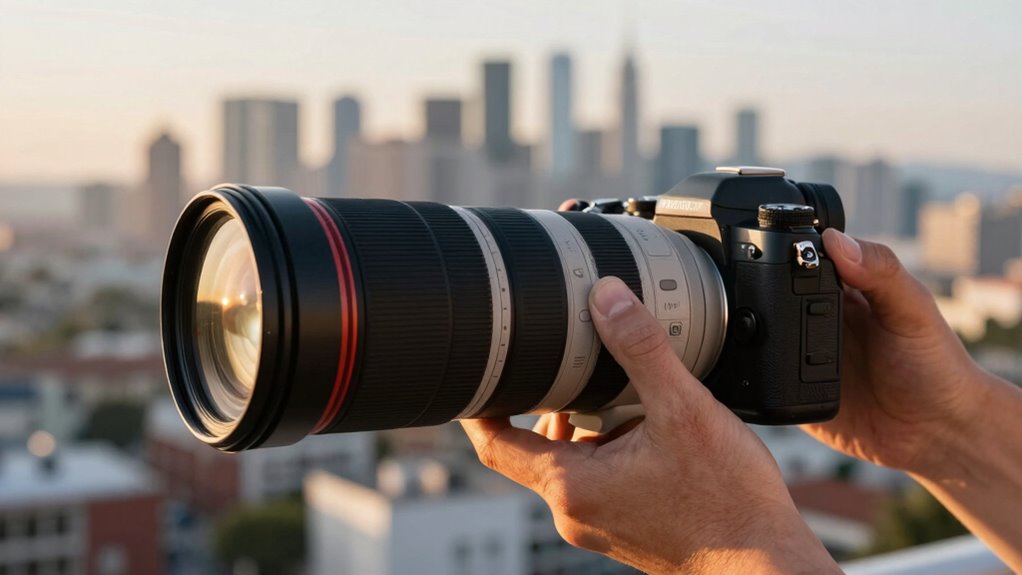
Have you ever wondered if an all-in-one zoom lens truly offers the perfect balance of convenience and quality? It’s a question many photographers grapple with, especially when weighing the benefits of creative versatility against the pursuit of sharper, higher-quality images. An all-in-one zoom lens promises a lot—covering a wide range of focal lengths with just one piece of equipment. This means you can switch from wide-angle shots to telephoto captures without changing lenses, saving you time and reducing gear clutter. Its portability convenience makes it ideal for travel, street photography, or any situation where carrying multiple lenses isn’t practical. You can slip it into your bag, grab your camera, and be ready to shoot nearly anything, anytime.
All-in-one zoom lenses offer convenience and versatility, but may sacrifice some image sharpness and quality.
But, while this ease of use is appealing, some photographers question whether the image quality of these lenses measures up to specialized options. Typically, all-in-one zoom lenses compromise a bit on sharpness, contrast, and overall optical performance, especially at extreme focal lengths. This often results in softer images or slight distortions, which can be a deal-breaker if you’re aiming for professional-grade results. The trade-off is clear: you gain incredible convenience and flexibility but might sacrifice some level of perfection in your images. Additionally, the technology behind lens design has been advancing, which means that some newer all-in-one lenses are offering improved optical performance that narrows this gap. Innovations in optical engineering are continuously improving the capabilities of these lenses, making them more competitive with specialized options. Furthermore, the evolution of lens manufacturing techniques is playing a significant role in enhancing the overall image quality of these versatile lenses.
Your desire for creative versatility is well served by an all-in-one zoom lens. It encourages spontaneous shooting and allows you to explore different styles without the hassle of changing lenses. You don’t need to carry multiple pieces of equipment or worry about compatibility; instead, you have a single, adaptable tool that can handle a variety of scenarios. However, this same convenience might tempt you into accepting lower image quality, especially if you’re used to the crispness of prime lenses or specialized zooms. The question becomes whether you value the freedom to shoot quickly and across many focal lengths more than the absolute highest quality in your images.
Ultimately, it depends on your priorities. If you’re a hobbyist, traveler, or someone who values ease of use and portability convenience, an all-in-one zoom lens can be a game-changer. It offers the flexibility to capture moments without fuss and keeps your gear lightweight. But if you’re a professional or a dedicated enthusiast chasing the best possible image quality for large prints or fine detail, you might find that investing in specialized lenses delivers better results. The debate hinges on what you’re willing to compromise—whether it’s the creative freedom and convenience of a single lens or the superior image quality of dedicated optics. Additionally, advancements in lens technology have been gradually narrowing the gap in optical performance, making some all-in-one options more competitive than ever.
As an affiliate, we earn on qualifying purchases.
Frequently Asked Questions
How Do All-In-One Zoom Lenses Compare in Weight to Prime Lenses?
All-in-one zoom lenses are generally heavier than prime lenses because they pack more optical elements to offer focal flexibility and zoom range. This added weight can cause optical compression, making images appear flatter. While primes are lighter and more portable, zooms provide convenience with versatile focal lengths, but at the cost of extra weight. So, if you prioritize focal flexibility, expect a heavier lens, but if lightness matters, primes are the way to go.
Are All-In-One Zoom Lenses Suitable for Professional Photography?
All-in-one zoom lenses are like Swiss Army knives—versatile but not always ideal for professional photography. You can use them for many situations, but they often come with versatility drawbacks and creative limitations. If you need the highest image quality and full control, prime lenses might be better. However, for quick shoots and flexibility, an all-in-one zoom can serve you well, especially when portability matters.
What Is the Typical Lifespan of an All-In-One Zoom Lens?
An all-in-one zoom lens typically lasts between 5 to 10 years, depending on lens durability and maintenance needs. Proper care, like cleaning the lens elements and storing it properly, can extend its lifespan. You should handle it gently, avoid extreme weather, and regularly check for dust or damage. With good maintenance, your lens can serve you well for many years, making it a reliable choice for versatile shooting.
Do All-In-One Zoom Lenses Perform Well in Low-Light Conditions?
You might think all-in-one zoom lenses excel in low-light conditions, but their sensor performance and aperture limitations tell a different story. Ironically, while they’re convenient, their smaller apertures often struggle to gather enough light, resulting in grainy or blurry shots. So, if low-light photography is your goal, expect these lenses to fall short, revealing their true weakness despite their versatility.
Can All-In-One Zoom Lenses Replace Multiple Lenses Effectively?
Yes, all-in-one zoom lenses can replace multiple lenses effectively, offering notable versatility advantages that suit various shooting scenarios. They provide the convenience of covering wide-angle to telephoto ranges without switching lenses, saving you time and effort. However, keep in mind that this convenience may come with some trade-offs in image quality and aperture performance, so consider your specific needs before relying solely on an all-in-one lens.
As an affiliate, we earn on qualifying purchases.
Conclusion
Ultimately, choosing an all-in-one zoom lens is like balancing between a bustling marketplace and a quiet, pristine gallery. While the marketplace offers convenience and freedom to explore every corner, the gallery promises sharper, more detailed art. You’re free to roam, but sometimes, that roaming comes at the cost of clarity. Decide what matters most—versatility or image quality—and remember, your lens choice shapes not just photos, but your entire creative journey.
As an affiliate, we earn on qualifying purchases.
compact zoom lens for street photography
As an affiliate, we earn on qualifying purchases.
As an affiliate, we earn on qualifying purchases.
Halloween Picks
halloween
As an affiliate, we earn on qualifying purchases.