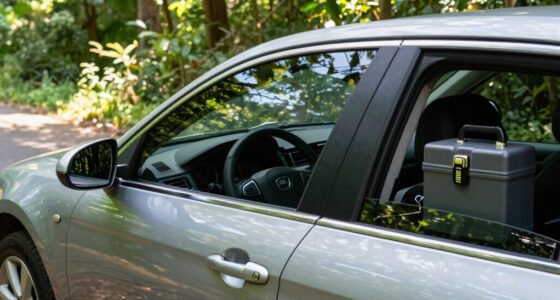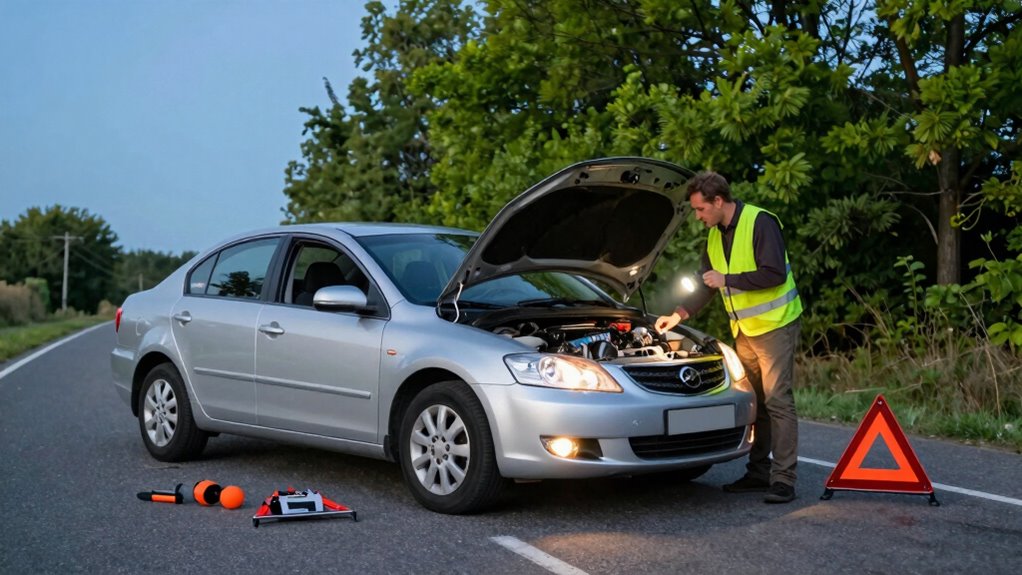

If your car breaks down while traveling, first stay calm and safely steer to the shoulder or a flat area away from traffic. Turn on your hazard lights and assess the situation for obvious issues like a flat tire or overheating. If needed, call roadside assistance or a tow service, and gather crucial details such as your location and vehicle info. Staying safe and prepared helps you handle the situation effectively—learn more tips to stay safe and prevent future breakdowns.

Get travel and outdoor gear delivered free with Prime
- Fast, free delivery on millions of items
- Prime Video, Amazon Music and more included
- Member-only deals all year
Key Takeaways
- Safely steer your vehicle to the shoulder or a flat, secure area away from traffic; turn on hazard lights immediately.
- Assess the situation for obvious issues like overheating, flat tires, or strange noises to determine if simple fixes are possible.
- Stay inside the vehicle if in a dangerous location; if safe, exit cautiously and stand away from traffic, wearing reflective clothing if available.
- Gather critical details such as your location, vehicle info, and any hazards to share clearly with roadside assistance or emergency services.
- Regularly maintain your vehicle with routine checks of fluids, tires, belts, and brakes to prevent breakdowns during travel.
As an affiliate, we earn on qualifying purchases.
How to Recognize Signs Your Car Is Breaking Down
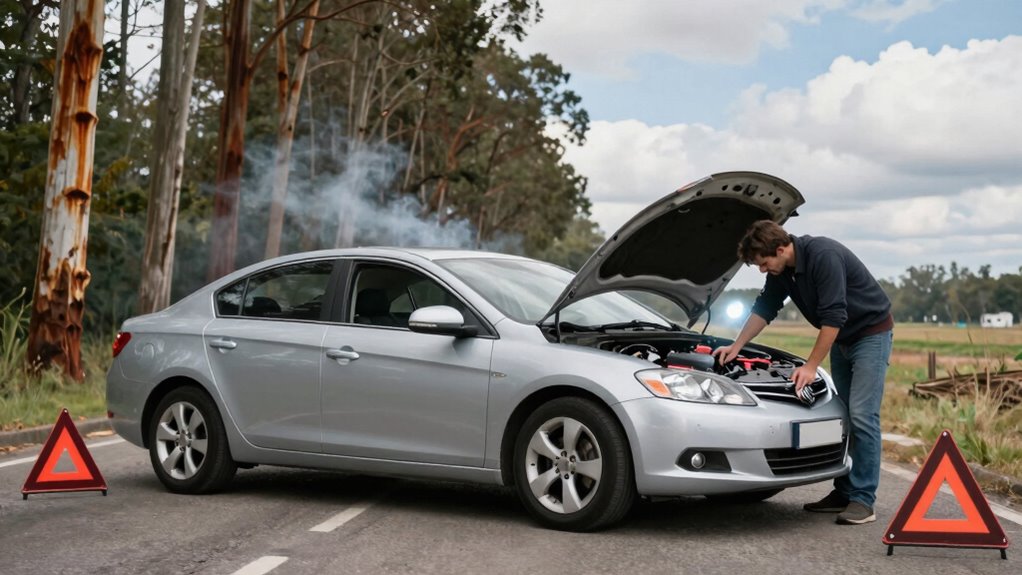
Your car often gives subtle clues when it’s about to break down, so paying attention to these signs can save you from a roadside emergency. One of the key indicators is an engine warning light on your dashboard. If it lights up, don’t ignore it—check your vehicle or consult a mechanic soon. Unusual noises are another red flag. You might hear knocking, grinding, or squealing sounds that signal mechanical issues. These noises often happen before a breakdown, so listening carefully can help you catch problems early. Also, pay attention to changes in how your car drives, such as vibrations, stalling, or difficulty accelerating. Recognizing these signs promptly allows you to address issues before they worsen, keeping you safe and preventing costly repairs down the road. Additionally, understanding the importance of vehicle maintenance can help you prevent many breakdowns before they occur. Regular inspection and servicing can identify potential problems early, saving you time and money, especially if your vehicle relies on electric components that may require specialized care. Being aware of dashboard alerts can further help you respond quickly to emerging issues. Moreover, staying informed about common mechanical problems can prepare you to handle issues more effectively.
As an affiliate, we earn on qualifying purchases.
Move to a Safe Spot and Protect Yourself First
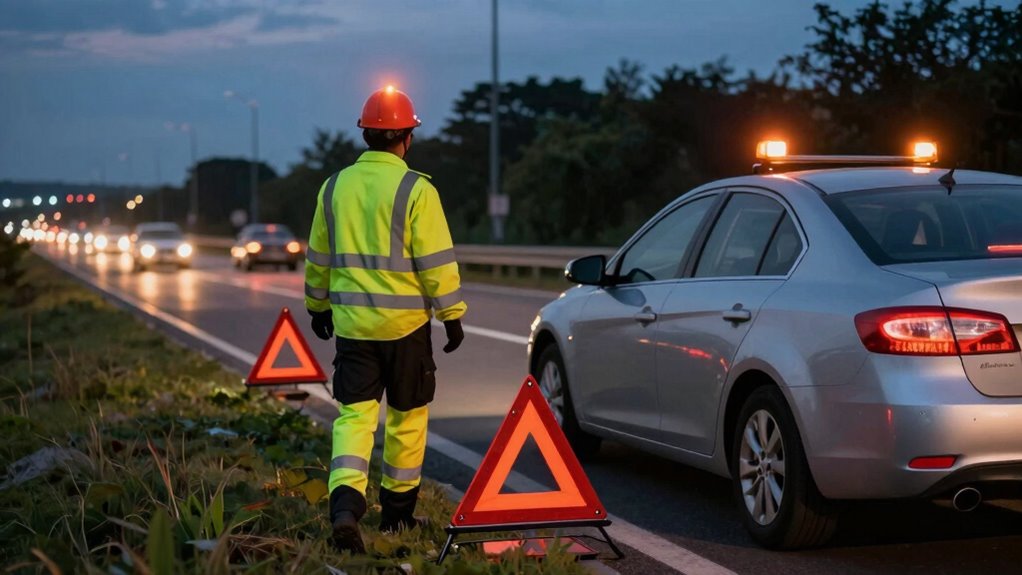
When your car breaks down unexpectedly, the first priority is to move safely away from traffic. Prioritize roadside safety by steering to the shoulder or a safe, flat area away from moving vehicles. Turn on your hazard lights immediately to alert other drivers and reduce the risk of accidents. Once stopped, stay inside your vehicle if it’s in a dangerous spot—exiting can expose you to oncoming traffic. If you must get out, do so cautiously and stand away from the road, preferably behind a barrier or out of traffic lanes. Protect yourself first by wearing reflective clothing if you have it, and always remain alert to your surroundings. Staying aware of your environment is essential to making responsible safety decisions. Your goal is to ensure personal protection while minimizing the risk of further accidents or injury. Remember that roadside safety measures are crucial to handle emergencies effectively. Being familiar with basic emergency procedures can help you respond more effectively in such situations.
reflective safety vest for drivers
As an affiliate, we earn on qualifying purchases.
As an affiliate, we earn on qualifying purchases.
Check Common Problems and Know When to Call for Help
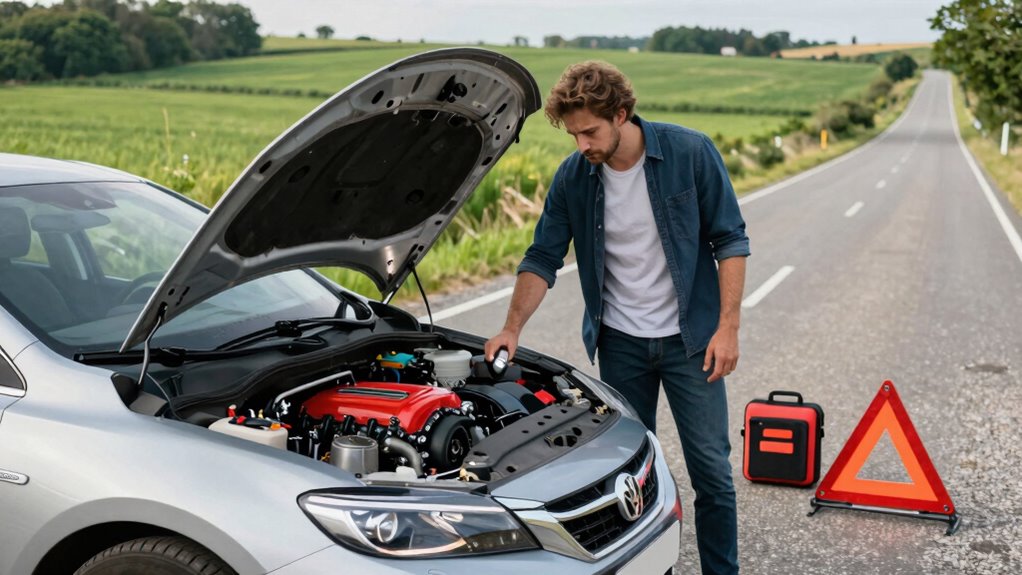
After ensuring you’re safe and your vehicle is parked in a secure spot, it’s time to assess what might be causing the problem. Use basic car troubleshooting skills to check common issues like overheating, flat tires, or engine warning lights. Look for obvious problems such as loose hoses, disconnected wires, or low fluid levels. If you notice anything unusual or if the problem seems beyond simple fixes, it’s wise to know when to call for help. Emergency preparedness means recognizing your limits and avoiding risky attempts to repair complex issues. Remember, calling roadside assistance or a tow service is often the safest choice when you’re unsure. Staying calm and knowing when to seek professional help can prevent further damage and keep you safe. Familiarizing yourself with common car problems can help you better understand the situation and decide when professional help is necessary. Additionally, understanding how to interpret warning alerts can provide critical information about the severity of the issue before calling for assistance. Recognizing cloud service outages can also help you determine if external factors may be affecting your vehicle’s electronic systems or related devices. It’s also helpful to be aware that electronic system issues might sometimes be related to external outages affecting connected devices.
As an affiliate, we earn on qualifying purchases.
Collect Important Info for Emergency Assistance
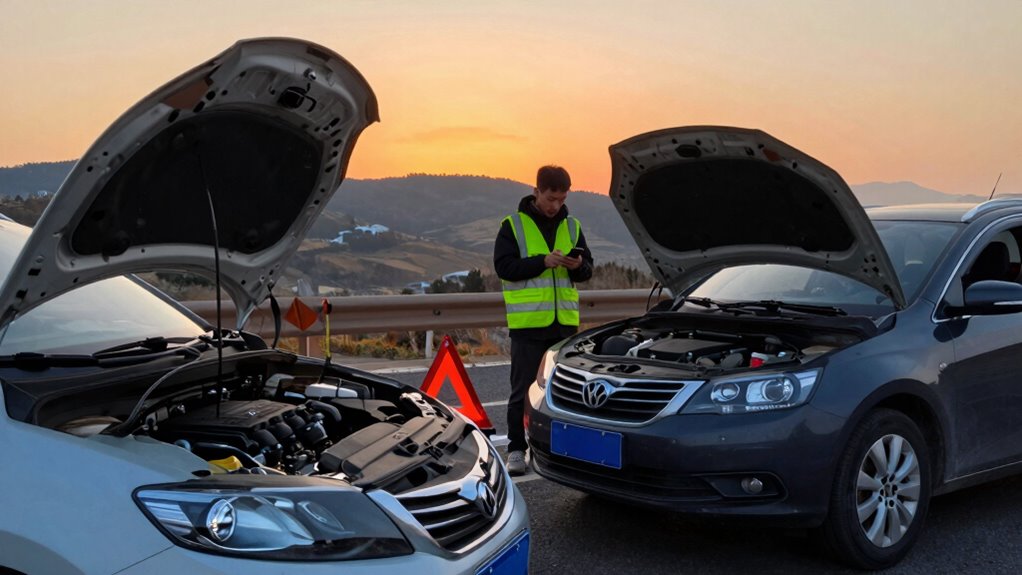
Gathering important information before calling for help guarantees a quick and efficient rescue. This ensures responders have all the necessary information to assist you promptly. This includes your exact location, vehicle make and model, license plate number, and the nature of the breakdown. Having this info ready minimizes delays and helps responders assist you faster. Remember to note any injuries or hazards nearby. Effective communication methods are essential for sharing your details accurately. Use the table below to organize your details:
| Location | Vehicle Details | Emergency Info |
|---|---|---|
| Street address | Make, model, license plate | Injury or hazard info |
| Nearby landmarks | Color, year, VIN | Emergency contact numbers |
| GPS coordinates | Contact info for roadside help | Medical needs (if any) |
Being prepared ensures you get help swiftly and safely. Digital communication methods and digital concepts are essential for effective communication during emergencies. For example, using digital maps can help pinpoint your exact location more accurately. Additionally, emergency apps can provide direct contact with rescue services and share your location instantly.
Tips to Maintain Your Car and Prevent Breakdowns
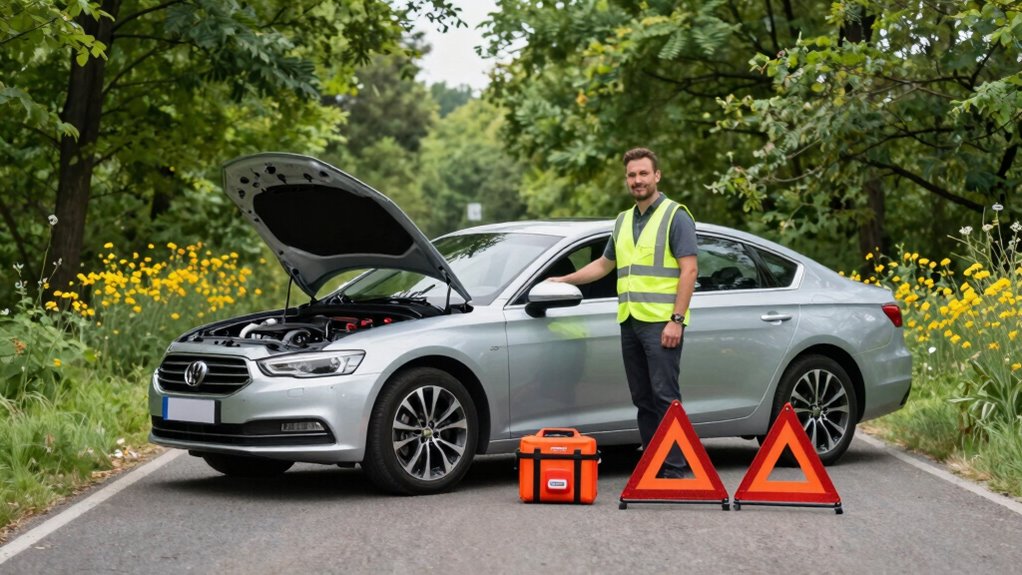
Regularly maintaining your vehicle is the best way to prevent unexpected breakdowns on the road. Preventive maintenance keeps your car running smoothly and helps you spot issues before they become major problems. To stay prepared, follow these tips:
- Check fluid levels regularly, including oil, coolant, and brake fluid.
- Inspect tires for proper inflation and tread wear.
- Replace worn belts and hoses to prevent breakdowns.
- Schedule routine inspections for brakes, battery, and lights.
- Keep an eye on vehicle ergonomics to ensure comfortable and safe operation during long drives. Additionally, be aware of the importance of air quality considerations within your vehicle, especially during long trips or in areas with poor air conditions, to maintain a healthy environment inside your car. Regularly ventilating your vehicle can help reduce cabin air pollutants and improve overall comfort. Being mindful of air filtration systems can further enhance air quality inside your car. Proper ventilation not only improves comfort but also reduces the buildup of potentially harmful substances. These steps boost your emergency preparedness by reducing breakdown risks. Staying proactive with preventive maintenance ensures your vehicle stays reliable during your travels, saving you time and stress. Consistent care keeps you safe and minimizes surprises on the road.
Frequently Asked Questions
What Should I Do if I Get Stranded in an Unfamiliar Area?
If you get stranded in an unfamiliar area, stay calm and assess your surroundings. Use urban navigation tools like GPS or maps to find safe routes or nearby help. Call local emergency contacts for assistance or directions. If possible, move to a well-lit, populated place and avoid isolated areas. Keep your phone charged, stay visible, and wait for help while monitoring your environment for safety.
How Can I Prevent Breakdowns During Long Road Trips?
To keep your vehicle running smoothly, stay ahead of the game with regular vehicle maintenance and stay alert with driver preparedness. Think of it as giving your car a checkup before a long journey. Check tire pressure, fluid levels, and brakes, and guarantee your emergency kit is stocked. Staying vigilant and maintaining your vehicle helps prevent breakdowns and keeps you safe, so you can enjoy the road instead of worrying about surprises.
Is It Safe to Attempt Minor Repairs Myself?
It’s generally safe to attempt minor repairs yourself if you have solid repair skills and understand vehicle safety. Before starting, verify your vehicle is off, cool, and on a flat surface. Use proper tools and follow instructions carefully. However, avoid risky repairs or if you lack confidence. If unsure, it’s better to call roadside assistance to prevent injury or further damage, prioritizing your safety above all.
What Emergency Supplies Should I Keep in My Car?
Imagine you’re stranded on a busy highway with a flat tire. You should keep an emergency kit in your car, including items like a flashlight, first aid supplies, water, and basic tools. Regular car maintenance helps prevent breakdowns, but having essentials guarantees you’re prepared. An emergency kit is crucial for safety and quick response, giving you peace of mind and the tools to handle unexpected situations confidently.
When Is It Necessary to Call Roadside Assistance Immediately?
You should call roadside assistance immediately if your vehicle requires towing or if you’re facing roadside emergencies like a flat tire, engine failure, or if you’re stranded in a dangerous location. Don’t attempt to fix serious issues yourself, especially if you’re unsure of the problem. Contacting professional help guarantees your safety and gets your vehicle towed safely, preventing further damage or risking your safety on the road.
Conclusion
Remember, being prepared can turn a stressful breakdown into a minor hiccup. As you focus on safety and troubleshooting, life often surprises you with moments of clarity—like a helpful stranger or a nearby repair shop. Sometimes, it’s these coincidences that remind you how unpredictable yet interconnected your journey truly is. Stay calm, stay alert, and trust that with the right mindset, you’ll navigate any breakdown and keep moving forward.
Halloween Picks
halloween
As an affiliate, we earn on qualifying purchases.