To prevent campsite cooking from taking over your trip, stick to simple, classic recipes that require minimal effort and ingredients. Use lightweight, versatile cookware and plan meals strategically, focusing on dinner while keeping breakfast and lunch quick and easy. Get everyone involved in prep to save time, and rely on pre-measured ingredients or pre-packaged foods on busy days. Maintaining a relaxed vibe will help you enjoy outdoor activities without cooking overshadowing your trip—keep exploring for more helpful tips.

Get travel and outdoor gear delivered free with Prime
- Fast, free delivery on millions of items
- Prime Video, Amazon Music and more included
- Member-only deals all year
Key Takeaways
- Plan simple, quick recipes that require minimal prep and cleanup to save time for outdoor activities.
- Use versatile, lightweight cookware to streamline meal preparation and reduce clutter.
- Schedule limited cooking times, focusing on dinner, while keeping breakfast and lunch minimal.
- Involve everyone in pre-measured ingredient prep and shared tasks to make cooking social and efficient.
- Prioritize pre-made or packaged foods on busy days to keep culinary efforts light and maintain outdoor enjoyment.
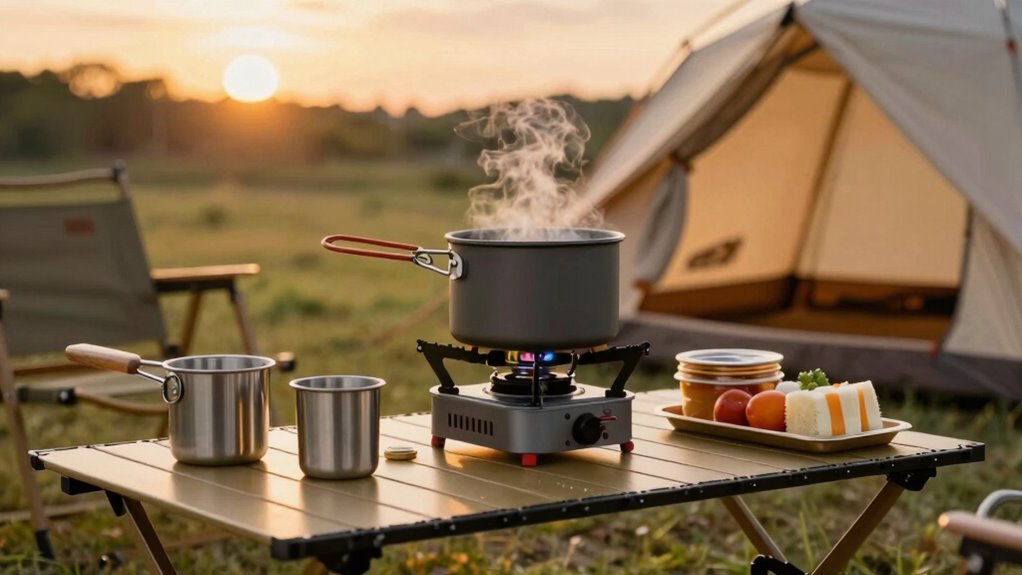
Cooking at the campsite can quickly become the main event of your trip, overshadowing other outdoor adventures. It’s tempting to focus on creating elaborate campfire recipes or experimenting with new flavors, but if you’re not careful, your culinary pursuits can dominate your entire experience. To avoid turning your trip into a never-ending cooking marathon, you need a clear plan that balances good food with outdoor fun. One effective way to do this is by choosing simple, quick recipes that don’t demand hours of prep or cleanup. Stick to classic campfire recipes like foil packet dinners, s’mores, or grilled veggies, which are easy to prepare and don’t require fancy ingredients or tools. This way, you spend less time fussing over meals and more time enjoying nature.
Keep camping meals simple with quick, classic recipes to enjoy more outdoor adventures and less time cooking.
Using portable cookware can make a big difference too. Lightweight pots, pans, and utensils designed for camping are essential because they allow you to cook efficiently without lugging around heavy gear. Opt for versatile pieces that can handle multiple tasks—think a single pot for boiling water, steaming, and making stews. This minimizes clutter and speeds up meal prep. When you guarantee your cooking setup simple, you free yourself from the trap of over-preparing or over-complicating your meals, which can lead to longer cooking times and more cleanup. Additionally, choosing camping-specific tools can improve your overall experience since they are designed to withstand outdoor conditions and maximize efficiency. Incorporating simple meal planning can further streamline your cooking routine and reduce stress during your trip. Planning ahead also helps you avoid last-minute decisions that might lead to unnecessary complexity or waste.
Set a schedule that limits your cooking sessions to specific times of the day. For example, plan to cook dinner but keep breakfast and lunch minimal—think cereal, fruit, or snacks. This helps prevent mealtime from taking over your entire day. Encourage everyone to participate in meal prep, making it quick and social rather than a chore. If you have kids or companions, involve them in assembling simple ingredients or roasting marshmallows. This not only speeds up meal preparation but also enhances the camping experience by fostering teamwork and shared enjoyment. To make the process even smoother, consider packing pre-measured ingredients to eliminate the need for last-minute measuring or portioning. This keeps prep time minimal and the flow of your day more relaxed. This keeps the focus on togetherness rather than just the food. Moreover, emphasizing minimalist cooking can help maintain a relaxed atmosphere and prevent the kitchen from becoming a busy hub that distracts from outdoor enjoyment.
Finally, remember that your trip is about more than just meals. Don’t let cooking become a distraction from outdoor activities like hiking, swimming, or relaxing around the fire. Keep your culinary efforts light and efficient, and don’t hesitate to rely on pre-made or packaged foods for busy days. With some planning and the right tools, you can enjoy delicious meals without letting cooking take over your entire vacation. Staying intentional about your camping cuisine ensures you get the best of both worlds—a satisfying meal and plenty of time to explore and unwind.
Frequently Asked Questions
What Are Quick Dinner Options for Camping Trips?
For quick camping dinners, opt for portable meal solutions like foil packet meals, instant noodles, or pre-made sandwiches. Keep your campfire snacks handy, such as trail mix or jerky, for easy bites between meals. These options save time, minimize cleanup, and keep you fueled without dominating your trip. With a little prep, you can enjoy delicious, hassle-free dinners that leave plenty of time for adventure and relaxation.
How to Store Perishable Food at the Campsite?
Think of your cooler as a treasure chest, guarding your perishable food. To keep it fresh, focus on proper food preservation and cooler organization—layering items with ice packs, placing perishables near the coldest spots, and sealing everything tight. Regularly check and replenish ice. This way, your food stays safe and fresh, letting you enjoy your trip without worrying about spoiled supplies.
What Are the Safest Ways to Light a Camping Stove?
You should always follow fire safety when lighting your camping stove. Use matches or a long lighter to keep your hands safe and light the stove away from flammable materials. Make sure stove maintenance is up to date; check for leaks or damage before use. Keep a fire extinguisher nearby, and never leave the stove unattended while in use. These steps help prevent accidents and keep your camping trip safe and enjoyable.
How to Clean Cooking Gear Efficiently?
You should rinse your cooking gear with hot water immediately after use to prevent food from sticking. Use reusable utensils for easy cleaning and avoid disposable options. For stubborn stains, scrub gently with a brush and mild soap, then rinse thoroughly. When preparing campfire recipes, keep cleanup quick by pre-soaking pots. This way, you save time and keep your gear in good shape for the whole trip.
Can I Cook Meals in Advance for Camping?
Coincidentally, meal prep becomes your secret weapon when camping; yes, you can cook meals in advance to save time and effort. Use proper food preservation techniques like vacuum sealing or refrigeration to keep your pre-made meals fresh and safe. This way, you minimize cooking at the campsite, freeing you to enjoy more of your trip. Your focus stays on adventure, not kitchen chaos, making your camping experience smoother and more enjoyable.
Conclusion
Remember, a little planning goes a long way. By keeping your campsite cooking simple and efficient, you’ll free up more time to enjoy the outdoors and make memories. Don’t let meal prep dominate your trip—after all, “All work and no play makes Jack a dull boy.” Embrace the balance, and your adventure will be just as flavorful as your meals. Happy camping!
Halloween Picks
halloween
As an affiliate, we earn on qualifying purchases.