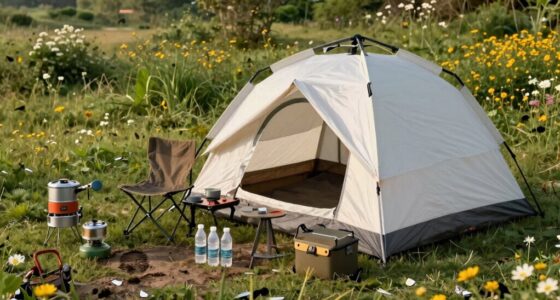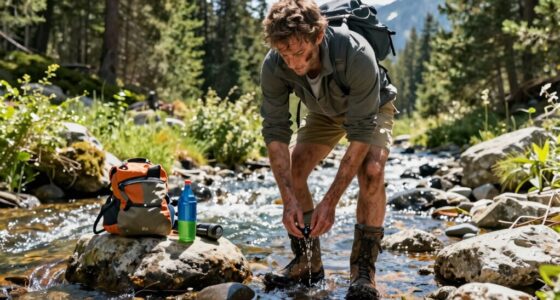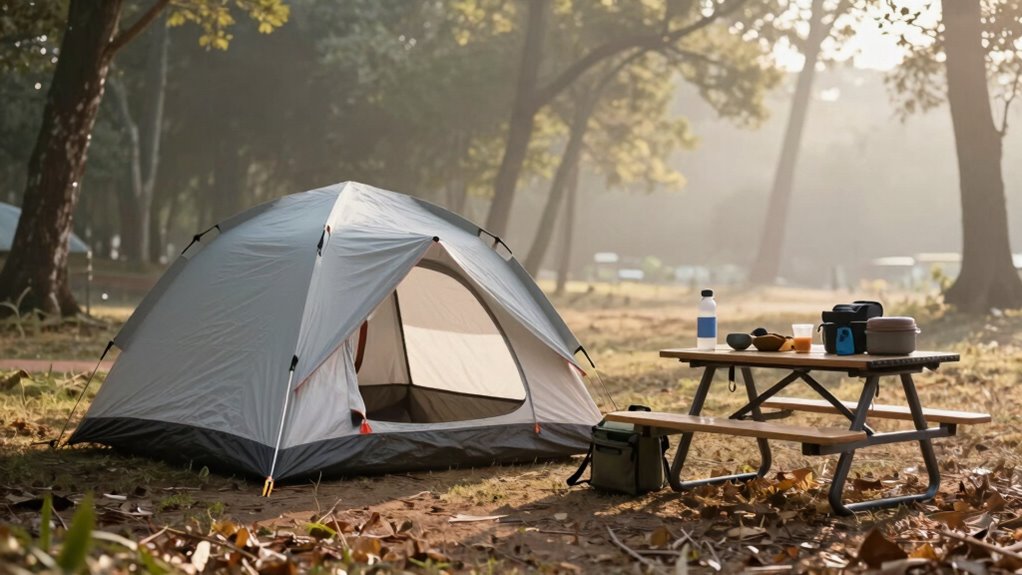

To leave camp faster without leaving a mess, organize and pack systematically using containers and labels for quick access. Disassemble gear carefully, keeping items sorted, and pack up last-minute essentials last. Clean the area as you go, following Leave No Trace principles. Use a checklist to make sure nothing gets left behind, and double-check small items and trash before departure. A smooth exit is all about preparation—keep exploring to discover more tips for efficient packing and cleanup.

Get travel and outdoor gear delivered free with Prime
- Fast, free delivery on millions of items
- Prime Video, Amazon Music and more included
- Member-only deals all year
Key Takeaways
- Prepare and organize all gear into labeled categories before packing to streamline cleanup and packing efficiency.
- Disassemble and pack camping equipment systematically, keeping parts sorted and in dedicated bags.
- Use packing cubes and rolling techniques to save space and facilitate quick packing and unpacking.
- Conduct a thorough site cleanup, ensuring all trash, food scraps, and debris are properly packed out.
- Double-check with a checklist to ensure all personal items are accounted for before departure.
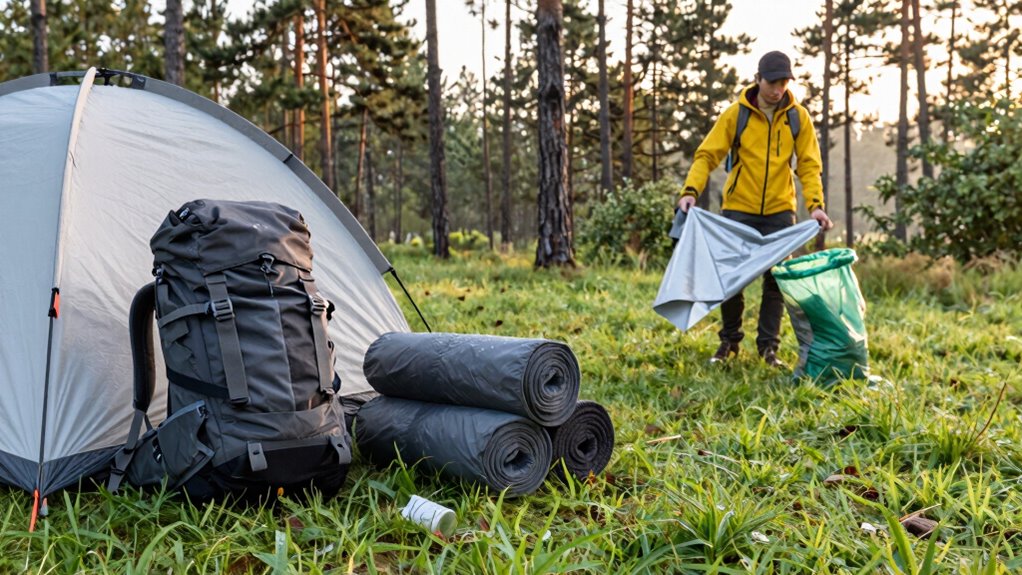
Leaving camp quickly can be a challenge, especially if you want to avoid leaving a mess behind. The key is to pack efficiently and organize your gear from the start. When you establish a system, you’ll save time during packing and guarantee everything ends up where it belongs. Before you start tearing down your campsite, take a few moments to gather all your essentials and plan your packing order. This way, you won’t waste time searching for items or forgetting important gear.
Begin by organizing your gear into categories—clothing, cooking supplies, personal items, and camping equipment. Use designated containers or bags for each category, which makes it easier to grab what you need and pack it away quickly. When packing efficiently, remember to roll clothes instead of folding them; this saves space and keeps items compact. For your gear, consider using packing cubes or compression sacks to maximize space and keep everything tidy. Labeling these containers can also help speed up the process when you’re ready to leave. Incorporating systematic packing techniques can further enhance your efficiency. Additionally, practicing camp site organization can help streamline your departure process. Being familiar with camp setup methods can also make disassembly quicker and more organized. Developing a leave no trace mindset ensures you leave the area clean and undisturbed, making the process more efficient and respectful.
Organize gear by categories, use labeled containers, and roll clothes to save space and pack efficiently.
As you start packing, work systematically. First, pack items you won’t need immediately, like extra clothing or spare gear. Leave essentials for last, such as your tent and cooking supplies, so you can access them easily during cleanup. When dismantling your tent, do so carefully, folding stakes and poles together and packing them in a dedicated bag. This prevents lost pieces and keeps your gear organized. Additionally, biodiversity awareness can help you identify and avoid disturbing local wildlife during your departure.
When it’s time to clear the campsite, always follow Leave No Trace principles. Clean up food scraps, pack out trash, and ensure your fire pit is fully extinguished. Use trash bags or designated containers to gather waste as you go, so you don’t leave anything behind. As you pack, double-check that you’ve collected all items, including small tools and personal belongings. Doing a quick sweep of the area before moving on guarantees you won’t leave anything behind, saving time in the long run.
Finally, streamline your departure by having a checklist. Cross off items as you pack them and confirm everything is accounted for before heading out. This habit reduces the chance of forgetting something important and helps you leave with a clean, organized campsite. With a little planning and efficient packing, you’ll find that leaving camp becomes a quick, smooth process, leaving behind nothing but memories and a clean site.
As an affiliate, we earn on qualifying purchases.
Frequently Asked Questions
What Are the Best Tools for Quick Campsite Cleanup?
To clean up your campsite quickly, use a sturdy trash bag for waste, a multi-tool for dismantling gear, and a broom or brush for sweeping. Keep your campfire safety in mind by thoroughly extinguishing it before packing up. Stay wildlife aware by storing food securely and cleaning up food scraps promptly. These tools and habits help you leave no mess behind, ensuring a quick, safe, and eco-friendly departure.
How Can I Organize My Gear for Faster Packing?
To pack faster, organize your gear with gear prioritization, placing essentials at the top for quick access. Use clothing compression bags to save space and keep your clothes neat. Pre-fold and bundle similar items together, and pack systematically, starting with bulky items first. This approach minimizes searching and stacking, making your packing efficient. With gear prioritized and clothing compressed, you’ll leave camp swiftly without sacrificing organization or cleanliness.
Are There Eco-Friendly Cleaning Products Recommended?
You can definitely use eco-friendly cleaning products like biodegradable detergents and plant-based cleaners to keep your gear and campsite spotless. These products break down naturally, reducing environmental impact. It’s true that many brands now offer effective, sustainable options, so you don’t have to sacrifice cleaning power for eco-consciousness. By choosing biodegradable detergents, you guarantee your camping routine stays green, helping preserve nature while keeping everything clean and fresh.
How Do I Handle Waste Disposal Efficiently?
You handle waste disposal efficiently by practicing waste sorting and using proper recycling methods. First, separate recyclables like plastics, cans, and paper from trash. Use designated bins or bags for each type to keep things organized. Make sure to follow your campsite’s recycling guidelines, and avoid mixing waste. Proper waste sorting and recycling help you leave the camp clean, minimize environmental impact, and speed up your departure process.
What Time of Day Is Best for Leaving Camp?
Early mornings are ideal for leaving camp, as studies show that most accidents happen in the late afternoon. This timing enhances your camping safety, especially if you check the weather considerations beforehand. Leaving in the morning gives you cooler temperatures, clearer trails, and less crowding, making your departure smoother. Plus, it provides ample time to pack up carefully and make sure you don’t leave anything behind, respecting nature and fellow campers.
As an affiliate, we earn on qualifying purchases.
Conclusion
Leaving camp quickly doesn’t mean you have to leave a mess. By staying organized, packing thoughtfully, and cleaning as you go, you’ll finish up in no time. Did you know that campers who clean as they pack save an average of 30 minutes? So, keep a checklist handy, tidy up frequently, and you’ll be on your way faster—without leaving a trace behind. Quick, clean departures make for happier camping experiences!
As an affiliate, we earn on qualifying purchases.
leave no trace camping cleanup kit
As an affiliate, we earn on qualifying purchases.
As an affiliate, we earn on qualifying purchases.
Halloween Picks
halloween
As an affiliate, we earn on qualifying purchases.