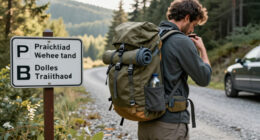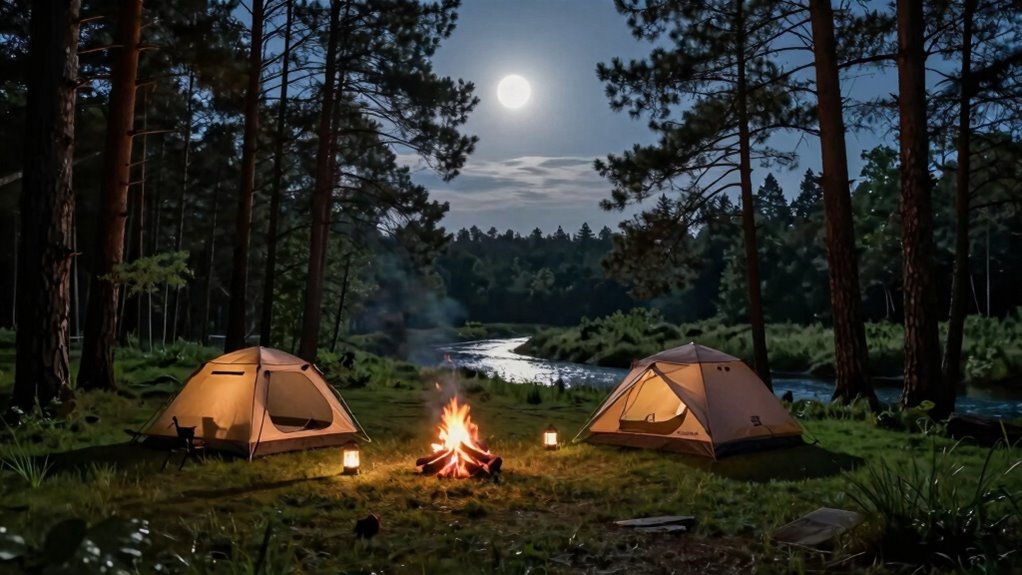

To pick a campsite that feels better all night, look for a flat, firm spot away from rocks, roots, and overgrown areas. Choose a site sheltered from wind and close to morning sun for warmth. Stay clear of damp, shaded spots and wildlife-heavy zones. Set up your fire safely if you plan to use one, and guarantee good ventilation. Paying attention to noise and environmental impact helps you stay comfortable and peaceful through the night. Keep exploring to discover even more tips.

Get travel and outdoor gear delivered free with Prime
- Fast, free delivery on millions of items
- Prime Video, Amazon Music and more included
- Member-only deals all year
Key Takeaways
- Choose a level, firm site with natural shelter to reduce wind and noise throughout the night.
- Select a location away from wildlife paths and dense vegetation to minimize disturbances and safety risks.
- Pick a spot with good airflow and ventilation to prevent condensation and ensure a comfortable sleeping environment.
- Avoid shaded or damp areas that can lead to soggy gear and discomfort during sleep.
- Consider proximity to early morning sun and natural sounds for a calming, consistent sleep experience.
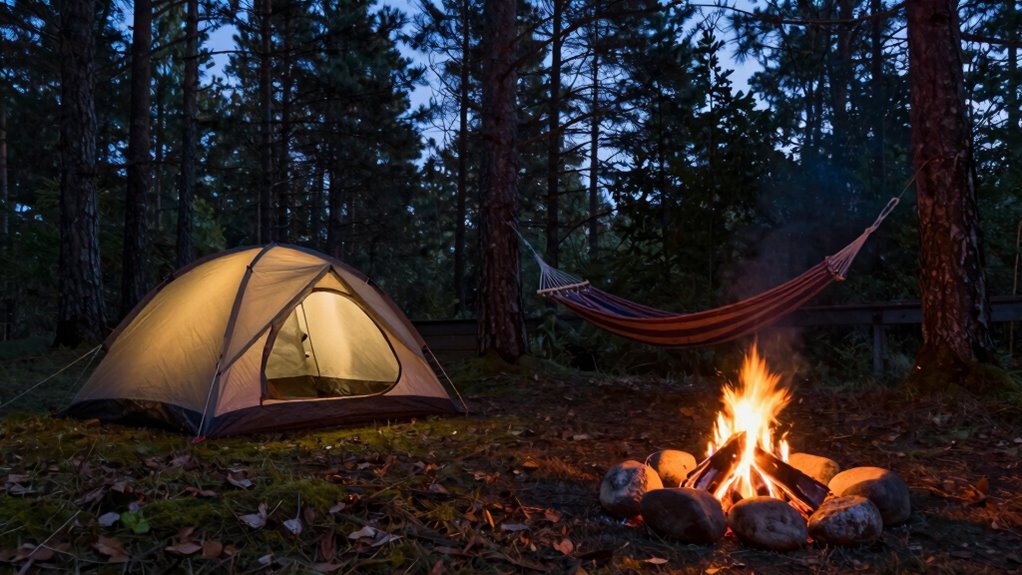
Are you wondering how to choose the perfect campsite? It’s not just about finding a flat patch of ground or a scenic view; the right spot can make all the difference between a good night’s sleep and a restless one. When you’re selecting a campsite, think beyond the initial impression. Consider how the site will feel as night falls, and how your experience can be improved by paying attention to details like campfire safety and wildlife awareness.
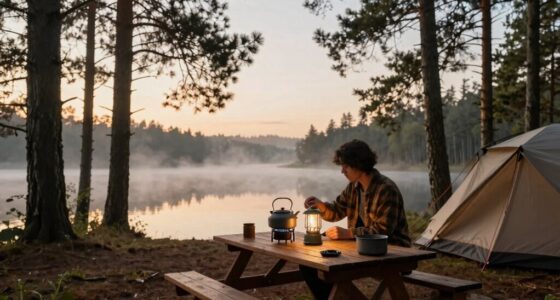
Start by evaluating the ground. You want firm, level terrain that’s free of rocks, roots, or sharp objects, which could cause discomfort or disrupt your sleep. But don’t stop there—think about how the site’s location will influence your night. Is it sheltered from wind? Will it catch the early morning sun? A slightly shaded spot might keep you cooler, but ensure it’s not so damp that your gear gets soggy. As the evening approaches, sounds and sights change. Being aware of potential wildlife activity is crucial. Choose a spot away from dense bushes or overgrown areas where animals might hide or pass through frequently. Keeping a safe distance from these areas is essential for both your safety and theirs, especially when considering wildlife awareness.
Evaluate terrain for comfort and safety, and consider wildlife activity for a peaceful campsite experience.
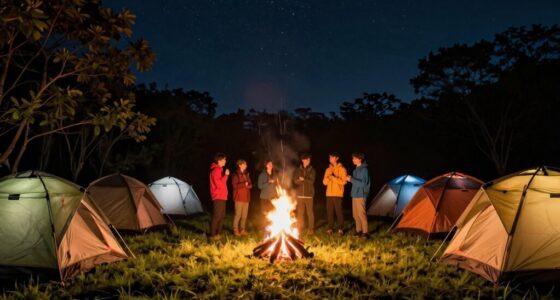
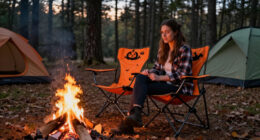
Campfire safety is another vital factor. If you plan on having a fire, pick a site that’s clear of overhanging branches and away from tents or other flammable materials. Look for existing fire rings or establish a safe boundary yourself. Always keep your fire manageable, and never leave it unattended. Knowing how to properly extinguish your fire is just as important as starting it—having water or a shovel nearby can prevent wildfires and protect the environment. Additionally, understanding fire safety regulations and local rules can help you avoid fines or dangerous situations. Being familiar with environmental impact practices can further ensure your camping remains sustainable and enjoyable for future visitors. Recognizing the importance of leave no trace principles can also help minimize your environmental footprint. Being mindful of ventilation can also improve your comfort by preventing condensation and ensuring fresh air circulates within your tent. Moreover, considering how sound travels might influence your sleep quality, especially if the site is near natural water sources or busy animal paths.
Frequently Asked Questions
How Can I Predict Weather Changes at the Campsite?
You can predict weather changes at the campsite by monitoring local weather patterns and checking forecast accuracy from trusted sources. Use weather apps or websites for real-time updates, and pay attention to signs like changing wind or cloud formations. Keep an eye on the weather forecast regularly, especially before nightfall, so you can prepare for sudden shifts and stay comfortable and safe throughout the night.
What Safety Factors Should I Consider When Choosing a Site?
Think of your campsite as a fortress. You must guarantee it’s built with safety in mind. Check for stable ground, away from dead trees or falling branches, and avoid low-lying areas prone to flooding. Prioritize campfire safety by keeping fires contained and away from tents. Be wildlife aware by storing food securely and avoiding attracting animals. These steps create a safe haven, allowing you to relax and enjoy your night peacefully.
How Do I Find a Campsite With Minimal Noise?
To find a campsite with minimal noise, choose a spot away from popular trails and campfire areas where noise from conversations and campfires can be loud. Look for sites surrounded by natural barriers like trees or rocks, which can block campfire noise and reduce disturbance. Also, pick a location away from areas with abundant nearby wildlife activity, as animals can create unexpected sounds that disrupt your peace all night.
What Amenities Should I Look for Nearby?
Think of nearby amenities as the safety net beneath your stars. Look for clean water sources, accessible restrooms, and fire pits for campfire safety. Staying aware of wildlife awareness, choose sites with proper trash disposal and secure food storage. These features guarantee you can relax and enjoy the night without worries, turning your campsite into a cozy haven. Prioritize amenities that support safety and comfort, making your outdoor experience truly memorable.
How Early Should I Arrive to Secure the Best Spot?
You should arrive early, ideally at least an hour before sunset, to secure the best campsite. This gives you time to set up comfortably, review campfire safety rules, and familiarize yourself with wildlife awareness. By arriving early, you reduce the risk of rushing and guarantee your spot feels secure and peaceful all night. Plus, you’ll have time to plan safe campfire use and keep wildlife at a safe distance.
Conclusion
Choosing the right campsite isn’t just about finding a pretty spot; it’s about selecting one that feels good all night. Imagine you set up near a gentle creek, hearing calming water as you drift asleep, instead of a noisy road that keeps you awake. Remember, taking the time to scout out a site with good natural shelter and soundproofing can turn a good night into a great one. Trust your instincts, and rest easy.
Fall Picks
fall essentials
As an affiliate, we earn on qualifying purchases.