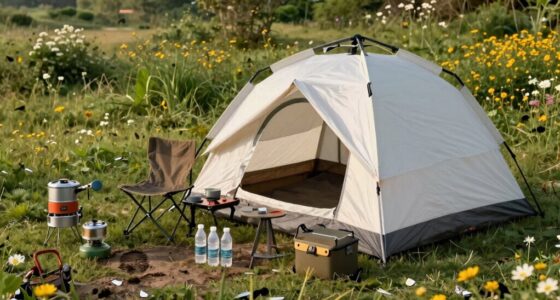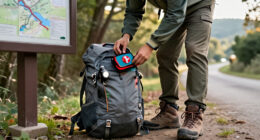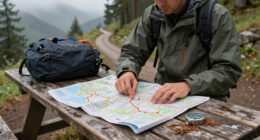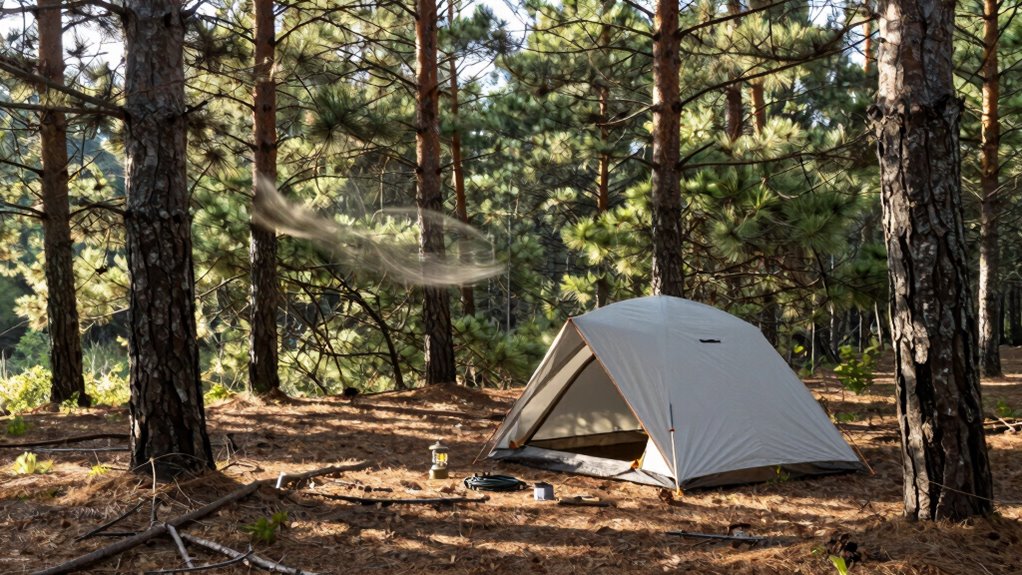
Before setting up your tent, check wind direction and strength at the campsite. Notice how it moves around natural barriers like bushes or ridges, and avoid placing your tent where wind hits directly into the entrance. Choose flat, firm ground and use stakes that suit the soil type. Secure guy lines well and position the tent to minimize wind impact. If you want to stay safe and comfortable, understanding these details can make all the difference.

Get travel and outdoor gear delivered free — and shop member deals
- Fast, free delivery on millions of items
- Access to Prime Big Deal Days deals on October 6–7
- Prime Video, Amazon Music and more included
Key Takeaways
- Observe wind direction and movement around the campsite before pitching the tent.
- Choose sheltered, firm terrain away from loose gravel or rocky areas for stability.
- Position the tent so that wind hits the side, not the entrance, to reduce flapping.
- Use natural barriers like bushes or ridges to block or reduce wind impact.
- Check weather forecasts for high wind alerts and plan accordingly before setup.
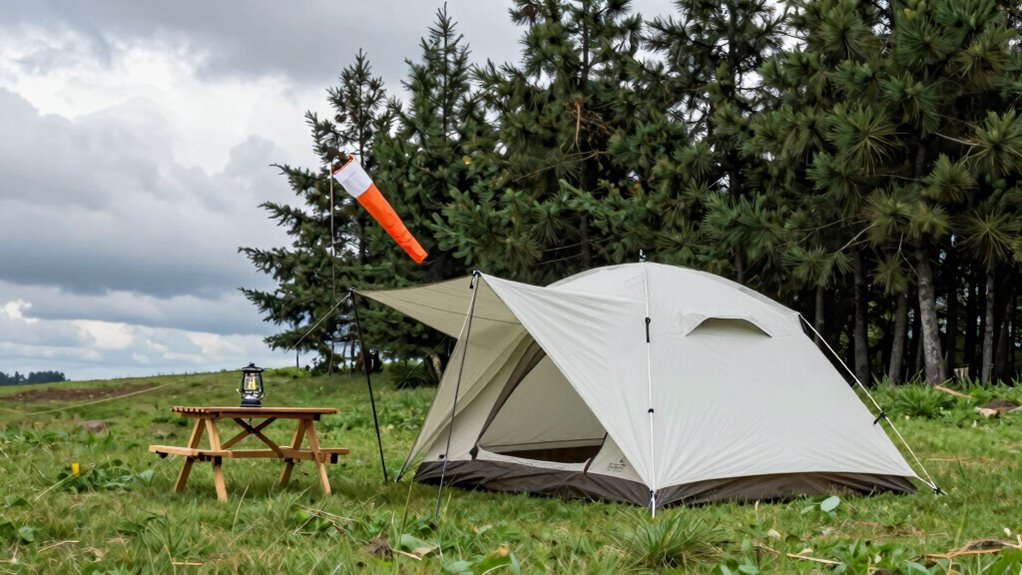
Have you ever set up camp only to be thwarted by relentless wind? It’s a frustrating experience, especially when your tent starts flapping wildly, and you worry about whether it will stay upright through the night. Before you pitch your tent, it’s vital to pay attention to the wind conditions in your chosen spot. Wind direction plays an essential role in determining how stable your tent will be once set up. If the wind is blowing directly into the tent entrance, you’ll find it difficult to keep the fabric secure and can feel overwhelmed by the gusts. Ideally, you want to position your tent so that the wind hits the side, rather than the front or back, to reduce pressure on the fabric and stakes. Observing how the wind moves around the campsite before setting up can save you from battling the elements later. Recognizing the impact of wind on your campsite setup can help you make better decisions for stability and safety.
Position your tent to block wind and prevent flapping for a more secure, comfortable night outdoors.
Once you’ve assessed the wind direction, focus on tent stability. A stable setup depends on how well you anchor your tent and how you choose your stakes and guy lines. If the wind is strong, you’ll need to make sure your stakes are driven deep into the ground, at least a few inches or more, depending on the soil type. Using sturdy, long stakes in loose or sandy soil can make a considerable difference. Additionally, attaching guy lines to reinforced points on your tent and anchoring them well away from the tent body provides extra support. Proper tension on these lines helps distribute the force of the wind evenly, preventing the fabric from flapping excessively or the stakes from pulling free. Incorporating weather forecasting into your planning can give you a better idea of wind conditions and help you prepare accordingly. Being aware of local terrain features can further enhance your setup, as different landscapes can influence wind patterns and intensity. Checking terrain types before setting up can help you select the most sheltered spot, improving your overall stability.
It’s also wise to take into account the terrain where you set up. Flat, firm ground is preferable, as it holds stakes better and offers more stability. Avoid setting up on loose gravel, sand, or rocky patches that can make securing stakes difficult. If you notice the wind is particularly fierce, you might want to choose a sheltered spot behind natural barriers like bushes, trees, or even small ridges. These features can greatly reduce wind impact and improve your tent’s overall stability.
Lastly, plan ahead by checking the weather forecast. If high winds are expected, it might be better to postpone your setup or choose a different location. Being proactive about wind conditions means you’re less likely to wake up in the middle of the night fearing your tent will collapse or blow away. Paying close attention to wind direction and making sure your tent is securely anchored will give you peace of mind and a more comfortable camping experience, no matter how gusty it gets.
camping tent stakes for loose soil
As an affiliate, we earn on qualifying purchases.
As an affiliate, we earn on qualifying purchases.
Frequently Asked Questions
How Can I Predict Wind Direction at a Campsite?
To predict wind direction at a campsite, you can use wind prediction tools like mobile apps or online weather forecasts that provide real-time data. Additionally, analyze local weather patterns, observing the movement of clouds, trees, or flags to gauge wind flow. Combining these tools and patterns helps you anticipate wind direction, ensuring you’re prepared to set up your campsite safely and comfortably, regardless of changing conditions.
What Are the Best Materials to Withstand Strong Winds?
When facing strong winds, opt for tents made from durable, wind-resistant fabric—these materials provide better resilience and stability. Look for tent durability that’s engineered to withstand gusts, and choose models with robust poles and secure anchoring systems. You’ll find that high-quality materials act as a shield against nature’s challenges, helping you stay comfortable and safe, even when the wind whispers its most persistent secrets.
How Do I Secure Lightweight Gear Against Gusts?
To secure lightweight gear against gusts, use sturdy tent anchors like stakes or guy lines to prevent movement. Set up a windbreak by positioning natural barriers or creating one with gear or tarps to shield your campsite. Guarantee your tent is properly anchored, and tighten all lines. Distributing weight evenly and adding extra stakes can also improve stability, making sure your gear stays put during strong gusts.
When Is the Safest Time of Day for Windy Conditions?
The safest time of day for windy conditions is early morning, like a calm lull before the storm. During this time, wind speeds are usually lower, reducing risks for campfire safety and wildlife disturbance. Setting up camp or lighting a fire then minimizes potential hazards, keeps animals undisturbed, and guarantees your safety. Avoid windy afternoons when gusts pick up, increasing the chance of accidents or environmental impact.
Are There Specific Signs Indicating Upcoming Strong Winds?
Yes, there are specific signs indicating upcoming strong winds. You should watch for wind speed indicators like rapidly swaying trees, fluttering leaves, or increased wind noise. Pay attention to weather pattern cues such as darkening skies, sudden drops in temperature, or a change in cloud formations. These signs often precede gusts, so recognizing them early helps you prepare and secure your campsite before the wind intensifies.
windproof camping tent guy lines
As an affiliate, we earn on qualifying purchases.
As an affiliate, we earn on qualifying purchases.
Conclusion
As you pack up your tent, feel the breeze tugging at your gear like an enthusiastic guest. Remember, a sudden gust can turn a peaceful campsite into a chaotic dance of flapping fabric and scattered supplies. By paying attention to the wind’s whisper before setting up, you’re like a skilled sailor reading the sky—ready for whatever weather comes your way. Stay alert, and your campsite will remain a cozy haven, no matter how the wind blows.
camping tent with reinforced attachment points
As an affiliate, we earn on qualifying purchases.
As an affiliate, we earn on qualifying purchases.
compact weather forecast for camping
As an affiliate, we earn on qualifying purchases.
As an affiliate, we earn on qualifying purchases.
Halloween Picks
halloween
As an affiliate, we earn on qualifying purchases.