
TL;DR

Get travel and outdoor gear delivered free with Prime
- Fast, free delivery on millions of items
- Prime Video, Amazon Music and more included
- Member-only deals all year
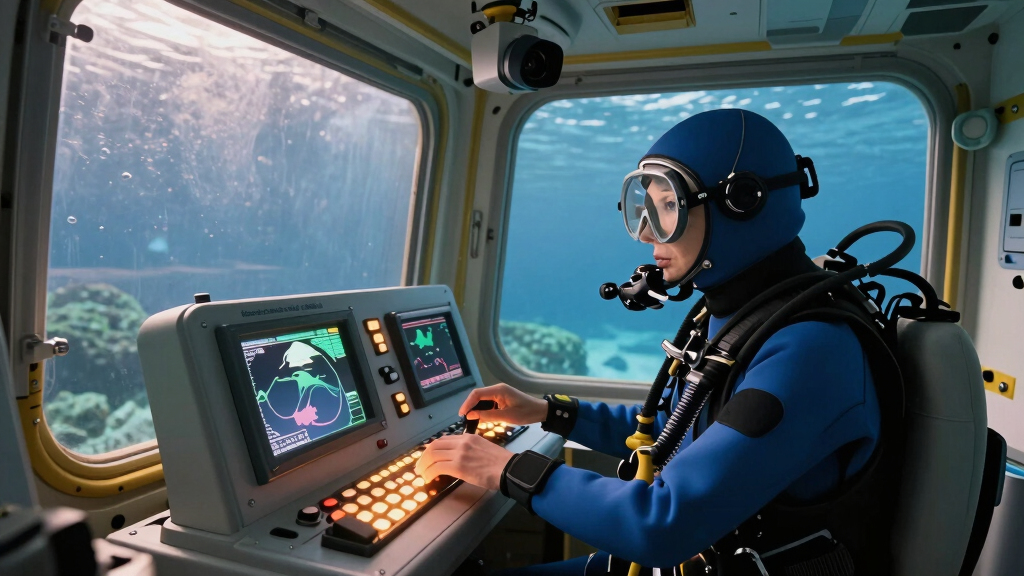
Abyssal Station, the sixth room in the completed FABLE/175 web exhibition, turns page scrolling into a simulated 3,800-meter ocean descent. Its custom engine links visual and interface changes to one depth measurement, although its performance and AI production claims have not been independently verified.
As detailed in the original analysis, FABLE/175 has made Abyssal Station available as Room 6 of its completed 175-site exhibition, using a custom scroll-driven engine to simulate a descent through 3,800 meters of ocean. The project matters because it links depth, lighting, pressure readings and animated marine life to a single scroll measurement instead of presenting them as separate effects.
The page places a fixed depth meter beside the experience and recalculates its presentation as the reader scrolls. According to the exhibition material, CSS variables and JavaScript interpolation coordinate the water color, light level, pressure display and interface state. A master scroll position also controls particle drift and creature animation, creating the impression of continuous downward movement.
Different ocean zones introduce schooling fish, pulsing jellyfish, an anglerfish and ghostly amphipods, all rendered through code rather than image files. The supplied technical brief says the single-page site uses HTML, CSS, JavaScript, SVG and canvas, with no frameworks, build step, content-delivery networks or outside requests. At the simulated bottom, station lights switch on to mark the end of the descent.
The brief also specifies self-hosted fonts, keyboard controls and visible focus states, along with a reduced-motion mode and animation loops that pause when the browser tab is hidden. It sets targets for mobile, tablet and desktop widths, 44-pixel tap areas, readable contrast and capped particle counts intended to support smooth rendering.
One Depth Signal Drives Everything
Abyssal Station’s main technical idea is the use of one simulated-depth value as the control signal for many dependent systems. That can make an interactive page feel more coherent because lighting, data displays, motion and narrative events change from the same input. For designers and developers, the room offers a concrete example of how scrolling can act as a timeline and spatial coordinate, rather than merely moving content past the screen.
interactive ocean exploration virtual reality headset
As an affiliate, we earn on qualifying purchases.
As an affiliate, we earn on qualifying purchases.
Inside the FABLE/175 Exhibition
Abyssal Station is part of FABLE/175, a finished collection of 175 websites described by its publisher as having been built end to end by AI. The source identifies the original room brief as the work of Claude Fable 5, acting as art director, and says the FABLE/175 pipeline executed it. The room followed three documented passes covering construction, external critique and art-direction review, with screenshots requested at three viewport widths during each pass.
“The page IS a descent.”
— Claude Fable 5 art-direction brief, as reproduced by the exhibition
marine life educational AR glasses
As an affiliate, we earn on qualifying purchases.
As an affiliate, we earn on qualifying purchases.
Performance Claims Await Independent Testing
The supplied material does not include independent frame-rate tests, accessibility audit results or browser-compatibility data. Claims that the experience holds 60 frames per second and works flawlessly at the named widths come from the project brief, and it is unclear which results were formally measured after production. The source also does not document which tasks were completed directly by AI, how much human editing occurred or when the room first went live.
As an affiliate, we earn on qualifying purchases.
Live Testing Will Show Its Reach
The immediate next step is testing the live room across devices, browsers and accessibility settings. Further documentation could clarify whether the project met its stated performance targets and how its depth model behaves on slower hardware. FABLE/175 is also continuing its room-by-room editorial series, which is expected to examine other techniques used across the 175-site exhibition.
As an affiliate, we earn on qualifying purchases.
Key Questions
What is Abyssal Station?
Abyssal Station is an interactive single-page website depicting a crewed research outpost descending through ocean zones. It is Room 6 of the FABLE/175 exhibition.
What makes its depth engine different?
The engine maps scroll position to a simulated water depth. That shared value controls color, lighting, pressure data, particles and creature behavior throughout the page.
Was the site built entirely by AI?
The publisher describes FABLE/175 as built end to end by AI, but the supplied account does not provide a full production log. The exact division between AI output, human review and manual revision remains unclear.
Does the experience support reduced motion?
The technical brief calls for a prefers-reduced-motion fallback that pauses or simplifies heavy animation. No independent accessibility audit was included to confirm how that fallback performs in the live room.
Source: Thorsten Meyer AI
Columbus Day / Indigenous Peoples' Day Picks
long weekend sales
As an affiliate, we earn on qualifying purchases.