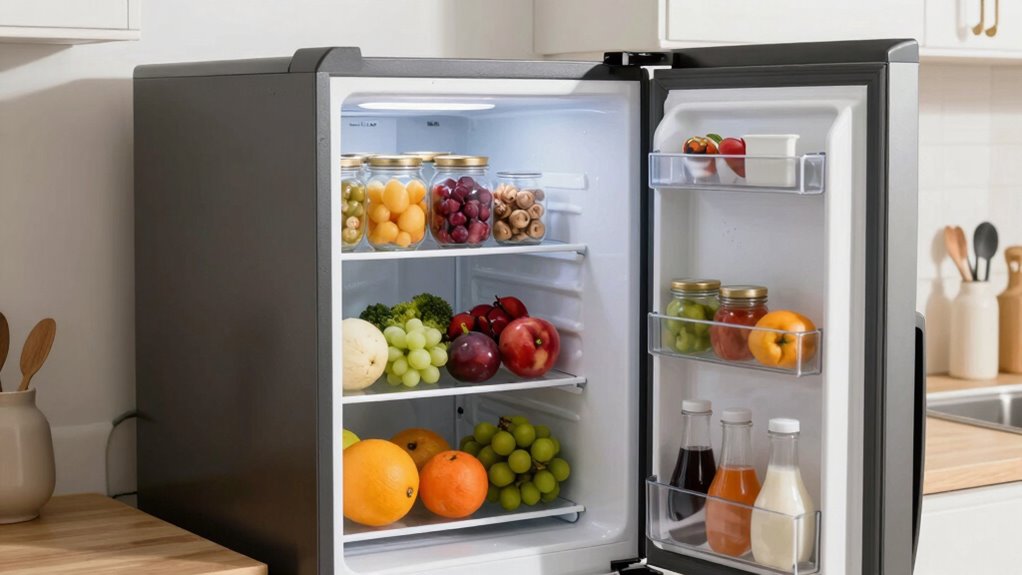

To use your mini-fridge without ruining food, keep vents clear of obstruction and avoid stacking items against the walls to guarantee good airflow. Set the thermostat between 37-40°F and regularly check the temperature with a thermometer. Position the fridge in a well-ventilated spot away from heat sources, and clean coils and seals routinely for efficiency. Proper placement, maintenance, and temperature control help keep your food fresh; discover more tips to optimize your mini-fridge’s performance.
Key Takeaways
- Keep vents clear and avoid stacking items against walls to ensure proper airflow and prevent hot spots.
- Set the thermostat to 37-40°F (3-4°C) and regularly verify with a thermometer for optimal food preservation.
- Place the mini-fridge in a well-ventilated area away from heat sources to prevent overheating and energy waste.
- Clean coils, check door seals, and maintain cleanliness to ensure efficient cooling and prolong the fridge’s lifespan.
- Avoid overloading the fridge or blocking vents to maintain consistent temperature and prevent food spoilage.
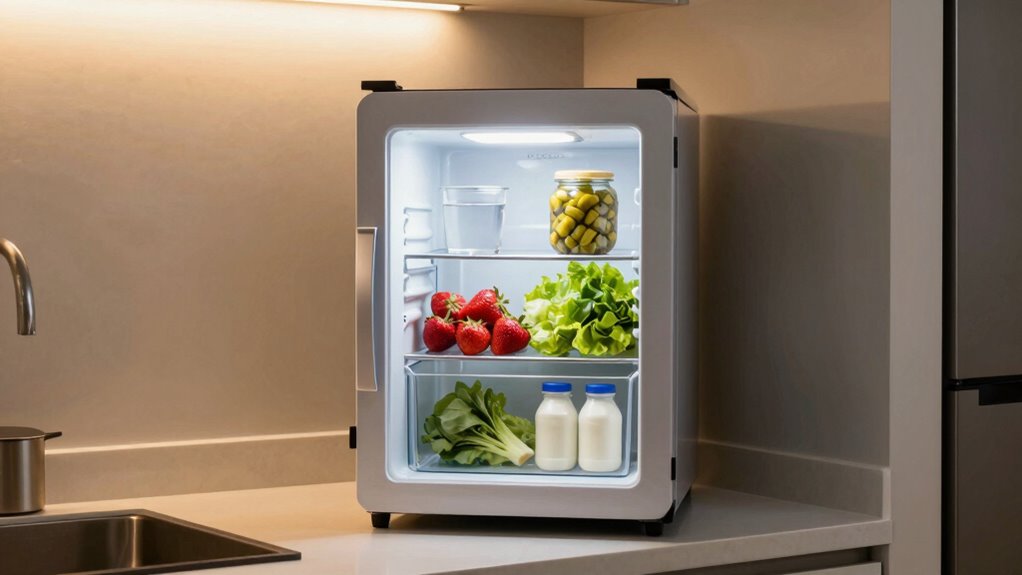
A mini-fridge is a convenient addition to any space, but to keep it running efficiently and prolong its lifespan, you need to use it correctly. One of the most important aspects is understanding how to optimize air circulation inside the unit. If you block vents or overload shelves, air won’t flow properly, causing uneven cooling and increasing the risk of food spoilage. Keep the vents clear and avoid stacking items directly against the back or sides of the fridge. Instead, leave some space around items to allow air to circulate freely. This airflow helps maintain a consistent temperature throughout the fridge, preventing hot spots that can spoil food.
Temperature control is another key factor. Most mini-fridges have a thermostat, so you need to set it appropriately. If the temperature is too high, perishable items like dairy or meat won’t stay fresh. If it’s too low, you risk freezing items that shouldn’t be frozen or wasting energy. Aim for a temperature around 37-40°F (3-4°C), which balances food safety with energy efficiency. Regularly check the temperature with a thermometer to guarantee it stays within this range. Adjust the thermostat as needed, especially if you notice inconsistent cooling or if the fridge is frequently opening or closing. Ensuring proper air circulation is essential for efficient cooling and food preservation. Additionally, maintaining good ventilation around the unit helps prevent overheating and supports optimal operation. Proper placement also minimizes energy consumption and mechanical stress on the compressor. Proper maintenance of the mini-fridge, like cleaning the coils and checking seals, can further improve efficiency and lifespan.
As an affiliate, we earn on qualifying purchases.
Frequently Asked Questions
Can I Store Non-Food Items in My Mini-Fridge?
Yes, you can store non-food items in your mini-fridge. It’s great for cosmetic storage, keeping products cool and prolonging their shelf life. You can also preserve delicate plants or cuttings, maintaining humidity and preventing wilting. Just make certain the items are safe from moisture damage, and avoid storing items with strong odors that could transfer to food. Proper organization helps prevent contamination and keeps your mini-fridge functioning well.
How Often Should I Defrost My Mini-Fridge?
You should defrost your mini-fridge whenever the ice buildup reaches about a quarter-inch thick. Coincidentally, regular defrosting helps with temperature regulation and overall maintenance. To keep it running smoothly, clean the coils and check the door seal monthly. Proper maintenance tips, like defrosting on schedule, prevent inefficient cooling, save energy, and extend your mini-fridge’s lifespan. So, stay attentive, and defrost when needed to keep your mini-fridge functioning effectively.
Is It Safe to Store Medication in a Mini-Fridge?
Yes, storing medication in a mini-fridge can be safe if you guarantee medication safety and temperature stability. You should keep the fridge at the recommended temperature, usually between 36°F and 46°F, and avoid frequent opening to maintain consistent conditions. Use a thermometer to monitor the temperature regularly, and avoid storing medications that require specific storage conditions outside this range. Proper management helps keep your medication effective and safe.
Can I Plug My Mini-Fridge Into a Different Outlet?
You can plug your mini-fridge into a different outlet, but make sure it’s compatible with the fridge’s electrical safety and outlet requirements. Check the voltage and amperage ratings to avoid electrical issues. Avoid using extension cords or adapters, as they can pose safety risks. Always plug it directly into a grounded outlet that matches the mini-fridge’s specifications, guaranteeing safe operation and preventing damage or hazards.
How Do I Prevent Odors Inside My Mini-Fridge?
A little fresh air goes a long way—think of it as “an ounce of prevention.” To prevent odors inside your mini-fridge, regularly clean it with mild soap and water, and use deodorizing techniques like placing an open box of baking soda or activated charcoal inside. Keep leftovers sealed tight and wipe spills promptly. These steps help with odor control and keep your mini-fridge smelling fresh and clean.
As an affiliate, we earn on qualifying purchases.
Conclusion
Now that you know how to properly use your mini-fridge, you can keep your food fresh and safe. Remember, storing perishable items correctly can extend their shelf life by up to 50%. Notably, a recent survey found that 65% of mini-fridge users experience fewer food spoilages when following proper storage tips. So, take these simple steps, stay organized, and enjoy fresh snacks without waste. Your mini-fridge can be your best kitchen companion when used wisely!
mini-fridge door seal replacement
As an affiliate, we earn on qualifying purchases.
As an affiliate, we earn on qualifying purchases.
As an affiliate, we earn on qualifying purchases.