To find the quietest part of a hotel without seeing the whole building, choose rooms away from elevators, stairwells, and noisy amenities like gyms or bars. Opt for higher floors and rooms at hallway ends to reduce foot traffic and street noise. Ask hotel staff for recommendations on quieter rooms and those less frequented. Using these tips, you’ll increase your chances of securing a peaceful space—if you want to discover more effective strategies, keep exploring.

Get travel and outdoor gear delivered free with Prime
- Fast, free delivery on millions of items
- Prime Video, Amazon Music and more included
- Member-only deals all year
Key Takeaways
- Request a room on higher floors away from external noise sources like busy streets or nightlife.
- Choose rooms at hallway ends to minimize foot traffic and neighboring noise.
- Ask hotel staff about recent renovations or soundproofing features for quieter rooms.
- Avoid rooms near noisy amenities such as gyms, bars, or ice machines.
- Use internal soundproofing measures like earplugs or white noise devices for added quiet.
When you’re trying to get a good night’s sleep, choosing the quietest part of a hotel can make all the difference. Without seeing the whole building, it’s essential to rely on strategies that help you identify the best room for peace and quiet. One effective approach is to look for rooms away from common noise sources like elevators, stairwells, and ice machines. These areas tend to generate more activity, which can disrupt your rest. If possible, opt for rooms on higher floors, as they’re generally less affected by street noise and foot traffic.
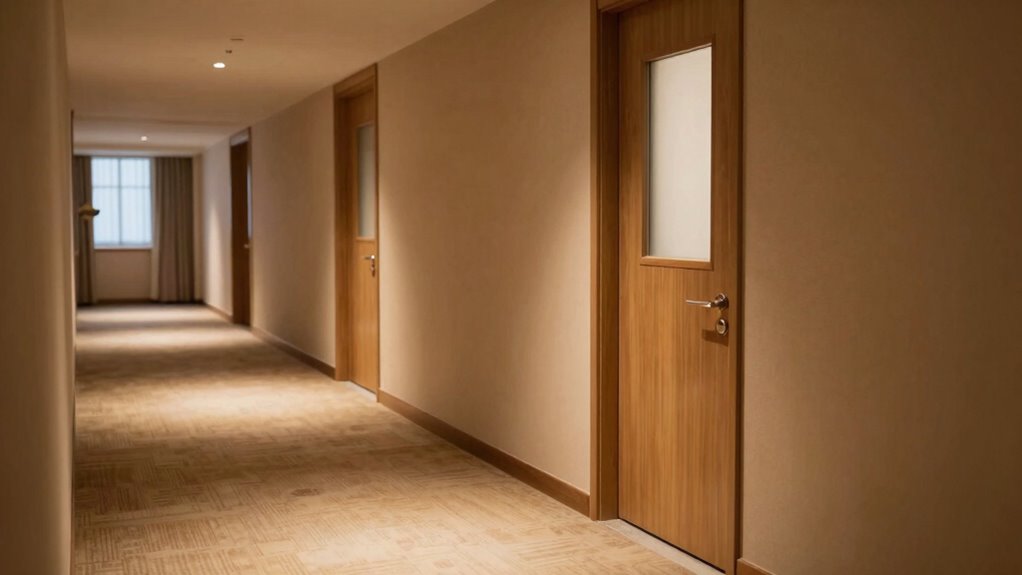
Pay attention to the layout of the hotel. Rooms at the ends of hallways often experience less foot traffic and noise from neighboring rooms. Avoid rooms next to or above noisy amenities like gym areas or bars, as these can be lively well into the night. Even if you can’t see the entire building, speaking with hotel staff can give you insight into which rooms tend to be quieter. Staff can often recommend rooms that are less frequented or have better soundproofing. Additionally, understanding building design can help you choose a room that minimizes noise transmission.
Choose rooms at hallway ends and ask staff for quieter options away from noisy amenities.
Soundproofing techniques inside the room can significantly improve your sleep quality. Request rooms with thicker walls or those that have been recently renovated for better sound insulation. When you settle in, consider using noise-canceling devices, like white noise machines or earplugs, to block out residual sounds. These devices can mask disruptive noises, creating a calmer environment conducive to sleep.
If you’re concerned about external noise, bring portable soundproofing tools such as foam panels or heavy curtains if the hotel allows. These can dampen sound transmission through windows and walls. Simple changes, like closing curtains tightly or placing a towel beneath the door, can also reduce noise infiltration. When choosing your room, avoid those with thin walls or windows facing busy streets, as they tend to be noisier. Additionally, researching the hotel’s soundproofing features can help you select a room with better barriers against noise. Being aware of soundproofing techniques available can further enhance your comfort.
By combining these methods, you can effectively create a quiet sanctuary that promotes restful sleep despite the building’s layout or external noise sources.
As an affiliate, we earn on qualifying purchases.
Frequently Asked Questions
Can I Request a Quiet Room in Advance?
Yes, you can request a quiet room in advance. Use room request tips like calling the hotel early, mentioning your preference for a peaceful location, and highlighting any noise sensitivities. Hotel communication strategies, such as confirming your request upon check-in and politely reiterating your needs, help guarantee your request is honored. Being proactive and clear about your preferences makes it more likely you’ll get a quiet room during your stay.
Do Higher Floors Tend to Be Quieter?
Higher floors often tend to be quieter because they experience less room vibration from street noise and better sound insulation from neighboring rooms. You’ll likely notice less disturbance and more peaceful sleep, especially away from elevators and busy areas. Choosing a room on a higher floor can reduce noise transmission and improve overall tranquility, making your stay more restful. Just confirm with the hotel about their sound insulation standards for peak comfort.
Are Rooms Near Elevators Noisier?
Rooms near elevators often have more ambient noise because of the constant movement and mechanical sounds. For example, a guest staying near the elevator reported hearing loud chattering and dinging sounds, disrupting sleep. Soundproof walls can help, but they aren’t always enough. To avoid noise, choose rooms farther from elevators and busy corridors, especially if you’re sensitive to ambient noise, ensuring a quieter, more restful stay.
Is It Better to Avoid Rooms Near Common Areas?
Yes, it’s better to avoid rooms near common areas. Guest reviews often highlight noise issues from lobbies, restaurants, or pools, so reading them helps you choose a quieter spot. Also, consider room layouts—rooms farther from entrances or busy hallways usually stay quieter. By paying attention to these details, you increase your chances of enjoying a peaceful stay without disturbances from high-traffic areas.
How Do I Identify Noise-Sensitive Areas in a Hotel?
You can identify noise-sensitive areas in a hotel by observing soundproofing techniques and ambient noise levels. Look for rooms away from elevators, stairwells, and busy corridors, as these tend to have higher ambient noise. Ask staff about soundproofing features, such as thicker walls or double-glazed windows. Pay attention to the hallway’s silence or noise when entering, and choose rooms that are tucked away from common areas to minimize disturbances.
As an affiliate, we earn on qualifying purchases.
Conclusion
So, even without a full view of the hotel, you can find a peaceful spot by trusting your instincts and paying attention to noise levels and location cues. Some might worry this approach isn’t foolproof, but by listening carefully and choosing rooms away from elevators, busy areas, and street noise, you markedly increase your chances of a quiet stay. Remember, a little extra effort often leads to a much more restful experience.
As an affiliate, we earn on qualifying purchases.
As an affiliate, we earn on qualifying purchases.
Halloween Picks
halloween
As an affiliate, we earn on qualifying purchases.