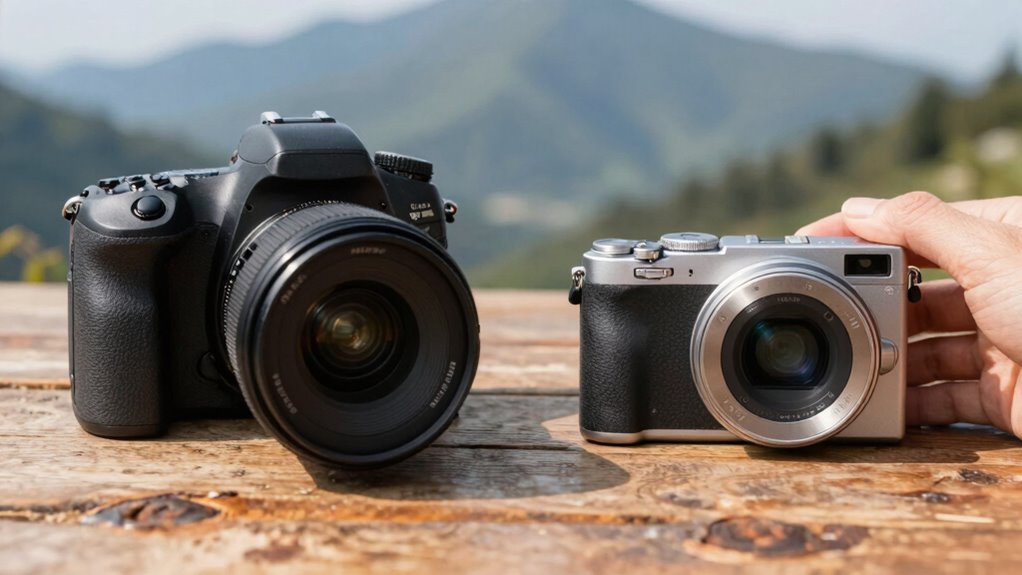
Choosing between full frame and smaller sensors for travel depends on how much weight you’re willing to carry. Full frame cameras offer better image quality and durability but tend to be bulky and heavier, which can slow you down. Smaller sensors are more lightweight, portable, and easier to handle in rugged conditions, making them perfect for light travel. If you keep going, you’ll discover how to balance quality, weight, and durability to match your trip.

Get travel and outdoor gear delivered free with Prime
- Fast, free delivery on millions of items
- Prime Video, Amazon Music and more included
- Member-only deals all year
Key Takeaways
- Full frame cameras are heavier and bulkier, impacting portability during extended travel or outdoor adventures.
- Smaller sensors enable lighter, more compact camera systems, ideal for carrying over long distances.
- Reduced weight with smaller sensors minimizes fatigue and makes gear easier to manage in remote locations.
- Heavier full frame setups may require additional protective gear, adding to overall travel weight.
- Balancing sensor size and weight is crucial for optimal travel photography convenience and comfort.
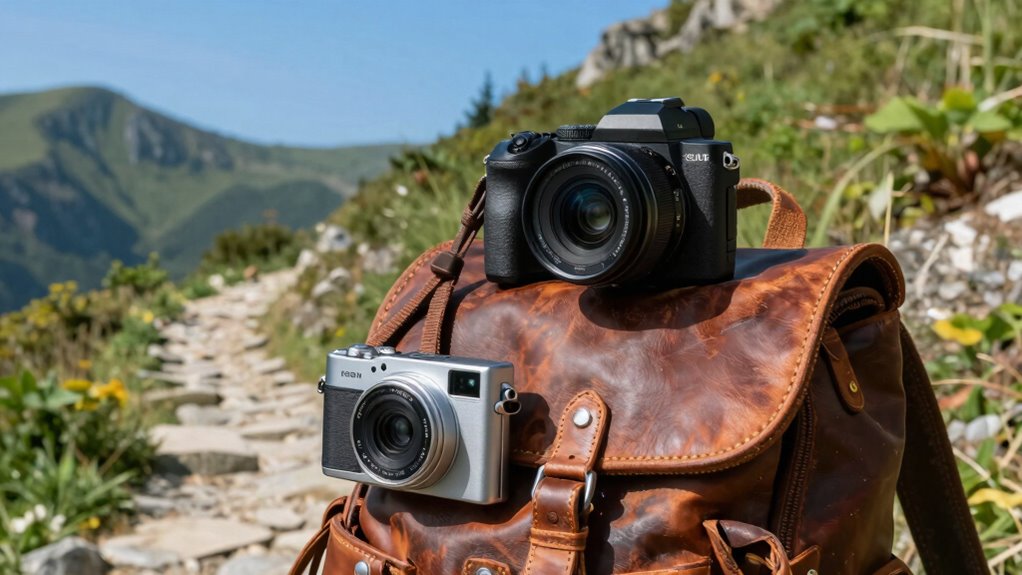
When choosing a camera for travel, understanding the differences between full frame and smaller sensors can substantially impact your images. The sensor size influences more than just image quality; it affects weight, durability, lens options, and how you’ll carry your gear. Full frame sensors are larger, which usually means better low-light performance and a broader dynamic range. But they also tend to be heavier and bulkier, which can add up over long trips. Smaller sensors, like APS-C or Micro Four Thirds, are lighter and more compact, making them an attractive choice if you want to pack light and move quickly.
Sensor durability is another key factor. Full frame sensors, due to their size, often come with robust build qualities but can be more susceptible to dust and damage if not handled carefully. Smaller sensors, often found in mirrorless cameras or compact models, tend to be more resilient and easier to maintain during rugged adventures. This durability can be critical if you’re exploring remote locations where repairs or replacements aren’t readily available. Plus, many smaller sensors are paired with weather-sealed bodies, giving you extra peace of mind against the elements. Furthermore, sensor size can influence the overall robustness of your camera system in challenging environments. A larger sensor not only impacts image quality but can also affect camera system durability, especially in unpredictable conditions. Additionally, the choice of sensor size can influence the system weight, which is crucial when travel involves extensive walking or backpacking. Selecting a smaller sensor can also lead to more compact camera systems, which are easier to carry for extended periods.
Lens compatibility is also a crucial consideration. Full frame cameras generally support a wider array of professional lenses, including high-quality wide-angle and telephoto options. This flexibility allows you to adapt to different shooting scenarios, from sweeping landscapes to close-up portraits. However, because lenses designed for full frame are often larger and heavier, they can add to your overall load. On the other hand, cameras with smaller sensors usually have a crop factor that effectively extends their telephoto reach, which can be an advantage for wildlife or distant subjects, but they may have fewer wide-angle options. Their lenses tend to be smaller and lighter, aligning well with the overall goal of reducing weight for travel.
Ultimately, your decision hinges on balancing weight, durability, and lens versatility. If you prioritize top-tier image quality and don’t mind carrying extra weight, a full frame setup could be ideal. But if you’re after portability and resilience, smaller sensors offer a practical alternative without sacrificing too much in image quality. Whichever you choose, keep in mind how sensor durability and lens compatibility will influence your experience and the quality of your travel photos. The right sensor size can make a significant difference in how effortlessly you capture memories and how well your gear holds up on your adventures.
compact mirrorless camera for travel
As an affiliate, we earn on qualifying purchases.
As an affiliate, we earn on qualifying purchases.
Frequently Asked Questions
How Does Sensor Size Affect Battery Life During Travel?
Sensor size directly impacts battery life during travel because larger sensors tend to consume more power, reducing battery efficiency. When you use a full-frame camera, its higher power consumption means you’ll need to carry extra batteries or charge more often. Smaller sensors, on the other hand, generally have lower power consumption, helping you extend your shooting sessions without worrying about running out of juice.
Are Smaller Sensors More Durable for Rugged Travel Conditions?
When it comes to rugged travel conditions, smaller sensors tend to be more durable. They’re built with sensor durability in mind and often withstand bumps and dust better. You get rugged performance without sacrificing too much image quality. Think of it as a case of “less is more”—smaller sensors are less prone to damage and easier to protect in tough environments, making them a smart choice for adventurous travelers.
Which Sensor Type Offers Better Image Quality in Low Light?
You’ll find that full-frame sensors deliver better image quality in low light because of their superior sensor performance. They capture more light, which reduces image noise and preserves details in dim conditions. Smaller sensors tend to produce more noise, making low-light shots less sharp. So, if low-light photography is your priority, a full-frame camera will give you clearer, cleaner images, especially in challenging lighting situations.
Do Smaller Sensors Require Different Lenses for Travel Photography?
Smaller sensors often require different lenses designed specifically for their size, ensuring proper lens compatibility. You’ll find that these lenses are usually more compact and lightweight, perfect for travel. Autofocus performance can vary, but many modern lenses for smaller sensors offer quick, accurate focus, making them practical for capturing spontaneous moments. Always check lens compatibility before buying, so you get ideal autofocus performance and the best image quality during your travels.
How Does Sensor Size Impact Overall Camera Price for Travelers?
You’ll find that sensor size considerably impacts camera prices, with smaller sensors often costing 30-50% less than full-frame options. This is mainly due to sensor compatibility and cost variations in manufacturing. If you prefer lightweight, budget-friendly gear, smaller sensors offer more affordable options without sacrificing quality. However, keep in mind that some accessories and lenses may still vary in price, affecting your overall travel camera budget.
As an affiliate, we earn on qualifying purchases.
Conclusion
Choosing between full frame and smaller sensors for travel isn’t just about image quality—it’s about how you’ll carry and enjoy your gear. Imagine lugging a full frame camera on a trek through bustling markets, while a compact mirrorless fits easily into your pack. The right choice keeps you light, spontaneous, and ready for every shot. Ultimately, it’s about balancing your adventure style with the gear that fuels your passion.
As an affiliate, we earn on qualifying purchases.
As an affiliate, we earn on qualifying purchases.
Halloween Picks
halloween
As an affiliate, we earn on qualifying purchases.