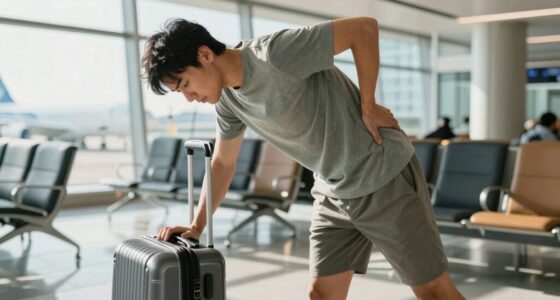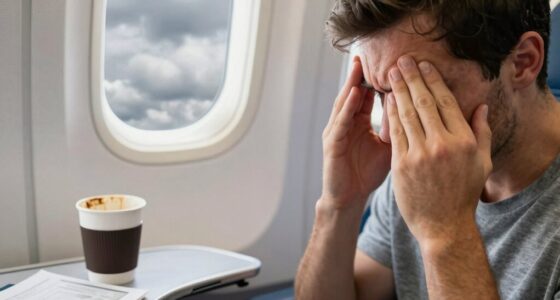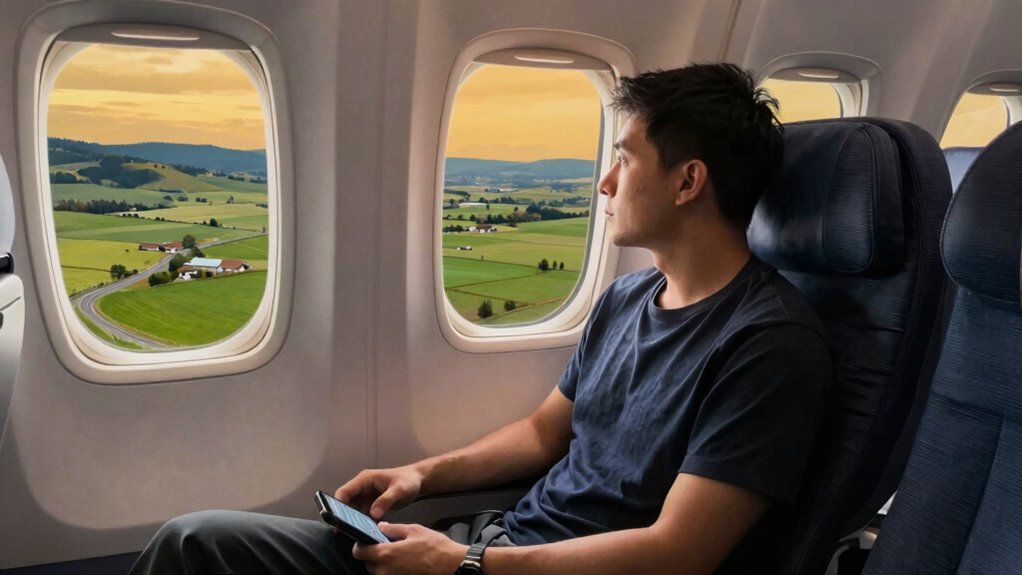

To make long travel days more bearable, adopt the “Sit Less” rule by taking frequent movement breaks. Stand, stretch, or walk every half hour to boost circulation and reduce muscle tension. Use ergonomic seating to support proper posture and avoid discomfort. Simple stretches like shoulder rolls or torso twists can be done even in confined spaces. Making these small, intentional moves throughout your trip helps prevent fatigue and keeps you feeling more comfortable—learn more ways to stay active during travel.

Get travel and outdoor gear delivered free with Prime
- Fast, free delivery on millions of items
- Prime Video, Amazon Music and more included
- Member-only deals all year
Key Takeaways
- Take regular movement breaks every 30 minutes to stretch, walk, or change positions.
- Use ergonomic seating with proper lumbar support and adjust your seat for optimal posture.
- Incorporate simple seated stretches like shoulder rolls and torso twists during travel.
- Avoid prolonged sitting by standing or walking during rest stops or layovers.
- Make small, consistent movements to improve circulation and reduce muscle tension throughout the day.
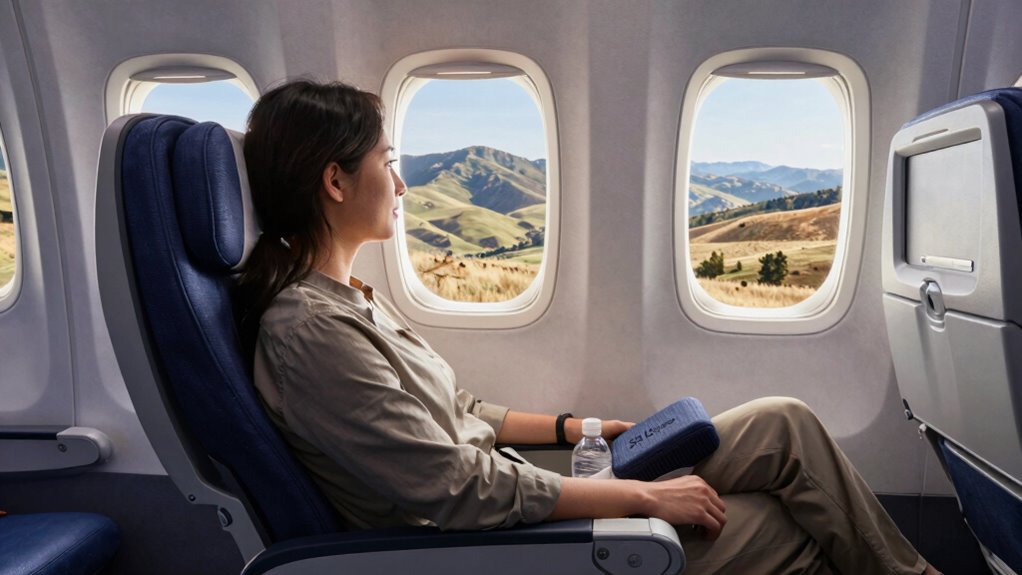
Have you ever wondered how much time you spend sitting each day? Chances are, it’s more than you realize. Long travel days, whether by car, train, or plane, often leave you feeling stiff and drained. But there’s a simple rule you can follow to make these days more bearable: sit less. It’s not about standing all the time but about integrating small, intentional movements into your routine. Using ergonomic seating can help, especially when you’re confined to a seat for hours, but it’s equally important to take movement breaks. These breaks don’t have to be long or complicated—just enough to loosen up your muscles and boost circulation.
When you’re on the road, your first instinct might be to settle into the most comfortable seat, but comfort shouldn’t come at the expense of your health. Ergonomic seating is designed to support your posture, reducing strain on your back and neck during long periods of sitting. Adjust your seat to keep your feet flat on the floor, your knees at a right angle, and your lower back well-supported. This setup minimizes discomfort and helps prevent long-term issues. Additionally, posture awareness plays a crucial role in maintaining comfort during extended sitting. Proper posture combined with ergonomic seating can significantly improve your long-term health. To further promote comfort and prevent stiffness, consider incorporating movement routines into your travel schedule, even if they’re brief. Incorporating regular movement can also help alleviate muscle tension and enhance overall comfort. Remember that the importance of movement extends beyond comfort—it’s a key factor in preventing health problems associated with prolonged sitting.
However, even with ergonomic seating, staying seated for hours isn’t ideal. That’s where movement breaks come into play. Every half hour or so, stand up, stretch, or walk around. If you’re in a car, take a break at rest stops; if you’re on a train or plane, do some seated stretches or walk down the aisle when possible. These small, frequent breaks improve blood flow and help prevent stiffness.
Incorporating movement into your travel routine is easier than you think. Simple stretches like rolling your shoulders, twisting your torso, or flexing your legs can make a difference. If you’re in a confined space, even shifting your position frequently can help. Remember, the goal isn’t to completely eliminate sitting but to reduce prolonged periods of inactivity. The “sit less” rule is about making conscious choices to move more often, even in small ways. Over time, this habit can lessen fatigue and discomfort, making long travel days feel less overwhelming. When you prioritize ergonomic seating and regular movement breaks, you’re not just surviving long trips—you’re taking steps to stay healthier and more comfortable throughout your journey.
Products Worth Considering

DJI Mini 4K Fly More Combo – Drone with 4K UHD Camera, 3‑Axis Gimbal, 10 km Transmission, 93‑min Flight Time (3 Batteries)

GoPro HERO Compact Waterproof 4K Action Camera

GoPro LIT Hero – Lightweight, Compact, Waterproof Action Camera with Built-in Light, 4K60 Ultra HD Video, 12MP Photo, Touch Screen, HyperSmo
As an affiliate, we earn on qualifying purchases.
Frequently Asked Questions
How Often Should I Stand or Move During Long Travel Days?
You should stand or move every 30 to 60 minutes during long travel days to stay comfortable and prevent stiffness. Remember to stay hydrated with travel hydration and pack essentials like snacks and a water bottle. Taking short walks or stretching helps improve circulation and keeps you alert. Make movement a priority, and you’ll feel more refreshed and less fatigued by the end of your journey.
What Are Simple Exercises I Can Do While Seated?
Think of it as killing two birds with one stone. You can do simple seated yoga stretches like shoulder rolls, neck tilts, and seated spinal twists to improve posture correction. These easy exercises help loosen tight muscles and boost circulation without leaving your seat. Incorporate deep breathing and ankle rotations to stay comfortable and alert. Regularly practicing these movements makes long travel days more bearable and keeps you feeling refreshed.
Can Standing Breaks Improve Travel Comfort and Energy Levels?
Standing breaks can substantially improve your travel comfort and energy levels. They promote posture correction by reducing strain on your back and neck, helping you stay alert. During breaks, hydrate well to prevent fatigue and dehydration. Incorporate gentle stretching or walking to boost circulation, which keeps you feeling more refreshed and less stiff. Regularly standing up makes long journeys more bearable and helps you arrive feeling more energized.
Are There Specific Stretches Recommended for Travelers?
You should try specific stretches like shoulder rolls, neck tilts, and leg lifts to improve comfort. Focus on posture correction by sitting upright and avoiding slouching. Incorporate breathing techniques, such as deep diaphragmatic breaths, to reduce tension and boost energy. Doing these stretches regularly during travel helps prevent stiffness, enhances circulation, and keeps you alert, making long days more bearable and comfortable.
How Does Sitting Less Impact Overall Health During Travel?
Sitting less during travel boosts your overall health by encouraging better posture correction, reducing stiffness, and improving circulation. It keeps your muscles active, helps prevent deep vein thrombosis, and supports better digestion. Traveling hydration plays an essential role too, as it aids circulation and keeps you energized. By combining posture correction with staying hydrated and moving frequently, you enhance your well-being, making long travel days more comfortable and healthier.
Conclusion
Remember, a journey of a thousand miles begins with a single step. By sitting less during long travel days, you not only make the trip more comfortable but also protect your health. Keep moving whenever you can—stretch, walk, or stand—because every small effort adds up. Don’t forget, even a tiny action can turn a long, tiring day into a more manageable one. Stay active, stay healthy, and enjoy the ride!