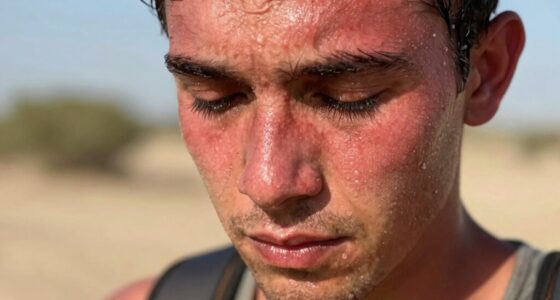
When your hands and feet get cold during trips, start by moving your muscles with simple exercises like finger taps or toe curls to boost circulation. Wear insulated gloves and warm socks, and keep active without overexerting yourself. Use portable hand warmers and layer your clothing to trap heat. Staying dry and hydrated also helps. For other quick tips and when to seek help, continue exploring ways to stay warm and comfortable on your journey.

Get travel and outdoor gear delivered free — and shop member deals
- Fast, free delivery on millions of items
- Access to Prime Big Deal Days deals on October 6–7
- Prime Video, Amazon Music and more included
Key Takeaways
- Engage in quick exercises like finger tapping, fist clenching, and ankle rotations to boost circulation rapidly.
- Use portable hand warmers and thermal socks to provide immediate warmth during cold trips.
- Layer clothing properly with insulated gloves, hats, and waterproof footwear to prevent heat loss.
- Keep moving regularly to maintain blood flow while avoiding excessive exertion that causes fatigue.
- Recognize signs of poor circulation, such as numbness or discoloration, and warm extremities promptly to prevent tissue damage.
portable hand warmers for travel
As an affiliate, we earn on qualifying purchases.
As an affiliate, we earn on qualifying purchases.
Why Do Your Hands and Feet Get Cold During Travel?
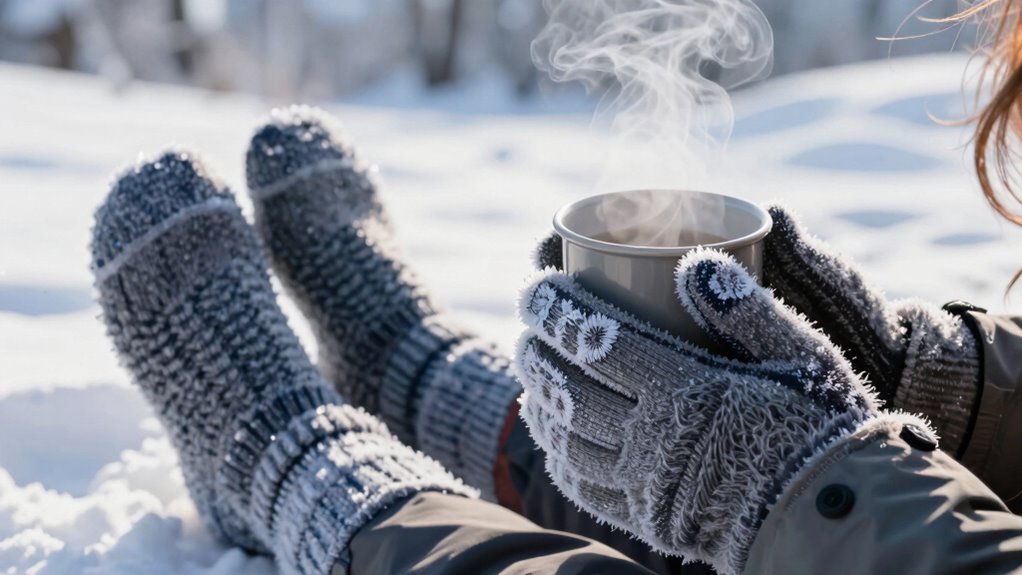
When you travel, your hands and feet often get cold because your body redirects blood flow to essential organs to maintain core temperature. This response is common during cold environments or sudden temperature changes, which can be influenced by environmental factors like wind, altitude, or exposure to chilly air. Circulatory issues can also play a role, making it harder for blood to reach your extremities efficiently. When your body detects cold, it constricts blood vessels in your limbs to preserve heat for your organs, leading to numbness or a tingling sensation in your hands and feet. Understanding these mechanisms helps you recognize that cold extremities are a natural response, not necessarily a sign of serious health problems, but they do signal your body’s effort to protect your core.
As an affiliate, we earn on qualifying purchases.
How to Tell When Your Hands and Feet Are Too Cold?
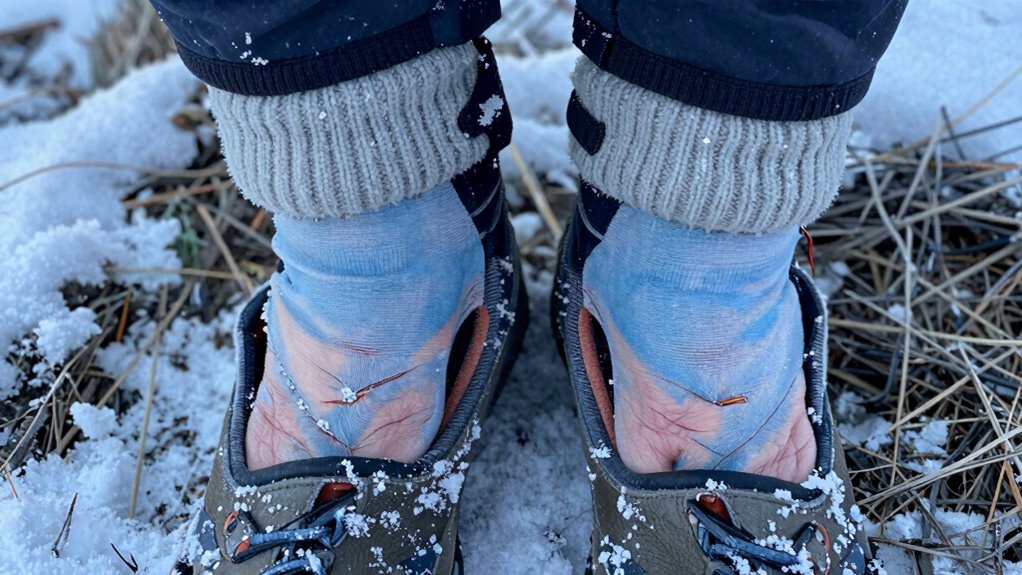
You’ll notice your hands and feet are too cold if their skin turns pale or bluish. You might also feel numbness or a tingling sensation that won’t go away. Recognizing these signs early helps you take action before the cold causes more harm. Additionally, paying attention to cycling gear and clothing can help prevent cold extremities by maintaining proper warmth. Ensuring your clothing has adequate thermal insulation can make a significant difference in keeping your extremities warm during trips. Being aware of early warning signs allows you to respond promptly and prevent frostbite or hypothermia. Incorporating indoor air quality considerations, such as reducing dust and microplastics, can also contribute to overall comfort and health during cold weather. Furthermore, understanding the role of AI-powered safety technologies in outdoor gear can enhance your awareness and safety during trips in cold environments.
Skin Color Changes
How can you tell if your hands and feet are too cold? One clear sign is skin color changes. When circulation issues occur, your skin might turn pale, bluish, or even mottled. Pale skin indicates reduced blood flow, while a bluish tint suggests your blood isn’t getting enough oxygen. You might also notice your fingertips or toes becoming unusually white or cold to the touch. These color shifts are your body’s way of shunting blood away from extremities to maintain core temperature. Pay close attention to these signs, as they signal your body is struggling to keep warm. Recognizing skin color changes early helps you take action before the cold causes more serious problems. Additionally, proper insulation can help improve circulation and prevent these issues from worsening. Maintaining good blood flow is essential for preventing cold-related skin color changes and keeping extremities warm. Incorporating positive thoughts and intentions can also help promote better circulation and overall warmth during your trips. Staying hydrated is another important factor, as it supports healthy circulation and can help prevent cold-related issues.
Feeling of Numbness
Feeling numbness in your hands and feet is a clear sign that your extremities are too cold. Numbness causes a disruption in nerve signals, leading to a loss of sensation and a tingling or “pins and needles” feeling. This cold sensation often indicates that blood flow has slowed, preventing warmth and oxygen from reaching your nerves. When you notice numbness, it’s essential to act quickly to warm up your extremities before tissue damage occurs. Ignoring these signs can worsen the situation, making your fingers and toes feel even more detached from your body. Pay attention to these cues and respond by warming your hands and feet with movement or warm clothing, preventing discomfort and potential injury caused by prolonged cold exposure. Additionally, understanding indoor air quality and humidity control can help maintain proper circulation and comfort during cold trips. Maintaining proper circulation is crucial to prevent further cold-related issues and ensure your extremities stay warm and functional. Proper blood flow can be supported by gentle movement and avoiding constrictive clothing, which can further impair circulation. Ensuring your environment has adequate humidity levels can also help improve overall comfort and blood flow during cold conditions. Being mindful of air humidity can make a significant difference in maintaining warmth and preventing numbness.
As an affiliate, we earn on qualifying purchases.
Quick Ways to Warm Up Hands and Feet Fast
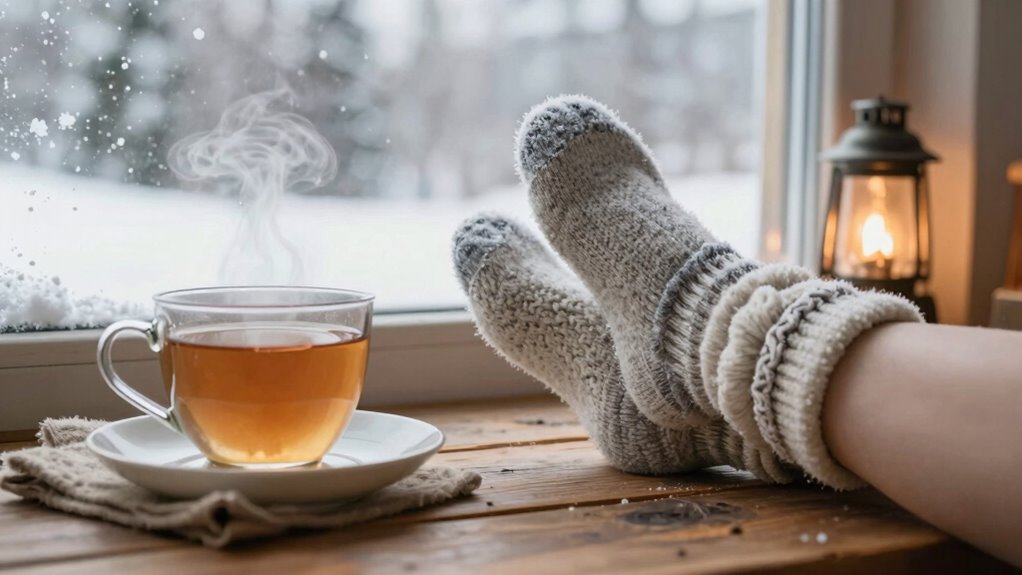
When you need to warm up your hands and feet quickly, try using hand warmers or insulated socks to trap heat. Moving your muscles through simple exercises can also boost circulation and generate warmth. These quick methods can help you feel warmer in no time. Additionally, understanding body jewelry measurements and materials can help you recognize how jewelry choices might influence comfort and circulation in colder conditions. Being aware of thermal properties of materials used in clothing and accessories can further optimize your warmth in chilly environments. Incorporating proper layering techniques can significantly improve heat retention and keep your extremities warmer longer.
Use Hand Warmers
Looking for a fast way to warm up cold hands and feet? Hand warmers are your best bet. These small packets generate heat quickly and can be tucked into your travel gloves or pockets, providing instant warmth. Simply shake or knead the warmer to activate it, then slip it into your gloves or hold it in your palms. For your feet, place warmers inside your shoes or slippers to keep toes toasty. Using hand warmers is convenient, portable, and effective—perfect for chilly trips. Keep a few spare packets in your bag so you can swap them out as needed. This quick fix boosts circulation and warmth, helping you stay comfortable no matter how cold it gets outside. Additionally, choosing portable power solutions can help keep your electronic devices running smoothly during winter adventures. Knowing how to protect your assets with wealth protection strategies can also ensure you enjoy your travels without financial worries. Being aware of proper clothing choices can further enhance your comfort in cold environments. Investing in good insulation layers can provide sustained warmth throughout your trip. In colder conditions, layering clothing can help maximize heat retention and flexibility.
Wear Insulated Socks
Wearing insulated socks is one of the quickest ways to warm up cold feet. These socks trap heat and prevent moisture from escaping, keeping your feet warm longer. For superior warmth, choose thermal footwear designed for cold conditions. High-quality insulated socks provide better insulation than regular socks, making a noticeable difference in comfort. When selecting socks, consider thickness and material, such as wool or synthetic fibers. Pairing insulated socks with thermal footwear enhances heat retention and keeps your feet dry. Here’s a quick comparison:
| Material | Insulation Level | Best Use |
|---|---|---|
| Wool | High | Cold outdoor activities |
| Synthetic Fiber | Moderate | All-day warmth |
| Cotton | Low | Not recommended for cold |
Investing in the right insulated socks ensures your feet stay warm and dry, even in freezing weather. Proper insulation is essential for maintaining comfort during winter trips, especially when cold hands and feet can affect your overall comfort and safety. Additionally, understanding the importance of feature Buddies can help you make informed choices about gear and clothing to stay cozy.
Practice Muscle Movements
Practicing quick muscle movements is an effective way to boost blood flow and warm up cold hands and feet rapidly. These movements promote muscle activation, which encourages blood circulation to extremities. Simple actions like clenching your fists or making rapid finger movements can stimulate blood flow directly to your hands. Similarly, toe curls, ankle rotations, and foot taps activate muscles in your feet, helping to generate warmth quickly. The goal is to engage muscles actively, encouraging circulation and preventing cold sensation. Perform these movements for 30 seconds to a minute, and you’ll notice your hands and feet begin to feel warmer. Incorporating muscle activation exercises into your warm-up routine is a fast, effective method to combat cold extremities while on trips.
layering clothing for cold trips
As an affiliate, we earn on qualifying purchases.
As an affiliate, we earn on qualifying purchases.
Clothing and Accessories to Keep Extremities Warm on the Go
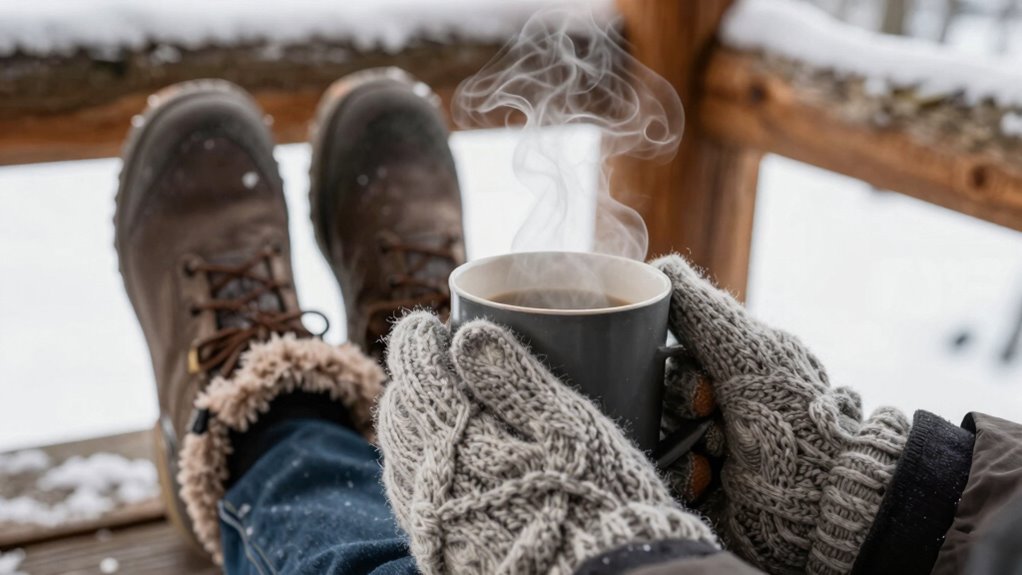
To keep your hands and feet warm while on the go, selecting the right clothing and accessories is essential. Layering is key—wear thermal gloves to insulate your hands and insulated footwear to protect your feet from cold. Choose accessories that trap heat without bulk, like thermal socks and wool hats. A well-packed backpack can include compact hand warmers and extra socks for quick warmth boosts. Here’s a quick guide:
| Item | Purpose | Tips |
|---|---|---|
| Thermal Gloves | Keep hands warm | Fit snugly without restricting movement |
| Insulated Footwear | Protect feet from cold | Opt for waterproof options |
| Wool Socks | Add extra insulation | Layer for added warmth |
| Hat or Beanie | Prevent heat loss from head | Cover ears for extra warmth |
Staying prepared with these essentials guarantees your extremities stay cozy during your travels.
Daily Habits to Prevent Cold Hands and Feet When Traveling
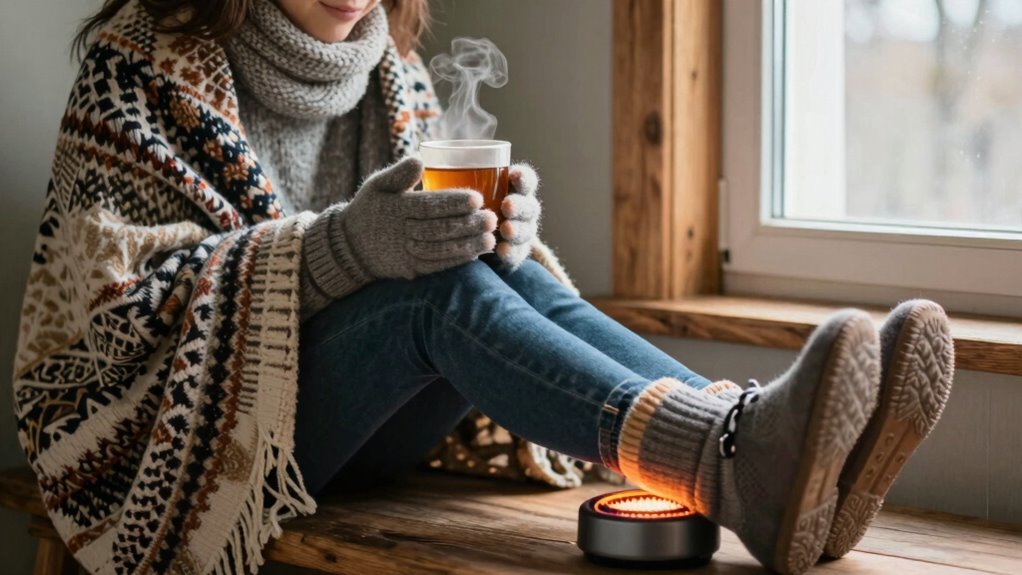
Implementing simple daily habits can considerably reduce the likelihood of cold hands and feet during your travels. Prioritize activities that boost your circulatory health, such as regular movement and stretching throughout the day. Staying active helps improve blood flow, preventing extremities from feeling chilled. Be mindful of environmental factors—you can’t control the weather, but dressing appropriately and avoiding prolonged exposure to cold or drafts makes a difference. Hydration and a balanced diet also support healthy circulation. Additionally, avoid smoking and excessive caffeine, which can constrict blood vessels and worsen cold extremities. Developing these habits creates a foundation for better circulation, helping your hands and feet stay warmer naturally, regardless of external conditions. Consistency is key to maintaining warmth during your trips.
Tips for Staying Warm During Outdoor Adventures and Chilly Destinations
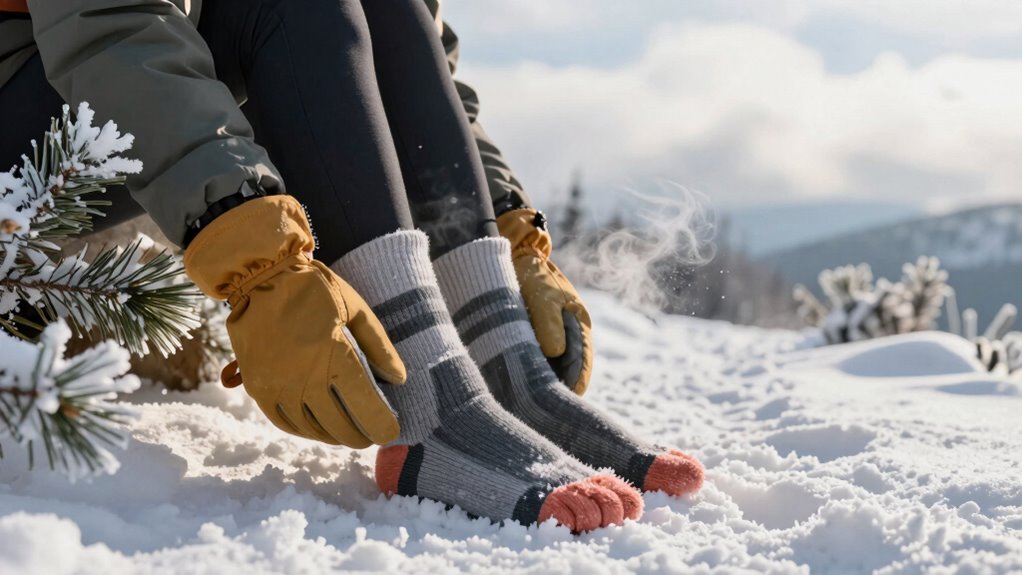
When heading out into cold outdoor environments or chilly destinations, staying warm requires strategic layering and mindful movement. Start with quality cold weather gear, such as waterproof jackets and insulated pants, to block wind and retain body heat. Wear thermal clothing as your base layer to wick moisture away from your skin and keep you dry. Add insulating layers like fleece or down for extra warmth, and finish with an outer shell for protection against the elements. Keep your extremities covered with warm gloves, hats, and thermal socks. Avoid unnecessary movement that wastes heat, but stay active to generate warmth. Hydrate and eat energy-rich snacks to maintain your body temperature. Proper layering and gear are your best defense against the chill, ensuring you stay warm and enjoy your adventure.
When to Seek Medical Advice for Persistent Cold Extremities
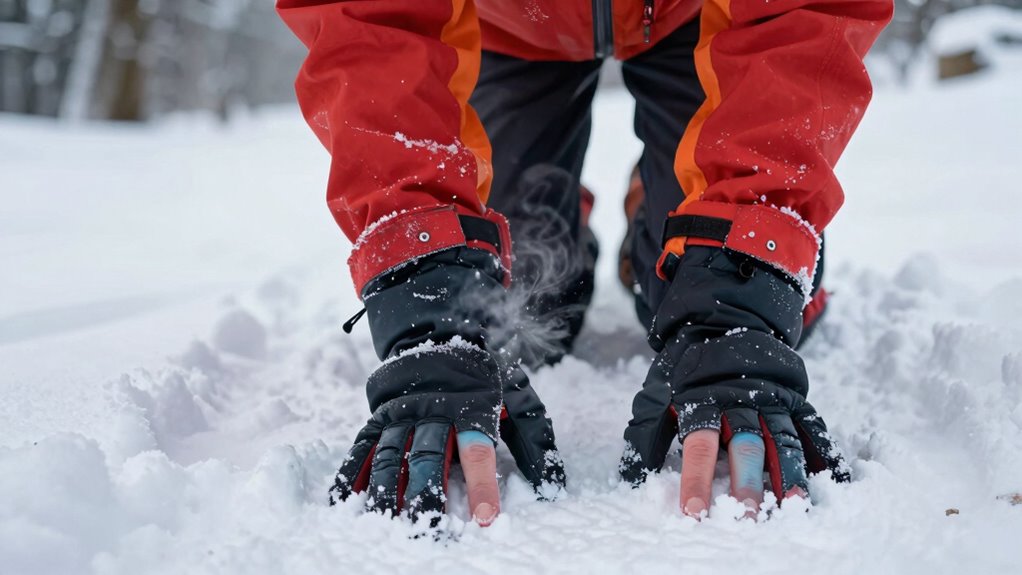
Persistent cold hands and feet can be a sign that something more serious is going on than just exposure to low temperatures. If you notice these symptoms alongside symptoms like chest pain, shortness of breath, or sudden weakness, seek medical advice immediately. Persistent extremity coldness may indicate underlying medical conditions such as Raynaud’s phenomenon, anemia, or circulation issues. Watch for emergency symptoms, including numbness, discoloration, or severe pain, which require urgent care.
| Symptom | When to Seek Help | Possible Causes |
|---|---|---|
| Cold extremities | If they last over an hour | Circulatory problems |
| Numbness or pain | Accompanying discoloration | Raynaud’s or nerve issues |
| Sudden weakness | With chest pain or difficulty breathing | Heart or vascular emergencies |
| Skin discoloration | Persistent or worsening | Circulatory or autoimmune issues |
| Severe pain | Intense and unrelenting | Critical circulation problems |
Frequently Asked Questions
Can Dehydration Cause Cold Hands and Feet During Travel?
Yes, dehydration can cause cold hands and feet during travel. When you’re dehydrated, your hydration levels drop, affecting your body’s ability to regulate temperature. This also disrupts your electrolyte balance, which is essential for proper circulation. As a result, blood flow to extremities decreases, making your hands and feet feel cold. To prevent this, stay well-hydrated and maintain electrolyte levels, especially on long trips.
Are There Specific Foods That Help Improve Circulation?
You can improve circulation with specific foods, especially superfoods for circulation like berries, spinach, and nuts. Incorporate circulation-boosting snacks such as dark chocolate, pumpkin seeds, or citrus fruits into your diet. These foods contain antioxidants, healthy fats, and vitamins that promote blood flow. Eating a balanced mix of these snacks regularly helps keep your hands and feet warm, especially during travel or cold weather.
How Does Stress Impact Extremity Temperature?
Stress triggers your body’s stress response, which causes blood vessel constriction. This constriction reduces blood flow to your extremities, leading to colder hands and feet. When you’re stressed, your body prioritizes essential organs, tightening vessels elsewhere. As a result, your extremity temperature drops because less warm blood reaches your hands and feet. Managing stress through relaxation techniques can help improve circulation and keep your extremities warmer.
Can Certain Medications Cause Cold Hands and Feet?
Sure, your prescription might be secretly plotting against you. Certain medications can cause cold hands and feet as a side effect, thanks to their circulatory impact. These drugs might constrict blood vessels or alter blood flow, leaving your extremities feeling like they’re auditioning for the North Pole. Always check medication side effects and talk to your doctor if you notice persistent coldness—your body’s way of saying, “Help, I need better circulation!”
What Are Natural Remedies for Persistent Cold Extremities?
You can try natural remedies like circulation boosters such as ginger, cayenne pepper, and ginkgo biloba to improve blood flow. Herbal remedies like cinnamon tea or hawthorn berry extract may also help. Regular exercise, staying warm, and managing stress can boost circulation naturally. These approaches work by stimulating blood flow, reducing cold extremities, and supporting overall circulation health without relying on medication.
Conclusion
Just like a fire needs kindling to stay alive, your body needs the right habits to keep your hands and feet warm. By understanding why they get cold and following simple tips, you can prevent discomfort on your travels. With these routines, you’ll stay cozy no matter where you go. Don’t let cold extremities put a damper on your adventures—think of it as warming up your journey, one step at a time.
Fall Picks
fall essentials
As an affiliate, we earn on qualifying purchases.