TL;DR
Portable camping hammocks are lightweight fabric beds suspended between secure anchors, usually trees, and can be comfortable on trips where the ground is uneven or wet. Compare the packed weight of the whole system, including straps, tarp, bug net, and insulation; a hammock alone does not keep you warm or dry. Check local rules, use suitable anchors, and test your setup before relying on it overnight.
A hammock can lift you above a muddy campsite, but it can also leave you shivering under a clear night sky. The fabric bed is only one part of the shelter; weather protection, insulation, insects, and suitable anchors shape the night you get.

Get travel and outdoor gear delivered free with Prime
- Fast, free delivery on millions of items
- Prime Video, Amazon Music and more included
- Member-only deals all year
This guide explains how to compare portable camping hammocks as complete systems, choose a comfortable size, and hang one safely. You’ll also see when a tent is the simpler choice, because a hammock needs the right place to hang.
For example, on a damp forest trip with two sturdy trees, a hammock and tarp may keep you clear of slick ground. On an exposed ridge with no reliable anchors, the same setup may be useless. Match your shelter to the campsite and forecast, and verify current campground rules before you go.
Compare packed weight and size for the full hammock system, including suspension, tarp, bug net, and insulation.
Check the maker’s dimensions and weight rating; a longer, wider hammock often makes diagonal sleeping easier.
Use sturdy, healthy anchors and wide straps, inspect your setup, and follow local rules.
Pack a suitable tarp for rain, a bug net for biting insects, and insulation beneath you for cold conditions.
Choose another shelter when suitable anchors are unavailable or hammock use is restricted.
What a camping hammock gives you—and what it leaves out
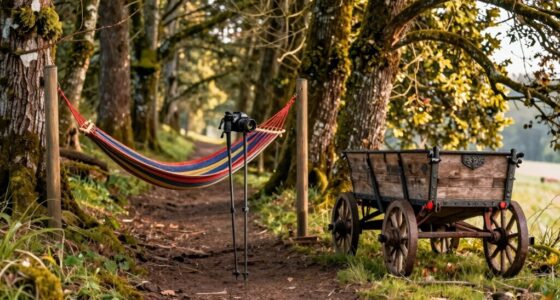
A portable camping hammock is a lightweight fabric bed that hangs between two secure anchors, usually trees. It keeps you off rocky, muddy, or uneven ground, but the hammock alone offers little protection from rain, wind, insects, or cold air moving beneath you.
That distinction matters when you pack. A hammock may feel like a complete shelter in your hands, but on a wet evening the rain taps straight onto the fabric unless you add a tarp. In a mosquito-heavy campsite, a bug net can turn an itchy night into a quiet one. When temperatures drop, air slips under the bed and pulls warmth away from your body.
Think of it as a bed that hangs, not a self-contained tent. A camper spending a dry summer night in a protected grove may need only the hammock and straps. Someone camping through a breezy night may need a tarp, bug net, and insulation as well.
The system changes with the conditions. Product features such as integrated bug nets, quick-adjust suspension, modular tarps, and shaped underquilts can simplify setup, but designs and availability change. Check current manufacturer specifications before buying, and test how each piece works together at home.
Products Worth Considering

DJI Osmo 360 Road Cycling First-Person Combo Action Camera

GoPro Fluid Pro AI 3-Axis Gimbal Stabilizer with AI Tracking and Fill Light

Apple AirPods Pro 3 Wireless Earbuds with Active Noise Cancellation
As an affiliate, we earn on qualifying purchases.
Compare the whole packed system before you buy
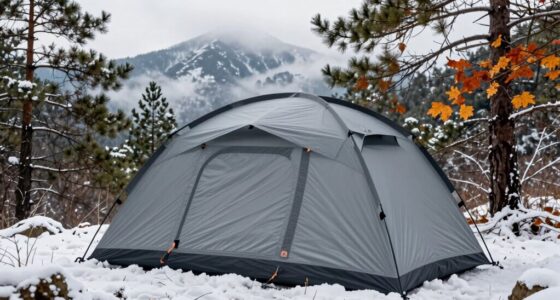
Portable camping hammocks save weight only when the complete setup beats your tent system for your trip. Compare the hammock, straps, tarp, bug net, and insulation against your tent, rainfly, stakes, and sleeping pad. The hammock’s advertised weight may cover only the fabric bed.
For example, you might pick up a hammock that feels feather-light in a shop, then discover that its tarp, suspension, and underquilt take up more room than expected. That is not automatically a problem: a full system may still pack well and suit your routes. But comparing just the hammock shell gives you the wrong number.
| What to compare | Hammock system | Tent system |
|---|---|---|
| Core shelter | Hammock and suspension | Tent body, poles, and stakes |
| Weather cover | Tarp and ridgeline | Rainfly and groundsheet, if used |
| Insect protection | Integrated or compatible bug net | Mesh tent body or separate net |
| Warmth underneath | Underquilt or suitable sleeping pad | Insulated sleeping pad |
| Site requirement | Secure, suitable anchors | Space to pitch and secure the tent |
There is no universal weight winner. A tent can make more sense on an open campsite, while a hammock can shine where trees are plentiful and the ground is soaked. Compare packed weights and packed sizes for the conditions you expect.
Choose a size that lets you lie comfortably
A longer, wider hammock usually makes it easier to sleep diagonally and lie flatter. Check the manufacturer’s dimensions and weight rating, then use its size guidance for your height and intended use. A smaller, lighter model may pack neatly but feel cramped on a long night.
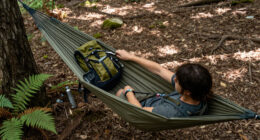
Many campers find that the diagonal position works better than lying straight along the centerline. Your shoulders and legs angle across the fabric, easing the tight, curled feeling some people get when they lie lengthwise. Try it in your yard or at a nearby campsite before committing to a week-long trip.
Imagine arriving after a long trail day and finding your feet pressed against one end while the fabric gathers around your shoulders. That discomfort can come from the hammock’s dimensions, your hang, or both. A roomier model may help, but it can add packed volume and weight. Check the rating for the whole setup and follow the maker’s instructions; never exceed its stated capacity.
Fit is personal. If you can, test the hammock with the sleeping bag or top quilt you plan to use. Small differences in body position, fabric width, and suspension can make a bigger difference than a product photo suggests.
Hang it with sturdy trees and a comfortable sag
To hang a camping hammock safely, use sound anchors, wide straps, and the manufacturer’s setup instructions. Keep your setup away from rocks, water, steep drops, and other hazards, and inspect straps and hardware before each trip. A low, stable hang reduces the distance you could fall.
- Check the site first. Look for healthy, sturdy trees and enough spacing for your hammock and suspension. Follow campground rules and avoid dead trees, fragile vegetation, and damaged bark.
- Use wide tree-friendly straps. Broad straps spread the load better than thin cord. Avoid tying directly around bark with narrow cord, which can injure a tree.
- Adjust for a comfortable sag. Follow the maker’s guidance and settle into the hammock carefully. A suitable sag supports a relaxed diagonal position without pulling excessively on the anchors.
- Test before sleep. Check that the straps hold, the hardware sits correctly, and your hammock stays clear of hazards when occupied.
For instance, two trees can look close enough from the trail, yet force the suspension into an awkward, overly tight angle. Take a moment to inspect the spacing before unpacking every piece. Leave No Trace principles apply: choose an appropriate site, protect trees, and respect local restrictions.
Never hang from questionable anchors or improvise a support system. If the only available trees are weak, damaged, or off limits, choose another shelter site or use a tent.
Stay dry, protected from bugs, and warm underneath
A comfortable hammock night usually needs the right protection above and below you. A properly sized tarp helps block rain and wind, a compatible bug net helps stop biting insects, and an underquilt or suitable insulated pad limits heat loss beneath your body.
A tarp needs enough coverage and a suitable pitch for the weather. Rain driven sideways by wind can reach an exposed hammock even when a tarp is overhead, so check coverage and secure the ridgeline before the clouds arrive. On a still, dry night, a tarp might stay packed; in a changing forecast, having it ready can save your sleep.
Why can you feel cold when the air seems mild? Air moving under the hammock cools the fabric, and your body compresses the insulation beneath you. A sleeping bag alone may lose much of its loft where your weight presses down. An underquilt hangs outside the hammock to preserve its loft, while a suitable sleeping pad provides another way to insulate underneath.
Picture a breezy evening when your shoulders feel cozy under a sleeping bag but your back keeps cooling. That is a sign to check the underside insulation. Match insulation to expected conditions, and test the complete setup before a remote trip.
If children are camping with you, keep close adult supervision around hammocks and nearby water, and prevent unsupervised access to pools or shorelines. A hammock is not a substitute for water safety or active supervision.
Decide whether a hammock fits your route and campsite
A hammock is a good fit when the campsite has suitable anchors and the full system meets your comfort and weather needs. It can be especially pleasant above wet or lumpy ground. It is a poor fit when trees are absent, unsuitable, protected, or against local rules.
Consider a forest route with campsites that have healthy trees and enough room for a tarp. There, a hammock may keep you away from puddles and the knobbly roots that make a tent floor uncomfortable. Now picture an exposed beach or a treeless alpine site. The hammock has nowhere appropriate to hang, and carrying it offers little benefit.
Ask the campground or land manager about restrictions before setting out. Rules vary, and some sites limit hammocks to protect trees and vegetation. Review the forecast too: a hammock does not automatically keep you dry in wind-driven rain or warm on a cold night.
Choose your shelter around the actual route. If your plans include both wooded and treeless sites, a tent may give you more flexibility. If you have confirmed anchors and have tested the setup, a hammock can turn a soggy, uneven patch of forest into a surprisingly comfortable place to sleep.
Frequently Asked Questions
Can I sleep in a camping hammock every night?
Many people sleep comfortably in hammocks, but comfort depends on size, sleeping position, insulation, and personal preference. Try your setup on a short trip before relying on it for a longer journey.
Do I need a tarp and bug net?
They can be optional in dry, mild, insect-free conditions, but rain and biting insects can make them essential for a comfortable night. Choose a tarp with enough coverage for the conditions you expect.
How do I stay warm in a hammock?
Insulate underneath with an underquilt or a suitable sleeping pad, then use a sleeping bag or top quilt suited to the expected conditions. A sleeping bag may compress beneath your body, reducing its warmth there.
Is a hammock lighter than a tent?
It depends on the complete setup. Compare the hammock, suspension, tarp, bug net, and insulation with the tent, rainfly, stakes, and sleeping pad.
Can I use any trees to hang a hammock?
No. Use sturdy, healthy trees and wide straps, and follow site rules to avoid damaging bark or fragile vegetation. Do not hang from dead or questionable anchors.
Are camping hammocks allowed at every campground?
No. Rules vary by park, campground, and land manager, and some places restrict hammocks to protect trees or vegetation. Check the current rules before you travel.
Conclusion
Choose the shelter your campsite can support. A portable camping hammock can feel wonderfully comfortable above mud and rocks, but only when you plan for anchors, rain, insects, and warmth underneath. Compare the full packed system and try it before your trip.
When the trees are sturdy and the tarp is pitched, the forest floor can stay slick and cold while you drift above it, warm and dry.