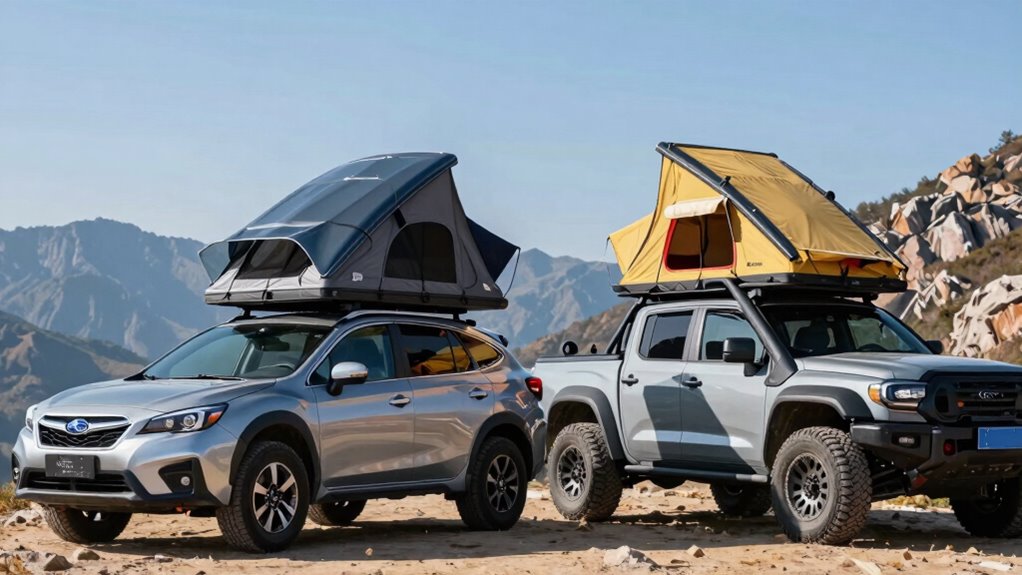

If you want quick setup, durability, and better weather resistance, a hard shell rooftop tent might be your best choice, especially if you frequently camp in harsh conditions. But if you’re after portability, easier repairs, or have a smaller vehicle, a soft shell tent could suit you better. Consider how often you’ll use it and your vehicle’s capacity. If you’d like to explore more details, you’ll find helpful insights below.

Get travel and outdoor gear delivered free with Prime
- Fast, free delivery on millions of items
- Prime Video, Amazon Music and more included
- Member-only deals all year
Key Takeaways
- Hard shell tents are ideal for harsh weather and durability, while soft shell tents offer easier setup and portability.
- Soft shell tents are better suited for smaller vehicles with limited roof space due to their lighter weight.
- Choose hard shell tents if insulation and weather resistance are priorities for cold or rainy conditions.
- Soft shell tents are more cost-effective and easier to repair, suitable for casual or frequent campers.
- Consider vehicle compatibility and storage needs when selecting between the rigid durability of hard shell and the flexibility of soft shell tents.
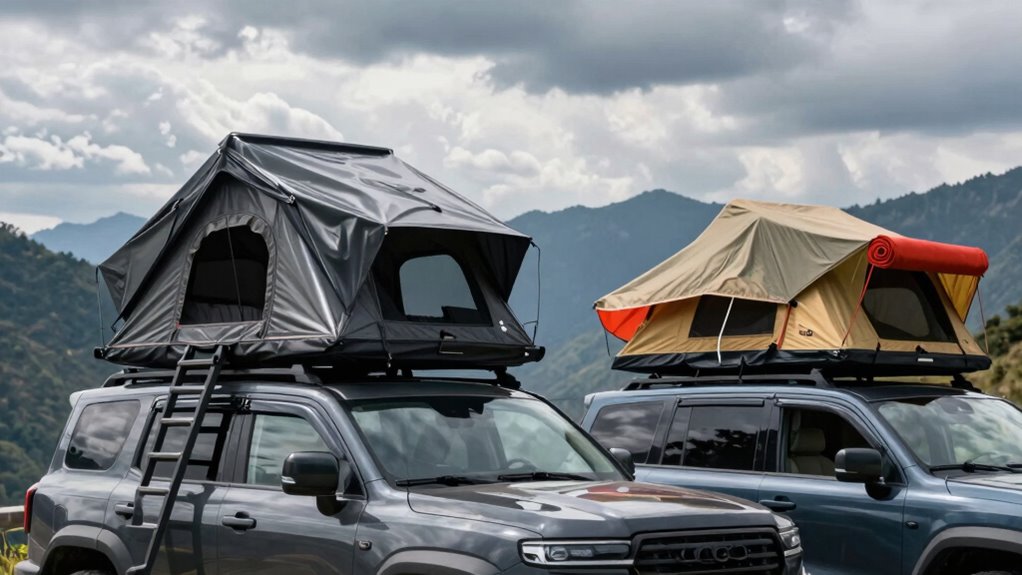
Are you curious about the different styles of rooftop tents available? When choosing between hard shell and soft shell designs, it’s important to consider how each option impacts your camping comfort and vehicle compatibility. Hard shell tents feature a rigid, durable exterior that pops open quickly, offering a sleek look and reliable protection from the elements. They’re especially popular among those who prioritize quick setup times and a more streamlined appearance. Soft shell tents, on the other hand, fold out from a more flexible fabric material, often making them lighter and more portable. Understanding how each style affects your overall camping experience helps you decide which one best fits your needs.
Hard shell rooftop tents are known for their sturdy construction, which can provide better insulation and protection against weather conditions. This means you stay warmer in cold weather and dry during rainstorms, enhancing your camping comfort. Their solid shells also tend to be more aerodynamic, reducing wind noise and drag while driving, which can improve fuel efficiency. However, because of their rigid build, hard shell tents are usually heavier and bulkier to lift onto your vehicle’s roof. Vehicle compatibility becomes a crucial factor here, as not all vehicles can handle the added weight or the size of these tents without modifications. If you have a smaller or less powerful vehicle, a hard shell might require extra planning or a vehicle upgrade. Additionally, the rigid structure of hard shell tents often makes them more durable and resistant to wear over time. This durability is partly due to their weather-resistant exterior, designed to withstand harsh conditions.
Soft shell tents are typically lighter and more flexible, making them easier to install and remove. They often fold away into a compact, low-profile package that can be stored in your trunk or garage when not in use. This flexibility enhances vehicle compatibility, especially if you own a smaller SUV or a vehicle with limited roof capacity. While soft shell tents may not offer the same level of insulation as their hard shell counterparts, many models include features like thick foam mattresses for added camping comfort. They tend to be less expensive and easier to carry, making them a practical choice for casual campers or those who frequently switch vehicles. Additionally, soft shell tents generally require less maintenance, as their flexible fabrics are easier to repair if damaged.
Ultimately, the decision between hard shell and soft shell rooftop tents boils down to your specific needs. If you prioritize quick setup, durability, and better weather protection, a hard shell might be the right choice. But if you value portability, ease of use, and vehicle compatibility, a soft shell tent could serve you better. Both styles bring unique advantages, so think about how you camp, what vehicle you drive, and which features will make your outdoor adventures more enjoyable.
As an affiliate, we earn on qualifying purchases.
Frequently Asked Questions
Are Hard Shell Tents More Durable Than Soft Shell Tents?
Hard shell tents are generally more durable than soft shell tents because their sturdy materials resist impacts and harsh weather. They better protect the tent interior, especially during storage, since their rigid shells keep out dirt and debris. Soft shell tents, made from flexible fabrics, are lighter but more vulnerable to tears and weather damage. So, if durability and long-term storage are priorities, hard shell tents are the smarter choice.
Do Soft Shell Tents Require More Maintenance Than Hard Shell Tents?
You’ll find soft shell tents generally need more maintenance than hard shell ones, as they require regular cleaning to prevent mold and wear. Soft shells have more fabric surfaces, making cleaning requirements more frequent and detailed. Maintenance routines involve checking for tears and cleaning off dirt after trips. Hard shells, with their sturdy, weather-resistant shells, demand less upkeep, making them a more low-maintenance option for frequent travelers.
Can Both Tent Styles Be Used in All Weather Conditions?
Both tent styles can be used in many weather conditions, but your camping comfort and weather adaptability depend on the specific model. Hard shell tents generally offer better protection against heavy rain and wind, making them ideal for harsh weather. Soft shell tents are lighter and easier to set up, but may require additional insulation or rainflies for extreme weather. Choose based on your typical camping environments and comfort preferences.
Which Style Offers Faster Setup and Takedown?
Hard shell rooftop tents offer faster setup and takedown, giving you greater camping flexibility. With a simple lift or fold, you can be ready to relax or pack up quickly, saving time and effort. Plus, their sleek, aesthetic appeal adds to your vehicle’s look. Soft shell tents might take longer to set up, but they often provide more interior space. Choose based on how quickly you want to get camped and your style preferences.
Are There Weight Limitations for Each Tent Type?
Yes, weight limitations vary between tent types due to material flexibility and ventilation efficiency. Hard shell tents are typically heavier, so your vehicle’s roof capacity is essential to prevent strain. Soft shell tents are lighter, offering more flexibility in weight, but their materials may impact ventilation efficiency. Always check your vehicle’s weight limits and choose a tent that balances durability with ease of use, considering your travel needs and storage capacity.
As an affiliate, we earn on qualifying purchases.
Conclusion
Choosing between hard shell and soft shell rooftop tents is like selecting a trusty companion for your adventures. Each offers unique perks, but ultimately, it’s about finding the one that feels like home on the open road. Remember, as the explorers of old once knew, the right shelter turns every journey into a story worth telling. Trust your instincts, and let your choice carry you to new horizons and unforgettable memories.
best rooftop tent for small vehicles
As an affiliate, we earn on qualifying purchases.
As an affiliate, we earn on qualifying purchases.
As an affiliate, we earn on qualifying purchases.
Halloween Picks
halloween
As an affiliate, we earn on qualifying purchases.