
TL;DR
The High-End PC and Workstation Tax is not a government levy; it is a reported market cost hitting retail buyers as memory and storage prices rise. The source material cites HP investor comments, late-June retail snapshots and workstation memory forecasts to show DIY builders and professional workstation buyers facing the sharpest exposure.
A late-June 2026 analysis of the High-End PC and Workstation Tax warns that DIY high-end PC builders and workstation buyers are now among the most exposed customers in the memory crunch, after HP reportedly told investors that memory rose from 15-18% to about 35% of a PC bill of materials.
The report, published as part of Thorsten Meyer AI’s Memory Squeeze series, says RAM and SSDs have moved from secondary line items to major cost drivers. In buyer terms, the cited HP figure means memory and storage can now rival or exceed the graphics card in some midrange and high-end builds.
A late-June retail snapshot cited in the source put a 32GB DDR5 kit at about $369, close to the price of the GPU in the same comparison build. The report says some premium builds that were near $2,000 a year earlier now land around $2,800-$4,500, with memory and storage described as the main swing factor.
The report’s central finding is that DIY no longer reliably saves money at the high end. It says large OEMs can use bulk contracts, hedged inventory and quarter-level pricing buffers, while retail buyers pay the spot price when they add parts to a cart. The report says a prebuilt system can now be cheaper than a comparable self-sourced build.
The high-end PC & workstation tax
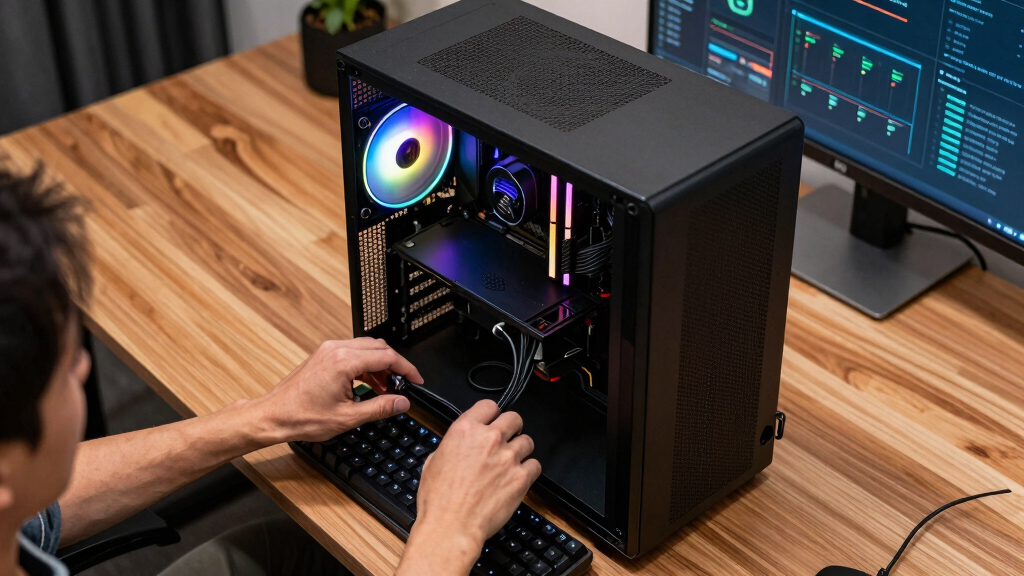
If you build your own machines or spec your team’s workstations, you’re the most exposed buyer in this market — no hedge, no bulk contract, just a parts cart and a number you used to ignore, now the biggest line on the invoice.
OEMs buy on bulk contracts and hold hedged stock; you pay the spot price on the day. The DIY builder is now the most exposed buyer in the chain — and the prebuilt is sometimes cheaper. Price it before you commit.
96GB & 128GB DDR5 RDIMMs are the scarcest, closest to the server memory makers prioritize. 64GB RDIMM could cost 2× by end-2026 vs early 2025. The parts that define a workstation are the ones squeezed hardest.
The squeeze didn’t just raise prices — it inverted the value system of high-end building. Buy big, buy early, build it yourself: each enthusiast virtue is now a way to overpay. Discipline beats ambition in 2026 — right-size hard, buy deliberately, lean on bundles, treat the prebuilt as a real price check. You can’t avoid the AI tax levied a layer up in the fabs; you can refuse to pay more of it than the job needs. Next: Cloud’s Hidden Memory Bill.
DIY Savings Are Under Pressure
For PC enthusiasts, the change hits a long-standing build strategy: buy more memory than needed, buy early and build the machine yourself. The report says those habits can now lead to overbuying, higher upfront costs and weaker value when prices are moving quickly.
For businesses, the pressure is sharper because workstations often need the exact parts under strain. The source points to 96GB and 128GB DDR5 RDIMMs as especially scarce, because they sit close to the server memory market. An analysis cited in the report projects 64GB DDR5 RDIMM modules could cost about twice as much by the end of 2026 as they did in early 2025.
As an affiliate, we earn on qualifying purchases.
HBM Demand Reaches Retail Parts
The article is the fifth installment in a series tracing the 2026 memory crunch from HBM demand into consumer RAM and storage. The source links the retail squeeze to upstream pressure from AI infrastructure and server buyers, which can pull manufacturer capacity toward higher-margin memory products.
The report cites HP Q1 2026 earnings, Tom’s Hardware, SlashGear, ipc2u and Counterpoint among its source base. It labels its prices as late June 2026 point-in-time figures, meaning current carts may already differ.
“If you build your own machines or spec your team’s workstations, you’re the most exposed buyer in this market.”
— Thorsten Meyer AI, The Memory Squeeze Part 5
high-performance SSD for gaming PC
As an affiliate, we earn on qualifying purchases.
As an affiliate, we earn on qualifying purchases.
Retail Averages Remain Unclear
The supplied material does not establish a full national retail average for DDR5, SSDs or RDIMMs, and it does not show how much of the change comes from supplier pricing, retailer markup or temporary shortages. The end-2026 RDIMM figure is a projection, not a confirmed final price.
It is also unclear how long OEMs can soften the impact with hedged inventory. If contract stock runs down or demand shifts, prebuilt pricing could move closer to retail parts pricing.
prebuilt gaming PC with high-end specs
As an affiliate, we earn on qualifying purchases.
As an affiliate, we earn on qualifying purchases.
Prebuilts Become The Benchmark
The practical next step for buyers is to compare a prebuilt quote, a CPU and motherboard bundle and a staged upgrade plan before buying memory-heavy systems. The series says its next installment will examine cloud memory costs, extending the same pricing pressure from local hardware to hosted computing.
As an affiliate, we earn on qualifying purchases.
Key Questions
Is the High-End PC and Workstation Tax an actual tax?
No. The report uses tax as a market metaphor for the extra cost created by higher memory and storage prices, not as a government charge.
Why are DIY builders more exposed than OEMs?
The report says OEMs can buy through contracts and hold inventory, while retail buyers usually pay the price available on the purchase day.
Are prebuilts always cheaper now?
No. The report says prebuilts are sometimes cheaper at the high end, so buyers should use them as a price benchmark before committing.
Which workstation parts are under the most pressure?
The source points to 96GB and 128GB DDR5 RDIMMs, plus other high-capacity workstation memory, as the parts facing the tightest supply.
Source: Thorsten Meyer AI