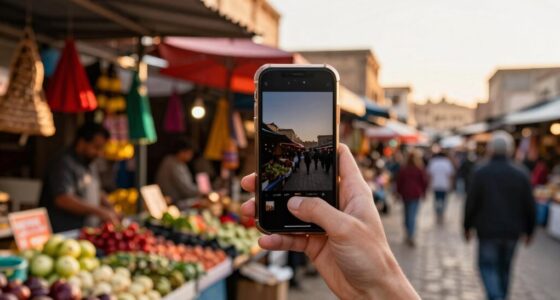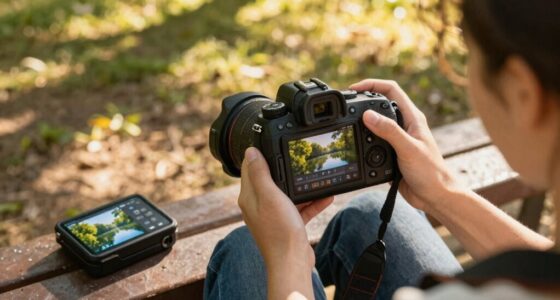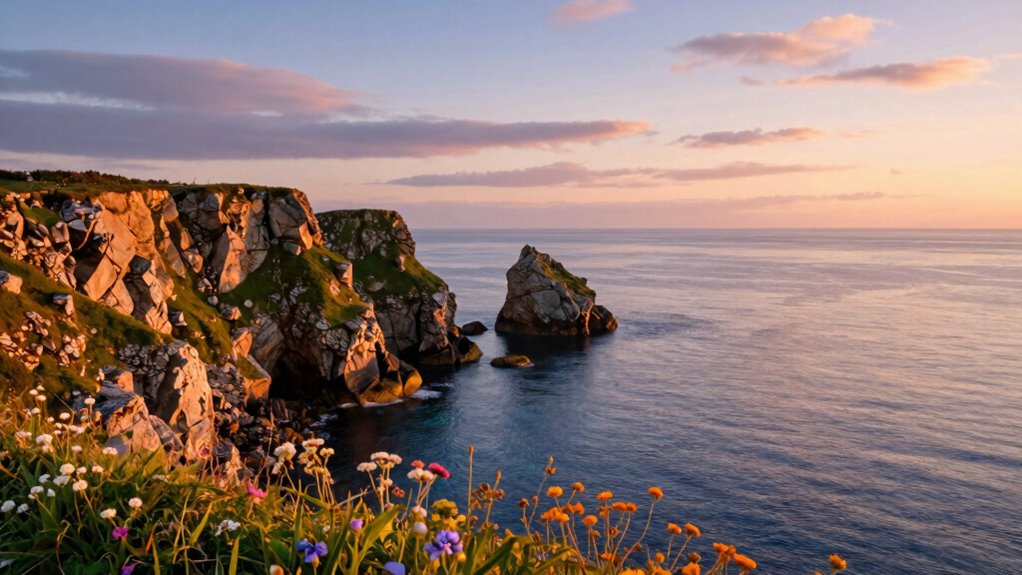
To capture a place without missing its essence, focus on framing it within its environment by using leading lines, framing elements, and foreground interest. Pay attention to lighting conditions, especially during golden hour, to add warmth and depth, and experiment with shadows or silhouettes for mood. Highlight unique textures, details, and character-specific elements that tell the story. Balancing wide shots with close-ups helps reveal both the overall atmosphere and distinctive features — discover more tips on making your photos truly authentic.

Get travel and outdoor gear delivered free with Prime
- Fast, free delivery on millions of items
- Prime Video, Amazon Music and more included
- Member-only deals all year
Key Takeaways
- Incorporate environment elements and foreground interest to provide context and convey the place’s atmosphere.
- Use wide shots alongside close-ups to capture both the overall environment and unique details.
- Apply the rule of thirds for balanced composition, emphasizing key features without clutter.
- Utilize natural lighting, especially during golden hour, to enhance textures and mood authentically.
- Focus on capturing textures, patterns, and authentic details that embody the place’s character.
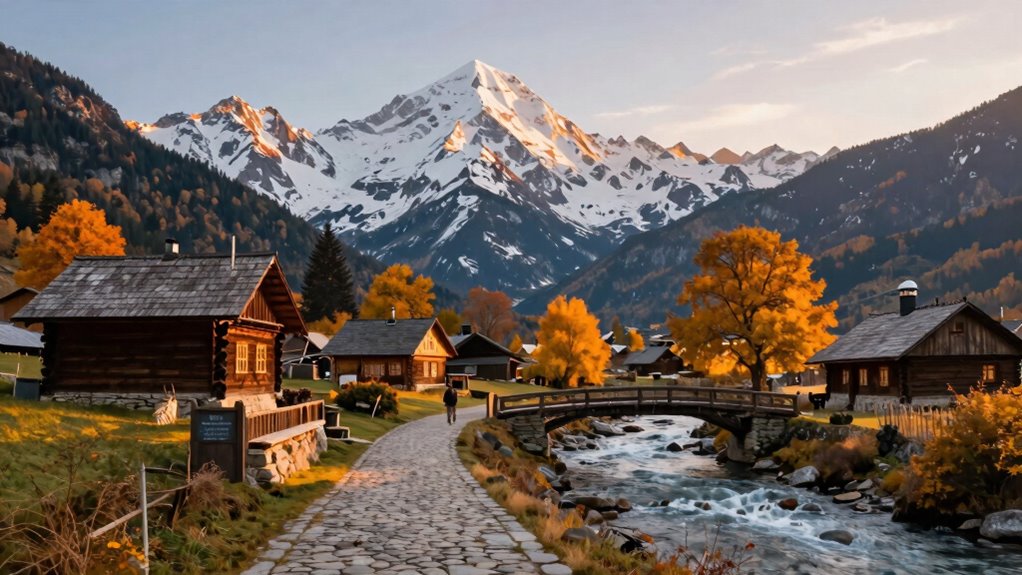
Capturing the essence of a place in your photos can be challenging because it’s easy to overlook the surroundings that make it unique. To truly convey what makes a location special, you need to think about how you’re framing the shot and what elements you include or exclude. Lighting techniques are crucial here; they can dramatically change the mood and highlight the features that define a place. For example, shooting during golden hour bathes your scene in warm, soft light that reveals textures and colors often missed in harsh midday sun. Use natural light to your advantage, but don’t be afraid to experiment with shadows and silhouettes to add depth and interest. If the lighting isn’t ideal, consider using reflectors or diffusers to control it, ensuring your subject and surroundings are well-lit without losing ambiance.
When it comes to composition tips, you want to focus on arrangement—how elements are positioned within the frame. A good rule of thumb is to incorporate the environment into your shot, not just the main subject. Look for leading lines, framing elements like archways or trees, and foreground interest that guides the viewer’s eye into the scene. Balance is key; avoid clutter and dead space that distracts from the core subject and the story it tells. You might also use the rule of thirds to place key features off-center, creating a more engaging image that invites viewers to explore the scene more fully. Pay attention to details that reveal the character of the place—textures, patterns, or even the way light interacts with surfaces. Understanding how lighting conditions influence your photos can help you capture the atmosphere more authentically.
It’s important to think about the story you want your photo to tell. Capture the atmosphere, the life, or the tranquility that makes the place special. Sometimes, this means zooming in on small details that embody the spirit of the location, like peeling paint or a vibrant flower. Other times, wider shots help convey scale and the environment’s overall feel. Keep in mind that capturing a place isn’t just about the obvious sights; it’s about revealing its personality through thoughtful composition and lighting. By paying close attention to these elements, you can create images that do justice to the place’s true essence, making viewers feel like they’re right there with you.
Products Worth Considering

DJI Osmo Pocket 4 Gimbal Camera Pro Kit, 18-Piece Bundle

DJI Osmo Pocket 3 Creator Combo Vlogging Camera with Mic 2, 1 CMOS, 4K/120fps, 3-Axis Stabilization, 128GB Card

GoPro Hero12 Black Waterproof Action Camera with 5.3K60 Video and 27MP Photos
As an affiliate, we earn on qualifying purchases.
Frequently Asked Questions
What Equipment Is Best for Capturing Immersive Place Photos?
To capture immersive place photos, use a wide-angle lens paired with a tripod for stability. Incorporate lighting techniques like natural light during golden hours or using external lights to enhance details. Equipment recommendations include a DSLR or mirrorless camera, a panoramic tripod head, and a remote shutter release. These tools and techniques help you preserve the ambiance and scale, ensuring your photos fully represent the essence of the place.
How Can I Improve My Composition When Photographing Places?
To improve your composition, focus on lighting techniques to highlight the place’s best features and create mood. Use framing strategies like leading lines, symmetry, and foreground interest to draw viewers in and guide their eye through the scene. Experiment with different angles and perspectives to add depth. Keep an eye on the balance and rule of thirds, ensuring your shot feels engaging and accurately represents the place’s essence.
What Time of Day Offers the Best Lighting for Location Shots?
You should shoot during the golden hour, just after sunrise or before sunset, when natural light creates warm tones and soft shadows. Imagine capturing a historic plaza during this time, where the gentle light enhances architectural details and shadow play adds depth. This lighting minimizes harsh contrasts, making your photos vibrant and inviting. The golden hour’s unique glow makes your location shots feel both authentic and mesmerizing.
How Do I Avoid Distortion in Panoramic or Wide-Angle Shots?
To avoid distortion in panoramic or wide-angle shots, you should use perspective correction tools during post-processing and choose lenses with minimal lens distortion. Keep your camera level and steady to prevent skewed lines, and avoid tilting the camera excessively. When capturing, use a tripod and guarantee your lens is properly aligned. This helps maintain straight lines and corrects for lens distortion, resulting in a clear, accurate panoramic image.
Are There Specific Editing Techniques to Enhance Place Photos?
You can enhance your place photos by using editing techniques like lighting enhancements and color correction. Adjust the brightness, contrast, and shadows to highlight key features and create a mood that matches the scene. Correct color imbalances to make natural tones pop, ensuring the place looks vibrant and true to life. These edits help draw viewers into the scene and emphasize the atmosphere, making your photos more engaging and immersive.
Conclusion
Remember, capturing a place isn’t just about snapping a shot; it’s about telling its story. Use your angles wisely, include surrounding details, and be mindful of the atmosphere. Don’t just scratch the surface—dig deeper to showcase the soul of the location. When you do, you’ll find that the essence of the place shines through, making your photos more than just pictures. After all, it’s the details that make a place come alive.