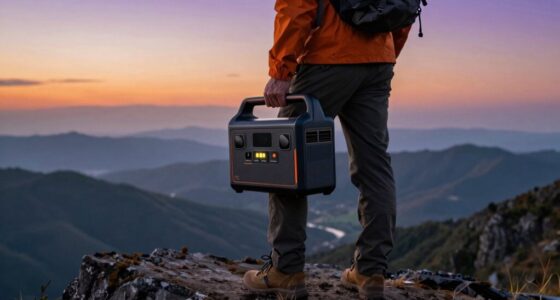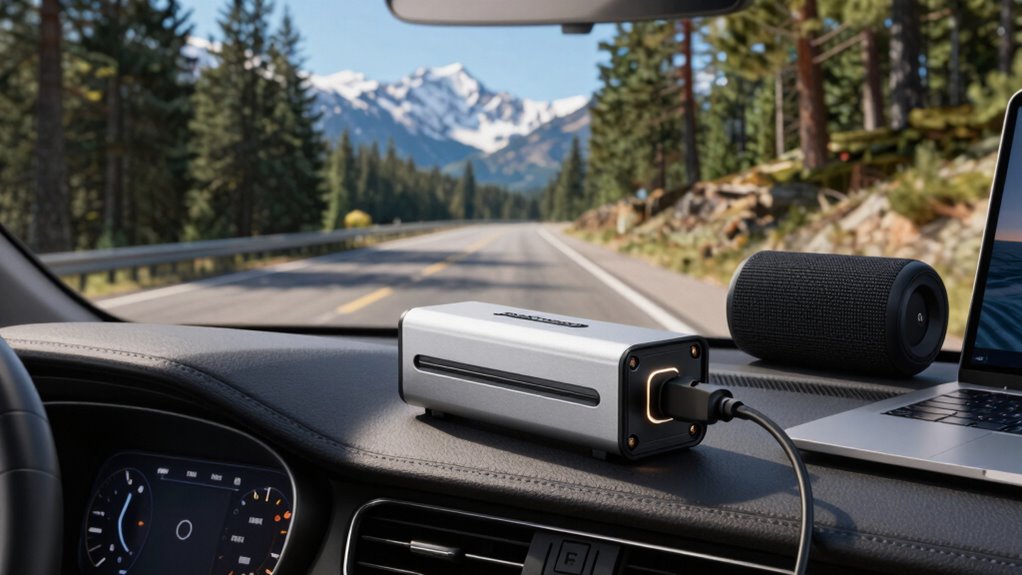
Power inverters are essential for short road trips when you need to charge phones, tablets, or small laptops quickly. They’re also helpful in remote camping or long journeys, especially when you don’t have access to power outlets. However, if you rely on powering larger devices or plan extended stays off-grid, integrating solar panels and batteries becomes more efficient. To optimize your setup and guarantee you’re prepared, discover more about best practices and setups.

Get travel and outdoor gear delivered free with Prime
- Fast, free delivery on millions of items
- Prime Video, Amazon Music and more included
- Member-only deals all year
Key Takeaways
- Power inverters are essential for short trips to charge small devices like phones and tablets.
- They are not ideal for extended trips without additional power sources, risking battery drain.
- Integrating solar panels enhances power availability and reduces reliance on vehicle batteries during long trips.
- Off-grid camping benefits from inverter and solar setups to power larger devices sustainably.
- Proper capacity selection prevents overloads and ensures efficient use of power in different trip durations.
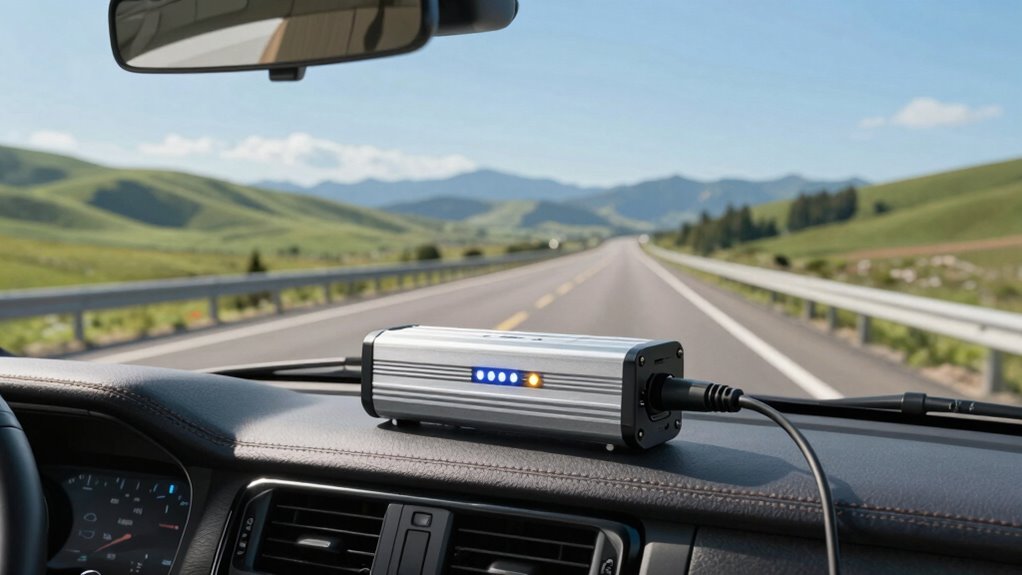
When you’re starting on a road trip, having a reliable power source can make all the difference in keeping your devices charged and your journey smooth. Power inverters are a popular choice for travelers who want to convert their vehicle’s DC power into AC, allowing them to use regular household appliances on the road. But their usefulness depends on your plans and setup. If you’re relying solely on your vehicle battery, a power inverter can be handy for short trips, powering phones, tablets, or a small laptop. However, keep in mind that using your vehicle battery extensively can drain it, potentially leaving you stranded if you forget to turn off the inverter or if your engine isn’t running. To extend your power options, you might consider integrating a solar panel into your setup. Solar panels can help recharge your power sources during the day, reducing the strain on your vehicle battery and ensuring you have power for longer periods. Additionally, choosing the right capacity inverter can prevent overloads and ensure efficient operation. Proper power management is essential for avoiding unexpected power loss and ensuring your devices stay charged throughout your trip. Utilizing renewable energy sources like solar can also promote more sustainable travel practices. Furthermore, understanding the energy efficiency of your devices can help optimize your power usage and extend your off-grid capabilities.
In situations where you’re staying stationary or planning a longer trip without access to charging stations, a solar panel paired with a power inverter becomes more essential. You can set up a solar panel on your roof or camp site to generate steady electricity, which can then be fed into a portable battery bank or directly into your inverter. This setup allows you to power larger devices or multiple gadgets without draining your vehicle’s battery. It’s especially useful if you’re camping off-grid or in remote locations, where traditional power sources are scarce. That said, if you’re just running a few devices for a few hours, a simple inverter connected directly to your vehicle battery might suffice. Additionally, understanding your power consumption needs can help you better determine the right setup for your trip.
12V car power inverter for road trips
As an affiliate, we earn on qualifying purchases.
As an affiliate, we earn on qualifying purchases.
Frequently Asked Questions
Can Power Inverters Charge All Types of Electronic Devices?
Power inverters can’t charge all types of electronic devices because of device compatibility and charging limitations. They work well with devices that have standard AC power needs, like laptops and small appliances. However, some gadgets, especially those with special power requirements or sensitive electronics, might not be compatible. Always check your device’s power specifications and the inverter’s capacity to make certain of safe and effective charging, avoiding potential damage or inadequate power supply.
What Safety Precautions Should I Take With Inverters on the Road?
You should prioritize battery safety by avoiding overloading the inverter and not connecting damaged cables. Always guarantee proper ventilation requirements, as inverters can generate heat; place them in well-ventilated areas away from flammable materials. Keep a fire extinguisher nearby and never leave the inverter unattended while in use. Regularly check for signs of wear or overheating, and follow the manufacturer’s safety guidelines to keep your road trip safe.
How Do I Choose the Right Inverter Wattage for My Needs?
To choose the right inverter wattage, first determine the total power your devices need, adding up their wattages. Opt for an inverter with slightly higher wattage than your total to avoid overload. Consider inverter efficiency, as higher efficiency means less energy waste. Also, check your vehicle’s battery compatibility to verify it can handle the inverter’s power draw without draining too quickly. This way, you get reliable performance without risking your battery lifespan.
Are There Any Legal Restrictions on Using Inverters in Certain Areas?
When it comes to legal restrictions on using inverters, it’s wise to stay on the right side of the law; rules can vary by area. Some regions have inverter regulations for safety reasons, especially in public or protected spaces. Always check local laws before plugging in, as violating these restrictions might lead to fines or equipment confiscation. Think of it as playing it safe—better to ask than to get caught off guard.
How Do I Maintain and Troubleshoot My Power Inverter?
To maintain and troubleshoot your power inverter, start by checking your vehicle’s battery maintenance to guarantee it’s charged and in good condition. Regularly inspect the inverter installation for loose connections or corrosion. If your inverter isn’t working properly, test the fuse and reset if necessary. Keep the vents clean to prevent overheating. Proper maintenance and troubleshooting help extend your inverter’s lifespan and ensure reliable power during your road trips.
As an affiliate, we earn on qualifying purchases.
Conclusion
As you hit the open road, your power inverter becomes a silent companion, quietly fueling your devices amid the vast, star-studded sky. It’s a small detail that can turn a lonely night into a cozy, connected escape. When you least expect it, that little device might just be the unexpected hero, keeping your phone alive as you chase sunsets and new adventures. Sometimes, the simplest tools bring the biggest comfort on your journey.
portable battery bank for off-grid power
As an affiliate, we earn on qualifying purchases.
As an affiliate, we earn on qualifying purchases.
small household inverter for travel
As an affiliate, we earn on qualifying purchases.
As an affiliate, we earn on qualifying purchases.
Fall Picks
fall essentials
As an affiliate, we earn on qualifying purchases.