

To avoid cultural faux pas, start by researching local customs through travel guides, official tourism websites, cultural blogs, and social media groups. Pay attention to greetings, personal space, dress codes, dining manners, and sensitive topics. Use translation apps to communicate respectfully. Observing how locals interact helps you adapt accordingly. If you stick to these tips, you’ll make positive impressions and have a smoother experience. Keep exploring to learn even more essential tips.

Get travel and outdoor gear delivered free — and shop member deals
- Fast, free delivery on millions of items
- Access to Prime Big Deal Days deals on October 6–7
- Prime Video, Amazon Music and more included
Key Takeaways
- Consult reputable travel guides and official tourism websites for updated social norms and etiquette tips.
- Explore cultural blogs, forums, and social media groups for firsthand experiences and practical advice.
- Research local greetings, gestures, and titles to understand respectful communication customs.
- Learn about traditional dress codes and dining manners specific to your destination.
- Use translation and cultural etiquette apps to clarify norms and avoid common faux pas.
As an affiliate, we earn on qualifying purchases.
Why Researching Cultural Norms Helps You Avoid Offending Locals
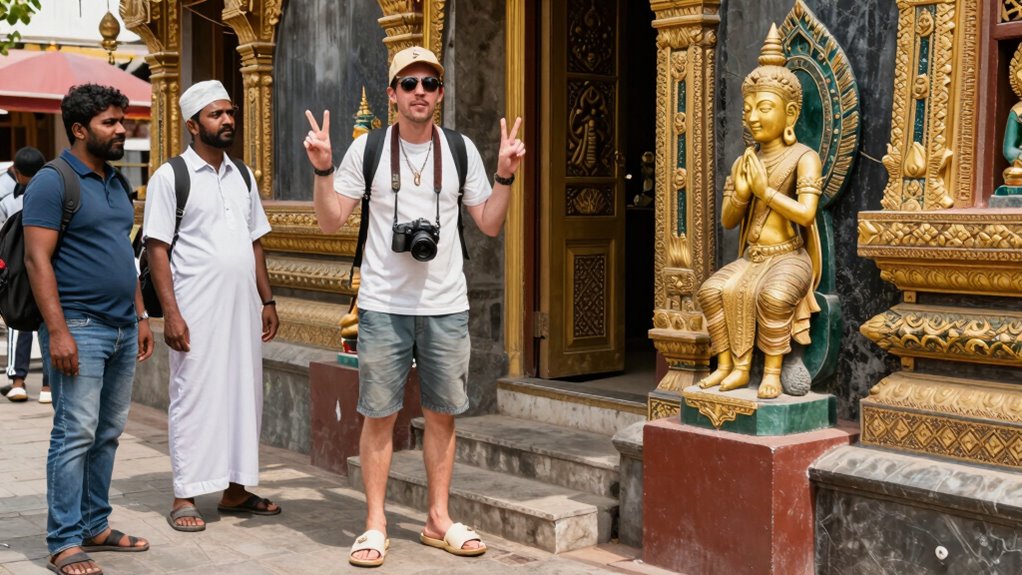
Have you ever experienced an awkward moment abroad because you unintentionally offended someone? That’s often due to cultural misunderstandings or etiquette pitfalls that catch travelers unaware. When you research cultural norms beforehand, you gain insight into what’s considered respectful and inappropriate. This proactive approach helps you navigate social interactions with confidence, avoiding gestures or language that might offend locals. For example, understanding proper greetings, table manners, or gift-giving customs prevents missteps that could damage relationships. Being informed shows respect and openness, making your experience richer and more authentic. Additionally, learning about regional flavors and traditional coffee and tea customs can deepen your appreciation and help you engage more meaningfully with local traditions. Recognizing cultural sensitivities ensures you avoid unintentional offenses that could hinder your interactions. Without this preparation, you risk offending people without even realizing it. Taking the time to learn about local etiquette helps you connect more genuinely and ensures your visit is enjoyable for everyone involved. Being aware of environmental impact and sustainable practices also demonstrates respect for the destination’s resources and local community. Moreover, understanding the impact of contrast ratio and other technical aspects of home cinema can enhance your overall entertainment experience, ensuring you make informed choices that suit your preferences. Being aware of regional customs can further enrich your cultural understanding and prevent faux pas.
As an affiliate, we earn on qualifying purchases.
What Resources Can Help You Learn About Cultural Etiquette?

Looking for reliable resources to learn about cultural etiquette? Travel guides, such as Lonely Planet or Frommer’s, often include essential etiquette guidelines that help prevent cultural misunderstandings. Cultural blogs and forums provide firsthand experiences and practical advice from locals or seasoned travelers. Official tourism websites also offer accurate, up-to-date information on customs and social norms. Books dedicated to intercultural communication can deepen your understanding of specific cultures, highlighting key etiquette differences. Social media groups focused on expats or travelers are valuable for asking questions and gaining insights. Additionally, cultural training workshops or language classes often cover etiquette essentials, reducing the risk of offending others. Exploring cultural norms through these resources guarantees you approach new cultures with respect and confidence, avoiding faux pas and fostering positive interactions. Being aware of cultural sensitivity practices is also crucial to ensure respectful and meaningful exchanges. Engaging with cultural competence concepts can further enhance your ability to navigate diverse social settings gracefully. Developing an understanding of cultural awareness helps you recognize and appreciate differences, making your interactions more meaningful and respectful.
traditional dress guide for travelers
As an affiliate, we earn on qualifying purchases.
As an affiliate, we earn on qualifying purchases.
How Do You Greet People Respectfully in a New Country?

When you meet someone new in a different country, using the right greeting gestures shows respect. Pay attention to whether formal or informal titles are appropriate, as they can vary widely. Being aware of these differences helps you make a positive impression right from the start. Additionally, understanding the Gold IRA market can provide insight into how investment preferences and cultural attitudes toward wealth and retirement savings differ across countries. Recognizing local customs around cultural faux pas can prevent misunderstandings and demonstrate your cultural sensitivity. For example, some cultures have specific greeting customs that are considered polite and respectful, so familiarizing yourself with these can greatly improve your interactions. Being familiar with local etiquette can further enhance your interactions and avoid unintentional offenses.
Proper Greeting Gestures
Understanding how to greet people respectfully in a new country is essential to making positive first impressions. Different cultures have unique greeting customs that can lead to cultural misunderstandings if overlooked. For example, some countries favor handshakes, while others prefer a bow, cheek kisses, or nods. Pay attention to local cues and observe how locals greet each other. When unsure, a simple, friendly verbal greeting combined with a respectful gesture usually suffices. Avoid overly familiar gestures until you comprehend the context; what’s acceptable in one culture might be offensive in another. Respectful greetings show your willingness to adapt and demonstrate cultural sensitivity. Doing a little research beforehand helps you avoid missteps and ensures your greeting gestures are appropriate and appreciated. Cultivating cultural awareness can significantly enhance your ability to navigate social interactions respectfully across diverse environments. Additionally, understanding Polynesian symbols for strength can offer insight into the importance of respectful gestures that honor local heritage. Becoming familiar with local gesture etiquette can further improve your interactions and show your respect for the community’s traditions.
Formal vs. Informal Titles
Using proper greeting gestures sets the tone for respectful interactions, but knowing whether to use formal or informal titles can make a lasting impression. In many cultures, formal titles like Mr., Mrs., or Dr. show respect, especially in professional or unfamiliar settings. They signal politeness and acknowledge social hierarchies. Conversely, informal titles or first names may be appropriate among friends or in casual environments. Before you arrive, research the country’s norms regarding titles. Some places prefer strict formality, while others value familiarity. Using formal titles when required demonstrates respect and helps avoid awkward moments. When in doubt, start with a formal title and observe how locals address each other. Adjust your approach accordingly to foster positive interactions and show that you respect cultural differences. Additionally, understanding the concept of cultural faux pas can help you navigate unexpected social missteps and demonstrate cultural sensitivity. Being aware of social etiquette can further enhance your ability to make respectful and appropriate interactions, especially when considering the local communication customs. Recognizing regional variations in greeting practices can also prevent accidental offenses and promote smoother communication. Knowing the importance of cultural norms can guide you in making appropriate choices and avoiding unintended offenses.
As an affiliate, we earn on qualifying purchases.
What Are Local Personal Space Norms and Gestures?

Have you ever wondered why a simple handshake in one country might feel invasive or overly intimate in another? Personal space varies widely across cultures, shaping how close you can stand or sit with others. In some places, standing shoulder-to-shoulder is normal, while in others, personal space is respected with more distance. Hand gestures also carry different meanings; what’s friendly in one country might be offensive in another. For example, a thumbs-up or pointing finger can have positive or negative connotations depending on the culture. Knowing these local norms helps you avoid awkward or disrespectful situations. Pay attention to body language and observe how locals interact, especially regarding personal space norms and gestures. Recognizing cultural communication styles can further enhance your understanding and interactions. Being aware of cultural differences in gestures is essential for respectful engagement. This awareness shows respect and helps you navigate social settings smoothly. Additionally, researching cultural etiquette before your trip can provide deeper insights into appropriate behaviors.
How Should You Dress Respectfully in Different Cultures?

Dressing appropriately in different cultures shows respect for local customs and helps you avoid unwanted attention or offense. Research the traditional attire worn by locals, especially for religious or formal occasions. In some cultures, modest clothing is essential; women might need to cover shoulders or knees, while men may wear long pants instead of shorts. When in doubt, opt for conservative and neutral clothing to show respect. Avoid flashy or revealing outfits that could be considered inappropriate. Pay attention to any specific dress codes, such as head coverings or traditional garments, and follow local guidelines. Wearing respectful attire demonstrates cultural awareness and helps you blend in more smoothly, fostering positive interactions and avoiding misunderstandings. Additionally, understanding cultural clothing standards can enhance your overall experience and demonstrate genuine respect for the community you are visiting.
What Are the Dining and Social Etiquette Tips to Know?

Knowing proper table manners and social greetings helps you show respect across cultures. Simple gestures like saying hello correctly and following dining customs can make a big difference. Being aware of these etiquette tips guarantees you avoid awkward moments and leave a positive impression.
Proper Table Manners
Ever wondered how to navigate a formal dinner without accidentally offending your hosts? Mastering proper table manners is key to respecting local dining customs. First, familiarize yourself with table etiquette, like keeping your elbows off the table and using utensils correctly. Second, observe how others serve themselves and follow suit—don’t reach across plates or start eating before everyone is served. Third, pay attention to your body language; sit up straight, chew quietly, and avoid loud coughing or sneezing. These small gestures show respect and help you blend in seamlessly. Remember, understanding these dining customs not only prevents faux pas but also demonstrates your appreciation for the culture. Being attentive to these details can turn an awkward moment into a memorable experience.
Appropriate Social Greetings
When greeting others at a social or dining event, the way you introduce yourself and respond sets the tone for the interaction. To avoid cultural misunderstandings, research local customs beforehand. For example, some cultures prefer handshakes, while others favor bows or cheek kisses. Pay attention to etiquette pitfalls, such as using the wrong greeting gesture or addressing someone improperly. In some countries, formal titles are expected, while others prefer casual introductions. Be aware of personal space differences and body language cues. Simple gestures like a warm smile and eye contact can go a long way. By understanding appropriate social greetings, you show respect and avoid uncomfortable moments that could lead to awkwardness or offended hosts.
Which Topics Are Best to Avoid in Conversations?

Avoiding certain topics during conversations can help prevent awkward moments or offending others. When engaging in small talk, steer clear of controversial topics that might spark disagreement or discomfort. Here are three areas to watch out for:
- Politics and religion – These subjects often lead to heated debates and can quickly spoil the mood.
- Personal finances – Asking about income or debt can feel intrusive and inappropriate.
- Sensitive cultural issues – Topics like historical conflicts or social controversies may offend or alienate others.
Sticking to neutral subjects helps maintain a friendly atmosphere. Remember, the goal of small talk is to connect, not to provoke or offend. Knowing what to avoid ensures smoother interactions and respectful conversations.
How Can Language and Translation Tools Make Communication Easier?

Language and translation tools have transformed communication by breaking down language barriers and making it easier for you to connect with people from different cultures. Translation apps allow you to quickly understand and be understood, reducing misinterpretations that often cause faux pas. These tools often have features like voice translation, real-time conversation modes, and cultural tips, which help you navigate unfamiliar settings more confidently. By using translation apps, you can clarify meanings, ask respectful questions, and avoid common misunderstandings. They’re especially useful when you’re unsure of specific phrases or idioms. While these tools aren’t perfect, they considerably improve your ability to communicate effectively, showing respect for local customs and avoiding awkward or offensive mistakes. Ultimately, they empower you to engage more naturally and thoughtfully across language divides.
Frequently Asked Questions
How Can I Learn About Regional Variations Within a Country’s Culture?
You can learn about regional variations by exploring local dialects and culinary customs. Listen to regional dialects to understand speech patterns and cultural nuances. Try regional dishes to experience local culinary customs firsthand. Reading travel blogs, guides, or watching videos focused on specific areas helps you grasp unique traditions. Talking to locals also offers valuable insights into regional differences, ensuring you avoid faux pas and show respect for their customs.
What Are Common Mistakes Tourists Make Regarding Local Customs?
You often make mistakes by ignoring local etiquette and dress codes, which can offend residents. You might dress too casually or reveal too much skin, not realizing what’s appropriate. You could also overlook simple customs like greetings or tipping practices. To avoid this, research the country’s local etiquette and dress codes beforehand. Paying attention to these details shows respect and helps you blend in smoothly during your visit.
How Do I Handle Cultural Misunderstandings Politely?
Ever wondered how to handle cultural misunderstandings politely? Just stay calm, listen actively, and show genuine respect through your words and actions. Practicing cultural sensitivity and respectful communication helps bridge gaps and ease tension. When in doubt, apologize sincerely and ask politely for clarification. Remember, demonstrating humility and openness shows you value their customs, turning a potential faux pas into an opportunity for positive connection.
Are There Cultural Taboos I Might Not Find in Guides?
Yes, there are hidden customs and unspoken rules that guides often miss. You might not find these in travel books or online resources. To uncover them, talk to locals or cultural insiders, observe everyday behavior, and listen carefully to what others avoid doing. Being attentive and respectful helps you navigate these unspoken rules smoothly, showing genuine interest and avoiding accidental offenses during your visit.
How Can I Adapt Quickly to Unexpected Cultural Differences?
Think of yourself as a time traveler, constantly adapting. When faced with unexpected cultural differences, observe local cues and listen actively—this is key to cultural communication. You can quickly adjust your etiquette by staying open-minded and respectful. Ask questions politely if unsure, and mirror appropriate behaviors. Flexibility and humility help you navigate surprises, ensuring you connect genuinely, despite the unanticipated differences.
Conclusion
So, before you waltz into a new country, do your homework—unless you enjoy unintentionally offending everyone and becoming the local legend for all the wrong reasons. Remember, a little research can save you from embarrassing blunders, awkward silences, and perhaps even a diplomatic incident or two. So, brush up on those customs, learn some phrases, and keep your foot out of your mouth. After all, a respectful traveler is a happy traveler—who hopefully avoids becoming the story everyone laughs about later.
Fall Picks
fall essentials
As an affiliate, we earn on qualifying purchases.