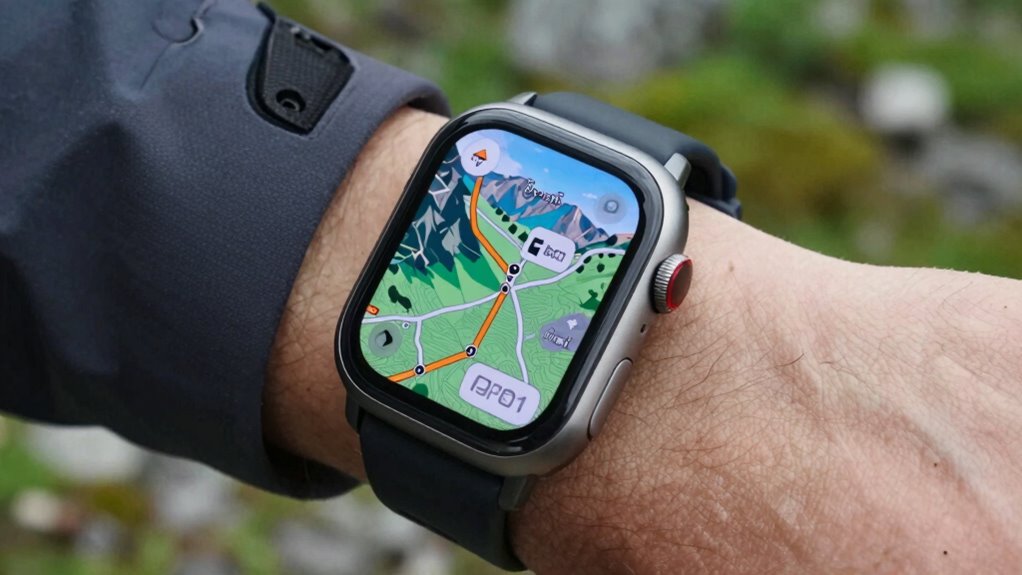

A GPS smartwatch with offline maps for travel can help you follow a route when your phone has no signal, but map features, battery life, and ease of use vary widely. I rank the Amazfit T-Rex 3 as the best overall option in this lineup for travelers who want a capable outdoor watch, while the Suunto Vertical stands out for demanding trips and the Amazfit Active Max for a more everyday-focused feature set. The main tradeoffs are ruggedness versus comfort, map capability versus setup simplicity, and battery endurance versus a bright, feature-rich display. Offline maps are not all alike, so check how routes are added and what remains available without a phone connection. Read on for the full breakdown and a guide to choosing for your kind of travel.

Get travel and outdoor gear delivered free with Prime
- Fast, free delivery on millions of items
- Prime Video, Amazon Music and more included
- Member-only deals all year
Complete the kit



Key Takeaways
- The T-Rex 3 is the strongest all-around fit for travelers who want a rugged outdoor watch without choosing the most expedition-focused option in the group.
- The Suunto Vertical suits longer, more demanding trips, while its sport- and adventure-oriented approach may be more watch than a casual city traveler needs.
- AMOLED screens and larger displays vary in travel usefulness: they can make map details easier to read, but buyers should weigh visibility against battery demands and watch size.
- Offline-map support is not a complete navigation plan. Travelers should check map coverage, route-loading steps, and whether the functions they need work without a phone connection.
- Several lower-profile models have limited product details in their names. I would verify map behavior, battery claims, and GPS specifications before choosing them over better-documented outdoor models.
| Cubitt VIVA Pro 2 Smartwatch, 1.85” AMOLED HD Display, Built-In GPS, Offline Maps, AI Coach, 100+ Sports Modes, 5ATM Water Resistance, 10-Day Battery |  | Best for a Big, Bright Travel Display | Display: 1.85-inch AMOLED HD | GPS and maps: Built-in GPS with offline maps | Battery life: Up to 10 days | VIEW ON AMAZON | See Our Full Breakdown |
| AGM Legion Pro GPS Smartwatch with Offline Maps and AMOLED Display |  | Best for Rugged Travel and Outdoor Sensors | Display: 1.43-inch AMOLED, 466 × 466 resolution, up to 600 nits, 60 Hz | Navigation: Built-in GPS with BeiDou, GLONASS, and Galileo support; offline maps | Outdoor sensors: Compass and barometer | VIEW ON AMAZON | See Our Full Breakdown |
| Amazfit T-Rex 3 GPS Smartwatch with 1.5-Inch AMOLED Display |  | Best for Long Trips Between Charges | Display: 1.5-inch AMOLED, up to 2,000 nits | GPS: Dual-band positioning with six satellite systems | Maps: Global maps and turn-by-turn navigation | VIEW ON AMAZON | See Our Full Breakdown |
| Suunto Vertical GPS Sports Watch, 1.4″ Touchscreen, 95+ Sports Modes, Sand |  | Best for Extended Expeditions | Display: 1.4-inch color touchscreen | Maps: Offline global maps with navigation features | GPS: Dual-band GPS | VIEW ON AMAZON | See Our Full Breakdown |
| Military Smart Watch for Men with Dual-Band GPS and Offline Maps |  | Best for Built-In Outdoor Extras | Display: 1.43-inch AMOLED, 466 × 466 pixels, Always-On Display | GPS: Dual-band L1+L5; GPS, GLONASS, BeiDou, Galileo, NAVIC, and QZSS | Maps: Offline maps | VIEW ON AMAZON | See Our Full Breakdown |
| HD300 Pro Military GPS Smartwatch with Offline Maps, AMOLED Display, Bluetooth Calling, and 4GB Storage |  | Best for Outdoor Sensor Coverage | Display: 1.43-inch AMOLED touchscreen, 466 × 466 resolution, always-on display | Navigation: GPS, Galileo, GLONASS, BeiDou, NavIC, and QZSS; downloadable offline maps | Map activation: One-time USB connection to a Windows or Mac computer | VIEW ON AMAZON | See Our Full Breakdown |
| Amazfit Active Max Smart Watch, 1.5-Inch AMOLED Display, GPS, 4GB Storage |  | Best for Long Trips Between Charges | Display: 1.5-inch AMOLED, up to 3,000 nits | Battery life: Up to 25 days | Storage and RAM: 4GB storage; 64MB RAM | VIEW ON AMAZON | See Our Full Breakdown |
| Amazfit Active 3 Smart Watch, 1.32″ AMOLED, Sapphire Glass, GPS, iOS/Android Compatibility |  | Best Compact Travel Pick | Display: 1.32-inch AMOLED | Glass: Sapphire | GPS: Built-in GPS with six satellite systems | VIEW ON AMAZON | See Our Full Breakdown |
| Amazfit Bip Max Smart Watch, 2.07″ AMOLED Display, GPS, iOS/Android |  | Best for Large Map Readability | Display: 2.07-inch AMOLED | Battery life: Up to 20 days | Onboard storage: 4GB | VIEW ON AMAZON | See Our Full Breakdown |
| GPS Smart Watch with Offline Maps, 1.96-Inch HD Screen, Bluetooth Calling, and AI Features |  | Best for Calls and Navigation Sensors | Screen: 1.96-inch HD touchscreen | GPS and maps: Built-in GPS with offline map downloads | Navigation sensors: Compass, altimeter, and barometer | VIEW ON AMAZON | See Our Full Breakdown |
| Cubitt Aura Pro 2 Smartwatch, 1.48” AMOLED HD, Obsidian Black |  | Best for Health Tracking with Offline Maps | Display: 1.48-inch AMOLED HD with auto-brightness | Color: Obsidian Black | GPS: Built-in GPS with offline maps and compass | VIEW ON AMAZON | See Our Full Breakdown |
| gps smartwatch with offline maps for travel | Display | Battery life | Compatibility | Water resistance |
|---|---|---|---|---|
| Cubitt VIVA Pro 2 Smartwatch | 1.85-inch AMOLED HD | Up to 10 days | — | 5ATM |
| AGM Legion Pro GPS Smartwatch | 1.43-inch AMOLED, 466 × 466 resolution, up to 600 nits, 60 Hz | Up to 9 days of use or 35 days standby | Android 5+ and iOS 12+ | — |
| Amazfit T-Rex 3 GPS Smartwatch | 1.5-inch AMOLED, up to 2,000 nits | Up to 27 days typical use; up to 180 hours in GPS mode | Android and iOS | 100 meters |
| Suunto Vertical GPS Sports Wat | 1.4-inch color touchscreen | Up to 500 hours in tour mode; 60 hours in tracking mode | — | — |
| Military Smart Watch for Men w | 1.43-inch AMOLED, 466 × 466 pixels, Always-On Display | — | Android and iOS | 5ATM; 50 meters |
| HD300 Pro Military GPS Smartwa | 1.43-inch AMOLED touchscreen, 466 × 466 resolution, always-on display | — | — | 3ATM |
| Amazfit Active Max Smart Watch | 1.5-inch AMOLED, up to 3,000 nits | Up to 25 days | Android and iOS; hands-free instant message replies require Android | 50 meters |
| Amazfit Active 3 Smart Watch | 1.32-inch AMOLED | Up to 12 days | iOS and Android | — |
| Amazfit Bip Max Smart Watch | 2.07-inch AMOLED | Up to 20 days | iOS and Android | — |
| GPS Smart Watch with Offline M | — | — | iOS and Android; supplied iOS minimum-version details conflict | Listed depth of 1.5 meters |
| Cubitt Aura Pro 2 Smartwatch | 1.48-inch AMOLED HD with auto-brightness | — | — | — |
More Details on Our Top Picks
Cubitt VIVA Pro 2 Smartwatch, 1.85” AMOLED HD Display, Built-In GPS, Offline Maps, AI Coach, 100+ Sports Modes, 5ATM Water Resistance, 10-Day Battery
I’d choose the Cubitt VIVA Pro 2 when seeing route details at a glance matters more than having the longest trip-ready battery. Its 1.85-inch AMOLED screen is larger than the AGM Legion Pro’s 1.43-inch display, giving map and workout information more room. Built-in GPS and offline maps suit days away from reliable phone service, while 5ATM water resistance and more than 100 sports modes add flexibility for active itineraries. The listed battery life reaches up to 10 days, though the Amazfit T-Rex 3 is a stronger fit for longer outings on its stated battery figures. The VIVA Pro 2 also packs extensive health tracking and AI coaching, but the product details don’t specify map-update procedures or GPS accuracy, and its interface may take newcomers time to learn.
Pros:- Large 1.85-inch AMOLED display gives maps and trip information more screen space.
- Built-in GPS and offline maps support route use away from cellular coverage.
- Up to 10 days of stated battery life can cover multi-day travel between charges.
- 5ATM water resistance and 100+ sports modes suit varied active travel.
Cons:- Product information does not specify GPS accuracy or offline-map update procedures.
- The interface may feel complex to first-time smartwatch users.
- Compatibility details are limited, particularly for iOS.
Best for: Travelers who want a large, bright screen for checking offline routes and also plan to track a broad mix of workouts and health metrics.
Not ideal for: Buyers who need clearly documented map-download and update steps, verified GPS accuracy details, or a simple interface with minimal setup.
- Display:1.85-inch AMOLED HD
- GPS and maps:Built-in GPS with offline maps
- Battery life:Up to 10 days
- Water resistance:5ATM
- Sports modes:100+
- Connectivity:Bluetooth calling, offline music, and smart notifications
- Health features:Heart rate, SpO₂, VO₂ Max, body temperature, stress, sleep, and menstrual cycle tracking
Our verdict“Pick the VIVA Pro 2 for a roomy map display and broad fitness tracking, but choose the T-Rex 3 if longer stated battery life matters more.”
AGM Legion Pro GPS Smartwatch with Offline Maps and AMOLED Display
The AGM Legion Pro is a practical match for travelers who expect rough weather, wet trails, or frequent outdoor use. Its MIL-STD-810H build, Gorilla Glass 3, 5ATM and IP68 ratings give it a more explicitly rugged specification than the Cubitt VIVA Pro 2. For route decisions, it combines offline maps with GPS, BeiDou, GLONASS, and Galileo support, plus a compass and barometer—useful tools when a trip involves more than following a city map. The 1.43-inch AMOLED is smaller than the Cubitt’s screen, and its stated battery life of up to nine days falls short of the Amazfit T-Rex 3’s longer typical-use figure. Maps also need to be downloaded through the AGM Nexus app before departure, so I’d plan that setup while connected.
Pros:- Offline maps work alongside GPS, BeiDou, GLONASS, and Galileo support.
- Compass and barometer add useful context for outdoor route decisions.
- MIL-STD-810H durability, Gorilla Glass 3, 5ATM, and IP68 ratings suit demanding conditions.
- Android 5+ and iOS 12+ compatibility is explicitly listed.
Cons:- Offline maps must be downloaded in the AGM Nexus app before going out.
- Up to nine days of use is less than the T-Rex 3’s stated typical-use battery life.
- The 1.43-inch screen provides less map viewing area than the Cubitt VIVA Pro 2.
Best for: Outdoor travelers who want a rugged watch with offline maps, a compass, barometer, and documented Android and iOS compatibility.
Not ideal for: Travelers who prefer a large map screen, want to avoid app-based map preparation, or need the longest stated battery runtime for an extended trip.
- Display:1.43-inch AMOLED, 466 × 466 resolution, up to 600 nits, 60 Hz
- Navigation:Built-in GPS with BeiDou, GLONASS, and Galileo support; offline maps
- Outdoor sensors:Compass and barometer
- Durability:MIL-STD-810H, Corning Gorilla Glass 3, 5ATM, and IP68
- Battery life:Up to 9 days of use or 35 days standby
- Sport profiles:100+
- Connectivity:Bluetooth 5.3, wrist calls, and notifications
- Compatibility:Android 5+ and iOS 12+
Our verdict“Choose the Legion Pro for rugged construction and outdoor sensors, provided you’re comfortable preparing maps in its companion app.”
Amazfit T-Rex 3 GPS Smartwatch with 1.5-Inch AMOLED Display
For a trip where charging access is uncertain, the Amazfit T-Rex 3 has the strongest battery case in this group: its listed figures reach up to 27 days in typical use and up to 180 hours in GPS mode. It pairs that staying power with dual-band positioning, six satellite systems, global maps, and turn-by-turn navigation, making it more explicitly equipped for sustained route tracking than the Cubitt VIVA Pro 2. The 1.5-inch AMOLED reaches up to 2,000 nits, a useful combination for checking directions outdoors, and the watch supports more than 170 workout modes. Compared with the Suunto Vertical, its supplied specs give a shorter maximum tour-mode figure, while its 48 mm case may feel bulky on smaller wrists. The T-Rex 3 is the more balanced choice for travelers who want battery endurance without giving up a bright screen.
Pros:- Up to 27 days of typical-use battery life and up to 180 hours in GPS mode.
- Dual-band positioning and six satellite systems support route tracking.
- Global maps and turn-by-turn navigation provide clear travel-oriented guidance.
- Bright 1.5-inch AMOLED and more than 170 workout modes suit outdoor use.
Cons:- The 48 mm rugged case may feel large on some wrists.
- The Suunto Vertical lists a longer maximum tour-mode runtime.
- Some communication and health-monitoring features are not detailed in the supplied specifications.
Best for: Multi-day hikers and travelers who want detailed navigation, broad satellite support, and long stated battery life without frequent charging.
Not ideal for: People with smaller wrists or travelers whose priority is the Suunto Vertical’s listed 500-hour tour-mode battery figure.
- Display:1.5-inch AMOLED, up to 2,000 nits
- GPS:Dual-band positioning with six satellite systems
- Maps:Global maps and turn-by-turn navigation
- Battery life:Up to 27 days typical use; up to 180 hours in GPS mode
- Workout modes:More than 170
- Water resistance:100 meters
- Compatibility:Android and iOS
- Case dimensions:1.91 × 1.91 × 0.54 inches
Our verdict“Choose the T-Rex 3 for long journeys that call for global maps and extended battery life, unless its large case or the Suunto’s tour-mode runtime is a better fit.”
Suunto Vertical GPS Sports Watch, 1.4″ Touchscreen, 95+ Sports Modes, Sand
The Suunto Vertical is the specialist pick for journeys where time away from charging matters more than a long list of smartwatch extras. Its headline up to 500 hours in tour mode exceeds the Amazfit T-Rex 3’s listed 180 hours in GPS mode, while offline global maps and dual-band GPS target serious outdoor navigation. That makes the Vertical the more compelling option for extended routes; the T-Rex 3, by comparison, offers a brighter AMOLED screen and more workout modes. Suunto lists a 1.4-inch color touchscreen and 95+ sports modes, with sapphire lens material in the supplied data. Solar charging applies to the Titanium model only, so buyers should check which version they are choosing rather than assume every model has it. Its navigation features may also take time to learn.
Pros:- Up to 500 hours in tour mode supports extended outdoor travel.
- Offline global maps provide route information without relying on a live connection.
- Dual-band GPS is specified for accuracy in challenging conditions.
- Sapphire lens material is listed, and the Titanium model adds solar charging.
Cons:- Solar charging is specified for the Titanium model only.
- Navigation features may involve a learning curve.
- The T-Rex 3 offers a brighter AMOLED display and more listed workout modes.
Best for: Trekking and expedition travelers who prioritize long tour-mode runtime, offline global maps, and dual-band GPS over a feature-rich smartwatch interface.
Not ideal for: Buyers who want an AMOLED display, a large collection of workout profiles, or solar charging without choosing the Titanium model.
- Display:1.4-inch color touchscreen
- Maps:Offline global maps with navigation features
- GPS:Dual-band GPS
- Battery life:Up to 500 hours in tour mode; 60 hours in tracking mode
- Sports modes:95+
- Materials:Sapphire lens; titanium material listed
- Charging:Solar charging on the Titanium model only
Our verdict“Pick the Suunto Vertical for long expeditions where tour-mode endurance and offline maps outweigh AMOLED screen appeal and a simpler learning curve.”
Military Smart Watch for Men with Dual-Band GPS and Offline Maps
This Military Smart Watch brings together features aimed at travelers who want more than route guidance: offline maps, a compass, altitude and air-pressure readings, and an LED flashlight. Its dual-band L1+L5 GPS supports six listed satellite systems, while 178+ sports modes and health tracking cover a broad range of trip activities. Compared with the AGM Legion Pro, it adds 2 GB of music storage and a larger stated battery capacity, but the AGM has more clearly documented ruggedness credentials, including MIL-STD-810H and IP68. The listed battery life here is up to 7–10 days, shorter than the Amazfit T-Rex 3’s typical-use figure. Bluetooth calling also depends on a paired phone, so this is best seen as a feature-packed travel companion, not a phone replacement.
Pros:- Dual-band L1+L5 GPS supports GPS, GLONASS, BeiDou, Galileo, NAVIC, and QZSS.
- Offline maps, compass, altitude and air-pressure readings, and LED flashlight add outdoor utility.
- 2 GB storage and Bluetooth calling offer music and communication features.
- 178+ sports modes and health tracking cover a wide range of activities.
Cons:- Up to 7–10 days of daily use is shorter than the T-Rex 3’s stated typical-use battery life.
- Bluetooth calls and notifications require a paired phone.
- The supplied product details do not list ruggedness certifications comparable to the AGM Legion Pro’s.
Best for: Travelers who want offline maps plus a flashlight, outdoor readings, music storage, and extensive activity tracking in one watch.
Not ideal for: Expedition travelers who prioritize the longest battery runtime or buyers who need independently specified ruggedness and durability standards.
- Display:1.43-inch AMOLED, 466 × 466 pixels, Always-On Display
- GPS:Dual-band L1+L5; GPS, GLONASS, BeiDou, Galileo, NAVIC, and QZSS
- Maps:Offline maps
- Battery:550 mAh; up to 7–10 days of active daily use
- Water resistance:5ATM; 50 meters
- Sports modes:178+
- Storage:2 GB
- Connectivity:Bluetooth
- Compatibility:Android and iOS
Our verdict“Choose this watch for its mix of offline navigation and practical outdoor extras, but look to the AGM Legion Pro for better-documented ruggedness or the T-Rex 3 for longer stated battery life.”
HD300 Pro Military GPS Smartwatch with Offline Maps, AMOLED Display, Bluetooth Calling, and 4GB Storage
The HD300 Pro is a strong fit for travelers who want offline maps alongside dedicated outdoor sensors, rather than a watch focused mainly on workouts and phone features. Its six-system GNSS support and compass, altimeter, and barometer give it a broader navigation toolkit than the Amazfit Bip Max, whose listing does not specify those sensors. The 1.43-inch AMOLED screen and 4GB storage add useful everyday flexibility, while two included straps make it easier to adapt the watch for travel and exercise.
The tradeoff is setup: activating map files requires a one-time computer connection, and app downloads depend on the paired phone and WearJoy. Its 3ATM water resistance is also less reassuring for water-heavy trips than a watch with a deeper stated rating. I’d choose it for varied outdoor routes, not for the simplest phone-free setup.
Pros:- Six satellite systems and downloadable offline maps support route guidance beyond cellular coverage.
- Altimeter, barometer, and electronic compass add useful context on outdoor routes.
- High-resolution AMOLED display includes an always-on mode.
- Includes two silicone straps and 4GB of storage.
Cons:- A Windows or Mac computer is required once to activate map files.
- Some app downloads and online functions depend on a paired phone and network access through WearJoy.
- 3ATM water resistance is a modest rating for swimming or water-focused travel.
Best for: Travelers who hike or explore unfamiliar areas and want offline maps plus compass, altitude, and pressure readings.
Not ideal for: Buyers who want quick map setup without a computer, or who need a watch rated for extended water activities.
- Display:1.43-inch AMOLED touchscreen, 466 × 466 resolution, always-on display
- Navigation:GPS, Galileo, GLONASS, BeiDou, NavIC, and QZSS; downloadable offline maps
- Map activation:One-time USB connection to a Windows or Mac computer
- Outdoor sensors:Altimeter, barometer, and electronic compass
- Storage:4GB
- Battery:530mAh; up to approximately 14 days of typical connected use or 45 days standby
- Water resistance:3ATM
- Connectivity and compatibility:Bluetooth calling; Android and iPhone compatibility through WearJoy
Our verdict“Choose the HD300 Pro if outdoor sensors matter as much as offline maps and you can accept its computer-based map activation.”
Amazfit Active Max Smart Watch, 1.5-Inch AMOLED Display, GPS, 4GB Storage
For travel where charging access may be irregular, the Amazfit Active Max makes a persuasive case with up to 25 days of battery life and offline maps. Its 1.5-inch AMOLED display is rated up to 3,000 nits, so route information should be easier to read in bright conditions than on a smaller screen like the Amazfit Active 3. Four gigabytes of storage and more than 170 workout modes round out a watch suited to both sightseeing and training.
It is also the stronger pick for travelers who want Zepp Coach plans and BioCharge energy monitoring, rather than the HD300 Pro’s more explicit compass, altimeter, and barometer set. The Active Max’s listed water resistance reaches 50 meters, but Android is required for hands-free instant message replies. Choose it for endurance and a bright display; skip it if map activation details or more complete outdoor sensor specifications are priorities.
Pros:- Up to 25 days of stated battery life suits longer trips between charges.
- Large 1.5-inch AMOLED display offers up to 3,000 nits of brightness.
- Offline maps and 4GB storage support travel and onboard media.
- Includes more than 170 workout modes, Zepp Coach plans, and BioCharge monitoring.
Cons:- Hands-free instant message replies require an Android phone.
- The listed GPS systems do not include a stated compass, altimeter, or barometer.
- Only 64MB of RAM is specified, and some connected features depend on the phone.
Best for: Frequent travelers and active users who want offline maps, a very bright screen, and fewer charging stops.
Not ideal for: iPhone users who expect hands-free instant message replies, or outdoor navigators who want specified compass, altimeter, and barometer hardware.
- Display:1.5-inch AMOLED, up to 3,000 nits
- Battery life:Up to 25 days
- Storage and RAM:4GB storage; 64MB RAM
- GPS:Built-in; supports BeiDou, GLONASS, GPS, and Galileo
- Offline maps:Supported
- Workout modes:More than 170
- Water resistance:50 meters
- Compatibility:Android and iOS; hands-free instant message replies require Android
Our verdict“Pick the Active Max for bright outdoor readability and long battery life, especially if you use Android for its reply features.”
Amazfit Active 3 Smart Watch, 1.32″ AMOLED, Sapphire Glass, GPS, iOS/Android Compatibility
The Amazfit Active 3 suits travelers who want offline navigation in a smaller-format watch without giving up a durable screen surface. Its 1.32-inch AMOLED display is smaller than the Active Max’s 1.5-inch panel, which may feel less spacious for map viewing, but the compact size can be a better match for runners or anyone who dislikes a bulky watch. Sapphire glass adds a clear durability advantage for trips where the watch may brush against luggage, gear, or trail surfaces.
It offers built-in GPS with six satellite systems and up to 12 days of battery life, though that is shorter than the Active Max’s stated 25 days. The listed features emphasize running and health tracking rather than extensive onboard storage or detailed outdoor sensors. Bluetooth calling is also limited to Android, and some functions rely on the Zepp app. I’d favor it for a compact, scratch-resistant travel companion, not for the longest trips away from a charger.
Pros:- Sapphire glass offers a durable surface for active travel.
- Built-in GPS supports six satellite systems and offline maps.
- Up to 12 days of battery life is suitable for many trips without daily charging.
- Works with both iOS and Android phones.
Cons:- The 1.32-inch display is smaller than the Active Max’s 1.5-inch screen for viewing routes.
- Bluetooth calling is limited to Android devices.
- Some features require the Zepp app, and onboard storage capacity is not specified.
Best for: Runners and travelers who prefer a compact watch with sapphire glass and offline map support.
Not ideal for: Buyers who prioritize a large map display, maximum battery life, or Bluetooth calling with an iPhone.
- Display:1.32-inch AMOLED
- Glass:Sapphire
- GPS:Built-in GPS with six satellite systems
- Offline maps:Supported
- Battery life:Up to 12 days
- Compatibility:iOS and Android
- Calling:Bluetooth calling; feature limited to Android devices
Our verdict“Choose the Active 3 if a smaller sapphire-glass watch matters more to you than a larger map screen or longer battery life.”
Amazfit Bip Max Smart Watch, 2.07″ AMOLED Display, GPS, iOS/Android
The Bip Max is the lineup’s clearest choice for buyers who want the largest stated screen for checking routes at a glance. Its 2.07-inch AMOLED display gives maps and other watch information more room than the Active Max’s 1.5-inch panel, while up to 20 days of battery life supports multi-day travel without frequent charging. Offline maps, GPS, and 4GB onboard storage make it a capable everyday travel option rather than just a large-screen fitness watch.
That extra display space comes with compromises. The product description calls the watch lightweight, but its size may still be less comfortable for small wrists than the compact Amazfit Active 3. The listing also does not state a water resistance rating, so I would not select it for trips built around swimming or wet conditions. Its 4GB storage may limit how much media and map data can be kept onboard, and full functionality depends on the Zepp app.
Pros:- 2.07-inch AMOLED display gives route details more viewing space than the other Amazfit watches in this batch.
- Up to 20 days of stated battery life supports longer trips between charges.
- Offline maps, GPS, and 4GB onboard storage provide travel and media functions.
- Includes more than 150 sports modes and BioCharge recovery metrics.
Cons:- No water resistance rating is specified in the supplied product data.
- The 4GB storage capacity may constrain onboard maps and media.
- Full functionality requires the Zepp app.
Best for: Travelers who prioritize a large, easy-to-read watch display and want offline maps with extended battery life.
Not ideal for: Small-wrist buyers, travelers needing a stated water resistance rating, or users who need more than 4GB of onboard storage.
- Display:2.07-inch AMOLED
- Battery life:Up to 20 days
- Onboard storage:4GB
- GPS and maps:GPS with offline maps
- Compatibility:iOS and Android
- Materials:Aluminum alloy
- Sports modes:More than 150
- Health features:BioCharge recovery and smart metrics
Our verdict“Choose the Bip Max if a large map display is your priority and you can accept the unspecified water rating and 4GB storage limit.”
GPS Smart Watch with Offline Maps, 1.96-Inch HD Screen, Bluetooth Calling, and AI Features
This GPS smartwatch combines offline map downloads with a compass, altimeter, and barometer, giving travelers more route context than the Bip Max, whose supplied specs do not list those sensors. The 1.96-inch screen is also generous for checking directions, though it is smaller than the Bip Max’s 2.07-inch display. Bluetooth calling, notifications, and more than 100 sports modes make it a broad everyday option for buyers who want navigation and phone access on the same wrist.
The tradeoff is that several phone features vary by platform: SMS replies work on Android only, while iPhone users receive notifications without replying. The supplied data gives a water depth of 1.5 meters, a narrower assurance than the Active Max’s 50-meter rating. Compatibility details also conflict on the minimum iOS version, so I would verify phone support before buying. This is a practical feature mix, but its travel case is less clearly specified than Amazfit’s.
Pros:- Offline map downloads pair with a compass, altimeter, and barometer.
- Bluetooth calling supports making and receiving calls from the watch.
- Large 1.96-inch screen and more than 100 sports modes suit travel and daily activity.
- Compatible with Android and iOS smartphones.
Cons:- SMS replies are limited to Android; iPhone users only receive message notifications.
- Listed water resistance depth is 1.5 meters, limiting confidence for water activities.
- The supplied iOS minimum-version information is inconsistent.
Best for: Travelers who want offline maps, outdoor sensor readings, and Bluetooth calls in one watch, especially Android users.
Not ideal for: iPhone users who want to reply to SMS from the watch, or travelers who need a clearly stated deeper water rating and consistent compatibility details.
- Screen:1.96-inch HD touchscreen
- GPS and maps:Built-in GPS with offline map downloads
- Navigation sensors:Compass, altimeter, and barometer
- Calling and messaging:Bluetooth calls and message notifications; SMS replies on Android only
- Sports modes:More than 100
- Health tracking:Heart rate, blood oxygen, stress, and sleep
- Water resistance:Listed depth of 1.5 meters
- Compatibility:iOS and Android; supplied iOS minimum-version details conflict
Our verdict“Choose this model for calls and outdoor navigation sensors, but verify your phone’s compatibility and avoid relying on it for water-heavy travel.”
Cubitt Aura Pro 2 Smartwatch, 1.48” AMOLED HD, Obsidian Black
The Cubitt Aura Pro 2 pairs built-in GPS and offline maps with a compass with a broad set of health measures, making it a strong fit for travelers who want route guidance and wellness tracking on one watch. Its 1.48-inch AMOLED screen is smaller than the Cubitt VIVA Pro 2’s 1.85-inch display, which may make map details less spacious, but the Aura Pro 2 puts particular emphasis on measures such as VO₂ Max, stress, sleep, and menstrual-cycle tracking. The stated battery life of up to 10 days can reduce charging interruptions on a trip, though actual runtime will depend on use. Bluetooth calling and offline music add convenience, but limited detail about third-party app support and a potentially complex interface make it a less clear choice for buyers who want a simple, highly customizable travel setup.
Pros:- Built-in GPS, offline maps, and compass support route guidance away from mobile coverage.
- Health tracking includes heart rate, SpO₂, VO₂ Max, stress, sleep, body temperature, and menstrual-cycle features.
- 1.48-inch AMOLED HD display with auto-brightness offers a vivid screen with automatic adjustment.
- Battery is rated for up to 10 days, with offline music and Bluetooth calling adding travel convenience.
Cons:- The 1.48-inch screen is smaller than the Cubitt VIVA Pro 2’s 1.85-inch display, leaving less room for map details.
- Third-party app support is not specified, limiting confidence for buyers who rely on outside navigation or travel apps.
- The feature-rich interface may take time to learn, and only Obsidian Black is listed.
Best for: Travelers who want offline route guidance alongside detailed health and sleep tracking, and are comfortable learning a feature-rich watch interface.
Not ideal for: Buyers who prioritize a large map display, broad third-party app support, or a clearly documented simple interface; the VIVA Pro 2 has a larger screen, while app support is not specified for this model.
- Display:1.48-inch AMOLED HD with auto-brightness
- Color:Obsidian Black
- GPS:Built-in GPS with offline maps and compass
- Health monitoring:Heart rate, SpO₂, VO₂ Max, body temperature, stress, menstrual cycle, and sleep analysis
- Battery:450 mAh; up to 10 days
- Calling and notifications:Bluetooth calling and smart notifications
- Music:Offline music with TWS support
Our verdict“Choose the Aura Pro 2 if health tracking matters as much as offline route guidance; pick a larger-screen option if map readability is your priority.”

How We Picked
I compared the 11 watches against the needs behind this search: reliable route guidance away from mobile service, a screen that can show useful map information, and enough battery and build quality for travel days. I also considered the likely learning curve, the usefulness of the watch beyond navigation, and the tradeoff between rugged outdoor hardware and a lighter everyday design. A GPS label alone did not count as proof of useful offline navigation; buyers still need to confirm map coverage, route transfer, and what features remain available without a paired phone.
The ranking favors products that appear better suited to travel and outdoor navigation, with the Amazfit T-Rex 3 placed ahead as the broadest fit and the Suunto Vertical positioned for more demanding adventures. Models with fewer details in their supplied names rank behind options whose product positioning is clearer, not because an unlisted feature is assumed to be absent. I also separated watches by use case: a large screen or calling feature can help some travelers, but it does not automatically outweigh navigation clarity, battery needs, and fit.
| gps smartwatch with offline maps for travel | Compatibility | GPS |
|---|---|---|
| Cubitt VIVA Pro 2 Smartwatch | — | — |
| AGM Legion Pro GPS Smartwatch | Android 5+ and iOS 12+ | — |
| Amazfit T-Rex 3 GPS Smartwatch | Android and iOS | Dual-band positioning with six satellite systems |
| Suunto Vertical GPS Sports Wat | — | Dual-band GPS |
| Military Smart Watch for Men w | Android and iOS | Dual-band L1+L5; GPS, GLONASS, BeiDou, Galileo, NAVIC, and QZSS |
| HD300 Pro Military GPS Smartwa | — | — |
| Amazfit Active Max Smart Watch | Android and iOS; hands-free instant message replies require Android | Built-in; supports BeiDou, GLONASS, GPS, and Galileo |
| Amazfit Active 3 Smart Watch | iOS and Android | Built-in GPS with six satellite systems |
| Amazfit Bip Max Smart Watch | iOS and Android | — |
| GPS Smart Watch with Offline M | iOS and Android; supplied iOS minimum-version details conflict | — |
| Cubitt Aura Pro 2 Smartwatch | — | Built-in GPS with offline maps and compass |
Factors to Consider When Choosing Gps Smartwatch With Offline Maps For Travel
Before choosing, I would focus less on the phrase “offline maps” and more on how the watch handles your actual trip. A watch for a multi-day trek has different priorities from one used for city walks, transfers, and occasional hikes. These checks can reveal when a simpler or more rugged model makes sense—and when a headline feature may not match your needs.
Check What “Offline Maps” Means on the Watch
The label can describe anything from a map stored on the watch to route guidance that still relies on a phone for setup or data. Before buying, find out whether you can download map areas in advance, follow a saved route without service, and see your position on the map when your phone is off. Look for details about map coverage in the countries or regions you plan to visit. A route line and turn prompts may be enough for a marked trail, while unfamiliar streets may call for a more detailed map display. Do not assume that a watch showing GPS in its name provides full offline cartography.
Plan for Route Setup Before You Leave
Offline navigation often depends on a companion app or a route file prepared before departure. Check which route formats and mapping services the watch supports, and whether route transfer requires a phone connection, account, or subscription. A common mistake is to download a map but forget to save the specific route, or to assume a route created in one app will transfer cleanly to another. Test the full process at home with the phone in airplane mode before relying on it abroad. If you prefer not to manage files or apps, prioritize a watch with a clear, repeatable map and route workflow.
Match Battery Expectations to Your Itinerary
Battery figures can change substantially when GPS tracking, map use, screen brightness, and notifications are active together. A watch that lasts through ordinary daily use may need more frequent charging on a trip with long navigation sessions. Compare the maker’s stated endurance for GPS use—not only its general smartwatch estimate—and consider how often you can recharge. For remote travel, less frequent charging can matter more than extra smart features. City travelers with easy access to power may reasonably give more weight to screen size or calls.
Choose a Display You Can Read on the Move
A larger, bright display can make map labels and route lines easier to check at a glance, especially when you are outdoors or wearing gloves. It also adds bulk, which can be uncomfortable during sleep, transit, or everyday wear. Consider whether you need a full map view or mainly want a direction cue and saved route line. Try to assess the screen against your wrist size and how you plan to use it, rather than treating the biggest display as the automatic winner. If you travel across varied lighting, check whether the display remains legible in both sun and low light.
Decide How Rugged the Watch Needs to Be
For hiking, camping, and rough-weather travel, a more durable build can make a watch easier to trust and less stressful to wear. For a trip centered on cities and museums, a bulky military-style design may be unnecessary, while a more compact watch can suit all-day wear better. Water resistance, screen protection, and strap comfort matter in different ways: swimming, wet-weather walking, and long days on foot each put different demands on a watch. Avoid choosing by rugged styling alone; check the specifications for the conditions you expect. A tougher case is useful only if its size and weight still work for you.
Spend on Navigation Before Extra Smartwatch Features
Bluetooth calling, music storage, coaching tools, and sports modes can be useful, but they do not replace clear offline maps or dependable route guidance. Decide which extras you will use while traveling and which can remain on your phone. When comparing models, give priority to map coverage, GPS needs, route handling, and battery behavior before adding convenience features to your checklist. A traveler who mainly wants city directions may value a readable screen and easy everyday operation, while a backcountry user may care more about navigation resilience. This order helps prevent paying for capabilities that do not improve your route decisions.
Frequently Asked Questions
Can I rely on a smartwatch’s offline maps if I leave my phone behind?
Only if the watch supports the specific navigation tasks you need on the watch itself. Confirm that maps and routes can be stored before leaving, then check whether GPS position, route guidance, and map display continue without a phone connection. Some companion apps may still be needed to prepare or transfer routes. I recommend testing the setup with your phone disconnected before travel. Keep a paper map or another backup for remote areas where a watch could lose power or be damaged.
Do all offline-map watches include maps for every country?
No. Map availability can vary by region, provider, and download method, even when a product advertises offline maps. Check coverage for your destination and whether the relevant area can be downloaded before you go. Also verify whether map updates or additional regions require an app, account, or paid service. A watch with suitable maps for one trip may not have the same coverage for your next destination. For multi-country travel, regional coverage deserves a place on your shortlist alongside battery life.
Should I choose a rugged outdoor watch or a lighter everyday model for travel?
Base the choice on how much time you expect to spend outdoors and how often you will use navigation. A rugged model is a better match for long hikes, rough conditions, and trips where durability and GPS use take priority. A lighter everyday design may feel more comfortable for city breaks and all-day wear, especially if navigation is occasional. Large, durable watches can feel cumbersome on smaller wrists or during sleep. If your itinerary includes both city and trail days, compare the comfort tradeoff against the outdoor features you will actually use.
Is a bigger AMOLED screen always better for viewing maps?
A larger screen can make route lines and labels easier to read, but size alone does not tell you whether the map will be clear or useful. Display legibility in bright sun, layout, and how much map detail the watch presents all matter. A larger bright screen may also affect battery use, so compare GPS endurance rather than relying on general-use estimates. Consider whether you want to inspect a map on your wrist or mainly follow a route cue. The best screen is the one you can read quickly without making the watch uncomfortable to wear.
What should I verify before buying a lesser-known watch with offline maps?
Look for clear details about map regions, route transfer, GPS operation without a phone, and battery life during navigation. Check whether the manufacturer explains how maps are installed and updated, and whether required companion software works with your phone. A product name that mentions offline maps does not establish the depth of its mapping or route features. Seek documentation for the exact model, since specifications can differ among watches with similar names. If those details are hard to confirm, a better-documented model is the safer travel choice.
Conclusion
For most travelers in this lineup, I would start with the Amazfit T-Rex 3 as the best overall, then compare the details of map setup and battery use against your itinerary. The Amazfit Active Max is my best value-style pick for everyday use if its map workflow and destination coverage meet your needs, while the Suunto Vertical is the best premium-oriented choice for demanding outdoor trips. Beginners should favor the watch whose route setup is easiest to confirm and practice, rather than choosing by a long feature list. For travelers who want a large display or calling and storage features, compare the Amazfit Bip Max and the HD300 Pro against your comfort and navigation priorities. Whichever model you choose, verify offline coverage and test a saved route before you leave.