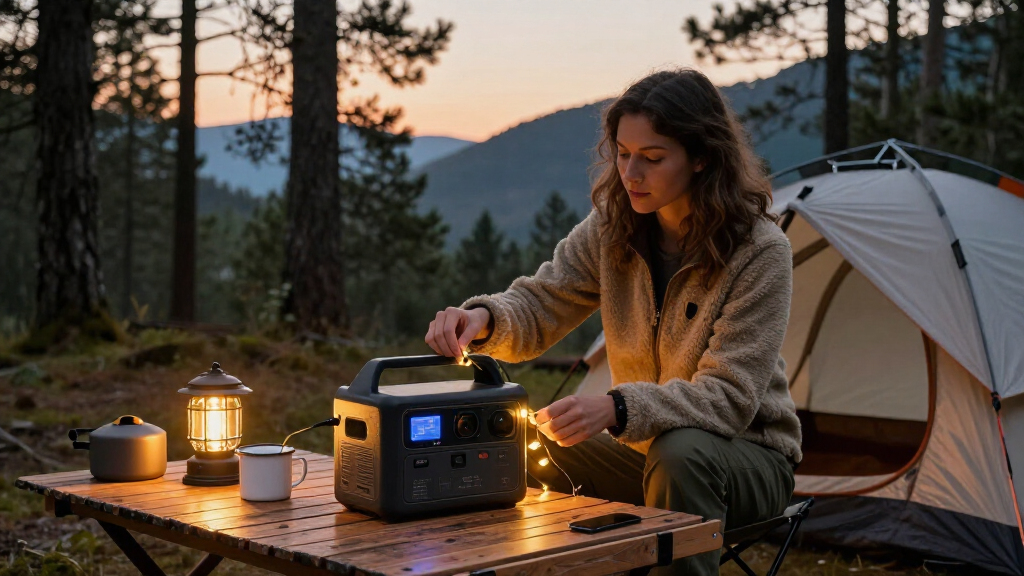
Among these portable camping power stations, I’d choose the BLUETTI Elite 100 V2 as the best overall for campers who need substantial capacity and 1800W output. The Jackery Explorer 300 is a more manageable match for lighter trips, while the Anker SOLIX C300 DC suits gear that charges mainly through USB and other DC ports. The main tradeoff is between more capacity and appliance support and a smaller, easier-to-carry unit with fewer AC demands. Solar bundles and battery chemistry also affect convenience, weight, and how a station fits a camping routine. Read on for the full comparison, ranking logic, and advice on choosing capacity for your trips.

Get travel and outdoor gear delivered free — and shop member deals
- Fast, free delivery on millions of items
- Access to Prime Big Deal Days deals on October 6–7
- Prime Video, Amazon Music and more included
Complete the kit


Key Takeaways
The two 1024Wh, 1800W models—the BLUETTI Elite 100 V2 and EF ECOFLOW DELTA 3—sit apart from the smaller stations for campers who need to run higher-draw equipment or stretch power across longer stays.
For a middle ground, the 288–300Wh group offers varied approaches: the Jackery Explorer 300 and Anker SOLIX C300 include AC outlets, while the Anker SOLIX C300 DC prioritizes DC charging.
The 88–97.6Wh models are better suited to phones, lights, and small electronics than to powering appliances; compact capacity limits how long a camp can rely on them.
A supplied solar panel, as with the ZeroKor 300W bundle, gives buyers a ready-made solar option, but panel output and weather affect how much energy a campsite can actually collect.
Capacity alone does not settle the choice: output limits, port mix, battery chemistry, and weight determine whether a station fits a specific car-camping setup or becomes unnecessary load.
| HOWEASY 88Wh Portable Power Station, 120W (240W Peak) |  | Best Ultra-Light Pick | Battery capacity: 88Wh | Running power: 120W | Peak power: 240W | VIEW LATEST PRICE | See Our Full Breakdown |
| VTOMAN FlashSpeed 300 Portable Power Station |  | Best Value for Longer Camp Trips | Battery capacity: 230Wh | Battery type: LiFePO4 | Output power: 300W | VIEW LATEST PRICE | See Our Full Breakdown |
| Anker SOLIX C300 Portable Power Station, 288Wh |  | Best for Fast Recharging | Battery capacity: 288Wh | Battery chemistry: LiFePO4 | Running output: 300W | VIEW LATEST PRICE | See Our Full Breakdown |
| ZeroKor 300W Portable Solar Generator with 60W Solar Panel | 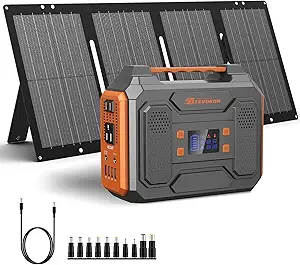 | Best Ready-to-Use Solar Bundle | Power output: 300W | Solar panel power: 60W | Solar conversion efficiency: 20.5% | VIEW LATEST PRICE | See Our Full Breakdown |
| BLUETTI Elite 100 V2 Portable Power Station, 1024Wh, 1800W |  | Best for High-Power Base Camps | Battery capacity: 1,024Wh | Battery type: LiFePO₄ | Surge power: 3,600W | VIEW LATEST PRICE | See Our Full Breakdown |
| Westinghouse iGen400s Portable Power Station, 400W Peak, 183Wh |  | Best Lightweight Pick | Battery capacity: 183Wh (also listed as 184Wh) | Running output: 200W | Peak output: 400W | VIEW LATEST PRICE | See Our Full Breakdown |
| BLUETTI Elite 30 V2 Portable Power Station 288Wh 600W LFP Solar Generator |  | Best Fast-Charging Compact Station | Capacity: 288Wh | Battery type: LFP (LiFePO4) | Continuous output: 600W | VIEW LATEST PRICE | See Our Full Breakdown |
| ZeroKor 120W Portable Power Station, 97.6Wh |  | Best for Minimalist Camping | Battery capacity: 97.6Wh / 26,400mAh | AC output: 120W | AC outlets: 2 | VIEW LATEST PRICE | See Our Full Breakdown |
| MARBERO Portable Power Station, 88Wh, 120W Surge |  | Best for Simple Campsite Essentials | Capacity: 88Wh | Running power: 80W | Surge power: 120W | VIEW LATEST PRICE | See Our Full Breakdown |
| Jackery Explorer 1000 v2 Portable Power Station |  | Best for Extended Camping and High-Power Loads | Battery capacity: 1,070Wh | Battery type: LFP | Output power: 1,500W | VIEW LATEST PRICE | See Our Full Breakdown |
| Core 300W Portable Power Station, 192Wh Solar Generator with 600W Surge |  | Best for Fast Recharging in a Compact Package | Capacity: 192Wh | Battery: LiFePO4; 4,000+ charge cycles | Weight: 8.8 lbs | VIEW LATEST PRICE | See Our Full Breakdown |
| Jackery Explorer 300 Portable Power Station, 292Wh |  | Best Lightweight Pick for Longer Weekends | Capacity: 292Wh | Battery chemistry: LiFePO4 | Weight: 7.5 lbs | VIEW LATEST PRICE | See Our Full Breakdown |
| Anker SOLIX C300 DC Portable Power Station, 288Wh, 300W |  | Best for USB-C-Heavy Campsites | Capacity: 288Wh | Output: 300W | Battery: LiFePO4 | VIEW LATEST PRICE | See Our Full Breakdown |
| ALLWEI 300W Portable Power Station with 256Wh LiFePO4 Battery |  | Best Lightweight Option with an Emergency Light | Capacity: 256Wh | Continuous / peak output: 300W / 600W | Battery chemistry: LiFePO4; 3,000 charge-discharge cycles | VIEW LATEST PRICE | See Our Full Breakdown |
| EF ECOFLOW DELTA 3 Portable Power Station, 1024Wh, 1800W |  | Best for Extended Trips and Larger Camp Loads | Capacity: 1,024Wh | AC output: 1,800W | Surge output: 3,600W | VIEW LATEST PRICE | See Our Full Breakdown |
| portable camping power station | Weight | Dimensions |
|---|---|---|
| HOWEASY 88Wh Portable Power St | 2.3 pounds | 6.6 × 3 × 4 inches |
| VTOMAN FlashSpeed 300 Portable | 7.4 pounds | 10.24 × 4.72 × 7.87 inches |
| Anker SOLIX C300 Portable Powe | 4.13kg | — |
| ZeroKor 300W Portable Solar Ge | — | — |
| BLUETTI Elite 100 V2 Portable | 25 pounds | 12.6 × 8.5 × 9.8 inches |
| Westinghouse iGen400s Portable | 5 pounds | 9.4 x 4.5 x 5.9 inches |
| BLUETTI Elite 30 V2 Portable P | 9.5 pounds | 9.8 x 7 x 6.6 inches |
| ZeroKor 120W Portable Power St | 2.2 pounds | 5.7 x 4.4 x 4.1 inches |
| MARBERO Portable Power Station | 3.2 pounds | 6.5 x 4.6 x 3.1 inches |
| Jackery Explorer 1000 v2 Porta | 23.8 pounds | 12.87 x 8.82 x 9.72 inches |
| Core 300W Portable Power Stati | 8.8 lbs | 9.4 × 7.3 × 5.4 in |
| Jackery Explorer 300 Portable | 7.5 lbs | 9.1 × 5.2 × 7.8 in |
| Anker SOLIX C300 DC Portable P | — | — |
| ALLWEI 300W Portable Power Sta | 6.4 lbs | 9.25 × 5 × 6.81 in |
| EF ECOFLOW DELTA 3 Portable Po | — | — |
More Details on Our Top Picks
HOWEASY 88Wh Portable Power Station, 120W (240W Peak)
At 2.3 pounds, this is the easiest option here to tuck into a daypack or keep beside a tent for phones, lights, and other small electronics. Its 88Wh battery and 120W running limit place it well below the VTOMAN FlashSpeed 300 in both capacity and appliance capability, so I’d treat it as a compact device charger rather than a camp kitchen power source. Eight ports give several people room to connect gear at once, while AC, car, and solar charging offer flexibility on the way to camp and off-grid. The built-in light adds useful emergency modes. The tradeoff is limited runtime for multiple devices, and solar charging requires a separately purchased compatible panel.
Pros:- Very light at 2.3 pounds, with a compact body and hidden handle
- Eight output ports support charging several small devices
- Can recharge from an AC outlet, car socket, or compatible solar panel
- Built-in LED has steady, flash, and SOS modes
Cons:- 120W running output rules out many larger appliances
- 88Wh capacity limits how long it can supply multiple devices
- Compatible solar panel is not included
Best for: Backpackers and minimalist campers who mainly need to recharge phones, headlamps, and other low-wattage devices.
Not ideal for: Campers running appliances or several power-hungry devices; the 120W running output and 88Wh capacity are restrictive.
- Battery capacity:88Wh
- Running power:120W
- Peak power:240W
- Output ports:8 total: 2 AC, 3 USB, 2 DC, 1 USB-C
- USB-C output:18W
- Recharging methods:AC outlet, 15V–24V solar panel (not included), 12V/24V car socket
- Weight:2.3 pounds
- Dimensions:6.6 × 3 × 4 inches
Our verdict“Choose the HOWEASY if carrying as little weight as possible matters more than long runtimes or appliance support.”
VTOMAN FlashSpeed 300 Portable Power Station
The FlashSpeed 300 is a practical step up from the HOWEASY: its 230Wh LiFePO4 battery and 300W output give small camp electronics more headroom and staying power, without moving into the weight class of the BLUETTI Elite 100 V2. At 7.4 pounds, it remains manageable for car camping, though it is no longer a natural choice for carrying far from the vehicle. Four charging routes—including 100W USB-C input—make it easier to top up with gear you may already pack, and its battery is rated for over 3,000 cycles. The limit is still 300W: larger appliances are out. Solar is supported, but the panel is not listed among the included components.
Pros:- 230Wh LiFePO4 battery rated for over 3,000 cycles
- 300W output and 600W peak provide more headroom than the HOWEASY
- Four recharging methods, including 100W USB-C input
- Seven-device output setup and built-in emergency light
Cons:- 7.4-pound weight is much less suitable for carrying on foot than the HOWEASY
- 300W output cannot support higher-powered appliances
- Solar panel is not included
Best for: Car campers who want a mid-size battery for phones, cameras, and modest electronics, with several ways to recharge it.
Not ideal for: Backpackers prioritizing the lightest load, or campers needing power for appliances above 300W.
- Battery capacity:230Wh
- Battery type:LiFePO4
- Output power:300W
- Peak output:600W
- Ports:7: 2 AC, 1 USB-C, 3 USB-A, 1 DC
- USB-C power:100W input/output
- Recharging methods:Wall outlet, solar panel, vehicle outlet, USB-C
- Weight:7.4 pounds
- Dimensions:10.24 × 4.72 × 7.87 inches
Our verdict“Pick the FlashSpeed 300 for car camping when you want more capacity and flexible charging than an ultra-light unit can provide.”
Anker SOLIX C300 Portable Power Station, 288Wh
The SOLIX C300 pairs a useful 288Wh capacity with 300W running output, making it a stronger all-around camp companion than the smaller HOWEASY for laptops, cameras, and several devices. Its distinguishing advantage is recharge flexibility: the unit supports wall, solar, car, and USB-C charging, and can reach 80% from a wall outlet in 50 minutes. That can shorten downtime between trips or during a stop at home. Three AC outlets and three USB-C ports also offer more varied connections than the VTOMAN FlashSpeed 300. The tradeoff is a 4.13kg listed weight, which is substantial for its capacity, and the shoulder strap is sold separately. Check solar-panel compatibility before buying; some Anker panels are excluded.
Pros:- 288Wh LiFePO4 battery with 300W running and 600W surge output
- Three USB-C ports and three AC outlets support varied camp gear
- Reaches 80% charge in 50 minutes from a wall outlet
- Supports wall, solar, car, and USB-C recharging
Cons:- Listed weight of 4.13kg is heavy for a compact camping station
- Shoulder strap is sold separately
- Not compatible with some Anker solar panels, including PS30, PS200, and PS400
Best for: Car campers and frequent travelers who want a 300W station with multiple high-output USB-C ports and fast wall recharging.
Not ideal for: Hikers who need a lightweight power source, or buyers planning to pair it with one of the listed incompatible Anker solar panels.
- Battery capacity:288Wh
- Battery chemistry:LiFePO4
- Running output:300W
- Surge output:600W
- Charging ports:8 total: 3 AC, 1 car socket, 3 USB-C, 1 USB-A
- USB-C output:Two ports up to 140W each; one port up to 15W
- Recharge time:80% in 50 minutes via wall outlet
- Weight:4.13kg
- Warranty:5 years
Our verdict“Choose the SOLIX C300 if fast recharging and plentiful USB-C connections matter more than minimizing carry weight.”
ZeroKor 300W Portable Solar Generator with 60W Solar Panel
Unlike the HOWEASY and VTOMAN units, the ZeroKor includes a 60W monocrystalline solar panel, so buyers have a panel in the box rather than needing to source one separately. That makes it a straightforward entry point for campers who want to try solar recharging. Its 300W maximum output and mix of AC, DC, and USB connections suit small electronics, while the built-in SOS flashlight and battery protections add practical campsite features. The product data does not list battery capacity, so I would not choose it over the Anker SOLIX C300 on runtime without checking that detail first. Solar has a real limitation, too: the panel junction box is not waterproof, so it needs protection from rain.
Pros:- Includes a 60W monocrystalline solar panel
- Accepts wall AC, solar, and 12V car charging
- Provides two AC outlets plus DC and multiple USB outputs
- Battery management protections include over-current and overheating safeguards
Cons:- Solar panel junction box is not waterproof
- Cannot safely power devices above 300W
- Battery capacity is not specified in the supplied product data
Best for: Car campers who want a solar panel included and mainly need to charge phones, lights, and other small devices.
Not ideal for: Campers who need a documented battery capacity, output above 300W, or a solar setup that can be left exposed to rain.
- Power output:300W
- Solar panel power:60W
- Solar conversion efficiency:20.5%
- AC outlets:2, up to 300W max
- DC port:9V–12.6V / 10A max
- USB ports:3 × 5V/3A; 1 Quick Charge port
- Charging inputs:Wall AC, 13V–23V solar panel, 12V car charger
- Included solar panel:60W monocrystalline
Our verdict“The ZeroKor suits campers who value an included solar panel over the clearer capacity and fast wall charging offered by the Anker SOLIX C300.”
BLUETTI Elite 100 V2 Portable Power Station, 1024Wh, 1800W
The Elite 100 V2 is in a different class from the compact stations above: its 1,024Wh LiFePO₄ battery and 1,800W rated output can support a much broader set of camp equipment and longer stays. It is the clear choice over the Anker SOLIX C300 when power needs extend beyond phones and laptops, but its 25-pound weight makes it a car-to-campsite unit, not a backpacking companion. Fast AC charging can take the battery to 80% in about 45 minutes, and UPS switchover of 10ms or less adds value when it doubles as backup at home. The tradeoffs are bulk and the need for a separate BLUETTI Charger 1 for vehicle fast charging.
Pros:- 1,024Wh capacity and 1,800W rated output support larger power needs than the compact models
- Reaches 80% charge in about 45 minutes via AC
- UPS switchover of 10ms or less can help keep compatible equipment powered
- LiFePO₄ battery rated for over 4,000 cycles to 80%
Cons:- 25-pound weight makes it unsuitable for backpacking or long carries
- Vehicle fast charging requires a separate BLUETTI Charger 1
- Larger capacity and output are more than many minimalist camping setups need
Best for: Car campers setting up a high-power base camp who also want a large-capacity station for home backup.
Not ideal for: Backpackers or campers with limited vehicle space; 25 pounds is cumbersome for carrying any distance.
- Battery capacity:1,024Wh
- Battery type:LiFePO₄
- Surge power:3,600W
- Power lifting output:2,700W
- AC charging time:About 45 minutes to 80%
- UPS switchover:10ms or less
- Weight:25 pounds
- Dimensions:12.6 × 8.5 × 9.8 inches
Our verdict“Choose the Elite 100 V2 for a vehicle-based camp or backup setup that needs substantial power, not for trips where portability means carrying it on foot.”
Westinghouse iGen400s Portable Power Station, 400W Peak, 183Wh
At 5 pounds, the Westinghouse iGen400s is the easiest choice here to carry between the car, campsite, and tent. Its 183Wh capacity and 200W running output suit phones, lights, and other modest electronics, but leave less room for power-hungry gear than the BLUETTI Elite 30 V2, which offers 600W continuous output. The iGen400s counters with a useful spread of AC, USB, and 12V ports, plus a display and a tri-mode flashlight for campsite and emergency use. Its quiet, fume-free operation also makes it more appropriate near a tent than a fuel generator. The tradeoff is getting it ready to recharge: the 100W AC adapter and solar panel are not included, and 200W running output rules out many appliances.
Pros:- At 5 pounds, it is easy to carry from a vehicle to a campsite.
- Quiet, fume-free operation suits use around tents and indoor backup situations.
- AC, USB, and 12V DC connections cover a range of small devices.
- Built-in display and tri-mode flashlight add practical campsite utility.
Cons:- The 200W running limit restricts the appliances and device combinations it can power.
- The 100W AC adapter needed for the stated charging speed is not included.
- Solar panel is not included.
Best for: Campers who prioritize a very light carry and need to recharge phones, lights, and other low-wattage devices.
Not ideal for: Campers planning to run appliances or several high-demand devices, or buyers who want an AC charging adapter or solar panel included.
- Battery capacity:183Wh (also listed as 184Wh)
- Running output:200W
- Peak output:400W
- Outlets:2 AC, 4 USB-C, 2 USB-A, 1 12V DC
- Weight:5 pounds
- Dimensions:9.4 x 4.5 x 5.9 inches
- Charging:Up to 80% in 2 hours with a 100W AC adapter; adapter not included
- Warranty:2-year limited warranty
Our verdict“Choose the iGen400s for a lightweight source of power for small camping electronics, not for running appliances.”
BLUETTI Elite 30 V2 Portable Power Station 288Wh 600W LFP Solar Generator
The BLUETTI Elite 30 V2 suits campers who want more output than the smallest stations without stepping up to a large, heavy unit. Its 600W continuous output gives it a wider range of uses than the 200W Westinghouse iGen400s, while the 288Wh LFP battery still keeps total stored energy modest for longer trips. Reaching 80% in 45 minutes is useful when a short stop is your chance to recharge, and its 9.5-pound weight remains manageable for car camping. The ≤10ms UPS switch is an extra benefit for backup use, though less central at a campsite. This is a more capable compact option, not a replacement for the much larger Jackery Explorer 1000 v2: it cannot provide the same runtime, and its continuous output still limits simultaneous high-wattage loads.
Pros:- 600W continuous output supports more equipment than the 200W Westinghouse iGen400s.
- Reaches 80% charge in 45 minutes according to the supplied specs.
- LFP battery chemistry and 288Wh capacity suit frequent portable use.
- At 9.5 pounds, it remains practical to move around a campsite.
Cons:- 288Wh capacity may not last through extended off-grid trips.
- 600W continuous output limits simultaneous use of high-wattage devices.
- The 1500W surge figure does not replace the lower continuous output for sustained loads.
Best for: Car campers and road-trippers who need a portable station for small appliances and electronics, with fast recharging between stops.
Not ideal for: Extended off-grid campers or anyone planning to run several high-wattage appliances for long periods.
- Capacity:288Wh
- Battery type:LFP (LiFePO4)
- Continuous output:600W
- Surge output:1500W
- Weight:9.5 pounds
- Dimensions:9.8 x 7 x 6.6 inches
- Charging time:0–80% in 45 minutes; 0–100% in 70 minutes
- Output outlets:9
- UPS switch time:≤10ms
Our verdict“Pick the Elite 30 V2 if you want a compact station with stronger output and rapid recharging, but do not expect large-station runtime.”
ZeroKor 120W Portable Power Station, 97.6Wh
The ZeroKor makes the most sense when low weight and basic device charging matter more than extended runtime. At 2.2 pounds, it is easier to pack than the 3.2-pound MARBERO 88Wh station, while its 97.6Wh capacity edges past that model’s 88Wh. Both remain small-capacity options, so think phones, lights, and other modest loads rather than appliances. ZeroKor provides AC, USB, and DC connections, plus an LED light with reading and SOS modes; included charging accessories also make it more ready to use than the Westinghouse iGen400s, whose AC adapter is sold separately. Its 120W AC output is the main constraint, and the solar panel is not included. This is a compact backup for a short outing, not a station for powering a full campsite.
Pros:- At 2.2 pounds, it is the lightest option in this group.
- 97.6Wh capacity is slightly higher than the 88Wh MARBERO model.
- AC, USB-A, USB-C, and DC outputs offer flexibility for small devices.
- Built-in LED includes reading and SOS modes, with several listed protection features.
Cons:- 120W output limits the appliances it can run.
- 97.6Wh capacity is suited to short trips and small electronics, not extended use.
- Solar panel is not included.
Best for: Minimalist campers, day-trippers, and backpack-style travelers who want to top up small electronics and carry a light for emergencies.
Not ideal for: Campers needing long runtimes, appliance power, or solar charging without buying a separate panel.
- Battery capacity:97.6Wh / 26,400mAh
- AC output:120W
- AC outlets:2
- Total power outlets:6
- Weight:2.2 pounds
- Dimensions:5.7 x 4.4 x 4.1 inches
- Recharge options:USB-C, car USB port, or solar panel (panel not included)
- Protection features:Short circuit, over-current, over-voltage, overload, and overheating protection
- Warranty support:12 months
Our verdict“Choose the ZeroKor for lightweight charging and emergency lighting on short trips, and skip it if you need appliance power or longer runtime.”
MARBERO Portable Power Station, 88Wh, 120W Surge
The MARBERO is a small-format pick for campers who want several connection types and a built-in light in one compact unit. Its eight ports let you connect a mix of small devices, but the 80W running output and 88Wh capacity set a clear boundary: it is better for phones, lights, and similar essentials than for appliances or long stretches away from an outlet. Compared with the ZeroKor 120W Portable Power Station, MARBERO stores less energy and weighs more, so it is not the stronger choice for minimizing pack weight or gaining runtime. Its three-level LED and SOS mode add useful campsite utility, and AC-adapter charging is included in the supplied details. Solar charging requires a compatible MARBERO panel, adding a brand-specific constraint.
Pros:- Eight output ports accommodate several small devices and connection types.
- Compact dimensions suit car-camping kits with limited storage space.
- Three brightness levels and SOS mode provide useful built-in lighting.
- Battery management and automatic shutoff features add protection.
Cons:- 88Wh capacity and 80W running power restrict runtime and device choice.
- At 3.2 pounds, it is heavier than the higher-capacity 2.2-pound ZeroKor.
- Solar charging requires a compatible MARBERO panel.
Best for: Campers who want a compact hub for charging small electronics and using a built-in campsite or emergency light.
Not ideal for: Travelers who need to power appliances, maximize battery capacity per pound, or use a broadly compatible solar panel.
- Capacity:88Wh
- Running power:80W
- Surge power:120W
- Ports:8 total
- Weight:3.2 pounds
- Dimensions:6.5 x 4.6 x 3.1 inches
- Charging:AC adapter or compatible 30W/60W MARBERO solar panel
- Lighting:Three brightness levels and SOS mode
- Safety features:Battery management system, short-circuit and overload protection, automatic shutoff
Our verdict“Choose the MARBERO for basic electronics and integrated lighting, but favor the ZeroKor if lower weight and more capacity matter more.”
Jackery Explorer 1000 v2 Portable Power Station
The Jackery Explorer 1000 v2 stands apart from the compact stations here by pairing a 1,070Wh LFP battery with 1,500W output and 3,000W surge capacity. That gives campers room to run more demanding gear and keep devices going longer than the 288Wh BLUETTI Elite 30 V2, at the cost of a heavier 23.8-pound carry. Three pure sine wave AC outlets, USB ports, and a car port make it a more versatile base for a vehicle-supported campsite or backup setup. Charging can take one hour with emergency charging enabled in the app, while the default figure is 1.7 hours; that fast mode involves an app setting. Its size and weight make it less suitable for walking far from the car, and solar charging is limited to compatible Jackery panels, which are not included.
Pros:- 1,070Wh capacity provides much more stored energy than the compact stations in this group.
- 1,500W output and 3,000W surge support higher-power devices than the BLUETTI Elite 30 V2.
- LFP battery is rated to retain over 70% capacity after 4,000 charge cycles.
- App includes emergency, quiet, and energy-efficiency charging modes.
Cons:- At 23.8 pounds, it is substantially less convenient to carry than compact camping stations.
- One-hour charging requires enabling emergency charging in the app; default charging takes 1.7 hours.
- Solar panel is not included, and solar charging is compatible only with Jackery panels.
Best for: Car campers and emergency-prepared households who need substantial stored energy and the ability to power higher-wattage equipment.
Not ideal for: Backpackers or campers who need a light, compact unit, or buyers who want solar-panel flexibility beyond Jackery-compatible panels.
- Battery capacity:1,070Wh
- Battery type:LFP
- Output power:1,500W
- Surge power:3,000W
- Weight:23.8 pounds
- Dimensions:12.87 x 8.82 x 9.72 inches
- AC outlets:3 pure sine wave
- USB-C output:Up to 100W
- Charging time:1 hour with emergency charging enabled; 1.7 hours by default
Our verdict“Choose the Explorer 1000 v2 for vehicle-supported camping and demanding loads, but not when low carry weight or open solar compatibility is a priority.”
Core 300W Portable Power Station, 192Wh Solar Generator with 600W Surge
The Core prioritizes quick AC top-ups over long runtimes: its 192Wh capacity is the smallest in this group, but it can reach 80% charge in a stated one hour. That makes it a practical fit for short trips or quick turnarounds between outings, rather than powering a campsite for several days. Its 8.8-pound weight is higher than the Jackery Explorer 300 at 7.5 pounds, though the Core adds a 10ms UPS function for users who also want backup for sensitive electronics at home. LiFePO4 chemistry and a stated 4,000-plus cycles favor long-term use. The tradeoff is limited appliance support: 300W continuous output rules out common high-wattage camp comforts, and solar panels are sold separately.
Pros:- Reaches 80% charge in a stated one hour using AC power
- LiFePO4 battery rated for more than 4,000 cycles
- UPS switches in 10ms or less for small backup loads
- Two AC outlets plus USB-C, USB-A, and car output
Cons:- 192Wh capacity is lower than the Jackery Explorer 300 and most other stations here
- 300W continuous output cannot run high-wattage appliances such as coffee makers
- Solar panel and car charger are sold separately
Best for: Campers taking short trips who value rapid wall recharging and want a compact station that can also provide UPS backup for small electronics.
Not ideal for: Campers who need multiple days of device charging, want to run high-wattage appliances, or need solar equipment included.
- Capacity:192Wh
- Battery:LiFePO4; 4,000+ charge cycles
- Weight:8.8 lbs
- Dimensions:9.4 × 7.3 × 5.4 in
- Ports:2 AC, 1 USB-C 65W, 2 USB-A, 1 car outlet
- AC recharge:0–80% in 1 hour
- UPS switch time:≤10ms
Our verdict“Choose the Core for quick recharging and UPS backup on short camping trips, but skip it if capacity matters more than charge speed.”
Jackery Explorer 300 Portable Power Station, 292Wh
Among the smaller stations here, the Jackery Explorer 300 pairs useful capacity with the lightest listed weight: 292Wh at 7.5 pounds. That gives it a clear portability advantage over the Core 300W, while offering about 100Wh more energy for phones, lights, and other modest camping loads. Its 300W rated output still sets a firm limit; this is a device-charging station, not a way to run a coffee maker or other demanding appliance. The 100W USB-C PD port and two AC outlets make it flexible at camp, and compatible solar panels can recharge it off-grid. Solar gear is not included, and the stated four-hour battery charge time is slower than the Core’s one-hour charge to 80%, so this pick favors light carry weight and capacity over quick wall refills.
Pros:- 292Wh capacity in a 7.5-pound unit
- 100W USB-C PD port supports higher-power USB-C devices
- Two AC outlets plus USB-A and car output
- LiFePO4 battery rated for more than 4,000 cycles to 70% capacity
Cons:- 300W rated output limits it to modest loads rather than common high-wattage appliances
- Compatible solar panel is sold separately
- Stated battery charge time is four hours, slower than the Core’s rapid AC charging
Best for: Backpackers and weekend campers who want more device-charging capacity than a sub-200Wh unit without carrying a heavier power station.
Not ideal for: Campers who need fast AC recharging, included solar panels, or enough output for high-wattage appliances.
- Capacity:292Wh
- Battery chemistry:LiFePO4
- Weight:7.5 lbs
- Dimensions:9.1 × 5.2 × 7.8 in
- Ports:2 AC, 1 USB-C PD 100W, 2 USB-A, 1 car port
- AC battery charge time:4 hours
- Solar charging:About 80% in 2.8 hours with a 100W panel
Our verdict“Pick the Explorer 300 if low carry weight and nearly 300Wh of capacity matter more than quick recharging or appliance-level output.”
Anker SOLIX C300 DC Portable Power Station, 288Wh, 300W
The Anker SOLIX C300 DC is the specialist in this group: seven ports, including two 140W USB-C outputs, make it a strong match for campers charging laptops and several personal devices without relying on AC outlets. Its 288Wh capacity is close to the Jackery Explorer 300’s 292Wh, but this DC-focused model does not list AC outlets, so it is less versatile for equipment that uses a standard plug. That distinction matters more than the small capacity gap. USB-C, car, and solar recharging give it several off-grid charging paths, while the included 140W cable gets one compatible device connected. The wall charger and shoulder strap are not included, adding setup and carry limitations compared with the more complete port mix of the Jackery. Check solar-panel compatibility before buying.
Pros:- Two 140W USB-C ports plus a 100W USB-C port
- Seven total ports for charging several devices
- 288Wh LiFePO4 battery in a portable format
- Supports USB-C, car, and solar recharging
Cons:- No AC outlets are listed, limiting compatibility with standard plug-in gear
- Wall charger and shoulder strap are not included
- Not compatible with several Anker panels, including PS30, PS200, and PS400
Best for: Campers who mainly charge USB-C laptops, phones, cameras, and other personal electronics and do not need AC outlets.
Not ideal for: Buyers who need to power standard AC-plug equipment, want a wall charger or shoulder strap in the box, or already own one of the listed incompatible Anker panels.
- Capacity:288Wh
- Output:300W
- Battery:LiFePO4
- Total ports:7
- USB-C ports:2 × 140W, 1 × 100W, 1 × 15W
- USB-A ports:2 × 12W
- Car socket:120W
- Recharge options:USB-C, solar, car
- Included cable:60cm 140W USB-C to USB-C
Our verdict“Choose the C300 DC for a campsite built around USB-C devices, but choose the Jackery Explorer 300 if you need AC outlets.”
ALLWEI 300W Portable Power Station with 256Wh LiFePO4 Battery
At 6.4 pounds, the ALLWEI is the lightest option in this five-product set, while its 256Wh capacity sits between the smaller Core and the roughly 290Wh Jackery and Anker units. That balance suits car campers who want to keep the load easy to carry without dropping to an especially small battery. Its LED light with SOS mode adds a practical campsite and emergency feature, and AC, car, solar, and combined AC-plus-solar charging offer flexibility when a suitable panel is available. Compared with the Jackery Explorer 300, it is lighter but provides slightly less capacity and a 60W USB-C port rather than the Jackery’s 100W port. A single AC outlet and 300W continuous ceiling also constrain what it can run; solar charging takes a stated four to five hours with a 100W panel.
Pros:- Lowest listed weight in this batch at 6.4 pounds
- 256Wh LiFePO4 battery rated for 3,000 charge-discharge cycles
- AC, car, solar, and combined AC-plus-solar recharging
- Built-in LED light includes an SOS mode
Cons:- Only one AC outlet is provided
- 300W continuous output limits appliance choices
- Solar panel is sold separately, and solar charging takes 4–5 hours with a 100W panel
Best for: Car campers and emergency-kit buyers who want a very light station, an SOS light, and multiple ways to recharge.
Not ideal for: Campers who need more than one AC outlet, faster solar charging, or enough output for high-wattage appliances.
- Capacity:256Wh
- Continuous / peak output:300W / 600W
- Battery chemistry:LiFePO4; 3,000 charge-discharge cycles
- Weight:6.4 lbs
- Dimensions:9.25 × 5 × 6.81 in
- Ports:1 AC, 2 DC5521, 1 car outlet, 1 USB-A 18W, 1 USB-C PD 60W
- AC recharge time:3.5–4 hours
- Solar recharge time:4–5 hours with a 100W panel
- Warranty:5 years
Our verdict“Choose the ALLWEI if low weight and an SOS light matter more than extra capacity, USB-C power, or AC outlets.”
EF ECOFLOW DELTA 3 Portable Power Station, 1024Wh, 1800W
The DELTA 3 is in a different capacity class from the other four picks: its 1,024Wh battery and 1,800W AC output can support a broader mix of campsite equipment and longer use between charges than the sub-300Wh stations. It is the clearest choice here for extended car camping or group trips where lights and personal electronics are not the only loads. Fast AC charging is a standout, with a stated full-charge time of 56 minutes, and extra batteries can expand capacity up to 5kWh. That headroom comes with a larger footprint and a 12.5kg carry weight, far beyond the Jackery Explorer 300’s 7.5 pounds. Expansion batteries are additional, and even 1,800W may not cover every high-demand appliance; X-Boost is listed, but buyers should check the specific device’s requirements.
Pros:- 1,024Wh capacity and 1,800W AC output suit larger camp loads
- Stated full AC charge time is 56 minutes
- Expandable to 5kWh with additional batteries
- LiFePO4 battery rated for 4,000 cycles to 80% capacity
Cons:- At 12.5kg, it is much heavier than compact options such as the Jackery Explorer 300
- Expansion batteries are required to reach the stated 5kWh maximum
- Some high-power appliances may exceed its 1,800W AC output
Best for: Car-camping groups and extended-trip campers who need substantially more stored energy and AC output than compact device-charging stations provide.
Not ideal for: Backpackers, minimalist campers, and buyers who prioritize low carry weight or do not need more than a few hundred watt-hours.
- Capacity:1,024Wh
- AC output:1,800W
- Surge output:3,600W
- X-Boost output:2,200W
- Battery chemistry:LiFePO4
- Expansion capacity:Up to 5kWh with additional batteries
- Solar input:Up to 500W
- AC charging:Up to 1,500W; stated full charge in 56 minutes
- Weight and dimensions:12.5kg; 15.7 × 8 × 11.2 in
Our verdict“Choose the DELTA 3 for extended car camping and larger loads, but leave it behind if portable means easy to carry on foot.”
How We Picked
I compared each station as camping equipment rather than treating battery capacity as the only measure. The main criteria were usable capacity, continuous and peak output, port selection, charging options, and portability. I also considered how battery chemistry and included accessories shape long-term fit and out-of-box usefulness, while avoiding claims that require unprovided performance or weight data.
The ranking favors models that balance capacity and output with practical flexibility for common camp needs. That puts the BLUETTI Elite 100 V2 first for its stated 1024Wh capacity and 1800W output, while the comparable EF ECOFLOW DELTA 3 remains a strong high-capacity alternative. Smaller options rank for narrower jobs: mid-capacity stations suit electronics and modest loads, and sub-100Wh choices suit short, light-duty outings. Models with different port strategies or a bundled panel are ranked for those specific uses rather than treated as direct substitutes.
Factors to Consider When Choosing Portable Camping Power Stations
I’d start with the devices you plan to power, then work backward to capacity, output, and carry needs. These choices are linked: a station that can run a device may still lack enough stored energy to run it for the time you need.
Match Capacity to Trip Length and Device Use
List each device, its wattage, and the hours you expect to use it; add phone and light charging rather than estimating from battery capacity alone. A station’s watt-hours describe stored energy, not the exact amount available at every outlet, since conversion and operating conditions affect delivered power. Short trips with phones, headlamps, and small electronics can suit a compact unit, while multiple days or sustained loads call for more reserve. A common mistake is choosing a capacity number that matches one appliance but leaves no energy for the rest of camp. I’d allow extra capacity for cold conditions, changing plans, and devices whose draw cycles on and off.
Check Continuous Output Before Peak Output
Compare a device’s running wattage with the station’s continuous AC output, not just its peak or surge figure. Peak output may cover a brief startup demand, but it does not mean the station can run that load continuously. This distinction matters for equipment with motors or compressors, whose startup draw can exceed their normal operating draw. Add together the loads you expect to use at once; a station may power each item individually but not all of them simultaneously. If your camp routine relies mainly on USB devices, AC output may matter less than the number and type of DC ports.
Choose Ports Around Your Actual Kit
Inventory the plugs on your devices before buying, including USB-C charging needs, standard USB, DC connections, and AC adapters. A DC-focused station can avoid running an inverter for compatible gear, but it is a poor fit if you depend on wall-style AC plugs. Conversely, extra AC outlets add little value when everything at camp charges through USB. Check whether the ports can operate at the same time and whether their output suits the devices you own. Adapters can fill some gaps, but each extra cable adds clutter and may not solve an output mismatch.
Balance Capacity Against Carrying and Vehicle Space
More stored energy generally means a larger unit to transport, so consider how far you will carry the station from the vehicle to camp. For car camping, a heavier unit may be acceptable if it replaces multiple charging solutions; for walk-in sites, size and carrying comfort can outweigh extra capacity. Compare listed weights and dimensions when available rather than assuming two stations with similar watt-hours are equally portable. Also leave room for charging cables, a solar panel, and safe placement away from rain or standing water. Buying more capacity than your trip needs can turn a useful power source into avoidable cargo.
Decide Whether Solar Is Part of the Plan
A bundled panel can simplify a first solar setup, but it does not guarantee that the station will refill quickly at camp. Actual collection depends on sunlight, panel placement, shade, weather, and the station’s accepted solar input. Confirm that the panel connection and input limits match the power station, especially if you plan to buy a separate panel later. A solar bundle makes more sense for longer stays with good sun exposure than for short trips where vehicle or wall charging is more reliable. Treat solar as a way to extend available energy, not as a promise of uninterrupted power.
Weigh Battery Chemistry and Charging Routine
Battery chemistry can affect service life, weight, and the station’s intended use, but it is only one part of the purchase decision. A stated LiFePO4 battery may appeal to buyers prioritizing cycle life, while a lighter or smaller model may better suit occasional, low-draw camping. Look for clear information on recharge methods, charging time, and any stated cycle-life conditions rather than relying on chemistry alone. Consider how you will store the station between trips and whether it is easy to recharge before departure. Paying more for a battery feature makes sense when it matches frequent use, not simply because the feature sounds more advanced.
Frequently Asked Questions
Can a 300Wh camping power station run a mini fridge overnight?
It depends on the fridge’s average energy use, not only its rated wattage. A compressor fridge cycles on and off, and heat, ventilation, and how often it is opened can change its draw. Check the fridge’s watt-hours per day if available, then compare that figure with the station’s capacity while leaving a reserve for other gear. A 288–300Wh station may be suitable for modest, carefully managed use, but it should not be assumed to support a fridge through a full night or longer without checking the numbers. For dependable multi-day refrigeration, a larger capacity class is the safer direction.
Should I choose the Anker SOLIX C300 or the C300 DC?
Choose based on the plugs your camping gear uses. The C300’s standard AC capability makes it more flexible for devices that need wall-style outlets, while the C300 DC is aimed at setups that can run from DC connections. If your kit is mostly phones, USB-powered lights, and compatible DC equipment, the DC model may avoid carrying features you will not use. If you need AC for a laptop charger or other equipment, check the exact outlet configuration before choosing the DC version. Neither model’s capacity alone tells you which one is the better match; port compatibility is the deciding factor.
Is a 1024Wh station worth bringing for a weekend camping trip?
It can be worthwhile if you plan to run higher-draw equipment, power several devices, or avoid frequent recharging during the trip. For a weekend focused on phone, light, and camera charging, a smaller station may do the job with less cargo. The larger models in this lineup also offer 1800W output, which matters for compatible AC loads, but that capability adds little if you only use USB. Estimate your total energy use and consider how the unit will be transported before choosing. A large station is most useful when its capacity and output solve a real camp need.
Does a solar panel included with a power station remove the need for vehicle charging?
No. A panel can replenish a station when sunlight and placement cooperate, but shade, clouds, season, and panel angle can reduce collection. Vehicle charging offers a different source of power and may be more predictable during travel, though charging speed depends on the station and vehicle connection. For a long stay, having more than one charging method can reduce reliance on any single source. Check the station’s supported solar input and the panel’s compatibility before buying a bundle. Plan around realistic daylight rather than assuming the panel will fully recharge the battery each day.
When is a sub-100Wh station enough for camping?
A sub-100Wh model is a reasonable fit for a short outing when the goal is topping up phones or powering a few small electronics. It is not a substitute for a larger station if you need AC appliances, repeated high-draw use, or several days of power away from other charging sources. Check the number and type of ports as carefully as the capacity, since a device may not connect directly. If you expect to charge several phones or run lights for extended evenings, a mid-capacity option gives more breathing room. Choose the small format when low carrying burden matters more than broad power coverage.
Conclusion
For most car campers seeking a balance of substantial stored energy and strong stated output, my best overall pick is the BLUETTI Elite 100 V2. The best value depends on the job: the Jackery Explorer 300 is a practical mid-capacity choice for lighter camp electronics, while the HOWEASY 88Wh is a compact fit for basic charging on short trips. For buyers new to power stations, I’d start with a clearly defined device list and choose a modest, easy-to-manage unit rather than paying for output they will not use. The best premium-class option is a tie between the BLUETTI Elite 100 V2 and EF ECOFLOW DELTA 3 for buyers prioritizing 1024Wh capacity and 1800W output; compare their charging and port details before deciding. For a solar-ready setup, consider the ZeroKor 300W bundle, and for DC-first gear, look at the Anker SOLIX C300 DC. Match the station to your actual loads and carrying limits, and the right choice becomes much clearer.
Fall Picks
fall essentials
As an affiliate, we earn on qualifying purchases.