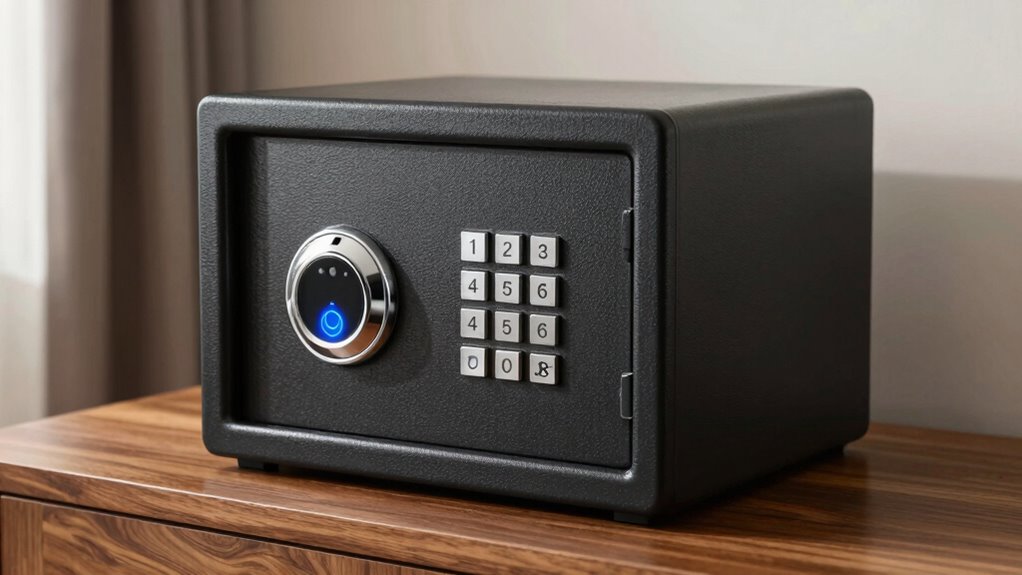

On the road, a biometric travel safe can feel more convenient and secure since you don’t have to carry keys or remember combinations. It offers quick access with your fingerprint and reduces worries about losing or copying keys. However, some people prefer traditional keyed safes for their simplicity and reliability, especially in environments where electronic systems might fail. Want to discover which option suits your travel style best? Keep exploring to find out more.

Get travel and outdoor gear delivered free with Prime
- Fast, free delivery on millions of items
- Prime Video, Amazon Music and more included
- Member-only deals all year
Key Takeaways
- Biometric safes offer quick access without keys, ideal for fast retrieval during travel emergencies.
- Keyed safes provide tactile reassurance and are less reliant on power, suitable for unpredictable travel conditions.
- Biometric safes are more sensitive to dirt or moisture, which may affect performance on the road.
- Keyed safes eliminate electronic failures, ensuring consistent access regardless of power or environmental issues.
- Overall, preference depends on valuing convenience and security features versus simplicity and reliability during travel.
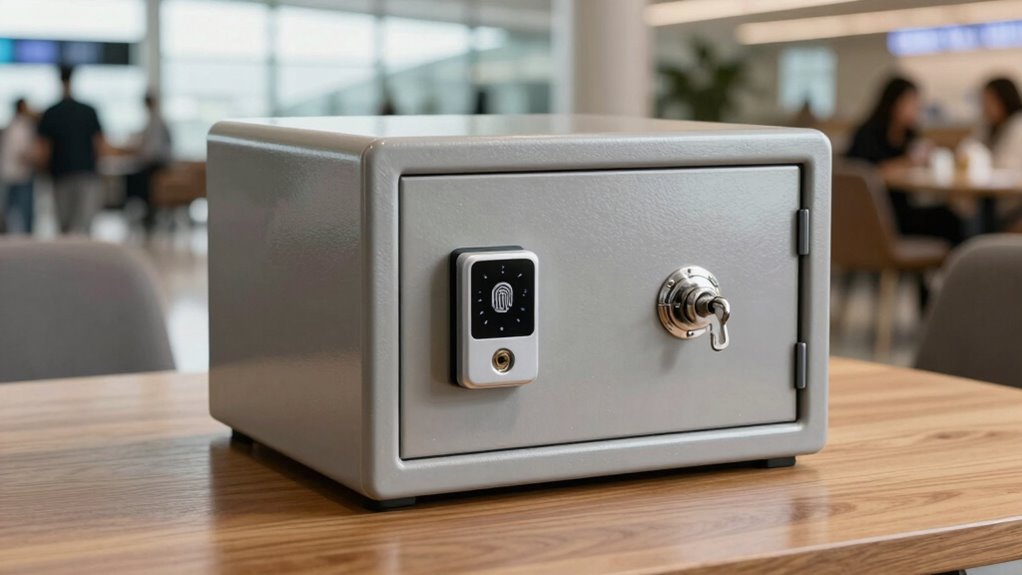
When choosing a travel safe, understanding the differences between biometric and keyed models is essential. Your security concerns and ease of use often guide which type suits your needs best. Biometric safes use fingerprint or other biometric data to open, meaning you don’t have to carry around keys or remember complex combinations. This feature can markedly enhance your sense of security because only your unique fingerprint can open the safe. With biometric safes, you avoid the risk of losing keys or forgetting combinations, which can be especially helpful when you’re on the go and need quick access to valuables. However, some may worry about the reliability of biometric technology—what happens if the scanner doesn’t recognize your fingerprint due to dirt, moisture, or injury? While modern biometric safes are quite accurate, these concerns are valid and might make you hesitant to rely solely on this method. Additionally, the security features of biometric safes are continually improving as technology advances, making them an increasingly popular choice among travelers. It’s also worth noting that biometric technology is becoming more resilient to environmental factors, further boosting confidence in their reliability. As biometric systems evolve, their ability to adapt to different conditions helps alleviate some of these reliability concerns. Moreover, ongoing technological advancements are addressing many of these reliability issues, enhancing user confidence.
On the other hand, keyed safes are straightforward: you use a physical key to open them. They have been around for ages and are generally simple to operate, making them a familiar choice for many travelers. The main advantage here is simplicity—no need to remember a code or worry about electronic malfunctions. Yet, security concerns come into play if you’re worried about losing the key or someone copying it. A lost key means you’ll need to have a backup plan, like a spare or a lock replacement, which can be inconvenient and potentially compromise your security if not handled properly. Additionally, keys can be duplicated, so if security is a top priority, keyed safes might pose a slightly higher risk of unauthorized access than biometric options. Some travelers also prefer the tactile reassurance of a traditional lock-and-key system, especially in areas where electronic devices might be vulnerable to power outages or technical issues. When considering security options, it’s important to weigh the risks of physical key loss against the technological vulnerabilities of electronic safes.
As an affiliate, we earn on qualifying purchases.
Frequently Asked Questions
Which Safe Is More Resistant to Tampering or Forced Entry?
A biometric safe is generally more resistant to tampering or forced entry because it relies on advanced security features like fingerprint recognition, which reduces vulnerabilities associated with traditional keys. While keyed safes may be quick to open, they pose security vulnerabilities if keys are lost or copied. So, for better protection, biometric safes offer enhanced security, even if user convenience varies depending on familiarity with the technology.
How Do Biometric Safes Perform in Extreme Weather Conditions?
Like a steadfast hero in a storm, biometric safes perform well in extreme weather conditions. They generally boast strong weather durability and cold resistance, ensuring your valuables stay secure even in freezing temperatures or rain. However, some models may experience slight malfunctions in harsh environments, so choose a safe with proven weatherproof features. With proper selection, you can rely on your biometric safe to brave the elements alongside you.
Are Biometric Safes More Expensive Than Keyed Safes?
Biometric safes tend to be more expensive than keyed safes, especially those designed for luxury security and travel convenience. You pay a premium for advanced features like fingerprint recognition, quick access, and enhanced security. While the initial cost is higher, many travelers find the added convenience and modern security technology worth the investment. If you’re prioritizing high-end security features, biometric safes are a smart choice despite the higher price.
Can Biometric Safes Store Multiple User Profiles Effectively?
You can definitely store multiple user profiles in a biometric safe. Think of it as “many hands make light work.” This feature boosts user convenience by allowing trusted users quick access, while security customization guarantees only authorized individuals can open it. With proper setup, biometric safes efficiently manage multiple profiles, making your travel experience smoother and more secure.
What Is the Typical Battery Life of Biometric Safes?
Biometric safes typically offer a battery life ranging from several months to a year, depending on their security features and usage frequency. You’ll appreciate the user convenience of low battery alerts, ensuring your safe remains operational when needed. To maintain security, it’s wise to check and replace batteries periodically, especially if you use the biometric feature heavily. This way, you stay confident about your safe’s reliability on the road.
As an affiliate, we earn on qualifying purchases.
Conclusion
Choosing between a biometric and keyed travel safe is like picking the right dance partner—each has its own rhythm. While biometric safes offer a sleek, effortless dance, keyed safes bring a familiar, dependable step. Whichever you prefer, remember that the best safe keeps your valuables close and your mind at ease. After all, on the road, the right security partner makes all the difference—so trust your instincts and keep your treasures in safe hands.
As an affiliate, we earn on qualifying purchases.
travel safe with fingerprint lock
As an affiliate, we earn on qualifying purchases.
As an affiliate, we earn on qualifying purchases.
Halloween Picks
halloween
As an affiliate, we earn on qualifying purchases.