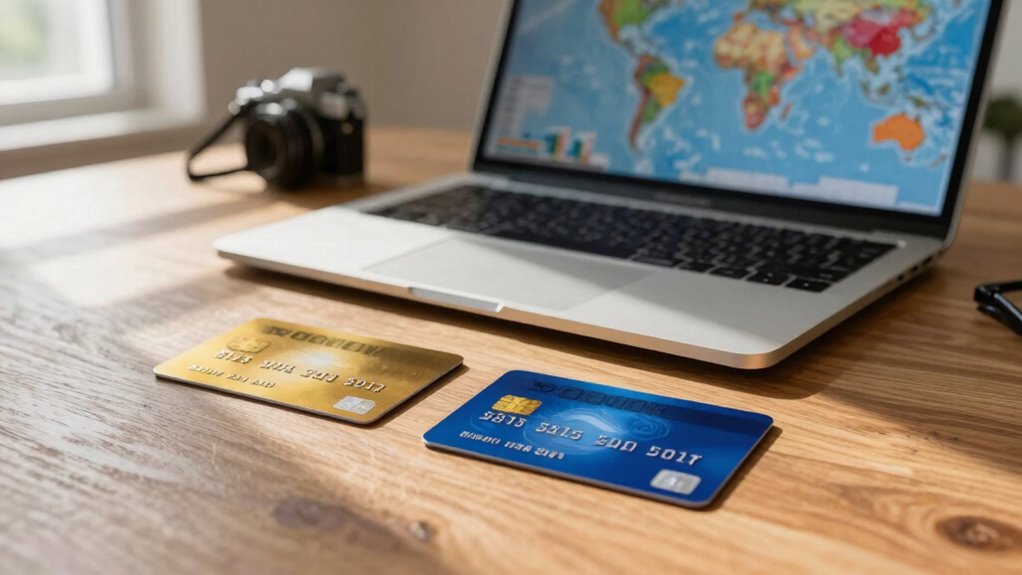
Using a two-card strategy makes money issues abroad less stressful. Carry a primary credit card with no foreign transaction fees for daily spending, and keep a secondary debit or prepaid card as a backup. This way, you can avoid high fees, access cash if your main card isn’t working, and better budget your expenses. Staying prepared gives you peace of mind and more control over your money. Discover how to implement this plan expertly as you continue.

Get travel and outdoor gear delivered free — and shop member deals
- Fast, free delivery on millions of items
- Access to Prime Big Deal Days deals on October 6–7
- Prime Video, Amazon Music and more included
Key Takeaways
- Using a primary credit card with no foreign transaction fees reduces costs and enhances security during travel.
- Keeping a separate backup card ensures access to funds if the primary card is lost, stolen, or declined.
- Loading a secondary prepaid or debit card with a fixed amount helps manage expenses and prevents overspending.
- Notifying your bank of travel plans prevents fraud alerts and card blocks while abroad.
- Developing an understanding of foreign exchange rates enables smarter spending and minimizes unfavorable currency conversions.
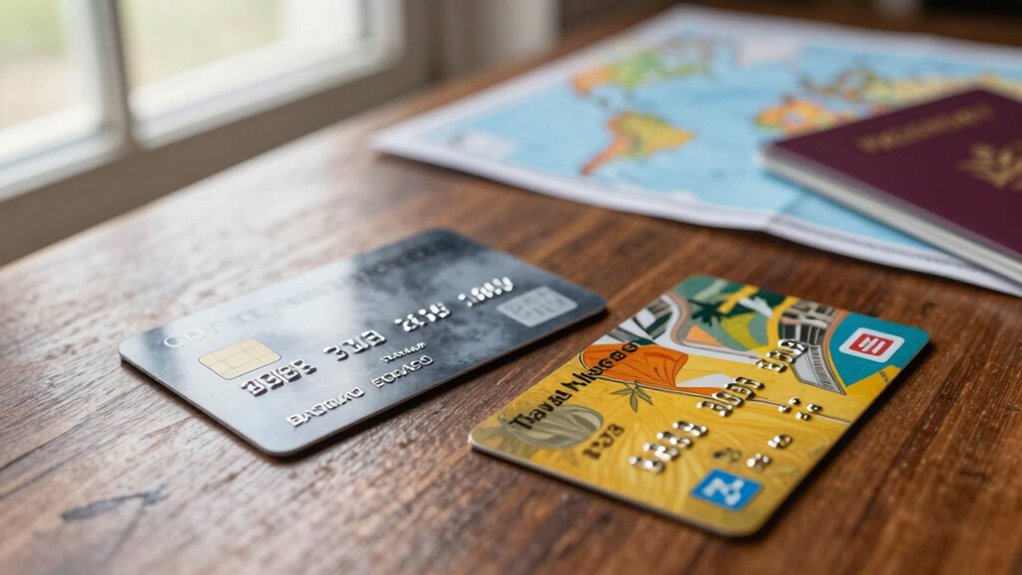
Traveling abroad can be exciting, but managing your money effectively is essential to avoid unnecessary fees and stress. One smart way to do this is by adopting a two-card strategy, which helps you navigate currency exchange and keep your finances in check. When you’re in a foreign country, relying on just one card can lead to high foreign transaction fees or limited access if that card is lost or blocked. By having two cards, you create a safety net that minimizes these risks and simplifies your financial planning.
Your primary card should be a credit card with no foreign transaction fees. This card is your main payment tool for most purchases, from dining to shopping. It’s usually more secure and offers better fraud protection. When you use this card, you benefit from favorable currency exchange rates, because credit card companies often process currency exchange more efficiently than cash exchanges or ATM withdrawals. Plus, many credit cards provide reward points or cashback, which can add up during your trip. Make sure to notify your bank about your travel plans beforehand to avoid any fraud alerts that could freeze your account.
The second card should be a debit or prepaid card that you keep separate from your primary card. This acts as a backup if your main card gets declined, lost, or stolen. It’s also useful for ATM withdrawals or places that only accept cash. When choosing this card, look for one with low or no foreign ATM fees, and check if it offers competitive currency exchange rates. Carrying a prepaid card loaded with a fixed amount can help you stick to your budget and prevent overspending. Additionally, keeping the second card in a different wallet or bag reduces the risk of losing all your funds if theft occurs. Being aware of currency exchange rates and options can also help you make smarter financial decisions abroad. Planning ahead with financial tools can further streamline your experience and avoid surprises. Having a basic understanding of foreign exchange concepts can also empower you to compare rates and choose the best options for your needs.
Financial planning with these two cards means you’re always prepared. You can plan your expenses around the strengths of each card — using your primary card for most transactions and your backup for emergencies or cash needs. This approach minimizes the need for frequent currency exchanges at unfavorable rates and reduces the chance of costly fees. It also gives you peace of mind, knowing that if one card is compromised, you still have access to funds through the other.
credit card with no foreign transaction fees
As an affiliate, we earn on qualifying purchases.
As an affiliate, we earn on qualifying purchases.
Frequently Asked Questions
How Do I Choose the Right Two Cards for Travel?
To choose the right two cards for travel, pick one that offers strong credit card rewards and another with thorough travel insurance. Look for a card that maximizes rewards on purchases like flights and accommodations, and ensure the other provides travel insurance that covers cancellations, delays, and medical emergencies. This combo helps you earn benefits while protecting your trip, making your travel experience smoother and less stressful.
What Are the Best Countries to Use This Strategy?
You can use this strategy effectively in countries with strong travel rewards programs, such as Japan, France, or Australia, where rewards can cover flights or hotels. It’s also smart in countries with high emergency expenses, like Mexico or Thailand, where your emergency funds backed by these cards can save you from big unexpected costs. This approach helps maximize benefits and keeps your emergency funds accessible, reducing travel stress.
Are There Fees Associated With Using These Two Cards?
Yes, there can be fees when using these two cards abroad. You might encounter ATM fees for withdrawing cash and foreign transaction fees on purchases. To minimize costs, check your bank’s policies beforehand. Some cards waive ATM fees or offer better rates for international transactions. Always review your card’s fee structure, carry multiple cards for backup, and consider using local currency to avoid extra charges.
How Do I Manage Currency Exchange Rates Effectively?
You can manage currency exchange rates effectively by staying informed about foreign exchange trends and timing your transactions wisely. Use online tools or apps to monitor currency fluctuations, so you know when rates are favorable. Consider locking in rates with forward contracts or using cards with no foreign transaction fees. Being proactive helps you avoid adverse effects of currency fluctuation and guarantees you get the best value when exchanging money abroad.
What Should I Do if My Cards Get Lost or Stolen Abroad?
If your cards get lost or stolen abroad, act quickly by contacting your bank and canceling them to prevent unauthorized use. Keep your emergency contacts and travel insurance info handy to report the incident and seek assistance. Use your backup payment methods if available. Always inform your bank about your travel plans beforehand to guarantee smoother support, and review your travel insurance for coverage details related to lost or stolen cards.
prepaid travel card with low ATM fees
As an affiliate, we earn on qualifying purchases.
As an affiliate, we earn on qualifying purchases.
Conclusion
With the two-card strategy, you turn worry into confidence, uncertainty into clarity, and stress into control. You plan, you prepare, and you protect your finances abroad. You stay informed, you stay flexible, and you stay secure. This simple approach empowers you to face money problems with calmness, confidence, and control. So, embrace the strategy, enjoy your travels, and let your financial worries become worry-free adventures.
As an affiliate, we earn on qualifying purchases.
As an affiliate, we earn on qualifying purchases.
Evergreen bestsellers Picks
bestsellers
As an affiliate, we earn on qualifying purchases.