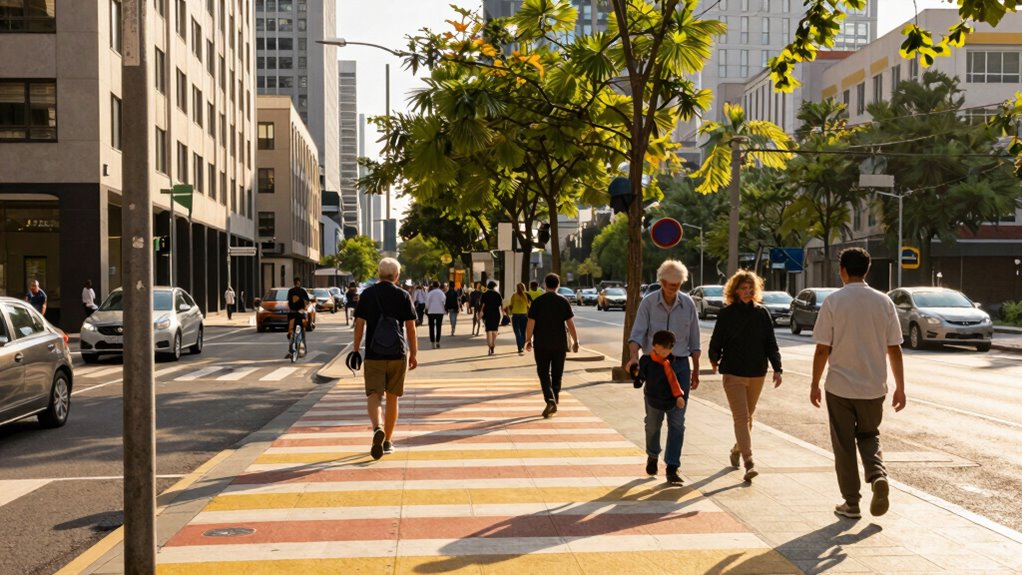

To build a safer walking route in a new city, start by connecting with local community groups and neighbors to gather insider tips on safe areas. Use online maps to pick well-lit, busy streets and avoid poorly maintained shortcuts. Share your plans with trusted contacts and stay alert to your surroundings, making eye contact and avoiding distractions. Participating in local safety initiatives can boost your confidence. Keep exploring these strategies for even more ways to stay safe on your walks.

Get travel and outdoor gear delivered free with Prime
- Fast, free delivery on millions of items
- Prime Video, Amazon Music and more included
- Member-only deals all year
Key Takeaways
- Research well-lit, busy streets and avoid alleys or poorly maintained areas using online maps and local insights.
- Talk to neighbors and community groups to identify safe routes and potential trouble spots.
- Share your walking plans with trusted contacts and keep your mobile device charged for emergencies.
- Stay alert, make eye contact, and avoid distractions like loud music to enhance situational awareness.
- Join local safety programs or walking groups to build confidence and discover trusted routes over time.
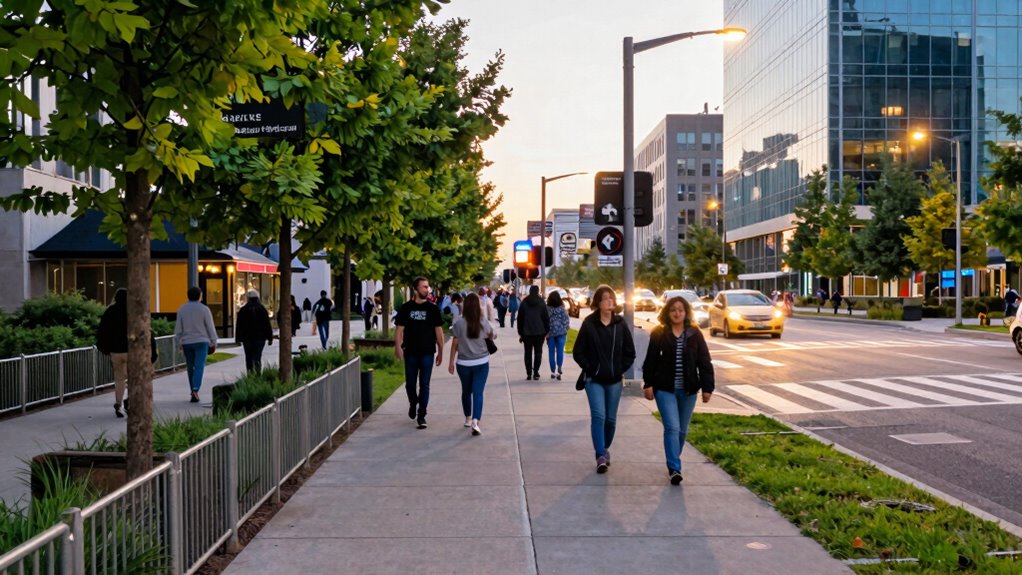
Moving to a new city can be exciting, but it also means figuring out how to navigate safely on foot. Your first step is to get familiar with your neighborhood and build connections within the community. Community engagement isn’t just about meeting people; it’s about understanding the area’s safety dynamics. Talk to neighbors, local shop owners, or community groups to gather insights on safe routes and trouble spots. These connections can also serve as a support network if you ever find yourself in an emergency situation. Being involved in local initiatives or neighborhood watch programs can boost your awareness and offer a sense of security, which is essential when exploring unfamiliar terrain.
Next, pay attention to your environment and plan your route carefully. Use online maps to identify well-lit streets, sidewalks, and pedestrian crossings. Stick to routes that are frequented by others, especially during evening hours. Avoid shortcuts through poorly maintained areas or alleys, which can be unsafe. As you navigate, keep your phone charged and consider downloading safety apps that share your location with trusted contacts. These tools enhance your emergency preparedness, making it easier to get help if needed. Familiarize yourself with local emergency numbers and nearest safe spots, like police stations or busy public places, so you’re prepared for any unexpected situation. Understanding the importance of biodiversity in urban environments can also help you recognize eco-friendly and sustainable areas, contributing to safer and healthier neighborhoods. Additionally, learning about the urban safety features implemented in your city can give you a strategic advantage when choosing routes. Incorporating knowledge about community resources can further support your safety by guiding you to local facilities that provide assistance or information.
In addition to route planning, stay alert and aware of your surroundings. Keep your head up, avoid distractions like loud music, and make eye contact with others when possible. This vigilance helps you spot potential hazards early, whether it’s a reckless driver, a stray animal, or an unfamiliar individual. When walking in new areas, it’s also wise to share your plans with someone you trust—let them know where you’re going and when you expect to arrive. This simple step can be lifesaving if an emergency arises. Remember, emergency preparedness isn’t just about having a plan; it’s about actively practicing safety measures and staying aware of your environment at all times.
Finally, consider participating in local community safety programs or walking groups. These groups not only make your walks safer but also help you integrate into the community. Over time, you’ll develop a sense of where to go and what to avoid, transforming your initial uncertainty into confidence. Building a safer walking route is a continuous process, combining community engagement, smart planning, and a proactive approach to safety. When you stay connected, prepared, and vigilant, exploring your new city becomes a rewarding experience rather than a risky one.
As an affiliate, we earn on qualifying purchases.
Frequently Asked Questions
How Can I Find Local Safety Tips for Unfamiliar Neighborhoods?
You can find local safety tips for unfamiliar neighborhoods by checking online community forums, social media groups, and neighborhood watch pages. Talk to residents or local business owners for firsthand advice. Attend neighborhood meetings if possible. These sources often share valuable safety tips, updates on local issues, and advice on staying secure. Staying informed through neighborhood watch programs helps you understand specific risks and enhances your overall safety.
Are There Specific Apps to Help Navigate Safe Walking Routes?
Think of virtual maps as your trusty compass, guiding you through unfamiliar streets. Apps like Google Maps and Citymapper offer real-time safety alerts, helping you avoid risky areas and find well-lit, populated routes. You can also enable safety features like sharing your location with friends or receiving notifications about incidents nearby. These tools empower you to navigate confidently, ensuring your walk remains safe and stress-free in any city.
What Should I Do if I Feel Unsafe While Walking?
If you feel unsafe while walking, trust your instincts and move to a well-lit, populated area immediately. Use your phone to call emergency services or activate any personal safety apps you’ve downloaded. Stay alert and maintain awareness of your surroundings. Emergency preparedness involves knowing local emergency contacts and having a plan. Keep your belongings secure, avoid distractions, and consider carrying personal safety devices like a whistle or pepper spray for added protection.
How Can I Identify Well-Lit and Busy Streets at Night?
You can identify well-lit, busy streets at night by observing street lighting and pedestrian density. Look for well-maintained streetlights that illuminate sidewalks clearly. Notice areas with frequent foot traffic, like cafes, shops, or bus stops, which indicate high pedestrian density. Use your phone’s map to find popular routes, and trust your instincts—avoid dark, deserted streets. Staying on brightly lit, busy streets helps you feel safer while walking at night.
Are There Community Groups That Assist Newcomers With Safety?
Did you know that community involvement can reduce crime rates by up to 25%? Many cities have safety initiatives and community groups that assist newcomers, helping you feel more secure. These groups often organize neighborhood watch programs, safety workshops, and buddy systems. Reaching out to local community centers or online forums can connect you with these groups quickly, making your walks safer and more comfortable in unfamiliar areas.
LED flashlight for walking safety
As an affiliate, we earn on qualifying purchases.
As an affiliate, we earn on qualifying purchases.
Conclusion
Now you’re ready to forge a fearless, friendly, and frictionless footpath. By blending basic tips with bold steps, you’ll build a safer stretch suited to your stride. Remember, stay vigilant, choose clear crossings, and seek well-lit walkways. With a little planning and proactive positioning, you’ll pave a path that’s peaceful, protected, and perfectly tailored to your travels. Step confidently into your city adventure, transforming unfamiliar streets into familiar, fabulous, and safe routes.
portable phone charger for emergencies
As an affiliate, we earn on qualifying purchases.
As an affiliate, we earn on qualifying purchases.
reflective safety vest for pedestrians
As an affiliate, we earn on qualifying purchases.
As an affiliate, we earn on qualifying purchases.
Halloween Picks
halloween
As an affiliate, we earn on qualifying purchases.