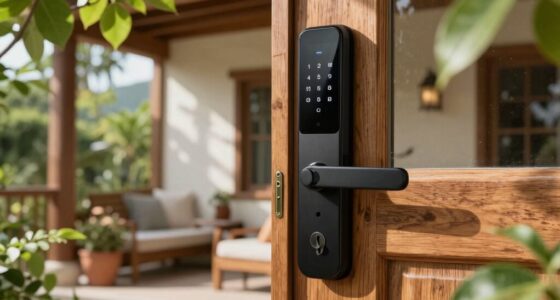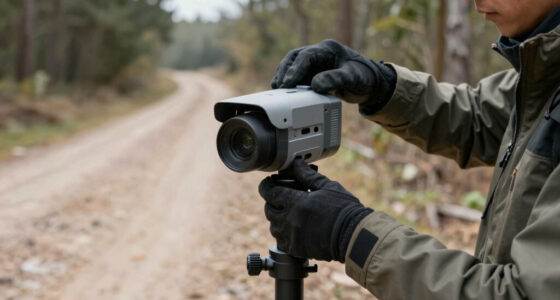

When securing your second home, focus on strategic coverage of key areas like entry points, driveways, and secluded spots. High-quality cameras with wide-angle lenses and night vision are more effective than multiple lower-quality units. Proper placement is essential—you want to cover vulnerable zones where intruders are likely to target. Smart integration with your existing systems enhances responsiveness and control. Keep in mind, protecting critical areas matters more than simply adding more cameras; explore how to optimize your setup further.

Get travel and outdoor gear delivered free with Prime
- Fast, free delivery on millions of items
- Prime Video, Amazon Music and more included
- Member-only deals all year
Key Takeaways
- Prioritize protecting entry points and high-risk areas with high-quality, strategically placed cameras for effective coverage.
- Focus on strategic placement over the number of cameras to ensure comprehensive security.
- Use property vulnerability assessments to identify critical zones needing surveillance.
- Integrate cameras with lighting and alarms for smarter, responsive security solutions.
- Opt for DIY installation and seamless system integration to adapt coverage as security needs evolve.
Are you worried about keeping your second home safe when you’re not there? It’s a common concern, especially if you can’t check on the property regularly. Investing in outdoor security systems can give you peace of mind, but it’s essential to focus on coverage rather than just piling up multiple cameras. The goal isn’t to have the most devices but to guarantee the areas that matter most are well-protected. A strategic approach involves understanding where to place cameras and how to integrate them effectively into your security setup.
Focus on strategic camera placement and integration for effective second home security, not just increasing the number of devices.
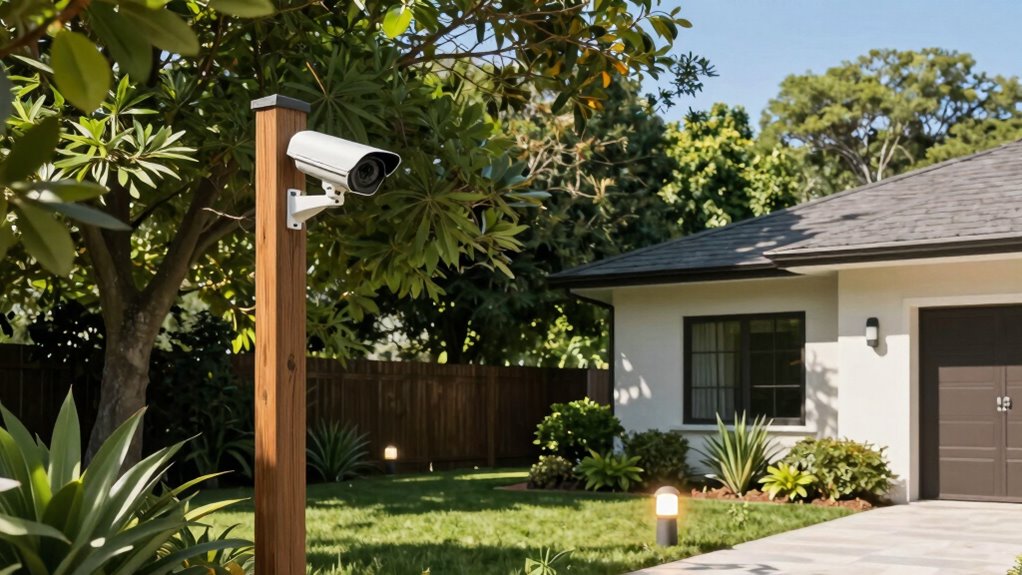
One of the most practical options today is DIY installation. It allows you to set up your security system without needing professional help, saving money and giving you control over the process. With DIY kits, you can place cameras in key spots—like driveways, entry points, and secluded backyards—without hassle. This approach also makes it easier to adapt your system as your needs change. When installing yourself, focus on camera integration. Choose cameras that connect seamlessly with your existing security network or smart home system. This integration ensures you can monitor all angles from a single app, receive instant alerts, and even control your system remotely. It’s about creating a cohesive security environment, not just scattering cameras around the property.
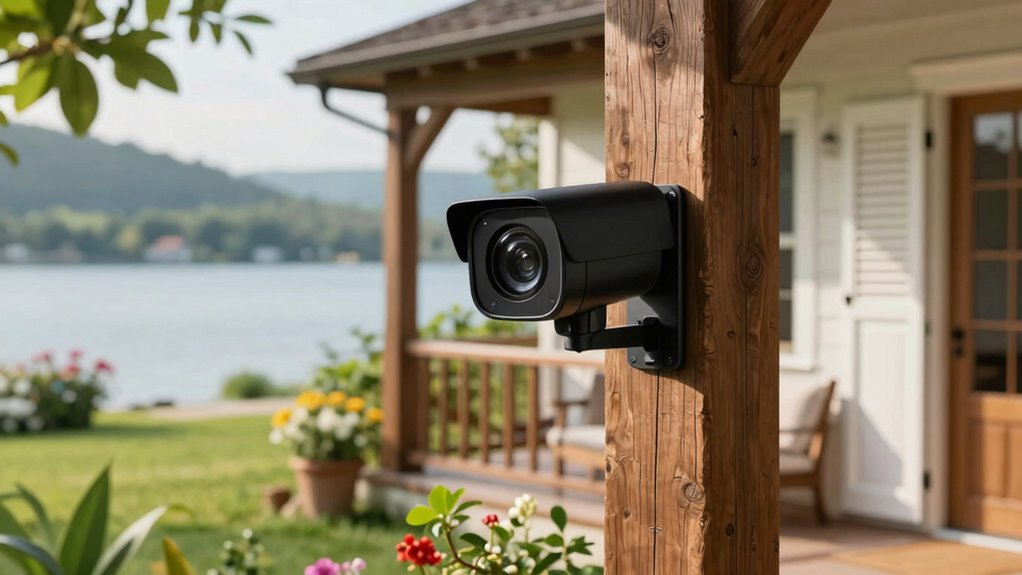
Coverage matters more than quantity. Instead of spreading your cameras thinly over the entire property, identify the most vulnerable points—front and back doors, garage entrances, and large windows. Position your cameras to cover these critical areas thoroughly. High-quality cameras with wide-angle lenses and night vision capabilities can often do the job better than multiple lower-quality units. The importance of camera placement cannot be overstated—strategic positioning significantly enhances your system’s effectiveness. The goal is to have clear, continuous coverage of high-risk zones, so even if someone tries to sneak around the perimeter, you’re alerted immediately. Incorporating security best practices can also enhance the effectiveness of your setup, such as lighting strategies or landscaping considerations that reduce hiding spots. Conducting a property vulnerability assessment can help you prioritize your camera placement more effectively.
When planning your outdoor security system, think about how your cameras will work together. Proper camera integration allows for smarter security—such as setting zones for motion detection or linking cameras to trigger lights or alarms. This integration makes your system more efficient and reliable, giving you better coverage without needing dozens of devices. Additionally, understanding the importance of biodiversity and sustainable practices can inspire eco-friendly security solutions, like solar-powered cameras or energy-efficient equipment. Remember, the key is to protect what’s most important, not to overdo the hardware. A well-placed, integrated system with DIY installation can be just as effective—if not more so—than a cluttered array of multiple cameras. Ultimately, proper coverage combined with smart integration will give you the confidence that your second home is safe, even when you’re away.
outdoor security cameras with night vision
As an affiliate, we earn on qualifying purchases.
As an affiliate, we earn on qualifying purchases.
Frequently Asked Questions
How Often Should Outdoor Security Systems Be Inspected or Maintained?
You should inspect your outdoor security system at least once a month to guarantee everything works properly. Perform routine checks on cameras, sensors, and locks, and don’t forget battery maintenance—replace batteries annually or when you notice power issues. Regular inspections help catch problems early, maintaining your second home’s security. Keeping up with these simple steps ensures your system stays reliable, giving you peace of mind when you’re away.
Can Outdoor Security Systems Detect Environmental Threats Like Fires or Floods?
Yes, outdoor security systems can detect environmental threats like fires or floods if they include environmental sensors. These sensors monitor conditions such as smoke, heat, water levels, or humidity. When they detect a threat, they activate alarms or notify you remotely, enabling quick action. Proper installation and regular testing are essential to guarantee your threat detection system works effectively, giving you peace of mind about your second home’s safety.
Are There Legal Restrictions on Outdoor Security Cameras in Residential Areas?
Think of outdoor security cameras as vigilant eyes in your neighborhood. Legally, privacy regulations shape where you can place them, ensuring you respect your neighbors’ privacy. You can’t just point cameras at private spaces like yards or windows without permission. Focus on strategic camera placement that covers your property without overstepping boundaries. By doing so, you keep your second home safe while respecting privacy laws—like a good neighbor watching out for everyone.
How Do I Ensure My Outdoor Security System Is Weather-Resistant?
To guarantee your outdoor security system is weather-resistant, apply weatherproofing tips like sealing camera housing with weatherproof covers and choosing cameras with an IP66 or higher rating. Carefully consider camera placement, avoiding areas prone to direct rain or snow, and install cameras under eaves or overhangs for added protection. Regularly inspect and clean your equipment to maintain peak performance, especially after harsh weather.
What Are the Best Practices for Integrating Outdoor Security With Smart Home Devices?
To seamlessly integrate outdoor security with your smart home devices, guarantee your security system supports smart device compatibility. Use a unified app for easy control and monitoring. Manage user access effectively by setting permissions for family or trusted visitors. Regularly update firmware to maintain security and compatibility. Connect motion sensors and cameras with your smart lighting or alarms to enhance automation. This integration creates a smarter, more responsive security setup for your second home.
As an affiliate, we earn on qualifying purchases.
Conclusion
When it comes to your second home’s outdoor security, remember that quality coverage beats sheer quantity every time. A few well-placed cameras and sensors can do more than many scattered ones, giving you peace of mind without overextending. Don’t fall into the trap of thinking more is better—sometimes, less is more, especially when it comes to protecting what matters most. Focus on strategic coverage, and you’ll be well on your way to a safer, more secure second home.
wide-angle outdoor security camera
As an affiliate, we earn on qualifying purchases.
As an affiliate, we earn on qualifying purchases.
smart home security camera system
As an affiliate, we earn on qualifying purchases.
As an affiliate, we earn on qualifying purchases.
Halloween Picks
halloween
As an affiliate, we earn on qualifying purchases.