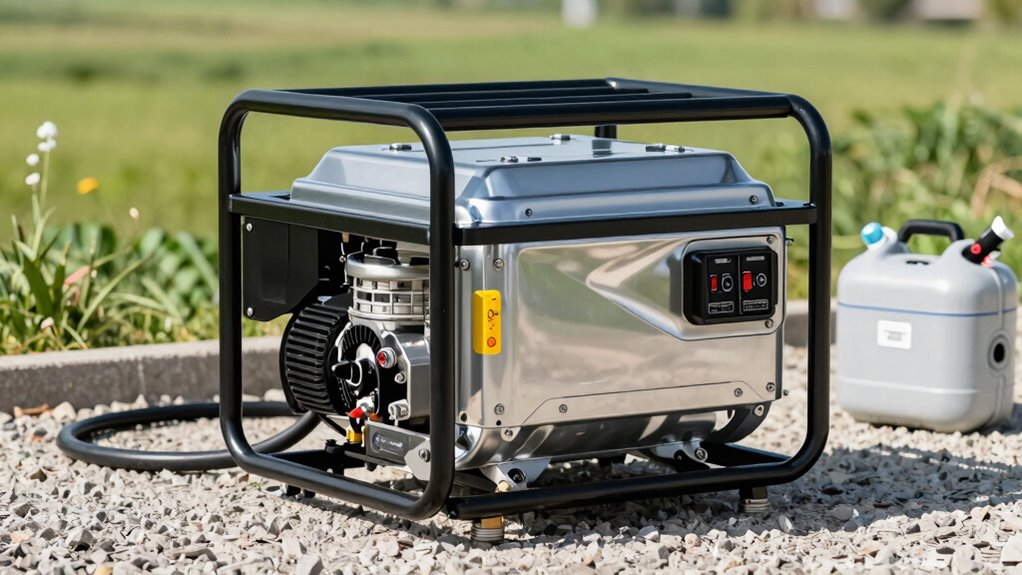

Choosing a dual-fuel generator offers you unmatched flexibility, allowing you to switch between gasoline and propane based on availability, cost, and environmental concerns. This adaptability lets you optimize fuel use, extend run times, and operate quietly when needed. Flexibility also helps you respond to emergencies or remote locations more effectively. If you want to discover how this versatility can give you a strategic advantage in various scenarios, keep exploring the details.

Get travel and outdoor gear delivered free with Prime
- Fast, free delivery on millions of items
- Prime Video, Amazon Music and more included
- Member-only deals all year
Key Takeaways
- Flexibility allows switching fuels based on availability, ensuring continuous power during outages or remote use.
- Dual-fuel options optimize fuel efficiency for longer runtimes or higher power needs.
- Fuel versatility enables quieter, cleaner operation with propane, enhancing comfort and environmental impact.
- Adapting fuel choice helps manage costs and reduces reliance on a single fuel source.
- Flexibility supports better resource management and preparedness for various scenarios.
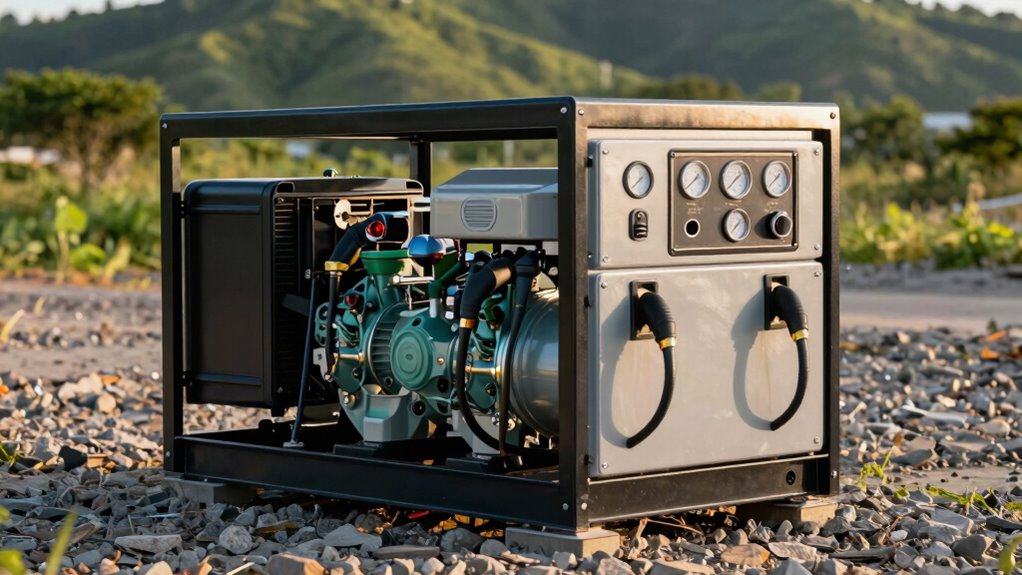
When choosing a generator, flexibility often outweighs raw power. Dual-fuel generators exemplify this principle, offering you the ability to switch between different fuel sources—most commonly gasoline and propane—based on availability and your specific needs. This adaptability can be a game-changer, especially during extended power outages or when you’re relying on your generator in remote locations. Instead of solely focusing on maximum wattage, it’s smart to weigh how efficiently and quietly the generator operates across different fuel types. Fuel efficiency becomes a vital factor, as it determines how long your generator can run on a given amount of fuel, saving you money and reducing the frequency of refueling. When you choose a dual-fuel model, you gain the advantage of optimizing fuel consumption depending on your circumstances, whether you prioritize longer run times or quicker, more powerful bursts of energy.
Noise levels are another key aspect often overlooked when shopping for a generator. Many assume that more power equals more noise, but dual-fuel generators tend to be designed with quieter operation in mind. Some models feature noise reduction technology that makes them suitable for residential areas or camping trips, where minimizing disruption is essential. Because you can switch between fuels, you can also select the one that produces less noise, further customizing the experience. For example, propane generally burns cleaner and quieter than gasoline, so if noise reduction is a priority, you might prefer to run your generator on propane when possible. This flexibility allows you to balance performance with comfort, making dual-fuel generators a versatile choice for various environments. Additionally, understanding fuel types and their impact on operation can help you make more informed decisions when selecting a model. Moreover, considering maintenance requirements for each fuel type can ensure your generator remains reliable over time. A thorough understanding of fuel storage options and safety precautions can also enhance your preparedness and ensure proper handling of fuels. Being aware of cost differences between fuel sources can help you manage your operating expenses more effectively, especially over the long term. Recognizing the environmental impact of each fuel type can also guide you toward more sustainable choices for your power needs.
dual fuel generator gasoline propane
As an affiliate, we earn on qualifying purchases.
As an affiliate, we earn on qualifying purchases.
Frequently Asked Questions
How Long Can a Dual-Fuel Generator Run on Each Fuel Type?
A dual-fuel generator can run approximately 8 to 12 hours on propane and 10 to 15 hours on gasoline, depending on load and fuel efficiency. You benefit from better power stability with gasoline for short-term use and longer run times with propane during emergencies. The flexibility lets you switch fuels based on availability, ensuring reliable operation while maintaining peak efficiency and consistent power output.
Are Dual-Fuel Generators More Environmentally Friendly Than Single-Fuel Models?
Think of dual-fuel generators like a hybrid car—you can switch fuels to optimize efficiency and emissions. They’re generally more environmentally friendly than single-fuel models because they often meet stricter emission standards and allow you to choose cleaner fuel options. This flexibility improves fuel efficiency and reduces greenhouse gases, making them a smarter choice for eco-conscious users. You get the benefits of lower emissions without sacrificing power or convenience.
What Maintenance Differences Exist Between Dual-Fuel and Single-Fuel Generators?
You’ll find that dual-fuel generators have slightly higher maintenance complexity due to their fuel compatibility systems, which require additional inspection and care. You need to regularly check and clean fuel lines, valves, and carburetors for both gasoline and propane. Single-fuel generators, on the other hand, are simpler to maintain since they only manage one fuel type, reducing potential issues and making routine upkeep more straightforward.
Can Dual-Fuel Generators Switch Fuels While Operating?
Yes, dual-fuel generators can switch fuels while operating, thanks to built-in switch mechanisms designed for this purpose. These switch mechanisms guarantee fuel compatibility and allow you to change between fuels like propane and gasoline smoothly. You simply activate the switch, and the generator shifts seamlessly, providing continuous power without stopping. This flexibility makes dual-fuel generators especially valuable for unpredictable power needs or emergencies.
What Is the Typical Cost Difference Between Dual-Fuel and Single-Fuel Generators?
You’ll find that dual-fuel generators generally cost more upfront than single-fuel options, with a typical price difference of 20-30%. While this means higher initial investment, you gain better fuel efficiency and versatility, as you can switch fuels based on availability or cost. The cost comparison shows that dual-fuel units may save you money in the long run, especially if fuel prices fluctuate or you prioritize flexibility.
quiet dual fuel portable generator
As an affiliate, we earn on qualifying purchases.
As an affiliate, we earn on qualifying purchases.
Conclusion
In the grand scheme, choosing a dual-fuel generator isn’t just about raw power—think of it as wielding a Swiss Army knife in your power arsenal. Flexibility lets you navigate unpredictable circumstances with the ease of a seasoned sailor in a tempest. Remember, in this modern age, adaptability trumps sheer output, much like how the compass outperforms the stars in guiding a ship. Embrace versatility, and you’ll stay powered no matter the storm.
best dual fuel generator for camping
As an affiliate, we earn on qualifying purchases.
As an affiliate, we earn on qualifying purchases.
dual fuel generator with long runtime
As an affiliate, we earn on qualifying purchases.
As an affiliate, we earn on qualifying purchases.
Halloween Picks
halloween
As an affiliate, we earn on qualifying purchases.