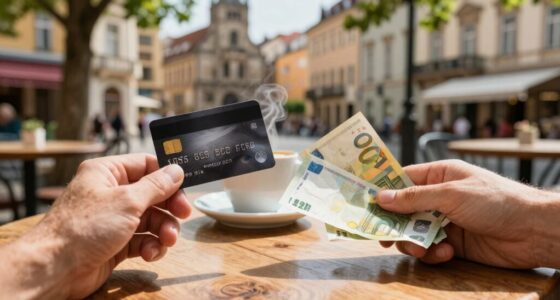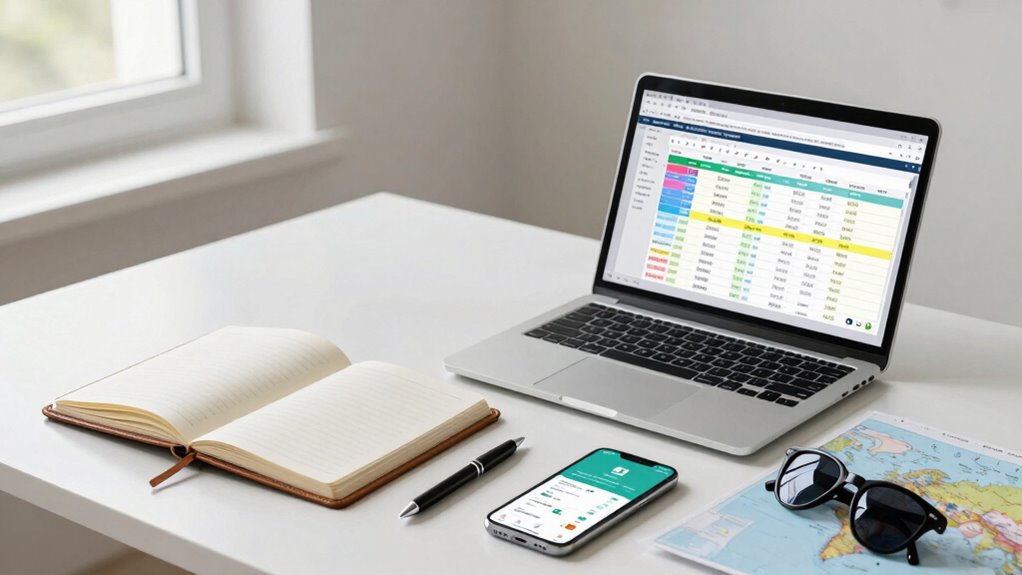

You can track your trip costs discreetly by using simple tools like a mobile app that syncs with your bank or credit cards. Record expenses daily in a quick, informal way—no need for detailed spreadsheets. Categorize spending into broad groups like food, transport, and souvenirs to stay organized without looking like a finance pro. Keeping things simple guarantees you stay on budget while enjoying your trip. If you’d like more tips, there’s plenty to discover below.
Key Takeaways
- Use a discreet mobile app to quickly log expenses on the go.
- Categorize costs simply to avoid detailed spreadsheets or complex tracking.
- Review expenses briefly each day to stay aware without overanalyzing.
- Keep receipts or notes handy for quick reference without looking overly meticulous.
- Set a daily or category limit to naturally monitor spending without constant counting.
Planning a trip can be exciting, but keeping tabs on your expenses is essential to avoid overspending. You don’t need to become a full-blown accountant to manage your travel budget effectively. The key is simple: set a clear plan for your expenses and stay organized without overcomplicating things. Start by establishing your overall travel budgeting. Decide how much money you’re willing to spend on the entire trip, then break that down into daily or category-specific limits. This helps prevent surprises and keeps your spending in check.
To keep things straightforward, expense categorization is your best friend. Divide your costs into easy-to-manage groups such as accommodation, food, transportation, activities, and souvenirs. When you categorize your expenses, it becomes easier to see where your money is going and to identify areas where you can cut back if needed. For example, if you notice your dining expenses are soaring, you can adjust your plans accordingly. Using separate envelopes, apps, or even simple spreadsheets can help you track these categories without feeling overwhelmed.
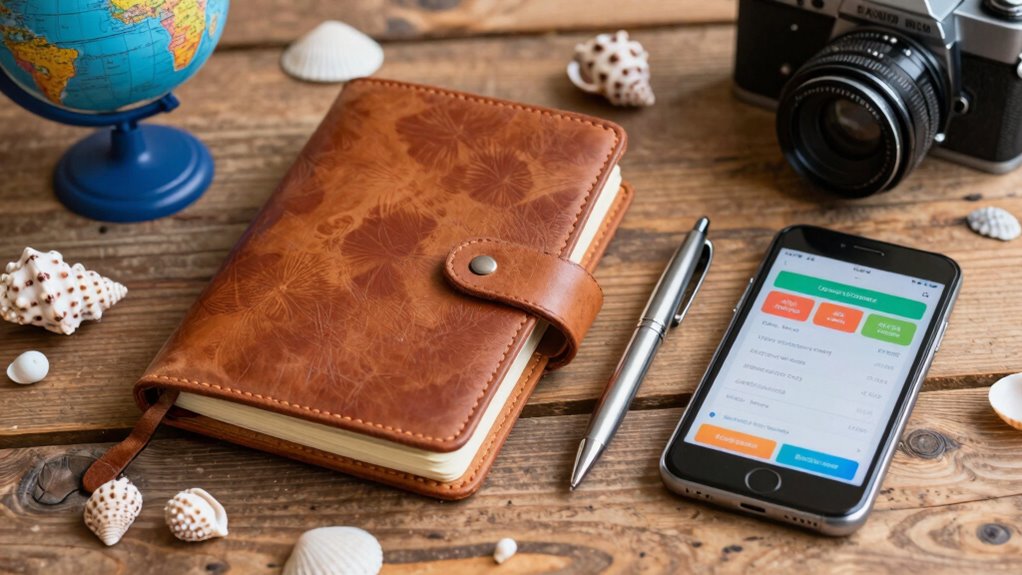
A practical trick is to carry a small notebook or use a mobile app dedicated to expense tracking. Whenever you spend, jot down the amount and category immediately. If you prefer digital tools, many apps sync with your bank accounts and credit cards, automatically importing your transactions. This saves time and reduces the risk of forgetting small expenses. Just remember to review your expenses daily to keep everything accurate and avoid surprises at the end of your trip.
While tracking, stay flexible. Sometimes, unexpected costs pop up, and that’s okay. Just log them, and if they threaten to blow your budget, look for areas to adjust. Keeping your expense tracking simple and consistent allows you to stay on top of your finances without feeling like you’re doing tax returns. The goal is to be aware of your spending without letting it bog you down. Additionally, understanding travel budgeting can help you make smarter financial decisions during your trip. Being aware of how to effectively categorize expenses can make the process less stressful and more manageable. Recognizing the importance of financial planning can also help you prepare for unforeseen circumstances and avoid financial stress. Incorporating expense tracking into your overall travel planning can further enhance your ability to stick to your budget and enjoy your trip without worry.
In the end, effective travel budgeting and expense categorization don’t need to be complicated. By setting clear limits, organizing your expenses into categories, and tracking them consistently, you can enjoy your trip stress-free. You’ll have a clear picture of your spending, allowing you to make smart decisions on the go. Travel is about enjoying new experiences, not stressing over every dollar. With these simple steps, you can keep your finances in check while still having plenty of fun.
As an affiliate, we earn on qualifying purchases.
Frequently Asked Questions
What Are the Best Apps for Tracking Trip Expenses?
You should try apps like Trail Wallet or Trabee Pocket for tracking trip expenses. They make budget planning easy and handle multiple currencies, which is perfect for international trips. These apps let you quickly log expenses, view spending summaries, and even do currency conversions on the fly. With their user-friendly interfaces, you won’t look like an accountant—just someone managing their trip costs efficiently and hassle-free.
How Can I Estimate Costs Before the Trip?
Before your trip, you need to get a clear picture—think of it as laying the groundwork. Use budget planning to set a rough estimate of expenses, considering transportation, accommodation, and meals. Research average costs online and add a buffer for surprises. This cost estimation helps you stay on track financially, making your trip more enjoyable without the stress of unexpected expenses. Being prepared lets you hit the ground running.
Should I Track Every Small Purchase?
You don’t need to track every small purchase, but keeping an eye on your spending habits helps you stay within your budget. Focus on logging significant expenses and occasional smaller ones that add up fast. Use budgeting tips like setting a daily limit or using an app for quick tracking. This way, you maintain control without becoming overly meticulous, ensuring your trip stays enjoyable and financially manageable.
How Do I Handle Shared Expenses With Travel Companions?
To handle shared expenses with travel companions, use a group expense sharing app or create a shared spreadsheet. Make sure you split costs fairly by dividing expenses equally or according to each person’s usage. Regularly update the totals and settle up at the end of each day or trip. Clear communication helps prevent misunderstandings and keeps everyone on the same page, making group expense sharing smooth and stress-free.
What’s the Easiest Way to Organize Receipts During Travel?
Sure, organizing receipts during travel is as simple as employing the ancient art of “spread them everywhere.” For effective travel budgeting, keep a dedicated envelope or digital app for each expense category—food, transport, souvenirs. Snap pictures of receipts immediately to keep your expense categorization on point. This way, you avoid the chaos of crumpled paper, and your future self will thank you when reconciling your trip expenses.
discreet travel expense notebook
As an affiliate, we earn on qualifying purchases.
As an affiliate, we earn on qualifying purchases.
Conclusion
Tracking your trip costs doesn’t have to feel like math class—think of it as keeping a friendly tab on your adventure’s treasure chest. Use simple tools, stay consistent, and don’t sweat the small stuff. Before you know it, you’ll have a clear picture of your expenses without turning into an accountant. Remember, the goal is to enjoy the journey, not drown in numbers. With just a little effort, your travel budget will stay afloat like a boat on calm waters.
As an affiliate, we earn on qualifying purchases.
mobile expense tracker for trips
As an affiliate, we earn on qualifying purchases.
As an affiliate, we earn on qualifying purchases.