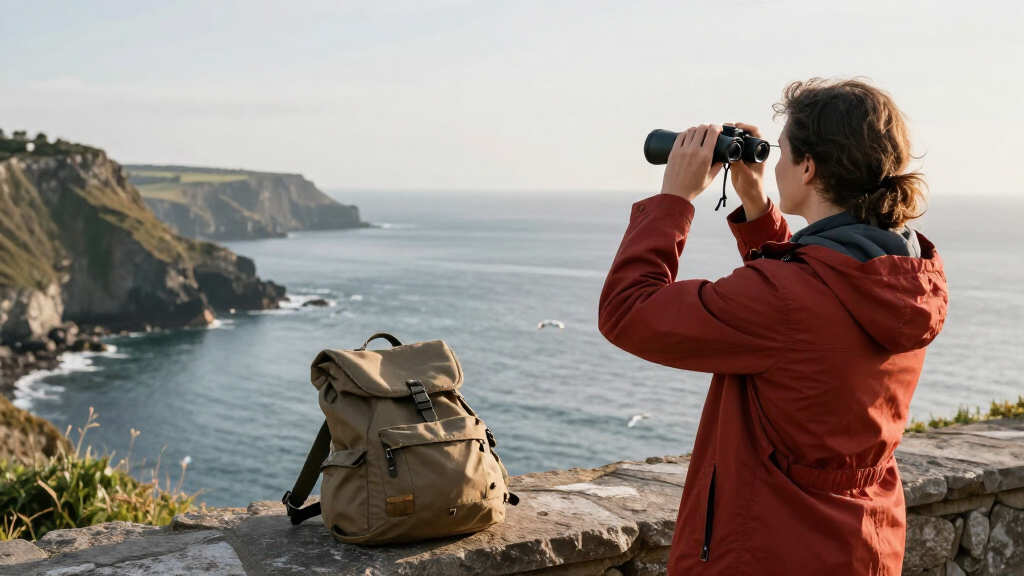
The best compact travel binoculars balance three things that constantly pull against each other: portability, optical brightness, and viewing stability. The Nikon Trailblazer II 8×25 takes the top spot because it is the only budget-friendly pick here that combines waterproof and fogproof construction with a genuinely sharp 8x view — a rare pairing at this size and price. The Pentax Papilio II 6.5×21 stands out for close-focus capability that no other option matches, making it the smart choice for travelers who care about insects and detail as much as distant landmarks, while the Occer 12×25 wins on value for casual users who want reach without a big spend. The main tradeoff you will face throughout this category is magnification versus steadiness: 12x and 20x models sound impressive but are genuinely hard to hold still in small housings, while 8x options deliver brighter, steadier images. Read on for the full breakdown of all fifteen models.

Get travel and outdoor gear delivered free — and shop member deals
- Fast, free delivery on millions of items
- Access to Prime Big Deal Days deals on October 6–7
- Prime Video, Amazon Music and more included
Complete the kit


Key Takeaways
- Waterproofing is the single biggest dividing line in this lineup — only the Nikon Trailblazer II 8×25 and the 8×30 Waterproof model offer sealed housings, which matters for beach, boat, and rain-heavy itineraries.
- 8x magnification beat 12x and 20x options for real-world travel use, because small-barrel 12x-plus binoculars magnify hand shake so much that the extra power rarely translates into a clearer view.
- Objective lens size mattered more than magnification for image quality — 25mm and 21mm models dim noticeably in forests and at dusk, while the 30mm and 32mm options stayed brighter.
- The Pentax Papilio II’s close-focus ability (under two feet) is unique in this roundup and makes it the only pick suited equally to butterflies, museum-style detail, and distant sightlines.
- Extreme magnification claims like ‘200x’ and ’25x’ on compact 25-32mm barrels translated into dim, shaky images — these models ranked low despite their marketing appeal.
| Mata1 Compact 8×21 Foldable Binoculars |  | Lightest Carry Pick | Magnification: 8× | Objective lens diameter: 21 mm | Dimensions: 3.9 × 3.5 × 3.5 in | VIEW LATEST PRICE | See Our Full Breakdown |
| Occer 12×25 Compact Binoculars for Adults and Kids |  | Best All-Rounder for Families | Magnification: 12× | Objective lens diameter: 25 mm | Field of view: 273 ft at 1,000 yd | VIEW LATEST PRICE | See Our Full Breakdown |
| Pentax Papilio II 6.5×21 Binoculars, Gray |  | Best for Close-Up Nature Viewing | Magnification: 6.5× | Objective lens diameter: 21 mm | Minimum close focus: 50 cm | VIEW LATEST PRICE | See Our Full Breakdown |
| Bushnell Powerview 10×25 Compact Binoculars |  | Best Established Brand Under Budget | Magnification: 10× | Objective lens diameter: 25 mm | Design: Compact folding Porro prism | VIEW LATEST PRICE | See Our Full Breakdown |
| 8×30 Compact Waterproof Binoculars |  | Best Brightness for the Size | Magnification: 8× | Objective lens diameter: 30 mm | Field of view: 128 m at 1,000 m | VIEW LATEST PRICE | See Our Full Breakdown |
| POLDR 12×25 Compact Pocket Binoculars |  | Best Fold-Away Pocket Pick | Magnification: 12x | Objective lens diameter: 25 mm | Field of view: 126 ft at 1,000 yards | VIEW LATEST PRICE | See Our Full Breakdown |
| 12×32 Compact Binoculars for Adults |  | Best Weatherproof Travel Pick | Magnification: 12x | Objective lens diameter: 32 mm | Field of view: 378 ft at 1,000 yards | VIEW LATEST PRICE | See Our Full Breakdown |
| WOZEL 20×32 Compact Binoculars |  | Best High-Magnification Reach | Magnification: 20x | Objective lens diameter: 32 mm | Field of view: 235 ft at 1,000 yards | VIEW LATEST PRICE | See Our Full Breakdown |
| Aurosports 10×25 Compact Binoculars |  | Best All-Round 10x for Sightseeing | Magnification: 10x | Objective lens diameter: 25 mm | Prism type: BAK4 | VIEW LATEST PRICE | See Our Full Breakdown |
| Hontry 10×25 Compact Binoculars for Adults and Kids | 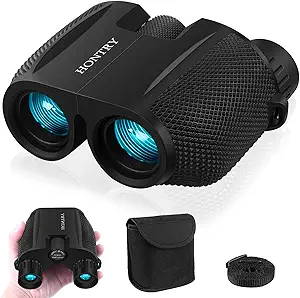 | Best Family and Kids Pick | Magnification: 10x | Objective lens diameter: 25 mm | Prism type: Bak-4 | VIEW LATEST PRICE | See Our Full Breakdown |
| Compact 200×25 Binoculars for Adults and Kids |  | Budget Pick for Casual Sightseeing | Magnification: Up to 200x (claimed) | Objective lens diameter: 25 mm | Prism type: Porro prism | VIEW LATEST PRICE | See Our Full Breakdown |
| Nikon Trailblazer II 8×25 Waterproof and Fogproof Binoculars |  | Best Optical Quality | Magnification: 8x | Objective lens diameter: 25 mm | Waterproof: Yes | VIEW LATEST PRICE | See Our Full Breakdown |
| 12×25 Compact Pocket Binoculars for Bird Watching, Travel, and Events |  | Best Value All-Rounder | Magnification: 12x | Objective lens diameter: 25 mm | Prism type: BAK-4 roof prism | VIEW LATEST PRICE | See Our Full Breakdown |
| Compact 12x Binoculars for Adults and Children |  | Lightest Travel Pick | Magnification: 12x | Objective lens diameter: 21 mm | Prism type: Roof prism | VIEW LATEST PRICE | See Our Full Breakdown |
| 25×32 Compact Binoculars for Bird Watching |  | Best for Long-Range Reach | Magnification: 25x | Objective lens diameter: 32 mm | Prism type: BAK-4 | VIEW LATEST PRICE | See Our Full Breakdown |
| compact binoculars for travel | Magnification | Objective lens diameter | Prism type | Field of view |
|---|---|---|---|---|
| Mata1 Compact 8×21 Foldable Bi | 8× | 21 mm | — | — |
| Occer 12×25 Compact Binoculars | 12× | 25 mm | BAK-4 | 273 ft at 1,000 yd |
| Pentax Papilio II 6.5×21 Binoc | 6.5× | 21 mm | BaK-4 | — |
| Bushnell Powerview 10×25 Compa | 10× | 25 mm | — | — |
| 8×30 Compact Waterproof Binocu | 8× | 30 mm | — | 128 m at 1,000 m |
| POLDR 12×25 Compact Pocket Bin | 12x | 25 mm | BAK4 | 126 ft at 1,000 yards |
| 12×32 Compact Binoculars for A | 12x | 32 mm | BAK4 roof prism | 378 ft at 1,000 yards |
| WOZEL 20×32 Compact Binoculars | 20x | 32 mm | Porro prism, BAK4 | 235 ft at 1,000 yards |
| Aurosports 10×25 Compact Binoc | 10x | 25 mm | BAK4 | — |
| Hontry 10×25 Compact Binocular | 10x | 25 mm | Bak-4 | — |
| Compact 200×25 Binoculars for | Up to 200x (claimed) | 25 mm | Porro prism | 5.2 degrees |
| Nikon Trailblazer II 8×25 Wate | 8x | 25 mm | — | — |
| 12×25 Compact Pocket Binocular | 12x | 25 mm | BAK-4 roof prism | 138 yd at 1,094 yd |
| Compact 12x Binoculars for Adu | 12x | 21 mm | Roof prism | 415 feet |
| 25×32 Compact Binoculars for B | 25x | 32 mm | BAK-4 | 175 ft at 1,000 yards |
More Details on Our Top Picks
Mata1 Compact 8×21 Foldable Binoculars
At 0.3 lbs and well under four inches folded, the Mata1 8×21 is the easiest model here to forget you’re carrying — and that’s the entire point for pack-anywhere travel. The folding hinge lets the barrels collapse to fit a jacket pocket, something bulkier options like the Occer 12×25 or the 8×30 waterproof model simply can’t do. The tradeoff is light: 21 mm objectives gather roughly half the light of a 30 mm lens, so dawn and dusk viewing gets dim fast. There’s also no waterproof rating, which matters if your itinerary includes boat trips or rainforest hikes. For daytime city sightseeing, stadium seats, and casual birding, though, the 8× magnification is forgiving of hand shake — steadier in practice than the 12× models in this roundup.
Pros:- Truly pocketable at 0.3 lbs with a folding hinge
- 8× magnification is easy to hold steady without image shake
- Folding bridge adjusts to different eye widths, good for sharing
- Complete accessory bundle: strap, bag, and cleaning cloth
Cons:- 21 mm objectives struggle in dim morning or evening light
- No waterproof or fog-proof rating provided
Best for: Travelers who prioritize pocketability and weight above all — city sightseers, cruise passengers, and anyone packing ultralight
Not ideal for: Low-light wildlife watchers or anyone heading into wet climates — small objectives and no weather sealing are real limits
- Magnification:8×
- Objective lens diameter:21 mm
- Dimensions:3.9 × 3.5 × 3.5 in
- Weight:0.3 lbs
- Focus type:Center focus, manual
- Lens coating:Anti-reflective
- Included accessories:Neck strap, storage bag, microfiber cloth
Our verdict“Buy these if minimum packed size matters more than optical brightness, and skip them if your travels involve dusk wildlife or wet weather.”
Occer 12×25 Compact Binoculars for Adults and Kids
The Occer 12×25 earns this spot by covering the widest spread of uses without a fatal flaw. Compared with the POLDR 12×25 and Hontry 10×25 elsewhere in this roundup, it stands out for genuine optical quality — BAK-4 prisms and fully multi-coated lenses, plus 20 mm of eye relief, which means glasses wearers actually see the full 273 ft field of view instead of a vignetted circle. The 12× magnification pulls distant wildlife and stage details closer than the 8× models here, but expect more visible hand shake; bracing against a railing helps. Waterproofing with rubber armor adds confidence the Mata1 can’t match. The honest limit: a 2.5 mm exit pupil means dim, gray-day performance, and 12× is genuinely tricky for younger kids to hold steady.
Pros:- BAK-4 prisms with fully multi-coated optics for the price
- 20 mm eye relief and adjustable eyecups work well with eyeglasses
- Waterproof body with grippy rubber armor
- ±5 diopter adjustment fine-tunes for vision differences between users
Cons:- 12× magnification amplifies hand shake, harder for kids and unsteady hands
- 2.5 mm exit pupil limits low-light and overcast performance
Best for: Families sharing one pair between adults and older kids for mixed sightseeing, birding, and sporting events
Not ideal for: Glasses-free viewers who mostly watch at dawn or dusk — the small exit pupil dims the image in weak light
- Magnification:12×
- Objective lens diameter:25 mm
- Field of view:273 ft at 1,000 yd
- Prism type:BAK-4
- Eye relief:20 mm
- Water resistance:Waterproof
- Weight:0.39 kg
Our verdict“The safest single-purchase choice for a household that needs one capable, weather-sealed binocular that everyone can share.”
Pentax Papilio II 6.5×21 Binoculars, Gray
The Papilio II does something no other binocular in this lineup can: it focuses down to 50 cm, turning into a reverse microscope for butterflies, wildflowers, museum artifacts, and tide pools. That close-focus ability redefines what travel optics can do — imagine examining cathedral carvings or market textiles at arm’s length. Compared with the Mata1 8×21 at the same objective size, the Papilio’s fully multi-coated BaK-4 optics and refined build deliver noticeably cleaner images, which is what you’d expect from an established optics brand. The compromises are real: 6.5× magnification is modest for distant wildlife, so it won’t replace a 10× or 12× model like the Occer for scanning far ridgelines. And with 21 mm objectives, twilight use is off the table. Still, for nature-focused travelers, the close-focus trick is genuinely unmatched.
Pros:- Unique 50 cm close focus for insects, flowers, and artwork
- Fully multi-coated optics with BaK-4 prisms from a proven optics maker
- Independent diopter adjustment and long eye relief
- Shock-resistant rubber-coated body with case and strap included
Cons:- 6.5× magnification is limiting for distant subjects
- 21 mm objectives perform poorly in low light
Best for: Nature travelers, macro-curious birders, and museum-goers who want to inspect details as much as distant scenes
Not ideal for: Anyone whose priority is long-distance viewing — 6.5× undershoots the reach of 10× and 12× models here
- Magnification:6.5×
- Objective lens diameter:21 mm
- Minimum close focus:50 cm
- Prism type:BaK-4
- Coating:Fully multi-coated
- Body:Rubber-coated
- Included accessories:Case, neck strap, lens cover
Our verdict“A specialist tool worth choosing over higher-magnification rivals if close-up viewing is as appealing to you as distance work.”
Bushnell Powerview 10×25 Compact Binoculars
The Powerview 10×25 brings something rare in the budget compact space: decades of manufacturing track record behind the name. Compared with the flood of generic 10×25 and 12×25 options in this roundup like the Aurosports 10×25 or Hontry 10×25, Bushnell’s quality control tends to be more consistent — fewer units with misaligned prisms or stiff focusers. The 10× magnification hits a practical middle ground: noticeably more reach than the 8× Mata1, less hand-shake penalty than the 12× Occer, making it the easiest step-up power for casual users. Where it falls short is weather protection and glass quality — this is a Porro-prism budget build, so expect softer edge sharpness and no serious sealing for sustained rain. Treat it as a dependable glovebox and daypack tool rather than an all-conditions optic.
Pros:- Established brand with more consistent quality control than generic rivals
- 10× magnification balances reach against manageable hand shake
- Classic folding roof-style body that slips into a daypack or glovebox
- Simple, durable design with few parts to fail
Cons:- Entry-level glass means softer edges and less contrast than premium compacts
- Not built for sustained wet weather or rugged abuse
Best for: Buyers who want a recognizable optics brand’s backing and predictable quality at a budget price point
Not ideal for: Wet-climate adventurers or optical perfectionists — edge softness and limited weather sealing are the price of the badge
- Magnification:10×
- Objective lens diameter:25 mm
- Design:Compact folding Porro prism
- Focus type:Center focus
- Body:Rubber-armored
- Brand:Bushnell
Our verdict“The pick when brand reliability and a sensible 10× power matter more than cutting-edge optics or weatherproofing.”
8×30 Compact Waterproof Binoculars
A 30 mm objective on a compact body is the quiet advantage of this model — it gathers roughly twice the light of the 21 mm and 25 mm options like the Mata1 or Occer, which translates directly into brighter, clearer views on overcast days and into the evening. The 8× magnification keeps the image steady, and the waterproof ABS housing adds weather confidence for coastal trips and boat excursions. The catch sits inside: BAK7 prisms rather than the BAK-4 glass found in the Occer and Pentax Papilio II, which typically costs you some edge sharpness and brightness — the bigger lenses claw much of that back, but not all. As a newer listing, there’s also less long-term track record to judge durability against. Still, if light-gathering ability in a travel-size body is your priority, this is the configuration to beat here.
Pros:- 30 mm objectives deliver noticeably brighter images than smaller compacts
- Waterproof construction suited to boats, beaches, and rain
- 8× magnification stays steady without bracing
- Adjustable eyepieces work for glasses wearers; case and strap included
Cons:- BAK7 prisms are a step below BAK-4 in edge-to-edge sharpness
- Larger and heavier than true pocket models like the Mata1
- Newer product with limited track record
Best for: Travelers who watch wildlife in forests, at dusk, or on overcast days and need more brightness than 21–25 mm models provide
Not ideal for: Optical purists — BAK7 prisms deliver softer edges than the BAK-4 glass in the Occer or Papilio II
- Magnification:8×
- Objective lens diameter:30 mm
- Field of view:128 m at 1,000 m
- Prism:BAK7
- Lens coating:FMC multi-layer coated
- Waterproof:Yes
- Material:ABS plastic
- Dimensions:4.49 × 1.77 × 4.53 in
Our verdict“The right choice when brightness in poor light outweighs pocketability and prism-grade refinement.”
POLDR 12×25 Compact Pocket Binoculars
POLDR’s folding bridge design is what separates these from the fixed-barrel crowd like the Occer 12×25. The hinges let the whole unit collapse to roughly palm size, so these disappear into a jacket pocket in a way fixed-body models can’t match — a genuine advantage if packing space is your main constraint. The 12x magnification is ambitious for a 25 mm optic, and that’s the honest tradeoff: images get large but dimmer at dusk than the 12×32 model below. The magnesium body keeps weight down while feeling less toy-like than the plastic WOZEL. Focus is a two-step ritual — center knob, then right-eye diopter — which some travelers will find fiddly with gloves on.
Pros:- Folding design collapses smaller than fixed-barrel rivals
- Magnesium body keeps weight low without feeling flimsy
- Complete accessory kit including case, strap, and cloth
- 12x reach is generous for a pocket optic
Cons:- Two-step focusing with separate diopter adjustment slows quick use
- Narrow 126 ft field of view at 12x makes tracking moving subjects difficult
Best for: Minimalist travelers and cruise passengers who want magnification that folds flat into a pocket and only comes out occasionally
Not ideal for: Dawn and dusk wildlife watchers — the small 25 mm objectives gather limited light when the sun drops
- Magnification:12x
- Objective lens diameter:25 mm
- Field of view:126 ft at 1,000 yards
- Prism type:BAK4
- Focus:Center knob plus right-eye adjustment
- Body material:Magnesium
- Accessories:Neck strap, cleaning cloth, carrying bag
Our verdict“Buy these if pocketability outranks image brightness; skip them if you glass at first light.”
12×32 Compact Binoculars for Adults
This is the only model in this batch with true waterproof and fog-resistant housing, which alone justifies its spot for anyone whose travel includes boats, rainforest trails, or drizzly city wandering. The 32 mm objectives and fully multi-coated BAK4 roof prisms deliver noticeably brighter, more contrasty views than the 25 mm POLDR when light fades. Compared with the WOZEL 20×32, the wider 378 ft field of view makes it far easier to find and follow subjects — reach means little if you can’t locate the bird. Twist-up eyecups and 14 mm of eye relief mean glasses wearers aren’t squinting behind the lenses. At 343 g it’s the heaviest here, and the 2.67 mm exit pupil still limits true dusk performance.
Pros:- Waterproof and fog-resistant housing unique in this batch
- Widest field of view here at 378 ft
- Twist-up eyecups with usable 14 mm eye relief for glasses wearers
- Fully multi-coated optics with BAK4 roof prisms
Cons:- Heaviest model in this group at 343 g
- Small exit pupil limits comfort in fading light
Best for: Adventure travelers and glasses wearers who need sealed, fog-proof optics for kayaking, hiking, and humid climates
Not ideal for: Ultra-light packers — at 343 g it’s over twice the burden of folding 8×21 alternatives
- Magnification:12x
- Objective lens diameter:32 mm
- Field of view:378 ft at 1,000 yards
- Prism type:BAK4 roof prism
- Lens coating:Fully multi-coated
- Eye relief:14 mm
- Weight:343 g (12 oz)
- Water resistance:Waterproof, fog-resistant
- Extras:Tripod mount, ±4 diopter adjustment
Our verdict“The pick for travelers who will actually get wet — everyone else can save weight elsewhere.”
WOZEL 20×32 Compact Binoculars
If your travel revolves around distant detail — whale watching from a cliff, reading a Faro lighthouse number, stadium seats in the upper deck — the WOZEL’s 20x reach outmuscles every other model here, doubling the working power of the Aurosports 10×25. The fully multi-coated BAK4 optics keep that magnified image respectable. But the physics catch up fast: a 235 ft field of view means finding your subject takes real patience, and a 1.67 mm exit pupil makes the view feel like peering through a keyhole once the light softens. Hand shake at 20x is relentless — many buyers will want to lean on the included strap or a rest. Unlike the 12×32 waterproof pick, the plastic housing offers no weather sealing at all.
Pros:- 20x magnification offers unmatched reach in this lineup
- Fully multi-coated optics keep distant detail sharp
- Case, strap, and cloth included
Cons:- Narrow 235 ft field of view makes target acquisition slow
- Not water resistant with a plastic enclosure
- 1.67 mm exit pupil is fatiguing and poor in low light
Best for: Distance-focused travelers — cruise passengers scanning horizons and stadium fans in the cheap seats who accept the handling effort
Not ideal for: Casual sightseers and anyone in wet climates — the narrow view, shaky handheld image, and zero weather resistance make it demanding for everyday use
- Magnification:20x
- Objective lens diameter:32 mm
- Field of view:235 ft at 1,000 yards
- Prism type:Porro prism, BAK4
- Lens coating:Fully multi-coated
- Eye relief:13 mm
- Exit pupil:1.67 mm
- Water resistance:None
- Enclosure:Plastic
Our verdict“A specialized reach tool, not an all-rounder — buy it for distance, not for versatility.”
Aurosports 10×25 Compact Binoculars
The Aurosports hits the sweet spot the 10×25 format is famous for: enough magnification for cathedral spires and harbor seals, without the shake or tunnel vision of the WOZEL 20x. The non-slip rubber armor and shockproof silicone eyecups make this the most drop-tolerant option here — a real consideration if your binoculars live in a daypack next to water bottles. Fully multi-coated BAK4 glass keeps images clean for the class, though the claimed low-light enhancement is vague and shouldn’t be mistaken for genuine dusk capability. At 0.5 lbs it’s lighter than the waterproof 12×32 model while being noticeably more rugged than the bare-bones Hontry. It lacks the folding hinge of the POLDR, so it won’t shrink as small in a pocket.
Pros:- Rubber armor and shockproof eyecups shrug off daypack abuse
- Balanced 10x magnification with steadier handheld views than 12x–20x rivals
- Fully multi-coated BAK4 optics for the price class
- Adjustable eye width fits a wide range of users
Cons:- Low-light performance claims are vague with no measurements
- Fixed body won’t fold down as small as hinged pocket models
Best for: Generalist travelers and casual birdwatchers who want one durable, easy-to-handle optic for mixed city and trail days
Not ideal for: Glassing enthusiasts who need low-light performance — the 25 mm objectives and unquantified dusk claims won’t satisfy serious dawn birders
- Magnification:10x
- Objective lens diameter:25 mm
- Prism type:BAK4
- Lens coating:Fully multi-coated (FMC)
- Weight:0.5 lbs
- Features:Adjustable eye width, shockproof silicone eyecups, rubber armor
Our verdict“The sensible default for travelers who want durability and usability over headline magnification numbers.”
Hontry 10×25 Compact Binoculars for Adults and Kids
What the Hontry does better than anything else here is fit small faces. The adjustable interpupillary distance down to 60 mm means children can actually merge the two circular images into one — something wider fixed-barrel models like the WOZEL simply can’t manage for young users. Sharing one binocular between parent and child on a safari or at a ballgame is this model’s whole reason to exist, and its 0.6 lb weight is manageable for small hands on a neck strap. The tradeoff versus the Aurosports is protection: no rubber armor, no stated weather resistance, and a build that feels more like a starter optic than a rugged travel tool. Bak-4 prisms are a pleasant surprise at this tier, giving images genuine depth.
Pros:- Interpupillary range of 60–75 mm fits kids and most adults
- Light 0.6 lb weight is easy for children to hold
- Bak-4 prisms deliver better depth than typical starter optics
- Simple enough for a child to operate without instruction
Cons:- No weather-resistance rating for rain or humidity
- Low-light performance is unspecified and likely modest
Best for: Families with school-age kids who need one shared, adjustable binocular for vacations, hikes, and stadium events
Not ideal for: Solo serious travelers — no weather sealing or protective armor means it won’t survive rough baggage or rainy climates
- Magnification:10x
- Objective lens diameter:25 mm
- Prism type:Bak-4
- Weight:0.6 lbs
- Interpupillary distance:60–75 mm
- Best use:Family outdoor activities, sports, concerts
Our verdict“The family-share pick — buy it for the kids’ eyes, not for expedition durability.”
Compact 200×25 Binoculars for Adults and Kids
Claims of extreme zoom are the story here, and they deserve skepticism. A pocket-sized binocular advertising 200x magnification with a 25 mm objective simply cannot deliver stable, bright images at that power — anything above roughly 12x becomes a handheld blur without a tripod. Where this option earns its place is price and portability: at 6.4 ounces with a center-focus wheel and multi-coated Porro prisms, it works fine as a grab-and-go spare for kids or casual concert viewing. Compared with the Nikon Trailblazer II 8×25, the optical quality and build are clearly a step down, but so is the cost of entry. The waterproof housing and five-year warranty are genuine pluses at this tier. Treat the magnification number as marketing, and this becomes a reasonable low-stakes purchase.
Pros:- Very light at 6.4 ounces for pockets and small bags
- Center-focus wheel simplifies adjustment for beginners and kids
- Waterproof housing with a five-year warranty
- Multi-coated Porro prisms deliver acceptable casual-viewing brightness
Cons:- The 200x magnification claim is unrealistic and unusable handheld in a binocular this small
- Listed weight conflicts between description and spec sheet, suggesting loose quality control
Best for: Families buying an inexpensive, lightweight pair for kids or occasional sightseeing where optical precision doesn’t matter much
Not ideal for: Anyone who expects true long-range clarity — the exaggerated zoom spec means images will shake and dim badly at high power
- Magnification:Up to 200x (claimed)
- Objective lens diameter:25 mm
- Prism type:Porro prism
- Coating:Multi-coated
- Water resistance:Waterproof
- Focus type:Center focus
- Field of view:5.2 degrees
- Weight:6.4 ounces
- Warranty:Five years
Our verdict“A cheap, light spare pair for casual use — as long as you ignore the impossible zoom claims.”
Nikon Trailblazer II 8×25 Waterproof and Fogproof Binoculars
This is the pick where glass quality and brand engineering justify paying more. Nikon’s multilayer-coated lenses produce noticeably brighter, cleaner images than budget rivals like the Occer 12×25 or POLDR 12×25, and the 8x magnification keeps the view steady and wide — exactly what you want when scanning a hillside from a moving boat or picking out wildlife quickly. Long eye relief with turn-and-slide rubber eyecups makes this the standout choice for eyeglass wearers, a group poorly served by most compacts in this roundup. The fully waterproof and fogproof housing also outclasses merely water-repellent models like the Compact 12x foldable pair. The tradeoffs: 8x is modest reach for distant birds, and no carrying case or accessories are specified, so budget a few dollars for a protective pouch.
Pros:- Multilayer-coated lenses deliver superior brightness and clarity for the size
- Long eye relief and turn-and-slide eyecups suit eyeglass wearers
- Fully waterproof and fogproof for rainforest and coastal trips
- Rubber armoring gives a secure, shock-resistant grip
Cons:- 8x magnification limits reach for long-distance wildlife viewing
- No carrying case or accessories included
- No image stabilization at this price point
Best for: Travelers who prioritize image brightness and durability, especially eyeglass wearers heading into wet or humid destinations
Not ideal for: Anyone wanting maximum zoom reach for distant wildlife — 8x falls short of the 12x and 25x options here
- Magnification:8x
- Objective lens diameter:25 mm
- Waterproof:Yes
- Fogproof:Yes
- Lens coating:Multilayer-coated
- Eye relief:Long
- Body:Rubber-armored
Our verdict“The best glass in this batch — buy it if image quality and weather sealing matter more than zoom power.”
12×25 Compact Pocket Binoculars for Bird Watching, Travel, and Events
This model hits the sweet spot most travelers actually need: 12x reach in a 0.38 lb package with premium BAK-4 roof prisms. The prism glass matters more than most specs on a spec sheet — BAK-4 delivers rounder exit pupils and brighter edges than the cheaper BK-7 glass common in budget compacts like the Aurosports 10×25. Fully multi-coated lenses keep dawn and dusk usable, which is when birds are most active, though complete darkness is off the table with 25 mm objectives. Compared with the Nikon Trailblazer II 8×25, you trade some optical refinement for extra zoom; compared with the WOZEL 20×32, you get far steadier handheld views. Central focus plus right-eyepiece diopter adjustment lets you fine-tune for mismatched eyes — a genuine comfort advantage on long viewing days.
Pros:- BAK-4 roof prisms with fully multi-coated lenses produce bright, clear views for the price
- Lightweight 0.38 lb body packs easily for daily carry
- Central focus plus diopter adjustment accommodates individual eyesight differences
- Rubber armor gives a steady, shock-resistant grip
Cons:- Not usable in complete darkness
- 25 mm objectives limit light gathering versus larger travel binoculars
Best for: Travelers who want one affordable, versatile pair balancing zoom reach, brightness, and pocketability
Not ideal for: Stargazers or anyone expecting true night use — the 25 mm objectives simply can’t gather enough light in darkness
- Magnification:12x
- Objective lens diameter:25 mm
- Prism type:BAK-4 roof prism
- Lens coating:Fully multi-coated
- Field of view:138 yd at 1,094 yd
- Focusing:Central focus and right eyepiece adjustment
- Weight:0.38 lb
- Low-light use:Suitable for low light; not complete darkness
Our verdict“The most balanced buy here — strong glass, real zoom, and true pocket weight at a mid-tier price.”
Compact 12x Binoculars for Adults and Children
At 5.3 ounces with a foldable hinge design, this is the pair that disappears into a jacket pocket — lighter even than the POLDR 12×25 and a natural companion for city breaks where binoculars are a maybe, not a certainty. The 415-foot field of view is genuinely wide for a 12x compact, which makes tracking moving subjects like birds or stadium action easier than through the narrower 25x model in this lineup. The included carrying case, neck strap, and cleaning cloth mean it works out of the box with no extra purchases, unlike the Nikon Trailblazer II. The compromises are real, though: the 21 mm objectives gather less light than the 25 mm and 32 mm options here, and water repellent is not waterproof — a heavy rainstorm or a dropped-in-a-puddle moment could end the trip for these.
Pros:- Featherweight 5.3 oz foldable design fits a shirt pocket
- Wide 415-foot field of view at 12x aids tracking moving subjects
- Rubber-armored aluminum body provides a non-slip grip
- Includes carrying case, neck strap, and cleaning cloth
Cons:- Only water repellent — not submersible or fully sealed
- 21 mm objectives restrict low-light performance compared with larger compacts
Best for: Weight-conscious travelers and families who want an ultra-light, foldable pair with accessories included for day trips and events
Not ideal for: Wet-climate adventurers — water repellency without full sealing makes this a poor choice for rainforests or boat excursions
- Magnification:12x
- Objective lens diameter:21 mm
- Prism type:Roof prism
- Field of view:415 feet
- Focus type:Center focus
- Water resistance:Water repellent; not submersible
- Weight:5.3 oz
- Included accessories:Neck strap, carrying case, cleaning cloth, manual
Our verdict“The best pick if pack weight is your top priority and the forecast stays dry.”
25×32 Compact Binoculars for Bird Watching
For travelers whose destinations involve distant subjects — whale watching, raptors across a canyon, ships on the horizon — this is the reach champion of the compact field. The 32 mm objectives paired with fully multi-coated optics and a BAK-4 prism gather more light than the 25 mm and 21 mm models here, softening the usual high-power penalty. But 25x demands honesty: handheld viewing at this magnification is genuinely difficult, and every heartbeat translates into image shake. Compared with the 12×25 Compact Pocket model, you gain serious distance but lose tracking ease and stability; a monopod or steady rest is close to mandatory. The 15 mm eye relief and adjustable eyecups are decent but fall short of the Nikon Trailblazer II for eyeglass wearers. Accessories are included, which offsets some of the practical burden.
Pros:- 25x magnification delivers true long-range viewing in a compact frame
- 32 mm objectives with fully multi-coated BAK-4 optics improve brightness over 25 mm rivals
- Adjustable eyecups with 15 mm eye relief add viewing comfort
- Carrying case, neck strap, and lens cloth included
Cons:- 25x magnification makes handheld images very difficult to hold steady
- Narrow 175 ft at 1,000 yards field of view makes finding and tracking subjects harder
Best for: Long-range watchers — whale spotters, raptor enthusiasts, and coastal cruisers — willing to brace or rest the binoculars for steady views
Not ideal for: Casual sightseers and anyone with unsteady hands — 25x handheld shake makes quick scanning frustrating
- Magnification:25x
- Objective lens diameter:32 mm
- Prism type:BAK-4
- Lens coating:Fully multi-coated (FMC)
- Eye relief:15 mm
- Field of view:175 ft at 1,000 yards
- Included accessories:Carrying case, neck strap, lens cloth
Our verdict“Maximum reach for distance-focused travelers, provided you accept the shake that comes with 25x power.”
How We Picked
I evaluated every model through one specific lens: how well it serves a traveler who carries it in a daypack or pocket for hours and pulls it out intermittently for wildlife, landmarks, and events. That meant weighing packed size and weight first, then image steadiness at the claimed magnification, because a shaky 12x view is worse than a stable 8x one. I also compared objective lens diameter against price, since brightness — not magnification — is what separates a satisfying view from a frustrating one in shaded forests or evening light. Weather sealing, eyecup design for glasses wearers, and focus wheel smoothness rounded out the criteria.
The ranking logic follows use case, not spec sheets. Models that solved a traveler’s real problem — like the Nikon’s waterproofing or the Papilio’s close focus — placed above models with bigger numbers but dimmer, shakier views. Ultra-high magnification compacts were ranked down honestly, because once you factor in hand shake and narrow fields of view, their claimed power mostly evaporates. Budget picks earned their positions by doing the basics well rather than by packing in specs that a small housing cannot deliver.
| compact binoculars for travel | Lens coating |
|---|---|
| Mata1 Compact 8×21 Foldable Bi | Anti-reflective |
| Occer 12×25 Compact Binoculars | — |
| Pentax Papilio II 6.5×21 Binoc | — |
| Bushnell Powerview 10×25 Compa | — |
| 8×30 Compact Waterproof Binocu | FMC multi-layer coated |
| POLDR 12×25 Compact Pocket Bin | — |
| 12×32 Compact Binoculars for A | Fully multi-coated |
| WOZEL 20×32 Compact Binoculars | Fully multi-coated |
| Aurosports 10×25 Compact Binoc | Fully multi-coated (FMC) |
| Hontry 10×25 Compact Binocular | — |
| Compact 200×25 Binoculars for | — |
| Nikon Trailblazer II 8×25 Wate | Multilayer-coated |
| 12×25 Compact Pocket Binocular | Fully multi-coated |
| Compact 12x Binoculars for Adu | — |
| 25×32 Compact Binoculars for B | Fully multi-coated (FMC) |
Factors to Consider When Choosing Compact Binoculars For Travel
Choosing compact travel binoculars is mostly about accepting the right tradeoffs rather than chasing the biggest numbers. Before you buy, it helps to understand what actually changes — and what marketers exaggerate — as binoculars get smaller.
Magnification: Why 8x Beats 12x for Most Travelers
The most common mistake buyers make is assuming more magnification is always better. In a compact binocular, anything above 10x amplifies your natural hand shake so much that the image appears to vibrate, canceling out the extra detail. A 12x view through a 25mm barrel also gathers less light per unit of magnification, so the image gets dimmer exactly when you zoom in. An 8x model delivers a steadier, brighter image with a wider field of view, which is what you actually need to find birds, spot wildlife, or read a distant hillside. Reserve 12x and above for situations where you can brace against something solid, and treat 20x-plus claims on pocket binoculars with deep skepticism.
Objective Lens Size and the Brightness Tradeoff
The second number — 21, 25, 30, or 32 — is the diameter of the front lens in millimeters, and it controls how much light reaches your eye. Divide objective size by magnification and you get the exit pupil; anything below about 2.5mm gets noticeably dim in shade, at dawn, or at dusk. That is why a 12×25 binocular (exit pupil of roughly 2.1mm) struggles in a forest while an 8×30 (3.75mm) stays pleasant. For travel in bright, open environments like coastal towns and savanna, 25mm is fine. If your itinerary includes rainforest, whale watching, or evening city views, stepping up to a 30-32mm model pays off more than any magnification increase.
Waterproofing and Build Quality
Most cheap compacts are neither sealed nor nitrogen-purged, which means internal fogging after temperature changes or a humid day — a problem that is essentially unfixable at home. If your travel involves boats, beaches, rain, or even just moving between air conditioning and tropical heat, O-ring sealed and fog-proof construction is worth paying extra for. Rubber armoring also matters more than it seems: slick plastic barrels get dropped, and a fall onto tile or rock ends a budget binocular’s life instantly. Check whether the focus wheel has positive resistance too, since sloppy focus mechanisms on the cheapest models make it hard to lock in a sharp image at all.
Size, Weight, and the Reality of Pocketability
‘Compact’ covers everything from foldable 8×21 models that fit a jeans pocket to 32mm roof-prism pairs that really need a small case. The honest question is how you will carry them: pocketable models get used far more often because they are actually with you when the moment happens, while slightly larger ones stay in the hotel. Foldable designs like the Mata1 and POLDR trade some optical refinement for packability — a reasonable exchange for occasional sightseeing. Also consider the eye relief specification if you wear glasses; under 14mm means you will struggle to see the full field of view with eyeglasses on, which is a daily frustration on long trips.
Close Focus: The Overlooked Spec
Travel is not only about distant things — butterflies at a garden, artwork, tide-pool creatures, and insects all sit a few feet away, and most binoculars cannot focus closer than 10-15 feet. A model with close focus under three feet, like the Pentax Papilio II, essentially doubles as a portable microscope and is beloved by nature travelers for exactly this reason. This spec is buried or omitted on most listings, so check it before buying if wildlife is a priority. For pure sightseeing and sports use, close focus is irrelevant and you can safely ignore it. But for anyone with even casual interest in bugs, flowers, or reef life, it is the difference between a gadget and a constant companion.
When to Pay More — and When Not To
The jump from a twenty-dollar compact to a fifty-to-hundred-dollar model buys real improvements: better prism glass, multicoated optics, weather sealing, and smoother mechanics. That mid-range tier is where the best value for travelers sits, as the Nikon Trailblazer II demonstrates. Beyond that, the law of diminishing returns kicks in fast for pocket binoculars — you are paying for marginal sharpness gains in a form factor that physically limits optical performance. What almost never makes sense for travel is spending on extreme-magnification compacts, no matter the price, because the housing size caps what they can deliver. Match your spend to your itinerary: occasional sightseeing justifies a budget pick, while a once-in-a-lifetime wildlife trip justifies the sealed mid-range.
Frequently Asked Questions
Are 12×25 binoculars good enough for travel, or should I get 8x?
For most travelers, 8x is the better choice, and the difference is bigger than the numbers suggest. A 12×25 binocular magnifies hand shake twelve times, and because the small barrel is light with no inertia to dampen movement, the image trembles noticeably when you are standing, walking, or riding in a vehicle. The 25mm objective also spreads its light across 12x magnification, producing a dimmer image with a narrower field of view that makes finding your subject harder. A 12x model earns its place if you specifically need reach — reading distant signage, shoreline birding, or stadium use where you can brace your elbows. But if your travel viewing is varied, an 8×25 or 8×30 will produce more satisfying views far more often.
Do I really need waterproof binoculars for travel?
If your trip involves any moisture — rain, boats, beaches, humid climates, or even heavy air-conditioning — waterproofing is the most durable feature you can buy, because internal fogging and dust ingress cannot be fixed by the user. Sealed, nitrogen-purged binoculars like the Nikon Trailblazer II survive being caught in a downpour or splashed on a whale-watching boat, while unsealed budget models can fog internally from nothing more than moving between a cold bus and a hot street. For dry-city sightseeing, the feature is closer to nice-to-have insurance. One honest caveat: ‘waterproof’ claims on unbranded budget listings are often unverified, so a known manufacturer’s sealing is worth more than the label on a generic box.
What do magnification claims like 20x or 200x on compact binoculars actually mean?
Treat them with strong skepticism, because physics limits what a small binocular can do. True 200x magnification requires enormous objective lenses and a tripod to be usable; a pocket-sized 25mm model physically cannot deliver it, and such claims are marketing shorthand rather than real specifications. Even genuine 20x or 25x compacts are barely handheld — the image shakes so much at that power that resolving detail becomes nearly impossible without support. They also gather very little light per unit of magnification, giving dim, washed-out views. If you feel drawn to these listings, recognize what you are actually buying: a budget optic with modest real performance dressed up with an inflated number.
Can I use compact binoculars if I wear glasses?
Yes, but only if the model offers adequate eye relief — generally at least 14-15mm — and eyecups that fold down or twist out of the way. Eye relief is the distance your eye can sit from the eyepiece while still seeing the full image circle; glasses hold your eyes farther back, so short eye relief means you see a vignetted, tunnel-like view. Many of the cheapest compacts in this category omit or skimp on this spec, which is a daily frustration for glasses wearers on a long trip. Before buying, look for a stated eye relief figure and a review mention from a glasses wearer. If the listing says nothing about it, assume it is marginal and prioritize models from established brands that publish the number.
Is it worth paying more for a mid-range compact, or are the cheap ones fine?
It depends entirely on how often the binoculars leave your bag. If you will pull them out a few times per trip for landmarks and the occasional animal, a budget 10×25 or 12×25 model delivers perfectly serviceable views and you will not mourn it if it is lost or damaged. If wildlife, birding, or extended viewing is a genuine part of your travel style, the mid-range tier is transformative: better coatings produce brighter, higher-contrast images, sealed housings survive weather, and smoother focus wheels let you track moving subjects. What is not worth the money is upgrading within the ultra-compact class for extreme magnification — that spending buys capabilities the small housing cannot use. Put your budget toward brightness and build, not bigger numbers.
Conclusion
The right pick here depends less on specs and more on how you travel. For the best overall choice for most travelers, the Nikon Trailblazer II 8×25 is the clear winner — sealed, fog-proof, bright, and steady, it is the one model in this lineup you can pack for any destination without a second thought. The Occer 12×25 takes best value for casual sightseers and families who want decent reach for minimal money, with the POLDR 12×25 and Hontry 10×25 as close alternatives depending on price and availability. On the premium end, the Pentax Papilio II 6.5×21 justifies its cost for nature-focused travelers — its close-focus ability is something nothing else here can do — while the 8×30 waterproof model is the pick for boat trips and wet climates where brightness and sealing matter most. Beginners and kids are best served by the forgiving, simple Mata1 8×21 foldable or the Aurosports 10×25, both inexpensive enough to make learning painless. Whatever you choose, resist the pull of extreme magnification claims: in travel binoculars, steady and bright beats big and shaky every single time.
Fall Picks
fall essentials
As an affiliate, we earn on qualifying purchases.