
To protect your data when crossing borders, encrypt your devices and files with strong protocols like AES-256 before travel. Use a no-log VPN to secure your internet traffic and avoid public Wi-Fi. Don’t connect your personal devices to unknown computers, as they may be compromised. Prepare a clear data security plan, delete unnecessary files, and store essential information securely. Following these steps will help keep your data safe and private during border crossings. Continue to learn more about safeguarding your information effectively.
Key Takeaways
- Encrypt sensitive files with strong protocols like AES-256 before travel to prevent unauthorized access.
- Remove unnecessary personal or business data and delete unneeded files to minimize exposure.
- Use a No-Log VPN to secure your online activity and mask your IP address during border crossings.
- Back up important data securely on encrypted external drives or trusted cloud services prior to travel.
- Avoid connecting devices to unknown or public computers, and disable automatic data sharing features.
As an affiliate, we earn on qualifying purchases.
Understand Border Data Risks
Have you ever wondered what risks your data faces when crossing borders? Border surveillance and customs inspections are key concerns. Authorities may scrutinize your devices or request access to your files, increasing the chance of data exposure. During border checks, your data can be intercepted, copied,, or analyzed without your knowledge. Customs inspections often involve examining your electronic devices, and you might be asked to release or hand over your information. While border surveillance aims to enhance security, it also raises privacy issues. Recognizing the potential for data breaches during border crossings is essential to understanding the importance of safeguarding your digital information. Knowing these risks helps you understand that your data isn’t fully protected once you approach border zones. Preparing for these challenges means being aware of what could happen and taking steps to minimize your vulnerabilities before crossing. Additionally, understanding how digital privacy can reflect underlying anxieties may help you better grasp the importance of safeguarding your information. Recognizing potential security vulnerabilities during border crossings is crucial to protecting your digital privacy, especially considering how privacy policies can impact your data security.
As an affiliate, we earn on qualifying purchases.
Encrypt Your Devices and Files Before Traveling
Before you travel, make sure to safeguard your devices and files using strong methods to protect your data. Back up critical information securely and remove any unnecessary files to reduce risk. Taking these steps helps ensure your data stays safe if your devices are accessed or confiscated. Additionally, consider using encryption techniques to add an extra layer of security to your sensitive information.
Use Strong Encryption Methods
Encrypting your devices and files before traveling is essential to protect your data from unauthorized access. Use strong encryption protocols like AES-256 to secure sensitive information on laptops, smartphones, and external drives. These protocols ensure that even if someone intercepts your data, they won’t be able to read it without the decryption key. Additionally, effective password management is crucial; create complex, unique passwords for your encryption tools and avoid reusing them across accounts. Enable full-disk encryption where possible, and consider using trusted encryption software to safeguard your files. Understanding bank SWIFT/BIC codes can further enhance your awareness of secure financial transactions. Strong encryption methods act as a vital barrier, making it considerably harder for malicious actors or border security to access your data, giving you peace of mind during your travels. Moreover, understanding privacy and security strategies can further enhance your data protection efforts while abroad. Implementing robust color accuracy techniques in your device settings can also help ensure your data visuals remain intact and unaltered during transmission. For added security, keep your encryption keys securely stored and avoid sharing them with unauthorized individuals. Additionally, familiarize yourself with border security protocols to better understand how your data may be inspected or accessed at international crossings.
Backup Critical Data Securely
To safeguard your important data during travel, it is crucial to back it up securely and make sure everything is encrypted beforehand. This ensures you won’t lose critical information if devices are lost or compromised. Use cloud storage services with strong encryption for data redundancy, so your files stay accessible from anywhere. Consider creating multiple backups on encrypted external drives for added security. Always verify that backups are complete and up-to-date before departure. Encrypt your devices and files to prevent unauthorized access, especially when crossing borders. Keep your backup methods simple yet reliable to avoid confusion or errors. Remember, a well-protected backup minimizes risks and keeps your data safe across different locations and jurisdictions. Incorporate performance Cookies and data management considerations to ensure your backup setup remains efficient and scalable, which is especially important when managing filter sizing/flow across various devices and storage systems. Additionally, staying informed about security protocols can help you adapt your backup strategy to evolving threats.
Remove Unnecessary Files
Wondering how to reduce the risk of exposing sensitive information during travel? Start by removing unnecessary files from your devices. Delete any data you no longer need, especially large files or documents containing personal details. This minimizes what could be compromised if your device is lost or seized. Before encrypting your devices, make certain only essential files remain. Consider storing important documents in secure cloud storage or using encrypted file sharing services, so you can access them safely without carrying everything physically. Removing unnecessary files not only reduces potential exposure but also streamlines your device, making encryption more effective. Additionally, understanding Vetted security practices can help you implement comprehensive protections. Limiting the amount of data stored on your device can also reduce data exposure risks, helping to keep your information safe during transit. Keep your data safe by limiting what’s on your device, and ensure your sensitive information is protected during transit. Implementing proper data management strategies is crucial in maintaining your privacy and security when crossing borders.
As an affiliate, we earn on qualifying purchases.
Use a No-Log VPN to Secure Your Internet Traffic

Using a no-log VPN helps protect your privacy and keeps your online activities anonymous, especially when crossing borders. It also prevents your internet provider from throttling your connection based on what you’re doing online. With a no-log VPN, you can browse securely without worrying about data collection or speed restrictions. Additionally, choosing an electric dirt bike with a strong resale value can be a smart investment, ensuring your equipment retains worth over time. For those who want to enhance their kitchen gear setup, investing in quality commercial equipment like globes and upright freezers can improve efficiency and food safety. Being aware of privacy policies and how cookies are used can further help you maintain control over your personal data while traveling online. Understanding the importance of digital privacy and how it relates to VPN use can empower you to make safer online choices during your travels.
Ensuring Privacy and Anonymity
When you prioritize privacy online, choosing a no-log VPN is essential for keeping your internet traffic secure. It helps protect your digital footprints and maintain your anonymity. Using reputable anonymity tools, you can browse without leaving traces that link back to you. A no-log VPN prevents your activity from being stored, shielding your identity from prying eyes. Imagine browsing in a secure bubble, free from surveillance. Here’s what it offers:
- Keeps your browsing history private
- Masks your IP address for true anonymity
- Ensures no logs are stored of your online activity
- Protects data on public Wi-Fi networks
- Prevents tracking by third parties
- Exploring new content formats can help you stay informed about the latest digital privacy tools and techniques
Preventing Data Throttling
Even with a fast internet connection, your service provider can intentionally slow down your data speeds during peak times or to manage network traffic, a practice known as throttling. To prevent this, use a no-log VPN that encrypts your traffic and bypasses throttling measures. A VPN with strong device authentication guarantees only authorized devices connect, reducing the risk of insider threats that could manipulate your connection or monitor your activity. By encrypting your data, a VPN hides your online behavior from your provider, making it harder for them to identify and slow down your traffic. This not only maintains your speed but also enhances your privacy, protecting you from potential internal threats and ensuring smoother, secure browsing across borders. Additionally, choosing a reliable VPN provider that adheres to a strict no-log policy further safeguards your personal information from being stored or shared. Implementing robust encryption protocols is essential for maintaining data integrity and privacy during international data transfers.
As an affiliate, we earn on qualifying purchases.
Avoid Public Wi-Fi and Use Secure Connections
Public Wi-Fi networks are often insecure, making them prime targets for cybercriminals to intercept your data. When using public hotspots, your information can be easily compromised if you’re not careful. To stay protected, avoid connecting to unsecured networks and always use secure connections like VPNs. Enable device firewalls to add an extra layer of security, blocking unauthorized access. Be cautious about sharing sensitive info over public Wi-Fi, as hackers may be lurking nearby. Use encrypted websites (look for HTTPS) whenever possible, and consider turning off sharing settings on your device. Remember, public hotspots are convenient but risky. Prioritize secure connections to safeguard your data when crossing borders, ensuring your information remains private and protected from prying eyes. Additionally, understanding halal technology practices can help you choose more secure devices and apps that respect privacy standards.
Don’t Connect Personal Devices to Unknown Computers
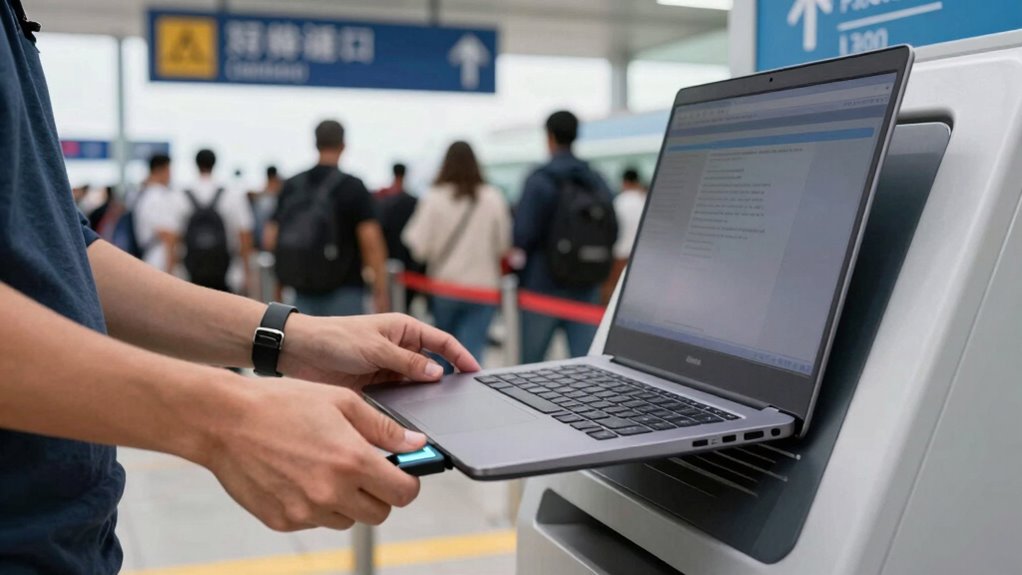
Connecting your personal devices to unknown computers can expose your data to significant security risks. Unknown systems may harbor device malware that can infect your device once connected, leading to data leakage or corruption. Public or unfamiliar computers often lack proper security measures, making it easier for malicious actors to access sensitive information. When you plug in your device, you risk unintentionally installing malware that can silently monitor or copy your data. Additionally, data leakage can occur if files are transferred without your knowledge. To protect yourself, avoid connecting personal devices to unfamiliar computers. Instead, use secure methods such as encrypted drives or cloud storage. Keeping your devices isolated helps prevent malware infections and safeguards your private information from falling into the wrong hands.
Create a Data Security Plan for Border Crossings
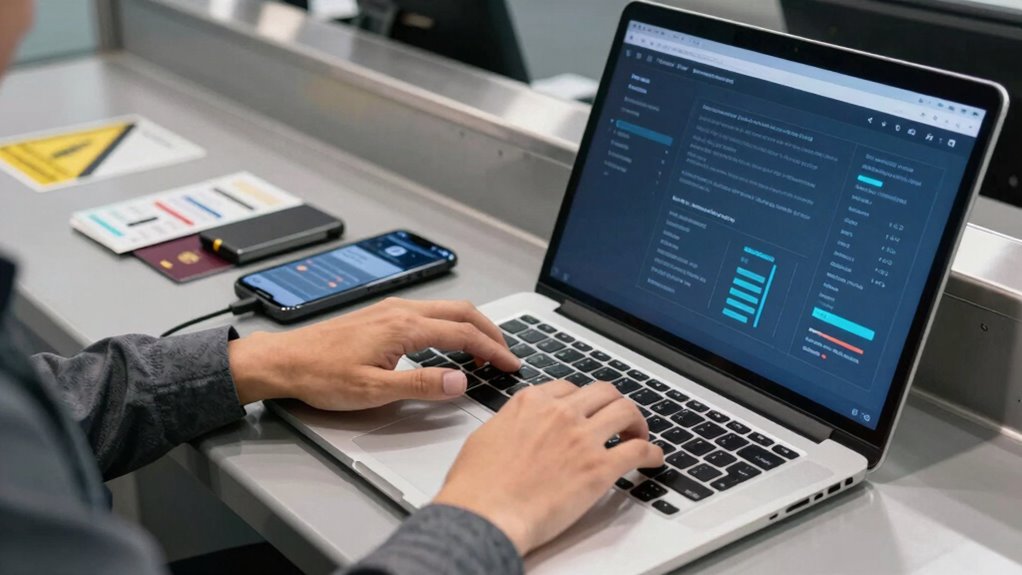
To effectively protect your data when crossing borders, you need a thorough security plan tailored to the unique risks of international travel. Your plan should address border customs procedures and ensure data compliance with local regulations. Take these steps:
- Encrypt sensitive files before traveling to prevent unauthorized access.
- Limit the amount of personal and business data on devices.
- Use strong, unique passwords and enable multi-factor authentication.
- Keep software updated to patch security vulnerabilities.
- Prepare a clear incident response plan in case data is compromised.
Frequently Asked Questions
What Legal Issues Might I Face When Crossing Borders With Encrypted Data?
When crossing borders with encrypted data, you might face legal issues like customs searches or seizures. You need to guarantee legal compliance with local laws, which may require revealing encryption keys or data. Be aware of encryption exemptions that could protect you, but authorities may still demand access. Always stay informed about specific border regulations and prepare necessary documentation to avoid legal complications or data loss during your travels.
Are There Specific Countries With Stricter Data Inspection Policies at Borders?
Border barriers bolster by countries like China, Russia, and the United States, which impose stricter inspection policies. These nations prioritize data sovereignty, scrutinizing personal and corporate data during border inspections. You must be cautious, as these countries often conduct all-encompassing data inspections, risking access restrictions or data confiscation. When crossing borders, understand each nation’s policies to protect your privacy and comply with local laws, avoiding unwanted data disputes or disruptions.
How Can I Verify the Security of a Public or Hotel Wi-Fi Network?
To verify the security of a public or hotel Wi-Fi network, start by checking if it uses WPA3 or WPA2 encryption, which are standard for secure networks. Avoid networks without a password or with weak security. Be aware of hotel network risks like open access points. Use a VPN to encrypt your data, and avoid accessing sensitive information unless you’re on a trusted, secured connection.
What Should I Do if My Devices Are Confiscated or Inspected at Border Control?
Think of device seizure and inspection protocols like a customs officer opening your suitcase; they’re just doing their job. If your devices are confiscated or inspected, stay calm, cooperate politely, and ask if you can access your data later. You might consider encrypted backups beforehand, so your information remains safe even if your device is temporarily held. Remember, respecting the process helps you navigate border inspections smoothly.
Can Using a VPN Fully Prevent Government Data Access During Border Crossings?
Using a VPN can’t fully prevent government data access during border crossings because VPN limitations exist, especially if authorities have legal encryption tools or court orders. While a VPN encrypts your traffic and masks your IP, border agents might still seize your device or request passwords. To better protect your data, confirm your VPN uses strong encryption, and remember that no method guarantees complete privacy in such situations.
Conclusion
Traveling abroad exposes your data to risks, but with the right precautions, you can safeguard it. While border crossings might seem like just a quick stop, they’re actually high-stakes moments for your privacy. Think of your data as valuable luggage—you wouldn’t leave it unattended in a busy terminal. Stay vigilant, encrypt your files, and use secure connections. In a world of constant digital threats, protecting your data is your best border security.