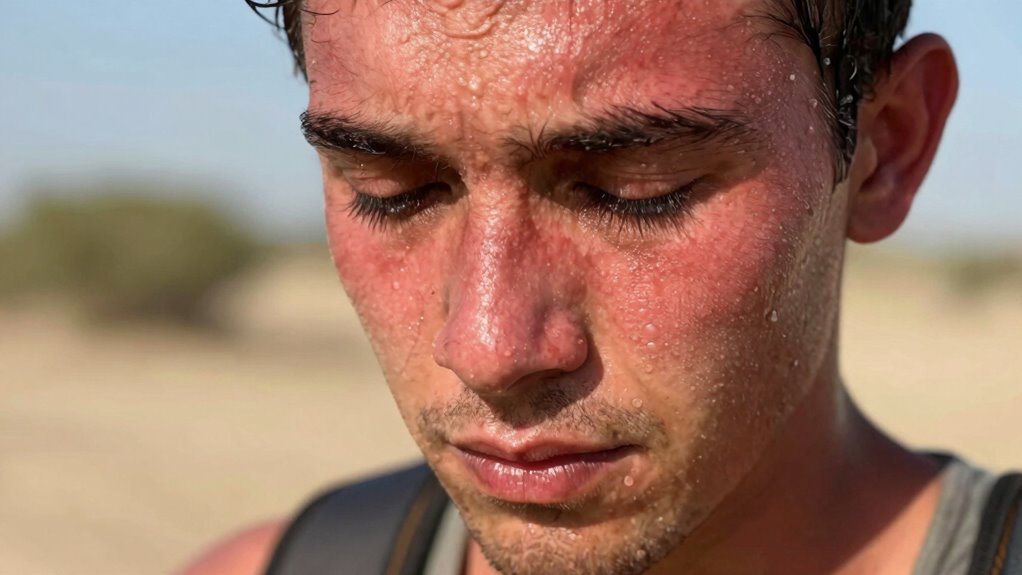

Heat exhaustion can sneak up on you quickly if you’re not paying attention. Early signs include feeling unusually tired, dizzy, or weak, along with heavy sweating, nausea, headache, or muscle cramps. Your skin might feel damp or cool, and you might sense you’re overheating. Acting quickly is key—move to shade, hydrate, and cool your skin. Stay alert to these warning signs, and discover more tips to prevent serious health issues during hot travels.
Key Takeaways
- Early signs include dizziness, excessive sweating, weakness, nausea, and muscle cramps that indicate heat stress.
- Recognizing hot or damp skin and fatigue signals the body’s struggle with overheating.
- Promptly moving to shade, resting, and hydrating can prevent progression to heat stroke.
- Ignoring early symptoms like headache and lightheadedness increases risk of serious health complications.
- Wearing lightweight, breathable clothing and using cooling strategies help detect and manage initial heat exhaustion signs.
Recognize the Early Signs of Heat Exhaustion

How can you tell if you’re starting to experience heat exhaustion? It often begins subtly, so paying attention to your body is key. One of the first signs is feeling unusually tired or weak, which can stem from dehydration. Your hydration strategies play a vital role here—drinking water regularly helps maintain your fluid levels. Also, observe your clothing choices; loose, lightweight, and light-colored clothing can help keep your body cool and prevent overheating. If you notice your skin feels damp or you start sweating excessively, these are early warnings. Don’t ignore feelings of dizziness or nausea, as they can signal your body is struggling to cope with the heat. Recognizing these signs early allows you to take action before heat exhaustion worsens. Proper hydration techniques are crucial for preventing dehydration-related symptoms. Staying in shaded or cool environments can significantly reduce your risk of heat-related illnesses. Incorporating preventative measures such as using fans or cooling towels can also provide additional relief and help manage your body temperature effectively. Implementing body cooling strategies like applying cold packs or taking a cool shower can further help lower your core temperature. Free Floating backyard design ideas such as landscaping and creating seating areas can help provide shaded and comfortable spots to cool down.
Common Symptoms You Should Watch For
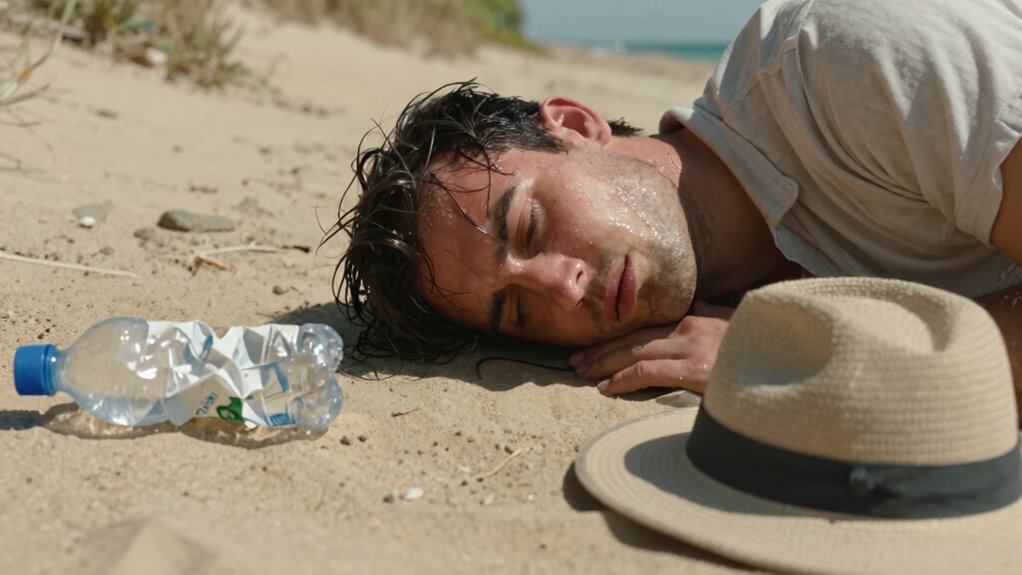
Recognizing the common symptoms of heat exhaustion is essential to prevent it from progressing into a more serious condition. You should watch for signs like heavy sweating, weakness, dizziness, and nausea. Early detection involves paying attention to these cues and adjusting your hydration strategies and sun protection. Dehydration can worsen symptoms, so sip water regularly and include electrolyte drinks. Be alert for cool, clammy skin and muscle cramps, which often indicate heat stress. Recognizing these signs early can help you take immediate steps to prevent heat-related illnesses. Proper hydration and regional flavor insights can also play a role in maintaining overall comfort and safety. Here’s a quick overview:
| Symptom | Action to Take |
|---|---|
| Heavy sweating | Rehydrate immediately with fluids |
| Dizziness or weakness | Rest in a shaded, cool area |
| Nausea or vomiting | Seek shade, hydrate, and monitor symptoms |
| Muscle cramps | Stretch gently and hydrate |
Prompt action can prevent heat exhaustion from worsening. Additionally, understanding heat stress and its impact can help you better prepare and respond effectively. Being aware of early warning signs can make a significant difference in managing heat-related health issues.
What Is Your Body Telling You When It Overheats
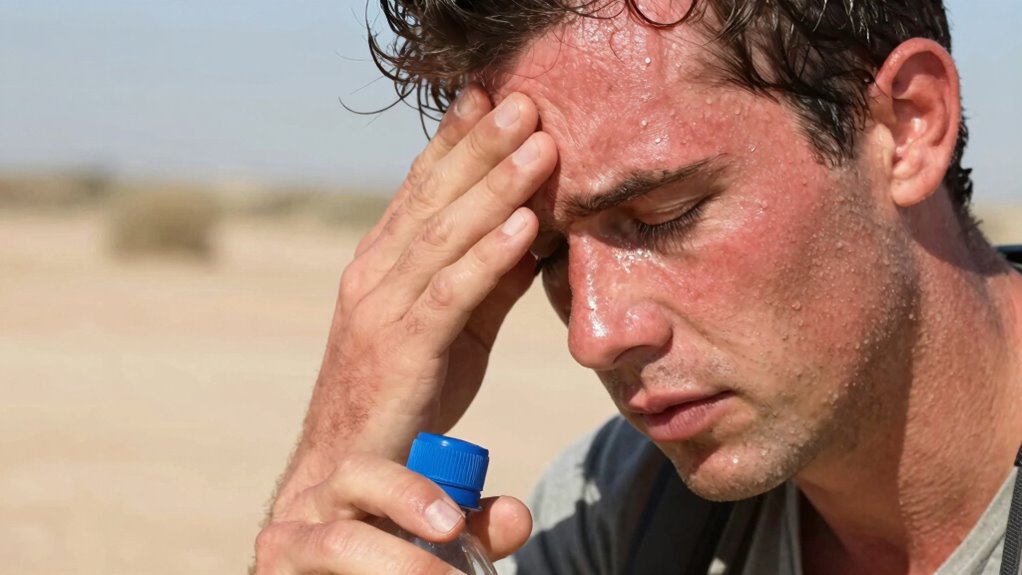
When your body overheats, it sends clear signals that you need to take action to cool down. You might start feeling dizzy, sweaty, or exhausted, and your skin could become hot and dry or damp with sweat. These are vital warning signs that your body is struggling to regulate temperature. To respond effectively, focus on hydration strategies—drink water regularly and avoid sugary or caffeinated beverages. Your clothing choices also matter; wear lightweight, loose-fitting, and light-colored clothing to reflect heat and promote airflow. If you notice these signals, don’t ignore them. Recognize them as your body’s way of telling you to cool off before heat exhaustion worsens. Paying attention to Biohacking techniques can help optimize your body’s response to overheating and improve recovery. Additionally, incorporating essential oils for heat exhaustion, such as peppermint or lavender, might also provide additional relief and help you stay calm during stressful conditions. Being aware of ergonomic strategies that support body cooling can further enhance your ability to manage heat exposure effectively. Practicing preventive measures can help you stay ahead of symptoms and avoid more serious heat-related illnesses. Staying vigilant about early warning signs ensures you act promptly and protect yourself from heat-related health risks.
What to Do Immediately If You Suspect Heat Exhaustion
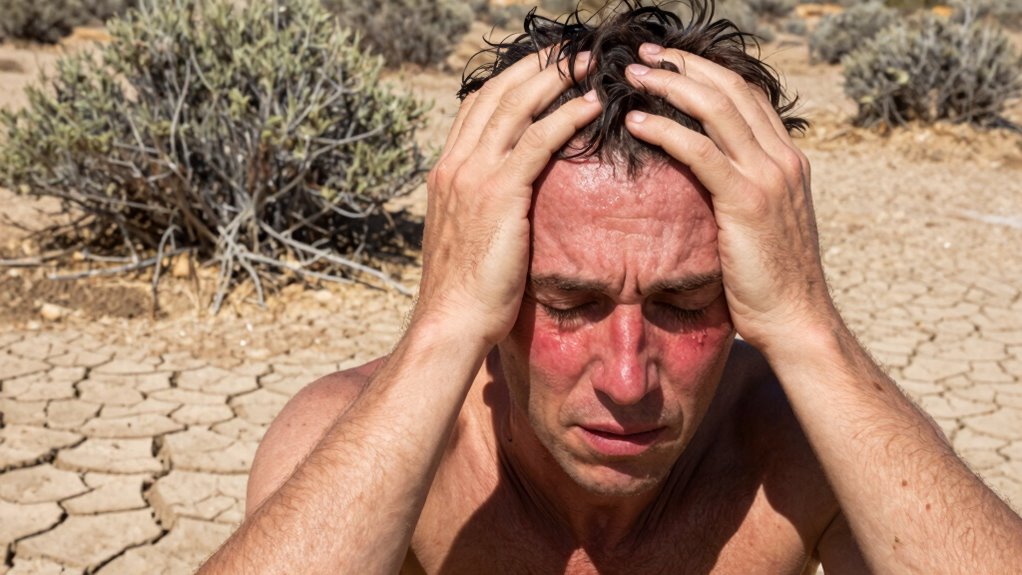
If you notice signs of heat exhaustion, taking immediate action can prevent the condition from worsening. First, move to a cooler, shaded area to lower your body temperature. Next, focus on hydration strategies by drinking plenty of water or electrolyte drinks—avoid caffeine or alcohol. Adjust your clothing choices; wear lightweight, breathable fabrics to help sweat evaporate. Use a cool compress or damp cloth on your neck, wrists, and forehead to cool down. Rest and avoid strenuous activity until you feel better. Remember, quick response is essential to prevent heat exhaustion from escalating into heat stroke. Stay alert to your body’s signals, and act fast to stay safe in hot conditions. Proper gear care can also help prevent overheating by ensuring your clothing remains breathable and effective. Additionally, being aware of heat pump features and maintenance can help you prepare for extreme weather conditions that may increase the risk of heat-related illnesses. Maintaining proper ventilation in your living or working spaces can further reduce the risk of overheating in hot environments. Regularly inspecting your environment for potential heat hazards can also contribute to overall safety during heat waves. Being proactive about climate control systems can make a significant difference in preventing heat-related health issues.
Tips to Prevent Heat Exhaustion During Hot Travel Days

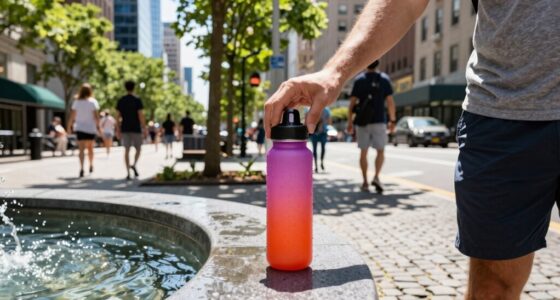
To prevent heat exhaustion during hot travel days, it’s essential to stay proactive about your hydration and clothing choices. Hydration strategies are key—drink plenty of water before you feel thirsty, and incorporate electrolyte drinks to replenish lost salts. Carry a reusable water bottle and sip regularly, especially in the heat. When it comes to clothing choices, opt for lightweight, loose-fitting, and light-colored fabrics that reflect sunlight and promote airflow. Wear a wide-brimmed hat and sunglasses to protect your head and eyes from direct sun exposure. Avoid tight or dark clothing that traps heat. Ensuring proper indoor air quality and humidity levels can also help keep your body cool and comfortable, reducing the overall risk of heat exhaustion while you enjoy your travels. Additionally, using portable oil radiators or other safe cooling devices can assist in maintaining a comfortable indoor environment, especially in places with poor ventilation. Maintaining a cool indoor environment is crucial for preventing heat-related illnesses, especially during extended stays in hot climates. Proper ventilation and the use of cooling fans can significantly enhance indoor comfort. Incorporating sustainable fabric technology such as moisture-wicking or breathable textiles can further help keep you cool and dry, supporting your efforts to stay comfortable. Taking these simple steps helps your body stay cool and hydrated, reducing the risk of heat exhaustion while you enjoy your travels.
Frequently Asked Questions
Can Heat Exhaustion Lead to Heatstroke if Untreated?
Yes, heat exhaustion can lead to heatstroke if you don’t address it promptly. If you ignore early signs during outdoor activities, your body temperature can rise dangerously. To prevent this, follow hydration strategies like drinking plenty of water and resting in cool areas. Staying aware of how your body feels helps you catch symptoms early, reducing the risk of progressing to heatstroke, which can be life-threatening.
Are Certain Medications Increasing Heat Exhaustion Risk?
Think of your medications as double-edged swords; some can turn up the heat on you. Certain medications have side effects like dehydration or dizziness, increasing your risk of heat exhaustion. Drug interactions may amplify these effects, making your body less able to handle high temperatures. Always check with your doctor or pharmacist about medication side effects and possible interactions, especially when traveling in hot climates, to stay safe and cool.
How Does Age Affect Susceptibility to Heat Exhaustion?
You’re more susceptible to heat exhaustion as you age because age-related risks increase elderly vulnerability. Your body’s ability to regulate temperature diminishes, making it harder to cool down. Older adults often have chronic conditions and may take medications that heighten this risk. To stay safe, stay hydrated, seek shade, and avoid strenuous activity during hot weather. Recognizing early signs is vital to prevent serious health complications.
Is Dehydration the Primary Cause of Heat Exhaustion?
Dehydration isn’t the sole cause of heat exhaustion, but it plays a starring role. When you don’t maintain proper fluid intake, your body risks electrolyte imbalance, making you vulnerable. This imbalance can cause symptoms like weakness and dizziness. You need to stay ahead of your body’s signals by drinking fluids regularly, especially in hot weather. Ignoring dehydration can turn a manageable situation into a heat exhaustion emergency faster than you think.
Can Clothing Choices Influence Heat Exhaustion Symptoms?
Yes, your clothing choices can influence heat exhaustion symptoms. Wearing lightweight, breathable clothing made of materials like cotton helps keep you cool, while dark or tight fabrics can trap heat. Additionally, choosing clothing that offers sun protection, such as wide-brimmed hats and UV-protective fabrics, shields your skin from intense sun exposure. These choices help regulate your body temperature and reduce the risk of heat exhaustion during hot days.
Conclusion
Don’t let heat exhaustion catch you off guard like a thief in the night. Stay aware of your body’s signals and act quickly—your health is the treasure at stake. By recognizing early warning signs and taking simple precautions, you can navigate hot travel days safely. Remember, your body’s warning lights are there for a reason—heed them before the heat becomes a storm you can’t weather. Stay cool, stay safe, and enjoy your journey.