Your suitcase tips over mainly because of uneven weight distribution that shifts its center of gravity and causes instability. When heavy items are packed on one side or placed too high, it becomes harder to balance and maneuver. The shape and design of your luggage, along with handle and wheel placement, also affect its stability. To keep your suitcase upright and steady, proper packing techniques are key—stay tuned for tips on how to do it right.
Key Takeaways
- Uneven weight distribution raises the suitcase’s center of gravity, making it unstable and prone to tipping.
- Overpacking or improper packing causes shifting of contents, disrupting balance during movement or standing.
- Narrow or uneven suitcase bases decrease stability, increasing the risk of tipping during rolling or lifting.
- Weak or poorly designed handles and wheels strain under imbalance, leading to instability and potential tipping.
- Lack of secure locks and organized packing allows contents to shift, compromising balance and causing the suitcase to tip over.
Why Does My Suitcase Keep Tipping Over?

If your suitcase keeps tipping over, the most common reason is uneven weight distribution inside it. When heavy items are placed on one side, the center of gravity shifts away from the suitcase’s base, making it unstable. This imbalance causes it to tip easily, especially when moving or standing upright. Additionally, the material durability of your suitcase plays a role; weaker or less sturdy materials can deform or bend under pressure, further destabilizing the structure. A well-balanced suitcase has its weight centered over the wheels and base, offering better stability. To prevent tipping, distribute your belongings evenly, ensuring heavier items are low and centered. Choosing a durable, high-quality suitcase can also help maintain its shape and balance over time. Proper weight distribution is essential for maintaining stability and preventing your suitcase from tipping over.
How Does Weight Distribution Affect Suitcase Stability?
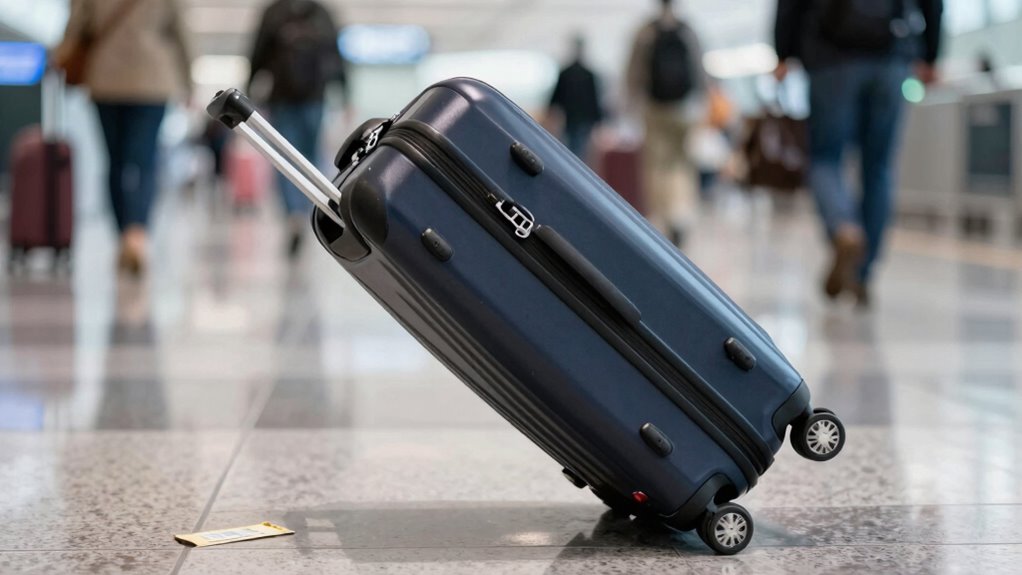
You can improve your suitcase’s stability by focusing on proper weight centering, keeping heavier items low and balanced. When heavy items are unevenly distributed, the suitcase becomes harder to control and more prone to tipping. Shifting your load to avoid uneven weight helps make certain your suitcase stays steady and easy to carry. Additionally, understanding weight distribution principles can help prevent tipping by ensuring the load is balanced across all axes. Proper load placement also minimizes strain on handles and wheels, making travel more comfortable. Being mindful of center of gravity can further enhance overall stability during transit. Ensuring your packing technique is correct is essential for maintaining balance and preventing accidents. Properly distributing weight also reduces the risk of damage to your belongings and the suitcase itself.
Proper Weight Centering
Proper weight centering is essential for suitcase stability because uneven distribution can cause it to tip or wobble during handling. When your luggage’s weight is evenly distributed, the center of gravity remains low and balanced, reducing the risk of tipping over. To achieve this, place heavier items at the bottom and close to the handle, keeping the weight balance centered. This gear care technique helps prevent strain on the wheels and handles, making transport smoother. Proper weight distribution not only enhances safety but also contributes to overall metabolic health by reducing physical stress during travel. Additionally, understanding center of gravity principles can help you pack more efficiently and prevent accidents. Research in biomechanics shows that proper weight placement improves stability during movement. Being aware of physical principles such as leverage and balance can further optimize your packing strategy. Consider the following table to help visualize effective weight placement:
| Item Placement | Effect on Stability |
|---|---|
| Heavy items at the bottom | Lowers center of gravity |
| Lighter items on top | Prevents top-heavy wobbling |
| Items near the handle | Easier to carry and control |
| Even distribution across compartments | Maintains balance |
| Avoid overloading one side | Prevents tipping over |
Keeping your weight centered ensures a stable, balanced suitcase during travel.
Impact of Heavy Items
Placing heavy items correctly in your suitcase directly influences its stability and ease of handling. When you load your suitcase, an uneven weight shift can cause a load imbalance, making it prone to tipping over. If heavy items are concentrated on one side or placed too high, the suitcase becomes top-heavy and unstable. Distributing weight evenly from bottom to top and side to side helps maintain balance during movement. Proper placement minimizes the risk of tipping when rolling or carrying your luggage. Remember, even small shifts in weight can affect overall stability, so adjust heavy items carefully. Being aware of load imbalance and managing the load early can significantly improve your suitcase’s stability. Maintaining proper weight distribution is essential for self-sufficiency in emergencies and everyday travel. By managing the load imbalance early, you’ll ensure your suitcase remains steady, making travel smoother and preventing unexpected tipping over. Additionally, understanding how weight placement impacts suitcase stability can help you make better packing decisions. Paying attention to center of gravity during packing can further enhance your suitcase’s stability. Being mindful of weight limits can also prevent overloading and maintain overall balance.
Effects of Uneven Load
When weight is unevenly distributed in your suitcase, it can considerably compromise its stability. An unbalanced load shifts the center of gravity away from the ideal position, making the suitcase more prone to tipping over. Poor load balance causes one side to be heavier, which increases the likelihood of wobbling or falling when you move or lift it. This uneven weight distribution makes handling more difficult and can strain your grip or wheels. To maintain stability, ensure the load is evenly spread, keeping the center of gravity close to the middle. Properly balanced weight distribution helps your suitcase stand upright, reducing the risk of tipping and making travel smoother. Incorporating weight distribution principles like packing lightweight, natural materials can also contribute to overall ease of handling. Additionally, understanding how center of gravity affects stability can help you pack more effectively. Being mindful of load balancing techniques can prevent unnecessary strain and accidents during transit. Checking your packing method before heading out, especially if you pack heavy or bulky items, can further enhance stability.
What Common Packing Mistakes Cause Suitcases to Fall?
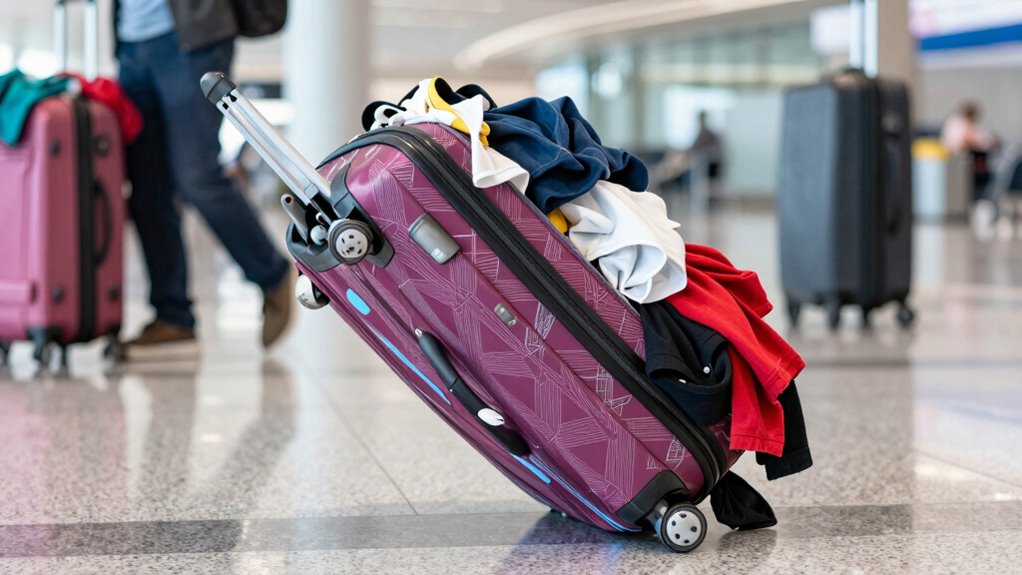
One common mistake is uneven weight distribution, which makes your suitcase hard to balance. Overpacking can cause imbalance, increasing the risk of it falling over. When your suitcase isn’t packed carefully, even small shifts can lead to instability. Incorporating Well-drained soil principles can help distribute weight more evenly and prevent tipping. This approach emphasizes proper airflow and drainage, which can also be applied to packing techniques to improve stability. Additionally, understanding creative storytelling for branding can inspire innovative packing ideas that improve stability and organization within your suitcase.
Uneven Weight Distribution
Uneven weight distribution is a common packing mistake that can cause suitcases to fall or become difficult to carry. When your belongings are unevenly spread, your suitcase’s center of gravity shifts, making it unstable. Poor load balancing means the heavier items are not positioned correctly, which can tip the case over easily. To prevent this, distribute weight evenly across the suitcase, placing heavier items closer to the center to maintain stability. Avoid putting all heavy objects on one side or at the bottom, as this disrupts balance when you lift or roll your bag. Proper load balancing ensures a lower, more centered center of gravity, reducing the risk of tipping and making your suitcase easier to maneuver. Additionally, practicing work-life harmony during your packing process can help you stay organized and reduce stress, contributing to a more balanced approach to travel.
Overpacking and Imbalance
Overpacking is a leading cause of suitcase imbalance that can make your luggage unstable and difficult to carry. When you cram too much into your suitcase, uneven weight placement occurs, increasing the risk of tipping over. Proper packing techniques help distribute weight evenly, preventing this issue. Focus on placing heavier items at the bottom and close to the wheels, while lighter items go on top. Avoid filling one side more than the other, which worsens imbalance. Use the table below to visualize effective packing:
| Packing Tip | Why It Matters | Example |
|---|---|---|
| Distribute weight evenly | Prevents tipping over | Balance clothes on both sides |
| Pack heavy items at the bottom | Keeps suitcase stable | Shoes, toiletries at the base |
| Use compartments and pouches | Maintains organization | Keeps weight in designated areas |
| Limit overpacking | Guarantees ease of carry and balance | Avoid stuffing to capacity |
How Should I Pack Heavier Items to Keep My Suitcase Stable?
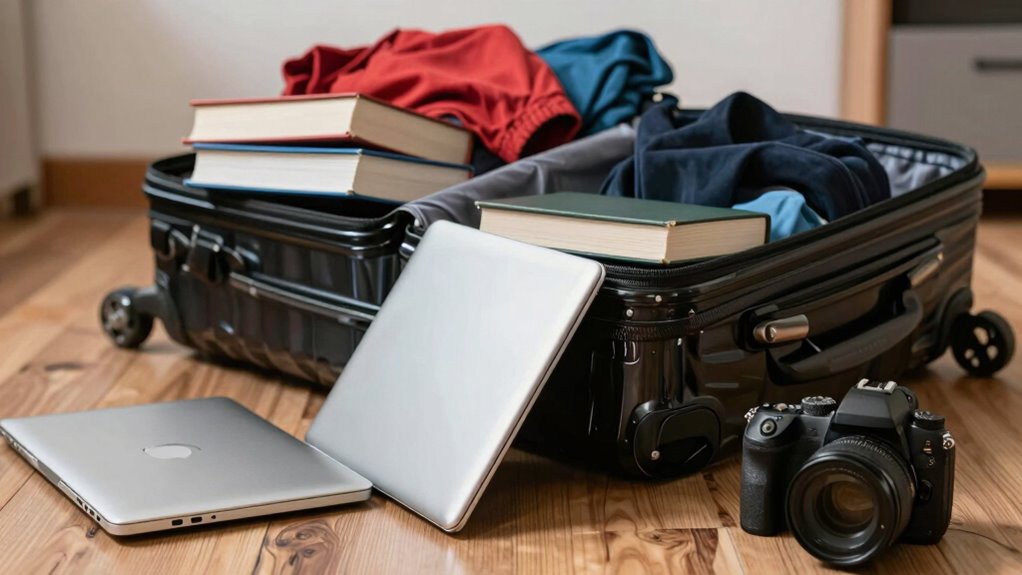
To keep your suitcase stable, place heavier items at the bottom and closer to the handle. Proper weight placement guarantees your suitcase remains balanced and easier to carry. Use packing techniques that distribute weight evenly across the suitcase’s base. Avoid piling all heavy items in one corner, as this can cause tipping. Instead, layer heavier belongings at the bottom in a compact manner, then fill in with lighter items on top. Secure items tightly so they don’t shift during transit. If your suitcase has compartments, utilize them to organize and stabilize weight. Incorporating traditional packing principles can also enhance stability by ensuring an even distribution of weight throughout your suitcase. Additionally, considering seasonal packing strategies can help optimize weight distribution based on your travel period. Properly managing weight distribution is essential for avoiding the discomfort of a top-heavy suitcase that tips easily. Using packing techniques recommended by luggage experts can further improve your suitcase’s stability and prevent accidents.
Does Suitcase Shape and Design Impact Its Balance?
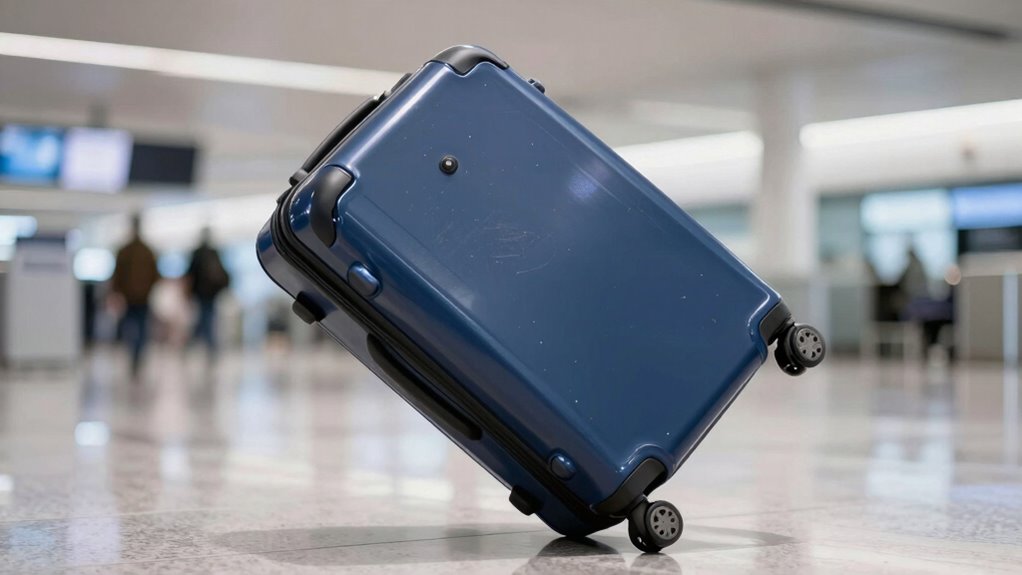
The shape and design of your suitcase play a crucial role in its overall stability. A well-designed suitcase can prevent tipping and make travel easier. The suitcase shape influences how weight distributes across the base, affecting balance. For example, a wider base offers more stability than a narrow one. Design impact also includes features like reinforced corners, sturdy handles, and balanced weight placement. Consider these points:
- Low-profile, broad shapes improve balance
- Lightweight materials reduce top heaviness
- Proper handle placement ensures even weight distribution
- Hard-shell cases prevent shifting of contents
- Straining paint techniques emphasize the importance of proper weight distribution to avoid instability.
Choosing a suitcase with a thoughtful design impact can substantially reduce the chances of tipping over, making your travels smoother. The right shape and design help keep your luggage steady, even when packed unevenly.
How Can I Choose a More Stable Suitcase?
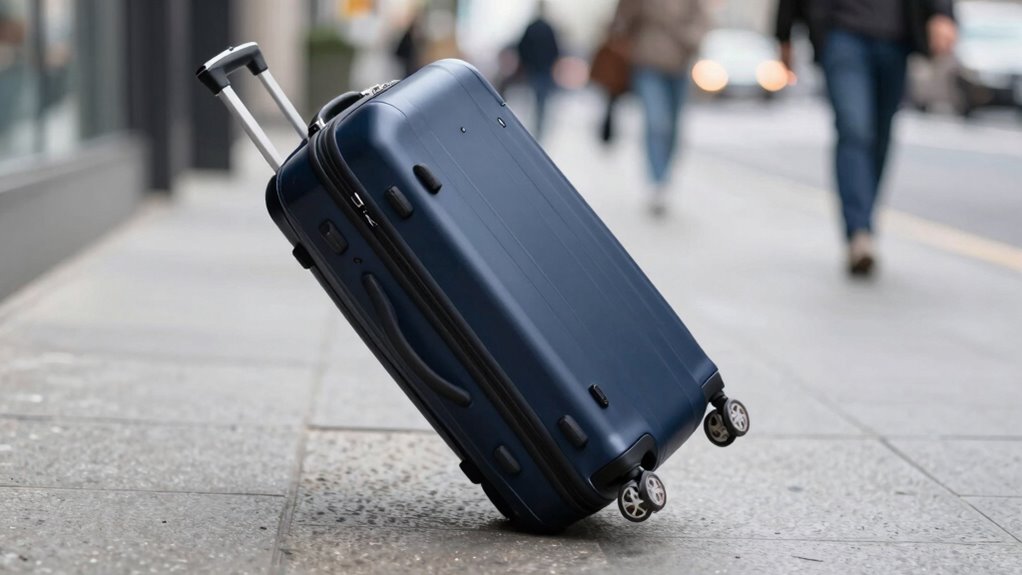
Choosing a more stable suitcase starts with paying attention to its design features. Look for cases made from durable materials like polycarbonate or reinforced nylon, which resist cracks and deformation that can cause imbalance. A sturdy, well-constructed frame provides better support and helps prevent tipping. Additionally, consider the brand’s reputation—reliable brands often prioritize quality and stability, reducing the risk of sudden shifts or falls. Check customer reviews to see if others have experienced stability issues. Opt for suitcases with a low center of gravity and a broad, balanced base. While aesthetic features matter, durability and reputable brands are key to ensuring your suitcase remains stable, even when fully packed or steering uneven surfaces.
How Do Handle and Wheel Placement Affect Suitcase Stability?
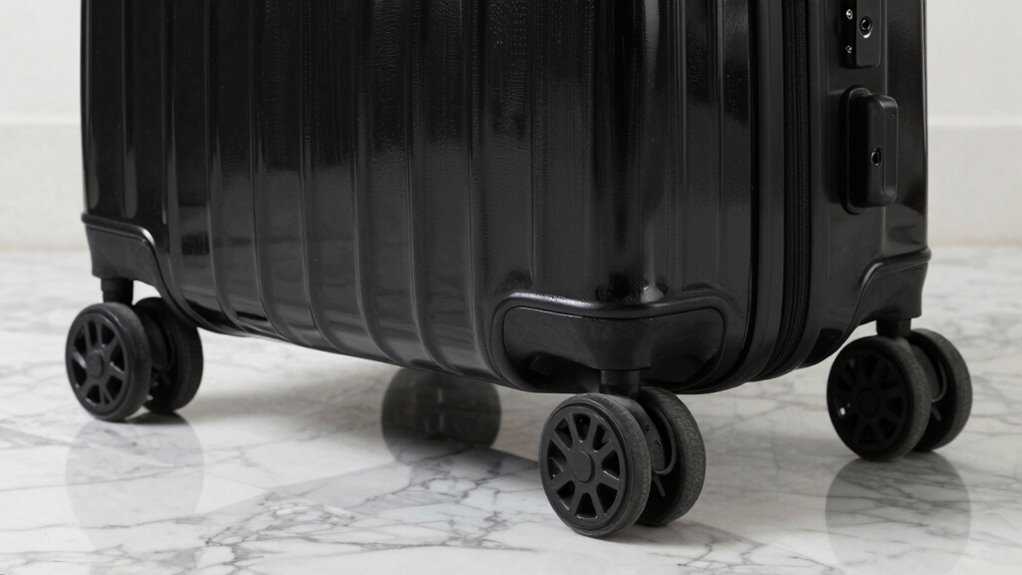
Ever wondered how handle and wheel placement influence your suitcase’s stability? The way these elements are positioned can make a big difference. Proper handle placement guarantees you lift the suitcase evenly, reducing tipping risk. Wheel positioning affects how easily the suitcase stays upright when rolling. For example:
Handle and wheel placement are key to suitcase stability and easy rolling.
- Handles placed centrally provide better balance when lifting
- Off-center handles can cause uneven weight distribution
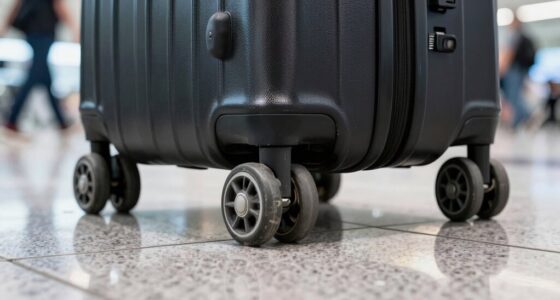
- Larger wheels positioned at the corners improve stability during movement
- Smaller or poorly placed wheels make tipping more likely
What Should I Do If My Suitcase Keeps Falling Over?
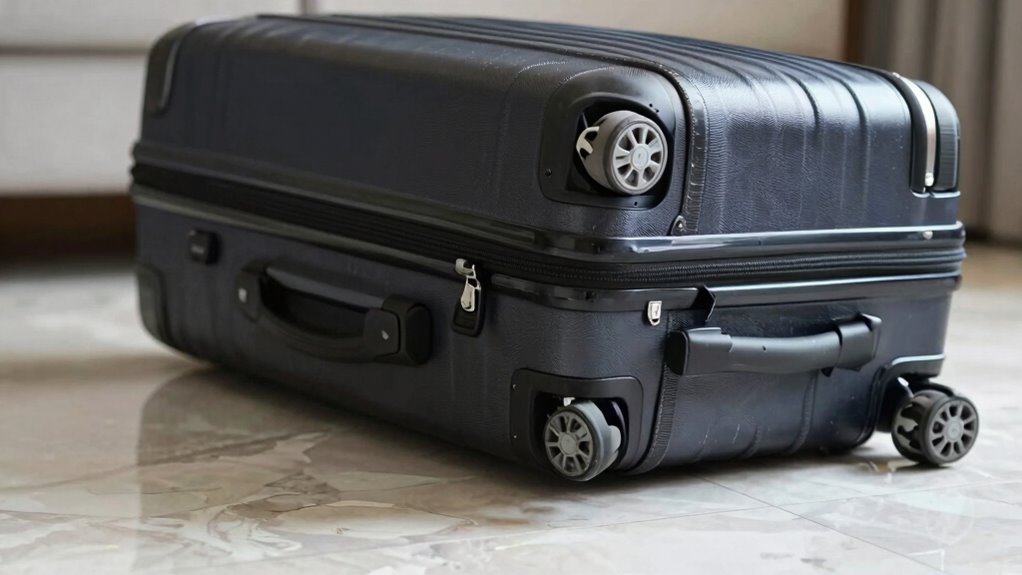
If your suitcase keeps falling over, the first step is to check its weight distribution and make certain you’re packing evenly. Clothing compression can help by reducing bulk and keeping items compact, which helps maintain balance. Avoid overpacking one side or the bottom, as uneven weight can cause tipping. Also, consider carry-on restrictions—overloading your suitcase beyond the allowed weight or size can make it top-heavy and unstable. Shift heavier items toward the center or close to the wheels to lower the center of gravity. Use packing cubes or organizers to keep items secure and evenly distributed. If needed, remove excess clothing or redistribute weight to improve stability. This simple adjustment can make your suitcase more balanced and prevent it from tipping over during transit.
How Can I Keep My Suitcase Upright During Travel?
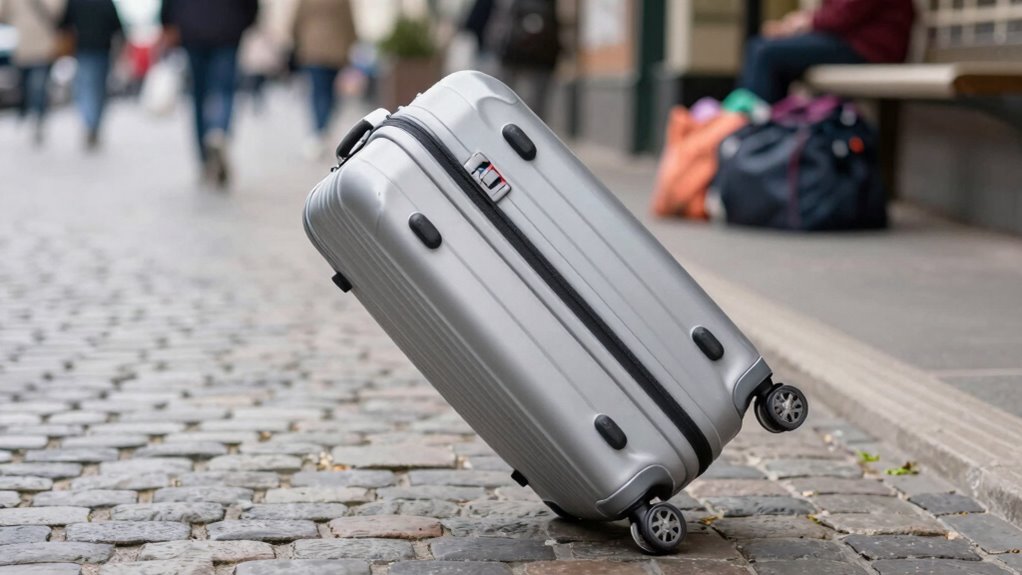
To keep your suitcase upright during travel, focus on proper weight distribution so it stays balanced. Make sure to secure the luggage lock firmly to prevent shifting inside. Both steps help maintain stability and make handling your suitcase easier on the go.
Proper Weight Distribution
Maintaining proper weight distribution in your suitcase is essential for keeping it upright during travel. An uneven weight imbalance often results from packing errors that shift your luggage’s center of gravity. To prevent this, start by placing heavier items at the bottom and close to the wheels, ensuring a stable base. Distribute lighter items evenly across the sides to maintain balance. Make sure to:
- Avoid overpacking one side or corner
- Pack bulky items centrally for better weight control
- Use compartments to organize and evenly spread weight
- Regularly check the suitcase’s balance before closing
Secure Luggage Locking
Securing your luggage with a reliable lock is essential for keeping it upright and stable during travel. Luggage security isn’t just about preventing theft; it also helps maintain your suitcase’s structure, reducing the chance of tipping over. Use sturdy travel accessories like TSA-approved locks to guarantee your bag stays closed and secure. When your luggage is properly locked, it resists accidental openings that can cause imbalance. Additionally, a locked suitcase discourages tampering, which could lead to uneven weight distribution. Ensure your lock fits snugly and is easy to operate, so you don’t risk damaging the zippers or fabric. Incorporating secure locking mechanisms into your travel routine not only protects your belongings but also contributes to keeping your suitcase stable and upright throughout your journey.
How Proper Packing Saves Time and Reduces Frustration

Proper packing can dramatically cut down your travel time and eliminate much of the frustration that comes with last-minute chaos. When you organize efficiently, you avoid digging through your luggage and wasting time. Use sturdy luggage material that maintains shape and balance, preventing uneven weight distribution. Pack travel accessories logically—place heavier items at the bottom and lighter ones on top. Consider compartmentalizing items to keep things accessible and avoid overpacking. This approach reduces the chances of overstuffing and imbalance. Additionally, packing smartly helps you quickly find essentials, minimizing delays at security or baggage claim. By paying attention to your packing method, you ensure your suitcase stays balanced and easy to handle, saving you time and avoiding the stress of dealing with a tipping, unstable bag.
Frequently Asked Questions
Can External Weather Conditions Affect Suitcase Stability?
External weather conditions can definitely affect your suitcase stability. Weather impact, like rain or snow, makes surfaces slippery, increasing the chance of tipping over. Wind can also push or sway your luggage, especially if it’s lightweight. External factors such as uneven or wet surfaces, and temperature changes that affect materials, contribute to instability. Always be mindful of weather when handling or placing your suitcase to prevent it from tipping over.
Do Different Terrains Impact How Easily a Suitcase Tips Over?
Different terrains definitely impact how easily your suitcase tips over. You’ll find that uneven hotel floors, cobblestone streets, or grassy areas challenge its stability, making it more prone to toppling. When you’re managing airplane baggage or storing luggage in a hotel, uneven surfaces can shift the weight distribution and throw off the balance. To prevent this, choose suitcases with sturdy wheels and always position them on as even a surface as possible, whether in transit or storage.
How Does Luggage Material Influence Balance and Tipping?
Luggage material affects your suitcase’s balance and tipping because it influences weight distribution and the center of gravity. Lightweight materials like polycarbonate keep the center of gravity lower, making it easier to stay balanced. Heavier materials like aluminum can raise the center of gravity, increasing the risk of tipping. Choosing durable, lightweight materials helps you manage weight distribution better, reducing the likelihood of your suitcase tipping over during transit.
Are There Specific Travel Scenarios That Increase Tipping Risk?
Oh, sure, because nothing screams adventure like trying to keep your overloaded suitcase from tipping over at every turn. Travel scenarios like uneven weight distribution, especially when you pack too much on one side, or using a poorly designed handle that throws off your grip, definitely increase tipping risk. So, be mindful of weight balance and choose a suitcase with a sturdy handle design to avoid a circus act every time you roll through the airport.
Can Luggage Security Features Affect Overall Stability?
Luggage security features can affect overall stability, especially if they add weight or alter your suitcase’s balance. For example, heavy luggage weight near the handle can cause tipping issues, and handle design impacts how easily you can maneuver and distribute weight. If security features like locks or reinforced compartments make your luggage uneven or heavier on one side, it increases the risk of tipping over during travel.
Conclusion
By understanding how weight distribution and suitcase design affect stability, you can pack smarter and prevent your bag from tipping over. Did you know that improperly packed suitcases are responsible for nearly 30% of travel delays caused by damaged or lost luggage? Keep heavier items low and centered, and choose a shape that suits your needs. With these tips, you’ll travel confidently, saving time and avoiding frustration every step of the way.