
To see if your luggage setup will annoy you daily, check for clutter, easy access, and logical organization. If you often struggle to find items quickly or unpack gets frustrating, your bag likely needs improvement. Use visual cues like tidy compartments and good space utilization to tell. Optimizing your layout reduces stress and saves time. Keep going, and you’ll discover simple tips to make your bag more efficient and stress-free.
Key Takeaways
- Conduct a quick visual check for clutter, disorganized items, and accessibility of essentials.
- Use packing tools like cubes, pouches, and dividers to maintain a neat and logical layout.
- Ensure fragile items are cushioned and cords are untangled to prevent damage and frustration.
- Store frequently used items at the top or in quick-access compartments to save time.
- Regularly review and declutter your bag to avoid overpacking and reduce daily annoyance.
Is Your Luggage Setup Working for You?
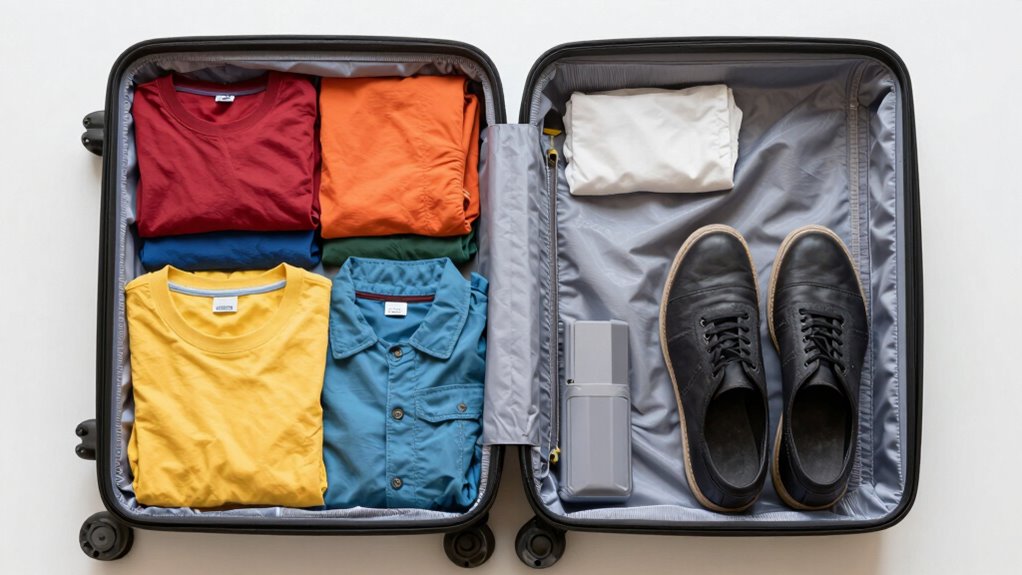
Have you ever wondered if your luggage setup is truly making travel easier? Your choice of travel accessories plays a big role in this. Well-organized compartments, secure zippers, and easy-to-access pockets help keep everything in place. When you prioritize luggage security, you reduce the risk of losing items or dealing with broken zippers. Consider using packing cubes or designated compartments to streamline your packing process. This setup not only saves time but also minimizes stress during security checks. If your luggage feels cluttered or disorganized, it’s a sign your current arrangement isn’t working. A thoughtful layout, combined with the right accessories, guarantees your belongings stay secure and accessible. Ensuring your luggage setup aligns with safety tips and practicality can enhance your overall travel experience. Additionally, understanding how to dog-proof your packing can prevent accidents and keep your belongings safe. Incorporating lightweight and durable travel gear can also make a significant difference in managing your luggage efficiently. Ultimately, a well-planned setup boosts confidence and makes every trip smoother.
How to Spot Signs of a Cluttered Bag
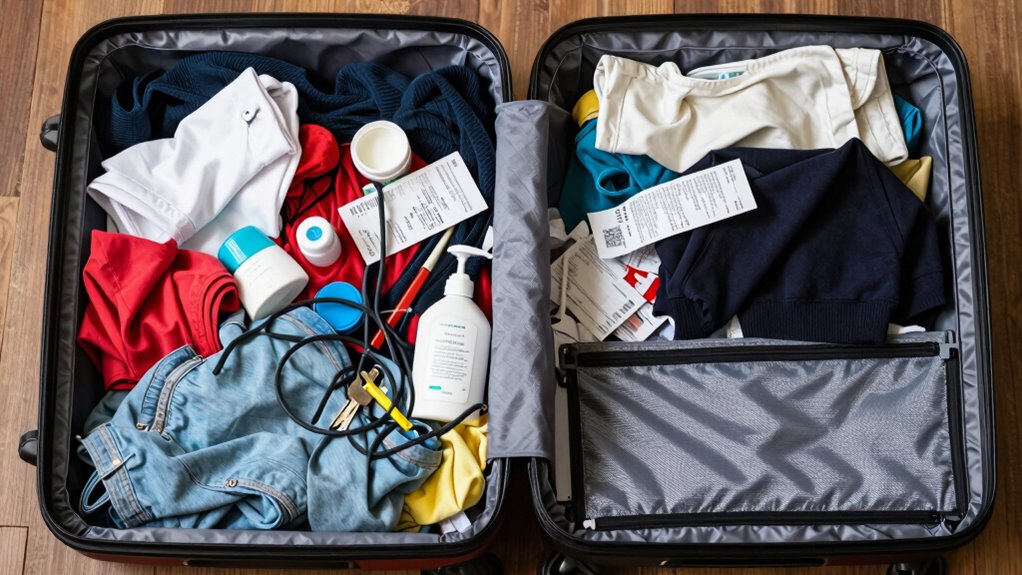
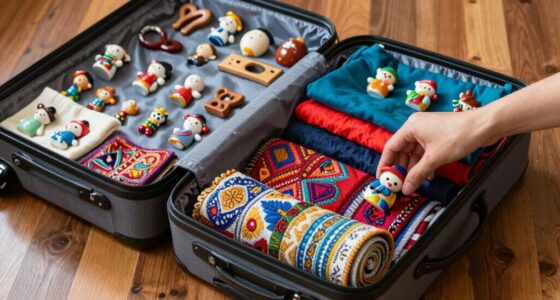
A cluttered bag can quickly turn your trip into a stressful experience, making it harder to find what you need when you need it. To spot signs of clutter, look for items piled haphazardly, with no clear organization. If you find yourself digging through layers of stuff, it’s a sign your bag lacks a minimalist approach. Consider whether your belongings are grouped logically or if everything’s just tossed together. Color coding your essentials can help keep things tidy and easily accessible. If you struggle to locate items quickly or frequently unpack and repack, it’s time to reassess your bag’s layout. A cluttered bag not only wastes time but also causes frustration. Simplify by adopting a minimalist approach and using color coding to maintain order and ease your daily routine. Additionally, understanding body jewelry measurements and materials can help you choose a bag that accommodates your gear comfortably if you’re using your bike for commuting. Incorporating effective bag organization techniques can further streamline your daily routine and reduce clutter.
Assess Your Luggage Layout in Minutes

You can assess your luggage layout quickly with a simple visual check to spot any unnecessary clutter. An organized packing strategy helps you see if everything fits neatly and is easy to access. Taking a few minutes now can save you time and frustration during your trip.
Quick Visual Inspection
When time is limited, a quick visual inspection can efficiently assess your luggage layout and identify potential issues. Focus on how your clothing organization appears—are clothes folded neatly and accessible? Check if your tech gadgets are easy to find and protected from damage. Look for clutter or items that seem crammed, which could cause frustration during travel. Ensure that essentials are grouped logically, so you can grab what you need without rummaging. Notice if fragile items are cushioned properly or if cords and chargers are tangled. This rapid assessment helps you pinpoint areas where your packing might cause inconvenience or damage. Additionally, understanding AI-driven packing optimization can further enhance your packing efficiency. Incorporating organized packing strategies can also minimize the risk of damage and improve your overall travel experience. Being mindful of packing checklist adherence ensures nothing important gets overlooked, saving you time and stress during your trip. Conducting a quick luggage organization review can reveal if your bag is set up for smooth daily use, preventing unnecessary rummaging. By doing so, you save time and avoid daily annoyances caused by disorganized luggage.
Organized Packing Strategy
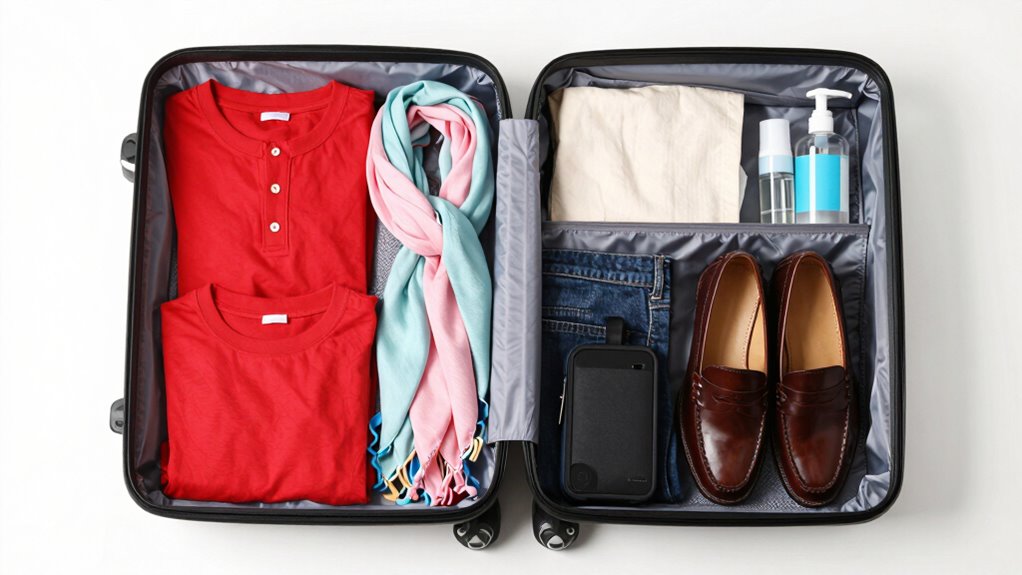
To quickly assess your luggage layout, start by methodically evaluating how your items are organized. An organized packing strategy guarantees your travel accessories are easily accessible and your luggage materials support durability. Visualize your bag’s interior:
- Neatly folded clothes stacked in compartments
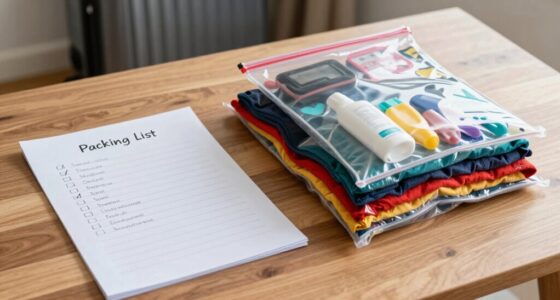
- Small pouches for chargers, toiletries, and essentials
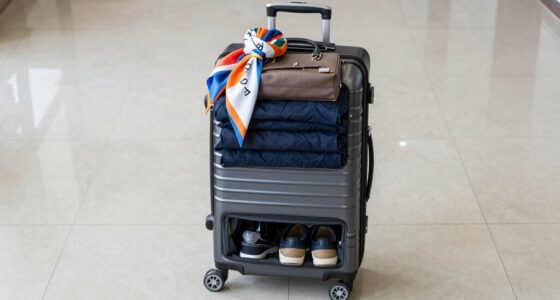
- Shoes and bulky items stored in separate sections or bags
This setup minimizes chaos and saves time during security checks or quick retrieval. Consider if your packing allows you to access essentials without rummaging through layers. An efficient layout reduces stress and prevents damage to delicate items. Incorporating smart design principles into your packing can further enhance your travel experience. Additionally, using compression bags can help maximize space and keep your belongings organized. Implementing ergonomic packing techniques can also improve your luggage’s overall efficiency, making it easier to manage and reducing strain during handling. Being mindful of your luggage layout can help you identify potential issues before travel. For example, paying attention to weight distribution ensures your bag remains balanced and easier to carry. By implementing these simple steps, you’ll optimize your luggage for both space and convenience, making your travels smoother and more enjoyable.
Top Packing Tips for Space and Accessibility

Maximizing space and guaranteeing easy access are key to efficient packing. Start by rolling clothes instead of folding; this saves space and reduces wrinkles. Use packing cubes to compartmentalize items, making it simple to find what you need without rummaging. Place frequently used items, like travel gadgets and essentials, near the top or in accessible pockets for quick retrieval. Be mindful of security measures—keep liquids and valuables in clear, easily accessible containers to streamline airport checks. Compress bulky items, such as jackets, with compression bags. Distribute weight evenly to prevent your bag from becoming unbalanced. By optimizing your packing techniques, you’ll create more space and ensure everything is within reach, making your travels smoother and less stressful.
Easy Strategies to Organize Your Bag Better
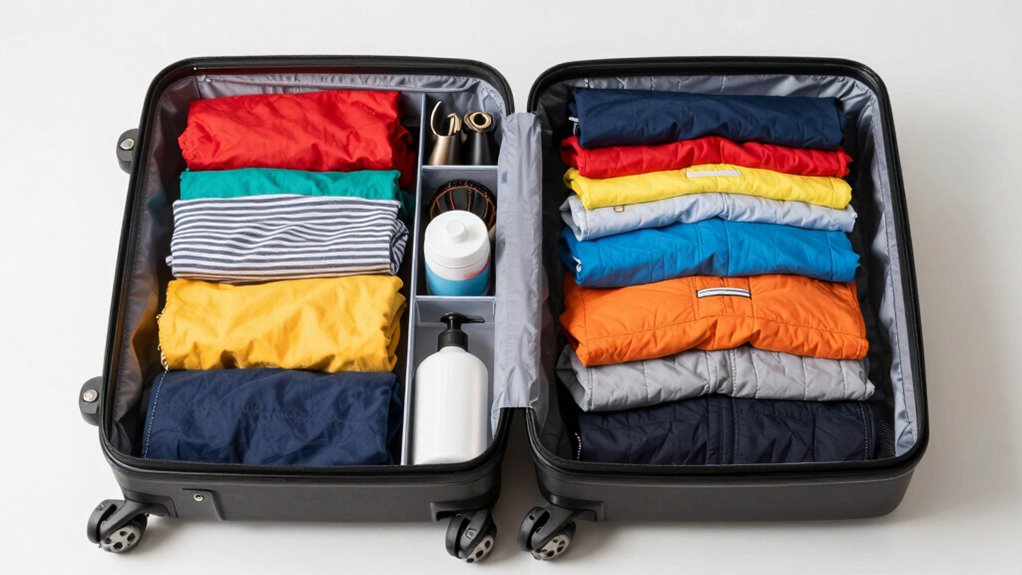
Organizing your bag effectively starts with creating designated zones for different items. This approach keeps everything accessible and enhances luggage aesthetics. To make it easier, consider color coordination: match similar items or use colored pouches to quickly identify essentials. Visual cues help streamline your routine and prevent rummaging. For example, you might:
- Use a brightly colored pouch for chargers and cables
- Keep toiletries in a clear, labeled bag
- Store snacks and personal items together in a patterned case
- Incorporate natural materials or elements to create a more harmonious and eco-friendly setup. Additionally, understanding how passive voice detection works can help you write more clearly and directly in your organization guides.
Additionally, adopting emerging trends in sports tech and fan engagement can inspire innovative ways to customize and optimize your packing system, making organization more engaging and personalized. These simple steps create a visual harmony that reduces clutter and makes packing more efficient. By establishing clear zones and coordinating colors, you’ll find your bag easier to navigate daily, saving you time and frustration while maintaining a tidy, appealing appearance. Additionally, implementing effective organization methods can ensure your preferences are remembered for a smoother organization experience.
Must-Have Items for Quick Access

Ever wondered which items you should keep within reach in your bag for quick access? Prioritize travel gadgets like your phone, portable charger, and earbuds—they’ll keep you connected and entertained without digging through your bag. Packing cubes are essential for organizing these items efficiently, making it easy to find what you need instantly. Keep your travel documents, like your passport and boarding pass, in a designated pocket or compartment so you’re not scrambling at security or boarding. A small bottle of hand sanitizer or tissues should also be within arm’s reach for convenience. Incorporating organized compartments can also help you locate items faster and reduce clutter, enhancing your overall travel experience. By organizing these must-have items in accessible spots, you save time and reduce frustration, ensuring your daily routine stays smooth and stress-free.
Common Packing Mistakes That Waste Time
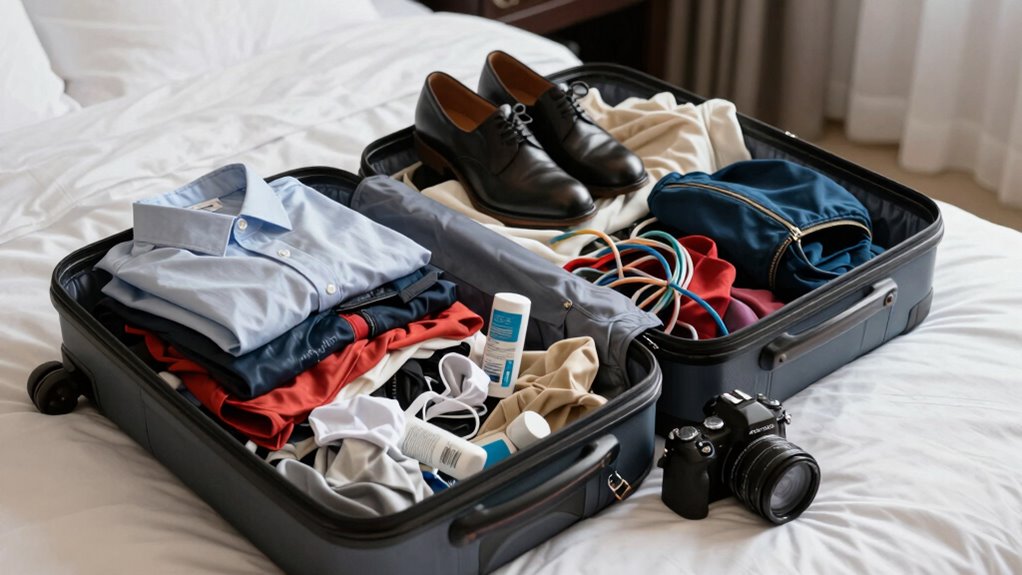
One common packing mistake that wastes time is overpacking, which makes it difficult to find what you need quickly and slows down the security or boarding process. Packing pitfalls like cramming too many clothes, toiletries, or gadgets into your bag create chaos and travel clutter. This clutter makes it hard to locate essentials and adds unnecessary delays. To avoid this, picture digging through a jumble of tangled cables, unfolded outfits, and overflowing compartments. When your bag becomes a mess, you spend extra minutes rummaging instead of moving smoothly through your trip. Streamlining your packing process helps prevent this. Keep only what’s necessary, and organize items efficiently. This way, you minimize travel clutter and save time, making your daily routine less stressful and more enjoyable.
Tools and Accessories to Keep Your Bag Neat
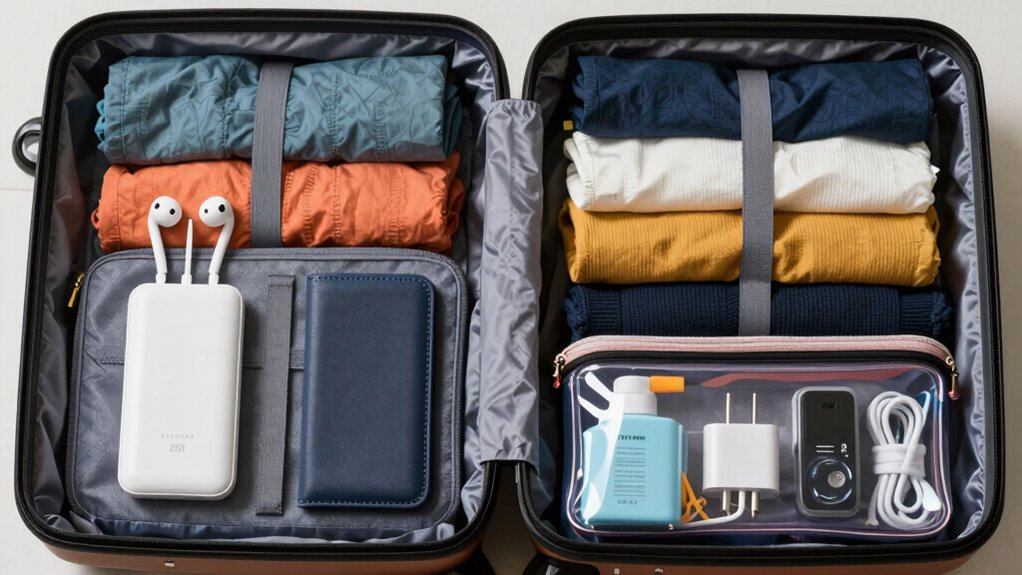
Using the right tools and accessories can make a significant difference in keeping your bag neat and organized. Travel accessories like packing organizers help compartmentalize your items, making it easier to find what you need quickly. Small tools such as cable ties, clip organizers, and toiletry pouches prevent clutter and spills. To maximize efficiency, consider these options:
| Item | Purpose |
|---|---|
| Packing cubes | Separate clothing and accessories |
| Tech organizers | Keep cables, chargers, and gadgets tidy |
| Mini toiletry bags | Contain liquids and grooming essentials |
| Slim wallets or pouches | Store documents and valuables |
These accessories streamline packing, reduce mess, and save time when unpacking. Properly utilizing travel accessories ensures your bag stays neat and functional daily.
Adjust Your Luggage Setup for Work, Travel, or Daily Use
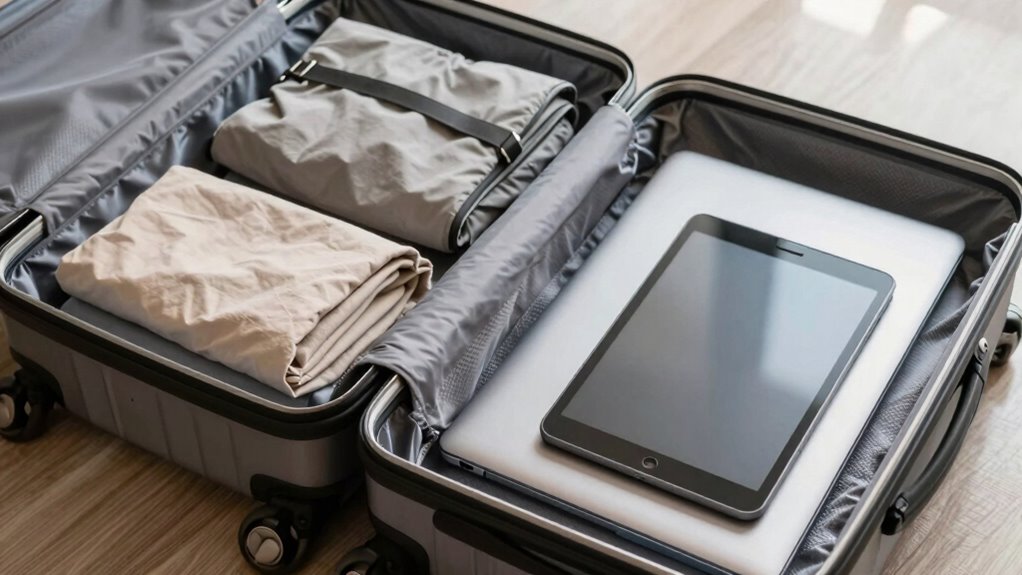
To make the most of your luggage, you need to adjust your setup based on your specific plans. Whether you’re heading to work, traveling, or going about daily routines, customizing your packing can save time and space. Focus on optimizing efficiency and tailoring your organization to meet different needs.
Optimize Packing Efficiency
Efficient packing starts with understanding your specific needs for work, travel, or daily routines. To maximize space, focus on clothing compression techniques, like rolling or using compression bags, which free up room and reduce wrinkles. Keep toiletry organization simple with small, leak-proof containers grouped together for easy access. Visualize your bag with:
- Neatly compressed clothing to fit more items
- A compact toiletry kit, reducing clutter
- Strategically placed accessories for quick retrieval
This setup minimizes wasted space and keeps essentials accessible. By optimizing your packing method, you avoid overstuffing or rummaging through your bag daily. Adjust your packing style based on your routine, ensuring everything fits snugly and efficiently, making your bag lighter and easier to carry. Proper organization truly streamlines your daily progression.
Customize for Different Needs
Whether you’re packing for work, a weekend trip, or daily errands, customizing your luggage setup guarantees you have everything you need without excess. Use personalized compartments to separate items efficiently—one section for electronics, another for clothes, and a dedicated space for essentials. Travel-specific organizers help keep everything in place and easy to access, reducing frustration during security checks or quick stops. Adjust your setup based on your needs: for work, include a laptop sleeve and document pockets; for travel, add shoe bags and toiletry pouches; for daily use, focus on quick-access compartments for keys, wallet, and phone. Tailoring your luggage with these features ensures comfort, organization, and faster packing, making your routine smoother and less stressful.
Final Tips to Keep Your Bag Organized and Stress-Free
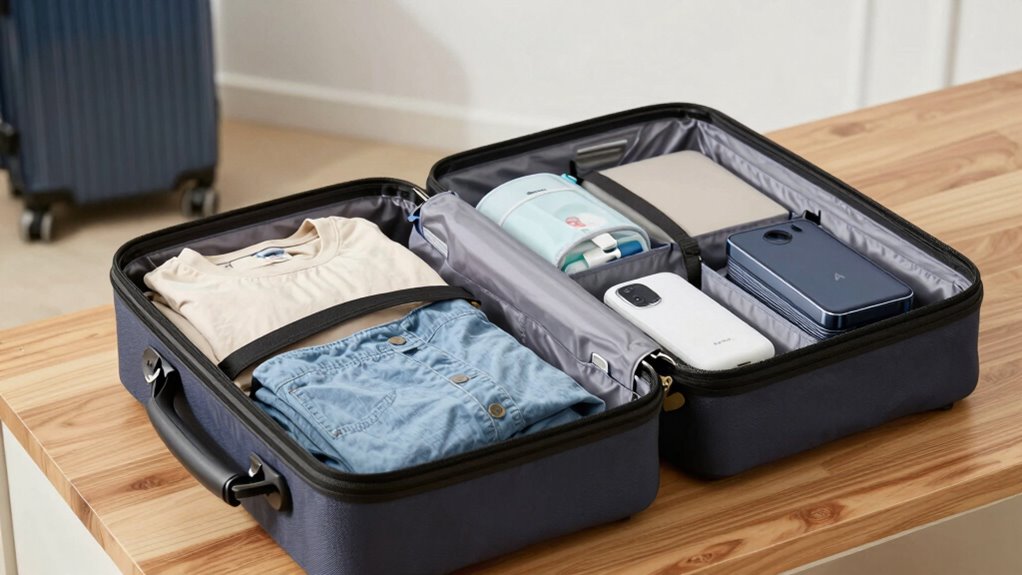
Staying organized during travel can considerably reduce stress and save time, so it’s worth incorporating a few simple strategies. Use color coding to quickly identify different categories—like red for chargers or blue for toiletries. Embrace compartmentalization by using small pouches or dividers, making it easy to locate items fast. To keep things tidy, consider these tips:
Stay organized with color coding, small pouches, and decluttering for stress-free travel.
- Assign specific compartments for each item type to avoid digging through your bag.
- Use transparent bags for quick visibility, reducing search time.
- Regularly review and declutter, ensuring only essentials occupy your space.
These methods help you maintain control, prevent chaos, and make packing and unpacking more efficient. With organized luggage, you’ll travel more relaxed, knowing everything you need is systematically stored and easily accessible.
Frequently Asked Questions
How Often Should I Reevaluate My Luggage Layout?
You should reevaluate your luggage layout whenever your packing routines change or you notice frequent annoyances. Regularly examining your setup helps you optimize space and accessibility, especially when adding new luggage accessories. Doing this every few months or before long trips ensures your bag remains efficient and stress-free. Stay attentive to how your current layout serves your needs, and adjust as necessary to keep packing simple and enjoyable.
What Are the Best Materials for Durable Travel Organizers?
You might be surprised to find that packing cubes made from ballistic nylon or polyester are your best bet for durability. These materials resist tearing, water, and wear, keeping your gear organized and intact. When choosing travel organizers, prioritize material durability to guarantee they withstand frequent use. Look for reinforced seams and sturdy zippers, so your packing cubes stay reliable, making your trips smoother and less stressful.
Can a Small Bag Be Organized Efficiently for Daily Use?
Yes, a small bag can be organized efficiently for daily use. Focus on compact packing by using thoughtful compartments and multi-purpose items. Optimize space by rolling clothes instead of folding and choosing slim accessories. Keep essentials accessible and avoid overpacking. With smart space optimization, you’ll find it easy to carry everything you need without clutter, making daily organization simple and stress-free.
What Color Coding Methods Help in Quick Item Retrieval?
You can use color coding to streamline your daily item retrieval. Assign specific colors to different categories, like red for electronics, blue for toiletries, and green for snacks. Use colored labels or small pouches to organize your bag. This visual system helps you locate items quickly, saving time and reducing frustration. With consistent color coding, you’ll find what you need instantly, making your daily routine smoother and more efficient.
Are There Specific Luggage Designs Better for Frequent Travelers?
You’ll love a luggage design with compact compartments and ergonomic zippers—because nothing says “perfect for frequent travelers” like struggling to find your essentials or battling zippers mid-journey. These features keep your belongings organized and accessible, reducing travel stress. Ironically, the best bags are those that seem simple yet are thoughtfully designed for quick access, durability, and comfort. So, opt for smart, well-structured luggage to make every trip smoother.
Conclusion
Remember, a well-organized bag is your best friend on busy days. Take a few minutes to assess and tweak your setup—it’s worth it. Keep things accessible and avoid clutter to save time and stress. After all, “A place for everything, and everything in its place.” When your bag is tidy, your day runs smoother. Stay organized, and you’ll find your daily routine much easier to handle.