
To avoid embarrassment at the gate, always measure your carry-on carefully before arriving at the airport. Use a reliable tape measure or bag sizer to check that your luggage fits within airline size restrictions, typically around 22 x 14 x 9 inches. Keep your bag organized and light to prevent last-minute overages. If your bag just exceeds limits, politely ask the gate agent about options—staying prepared helps ensure a smooth boarding process. Find out how to perfect your gate check technique next.
Key Takeaways
- Measure your carry-on using a reliable tool before arriving at the gate to ensure compliance with airline size restrictions.
- Familiarize yourself with your airline’s specific carry-on size limits to prevent last-minute rejections.
- Contact the gate agent proactively if your bag slightly exceeds limits to explore options like gate check or re-packing.
- Pack efficiently, removing non-essentials or redistributing weight to stay within size and weight limits.
- Double-check your luggage dimensions and weight at home to avoid embarrassing re-measurements during boarding.
Find the Right Carry-On Size for Your Trip
Choosing the right carry-on size depends on your travel plans and airline restrictions. Start by considering weight restrictions, as many airlines impose limits that can lead to extra fees or checked baggage. To stay within limits, pack efficiently using smart packing tips like rolling clothes and minimizing non-essentials. Measure your bag beforehand to ensure it fits airline size guidelines, preventing surprises at the gate. Think about how long you’ll be away; a smaller bag might suffice for a weekend, while a slightly larger one suits longer trips. Remember, a well-chosen carry-on saves you from checking luggage and speeds up your departure. Being mindful of size and weight restrictions helps you breeze through airport security and avoid unnecessary delays. Additionally, verifying your bag’s dimensions and features can help ensure compatibility with your smart travel gear and enhance your travel experience. Properly labeled luggage tags can also make baggage handling smoother and reduce the risk of loss, especially when navigating through busy airports. For added peace of mind, consider security features like locks or tamper-evident zippers to protect your belongings during travel.
Understand Airline Carry-On Size Restrictions and Exceptions
Knowing your airline’s size limits helps you avoid surprises at the gate. Some airlines offer common size exceptions, like for personal items or special equipment. Always measure your bag beforehand to make certain it fits within the restrictions and avoid last-minute issues. Understanding cookie categories can also help you manage your online browsing experience related to airline policies and booking details. Additionally, being aware of security zone info can assist you in preparing for security procedures and avoiding delays. Being familiar with checked baggage policies can help you plan accordingly if your items exceed carry-on limits. Recognizing carry-on size exceptions can further simplify your travel experience and reduce stress during boarding. Moreover, reviewing airline-specific guidelines ensures you’re fully informed about any unique restrictions that might apply to your flight.
Airline Size Limits
Airlines set specific size limits for carry-on bags to make certain they fit comfortably in overhead compartments and comply with safety standards. These limits vary across airlines but typically restrict dimensions to about 22 x 14 x 9 inches. Knowing these restrictions helps prevent surprises at the gate, especially when packing your luggage, color, or organizing travel accessories. Some airlines may allow slightly larger bags for premium passengers or due to specific policies. Here’s a quick comparison:
| Airline | Max Size (inches) | Notable Exceptions |
|---|---|---|
| Airline A | 22 x 14 x 9 | Larger for first class, certain routes |
| Airline B | 21.5 x 9 x 14 | No exceptions |
| Airline C | 23 x 14 x 9 | Additional allowances for certain cabins |
| Airline D | 22 x 14 x 9 | No specific exceptions |
Knowing these limits guarantees your travel accessories and luggage color choices stay within regulations. Additionally, understanding airline size restrictions can help you avoid the carry-on measure test embarrassment. Being aware of regulations and exceptions ensures smoother boarding experiences and reduces the risk of gate-checking your bag unexpectedly. Familiarity with size regulations can also help you develop more efficient packing strategies, saving time and space in your luggage.
Common Size Exceptions
While most airlines enforce strict size limits for carry-on bags, some offer notable exceptions that can make packing easier. For example, certain carriers allow slightly larger luggage weight or special items like musical instruments or medical devices. Additionally, some airlines permit carry-ons in specific colors, like a designated carry-on color, to help staff quickly identify approved bags. These exceptions often apply to elite frequent flyers or passengers with special needs, and understanding these policies can be beneficial. Knowing about these size exceptions can prevent last-minute surprises at the gate. Understanding airline policies is crucial for travelers to avoid embarrassment or delays, especially when your carry-on’s color or weight might be borderline. Some airlines also provide specific guidelines for these exceptions, so reviewing them before your trip can save time and stress. Being aware of carry-on size variations can help you pack more efficiently and confidently. For example, some airlines may also consider bag shape and design when assessing size allowances, which can be helpful to know. Keep in mind, even if your bag fits within the typical dimensions, adhering to luggage weight limits is essential. Always check your airline’s specific policies to avoid embarrassment or delays, especially when your carry-on’s color or weight might be borderline.
Measuring Your Bag
To guarantee your carry-on bag meets airline size restrictions, you need to measure it accurately before heading to the gate. Start by checking the bag’s dimensions, including length, width, and depth, against the airline’s limits. Pay attention to weight distribution, ensuring heavier items are balanced evenly to avoid exceeding weight restrictions and causing issues during boarding. Don’t forget to measure the handle height—some airlines include the handle’s extension when evaluating size. Make sure the handle can fold down or collapse to stay within the allowed dimensions. Use a measuring tape or a size-checking frame to verify these details. Proper measurement helps prevent surprises and ensures your bag comfortably fits in the overhead bin or under the seat, saving you embarrassment and hassle. Additionally, understanding airline regulations can help you prepare more effectively and avoid last-minute issues. Being aware of carry-on size limits is essential for a smooth travel experience. To further ensure compliance, measure your bag periodically and compare it against standard airline requirements to stay up-to-date with any changes.
Why the Gate Measure Test Can Save You Fees and Stress
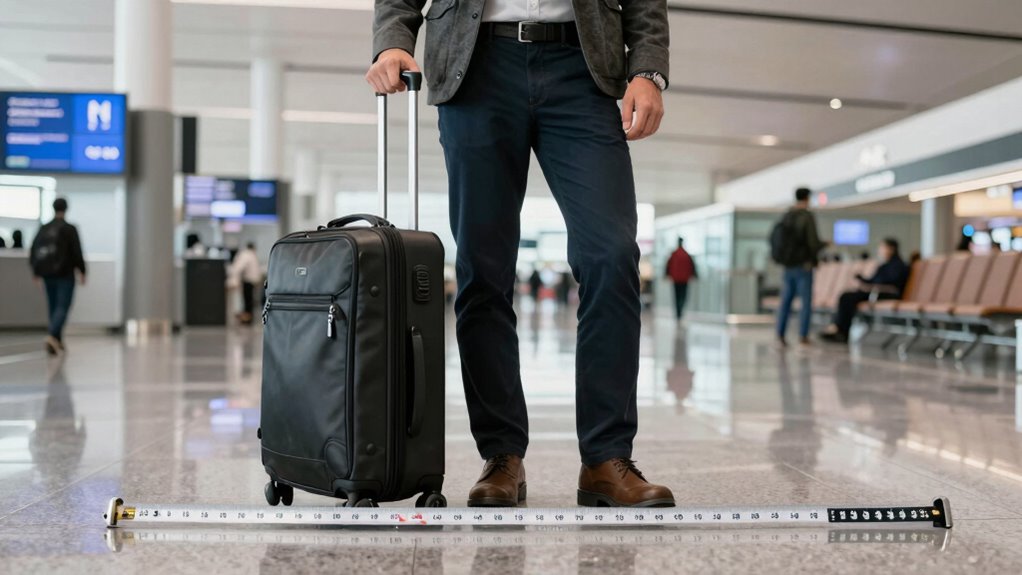
The Gate Measure Test can help you avoid unexpected fees and reduce last-minute stress because it guarantees your carry-on bag meets airline size requirements before you reach the gate. This simple step enhances luggage security and ensures you’re in compliance with travel regulations, preventing delays or denied boarding. By verifying your bag’s size early, you avoid costly oversize baggage fees and the embarrassment of gate re-measurement. It keeps your travel smooth and hassle-free. Remember, airlines impose strict size limits, so a quick gate measurement helps you stay prepared. This proactive approach minimizes surprises, helping you focus on your trip instead of last-minute adjustments or disputes. Additionally, practicing proper gear care tips for your luggage can prolong its lifespan and maintain its appearance over many trips. Being aware of carry-on regulations can further streamline your packing process and reduce the hassle at the airport. Staying informed about airline policies ensures you’re always prepared for different carriers’ requirements. Knowing the size measurement standards used by airlines can give you extra confidence when packing.
How to Quickly Measure Your Carry-On at the Gate
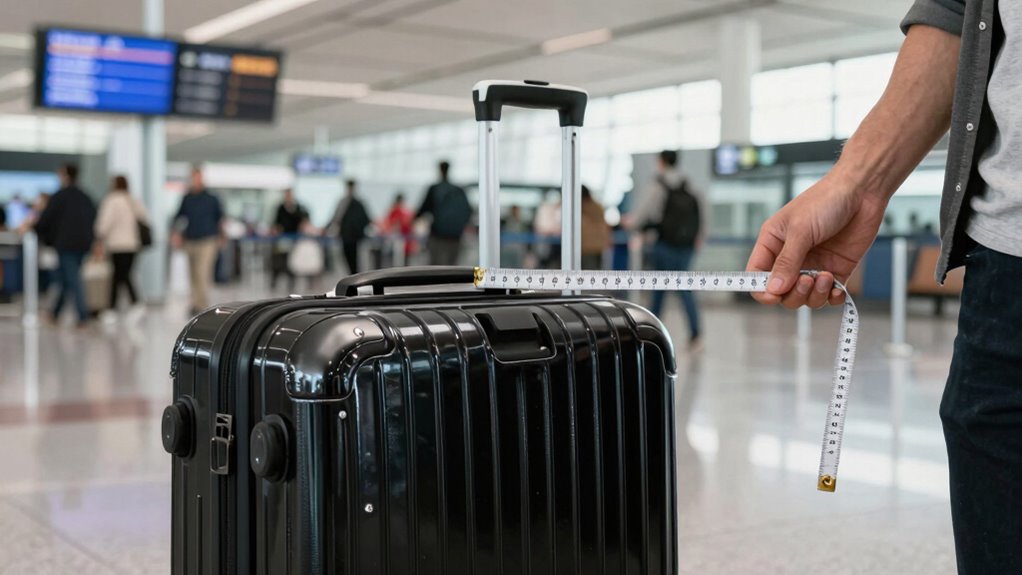
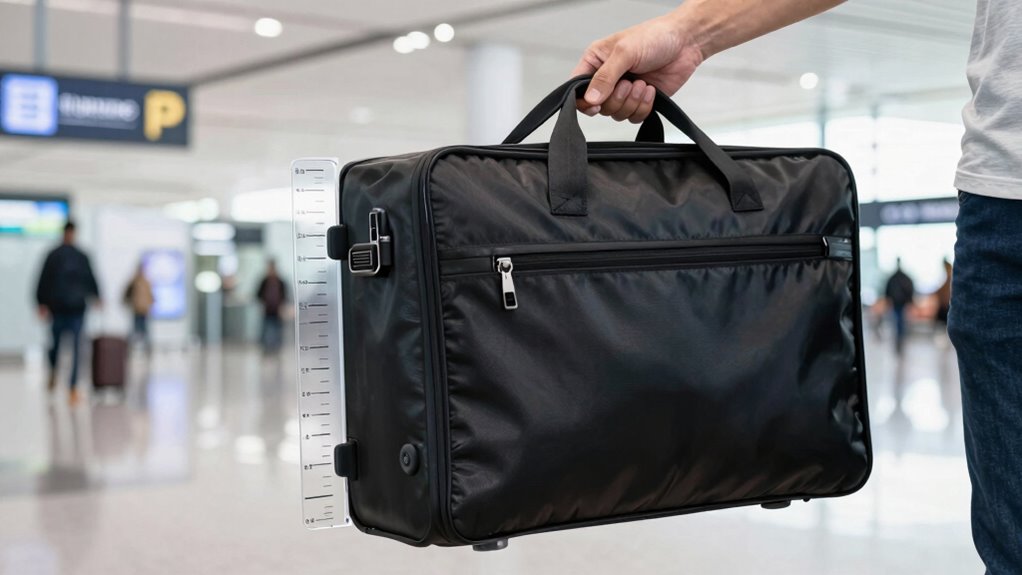
Carrying a portable measuring device or using a simple ruler can help you quickly check your bag’s size right at the gate. This is essential for ensuring your luggage adheres to airline standards and fits within luggage ergonomics principles, making travel packing more efficient. Place your bag on a flat surface or hold it up against the measuring tool to get an accurate reading. Keep in mind that many airlines have strict size limits, so measuring at the gate saves you from potential surprises or fees. Compact, lightweight tools are ideal for this purpose. By doing a quick measurement, you can avoid delays and stress, confidently confirming your carry-on’s compliance before reaching the boarding area. It’s a simple step that keeps your travel smooth and hassle-free. Using precise measurements ensures your luggage remains within permitted dimensions, preventing unnecessary hassles.
Essential Tools You Need for Accurate Bag Measurement
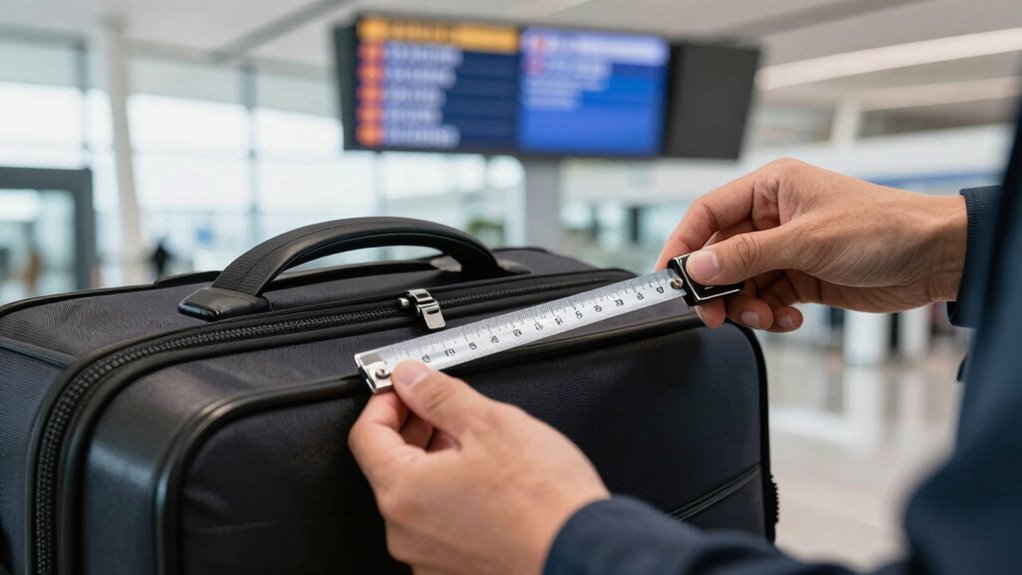
Having the right tools guarantees you can accurately measure your carry-on bag right at the gate. To guarantee your luggage dimensions meet airline restrictions, invest in essential travel accessories. A reliable measuring tape is vital for precise measurements, especially for irregular shapes. A portable luggage scale helps verify weight limits without guesswork. A clear, foldable luggage size indicator can be handy for quick checks. Consider a compact ruler or a dedicated bag sizer to compare your bag’s dimensions directly. Finally, a soft, flexible measuring tool prevents damage to your luggage. These tools boost your confidence, reduce surprises, and help avoid embarrassing moments at the gate, making sure your carry-on fits perfectly within airline guidelines. Proper measurement tools save time and streamline your travel experience.
What to Do If Your Bag Is Slightly Over the Limit?
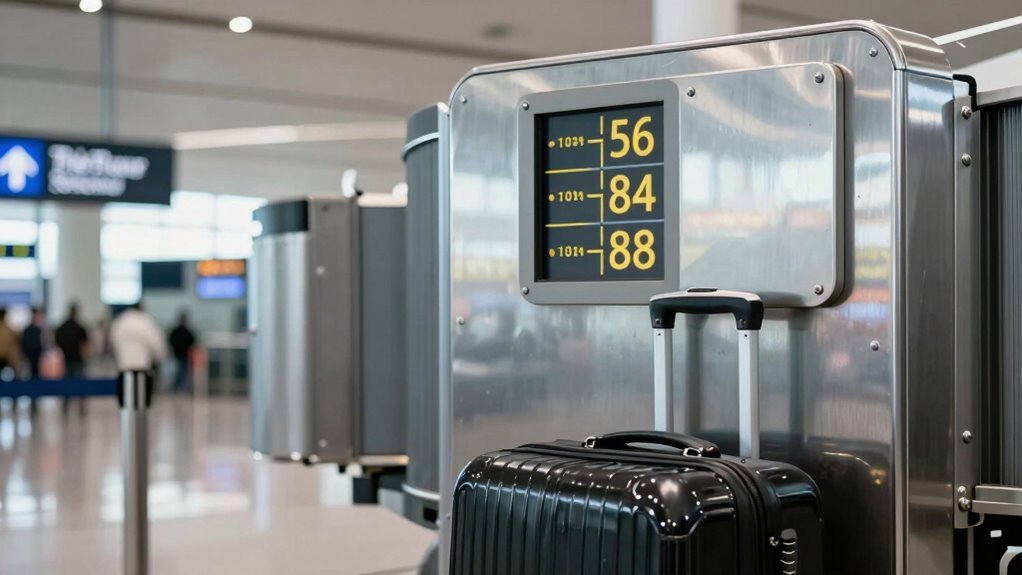
If your bag exceeds the airline’s weight or size limits by just a small margin, don’t panic. First, reassess your luggage weight quickly. Use your luggage scale to confirm if it’s truly over the limit. If it is, consider adjusting your packing techniques—redistribute heavier items into your pockets or carry-on, or remove non-essential items. Sometimes, simply shifting things around can reduce luggage weight enough to meet restrictions. Keep in mind that a slight overage might be overlooked at the gate, but it’s best to be prepared. If you’re still over, politely explain your situation to the gate staff. They may offer solutions like checking the bag for free or providing options to lighten your luggage without hassle.
Tips for Choosing a Carry-On That Meets All Airline Rules
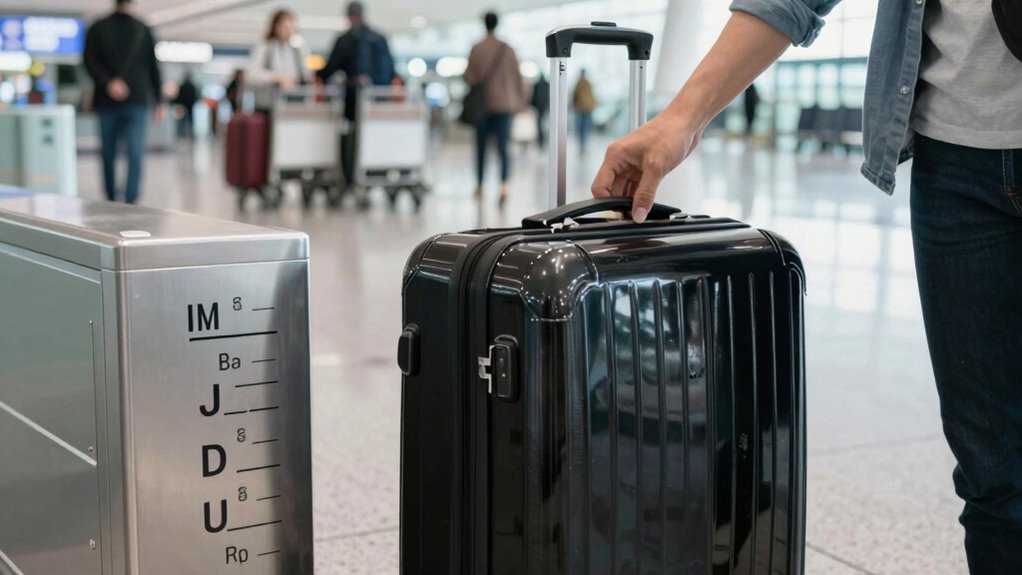
Before you pick out a carry-on, measure it carefully to guarantee it fits your airline’s size limits. Knowing these restrictions upfront saves you from surprises at the gate. Always double-check your airline’s rules to choose a bag that meets all the requirements.
Measure Before Packing Carefully
To guarantee your carry-on meets airline regulations, start by measuring its dimensions carefully before packing. Knowing your luggage dimensions helps you avoid surprises at the gate. Use a reliable tape measure and double-check all sides, including handles and wheels. Remember, packing strategies can impact size; overstuffed bags tend to expand beyond limits. Keep your packing organized to prevent unnecessary bulk. Consider these points:
- Measure with the bag fully packed, not empty
- Account for external attachments like wheels and handles
- Use packing cubes to optimize space
- Weigh your luggage to stay within weight limits
- Regularly verify dimensions as you pack
Being precise with measurements ensures your carry-on complies with airline size restrictions, saving time and stress at the airport.
Know Airline Size Limits
Are you confident your carry-on fits all airline size limits? Knowing airline restrictions is key to avoiding gate surprises. Check the airline’s website for specific dimensions—baggage policies vary. Use a measuring tape to verify your luggage’s size, ensuring it meets the requirements. Opt for a durable suitcase with strong zippers and resilient material to withstand handling. Proper packing techniques help maximize space without overstuffing, reducing the risk of exceeding size limits. Here’s a quick reference:
| Airline | Max Dimensions (inches) |
|---|---|
| Airline A | 22 x 14 x 9 |
| Airline B | 21 x 9 x 14 |
| Airline C | 24 x 16 x 10 |
| Airline D | 22 x 14 x 9 |
Knowing these limits keeps your luggage durable and compliant.
Prepare Your Bag for a Fast Gate Check
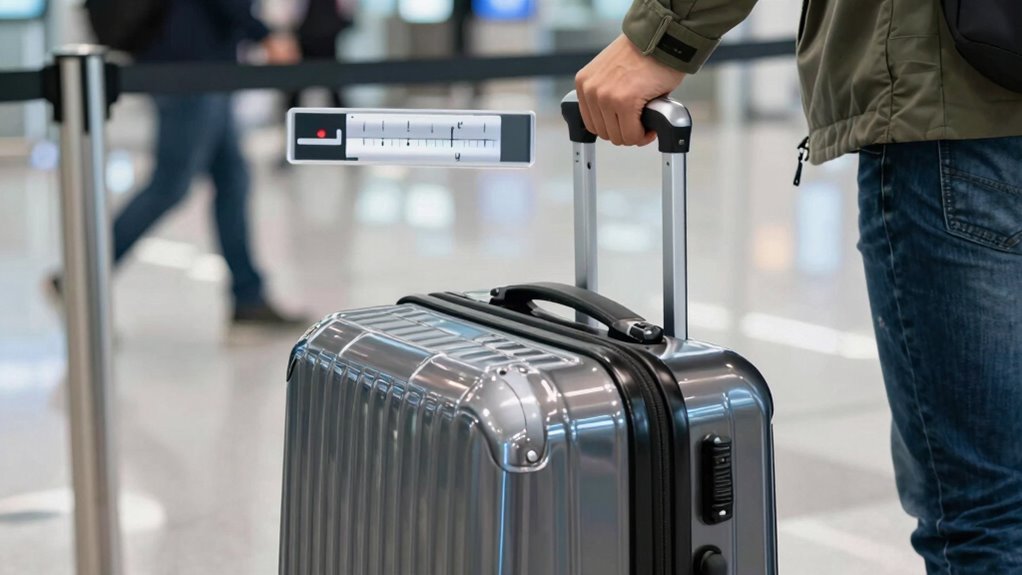
Preparing your bag for a fast gate check means packing efficiently and keeping essentials accessible. Good luggage organization saves time and reduces stress during security. Focus on packing smart by placing frequently needed items at the top or in easily reachable compartments.
To maximize packing efficiency:
- Use packing cubes to compartmentalize your belongings
- Keep your ID and boarding pass in an outer pocket
- Place liquids and electronics in clear, accessible bags
- Avoid overstuffing to prevent delays
- Roll clothes to save space and prevent wrinkles
Final Checklist: Make Sure Your Bag Passes the Gate Measure Test
Before heading to the gate, double-check that your bag meets the airline’s size and weight restrictions. Use packing tips like rolling clothes tightly and choosing lightweight luggage materials to maximize space and minimize weight. Measure your bag with a reliable gate check tool or a clear measuring device, making certain it fits within the specified dimensions. Confirm that your packed items aren’t pushing the weight limit, which can cause delays or rejection at the gate. Make certain your bag’s structure remains intact—soft luggage can expand, so be cautious not to overstuff. A well-packed, lightweight bag made from durable, flexible materials will pass the gate measure test smoothly, saving you time and embarrassment. Double-checking now prevents surprises and keeps your travel stress-free.
Troubleshooting Common Carry-On Sizing Issues
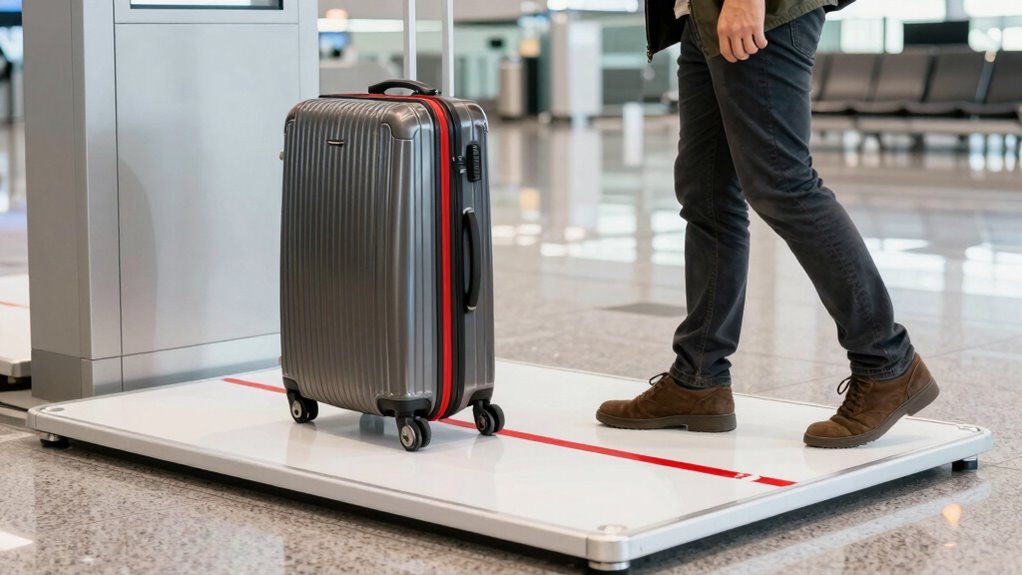
If your bag doesn’t pass the gate measure, start by measuring it again before packing to verify accuracy. Understand your airline’s size limits to avoid surprises at the gate, and don’t hesitate to check with the gate agent if you’re unsure. Addressing these issues early can save you time and stress during boarding.
Measure Before Packing
To avoid last-minute surprises at the gate, you should measure your carry-on bag before packing. This helps prevent last-minute repacking or being denied boarding due to size issues. Use a measuring tape or a dedicated bag sizer to double-check dimensions. Keep in mind:
- Measure the length, width, and height precisely
- Use packing cubes to organize items efficiently
- Weigh your packed bag with a portable weight scale
- Remember airline size limits and don’t rely solely on visual judgment
- Reassess your packing if your bag exceeds limits
Understand Airline Limits
Understanding airline limits is essential to prevent size-related issues at the gate. Before heading to the airport, check your airline’s specific baggage policies, including maximum dimensions for carry-ons. Your boarding passes often include this information or links to the airline’s website. Keep in mind that exceeding size limits can lead to additional baggage fees, which can be costly. Measure your bag carefully with a reliable sizer or tape measure to confirm it fits within the restrictions. If your bag is borderline, consider packing lighter or using a smaller bag to avoid surprises at the gate. Being familiar with these limits ensures a smooth check-in process and helps you avoid the embarrassment of having your bag rejected or subjected to extra charges.
Check With Gate Agent
When your carry-on bag exceeds the size limits, the gate agent is your first point of contact for resolution. They can clarify the airline’s carry on restrictions and help determine if you need a gate check. Be polite and prepared to show your bag’s dimensions if asked. Remember, gate check options might be available if your bag is slightly oversized but still manageable. The gate agent can also advise on options if your bag is considerably over the limit. It’s essential to stay calm and cooperative to avoid delays or additional fees. Keep these tips in mind:
- Confirm the specific carry on restrictions for your airline
- Ask about gate check procedures if needed
- Be ready to adjust or re-pack quickly
- Respect the agent’s instructions
- Understand that gate check may be free or fee-based
Frequently Asked Questions
Can I Use a Different Measuring Method Than the Gate Test?
Yes, you can use alternative methods and measuring tools instead of the gate test. Many airports accept measurements with a ruler, tape measure, or a dedicated luggage sizer. Just make certain your bag fits within the airline’s size limits before heading to the gate. Using these tools helps you avoid surprises and potential embarrassment, making the boarding process smoother and stress-free. Always double-check your measurements to stay compliant.
What Are the Consequences if My Bag Fails the Gate Measure?
If your bag fails the gate measure, it’s like hitting a brick wall. You might face fees for excess baggage weight or be asked to check your bag, delaying your departure. Airport policies are strict; they want your baggage to fit within size limits for safety and efficiency. To avoid surprises, always check your baggage weight and size beforehand, so you don’t get caught off guard at the gate.
Are There Specific Carry-On Size Standards for International Flights?
Yes, there are specific carry-on size standards for international flights. Airlines typically follow international standards, which often limit carry-on dimensions to around 22 x 14 x 9 inches (56 x 36 x 23 cm). You should always check your airline’s guidelines before packing, as some may have slightly different carry-on dimensions. Staying within these international standards helps you avoid surprises at the gate and keeps your travel smooth.
How Do I Handle Irregularly Shaped or Bulky Carry-On Items?
Did you know nearly 30% of travelers struggle with irregularly shaped or bulky carry-ons? To handle these, you should focus on packing strategies that maximize space and choose bags with flexibility. Use soft-sided luggage or expandable bags, and pack strategically by placing heavier items at the bottom and filling gaps. This approach helps your awkward items fit comfortably, reducing stress at the gate and avoiding delays or embarrassment.
Is There a Recommended Brand of Measuring Tools for Accuracy?
For measuring accuracy, you should choose reliable tools like a sturdy, digital luggage scale or a flexible measuring tape. Brands like Etekcity and Dr.meter are highly recommended for their precision and durability. These tools help you avoid surprises at the gate, ensuring your carry-on complies with size limits. Always double-check measurements before heading to the airport to prevent embarrassment and streamline your travel experience.
Conclusion
By mastering the gate measure test, you’ll avoid the nightmare of last-minute fees and the embarrassment of holding up the line. With a quick check, your carry-on will glide through the process smoother than a jet on takeoff. Think of it as your secret weapon against travel chaos—saving time, money, and your sanity. So, be prepared, measure confidently, and turn what could be a stressful moment into a breeze that leaves everyone in awe.