
📊 Full opportunity report: Vertigo relief app on IdeaNavigator AI — validation score, market gap, and execution plan.
TL;DR
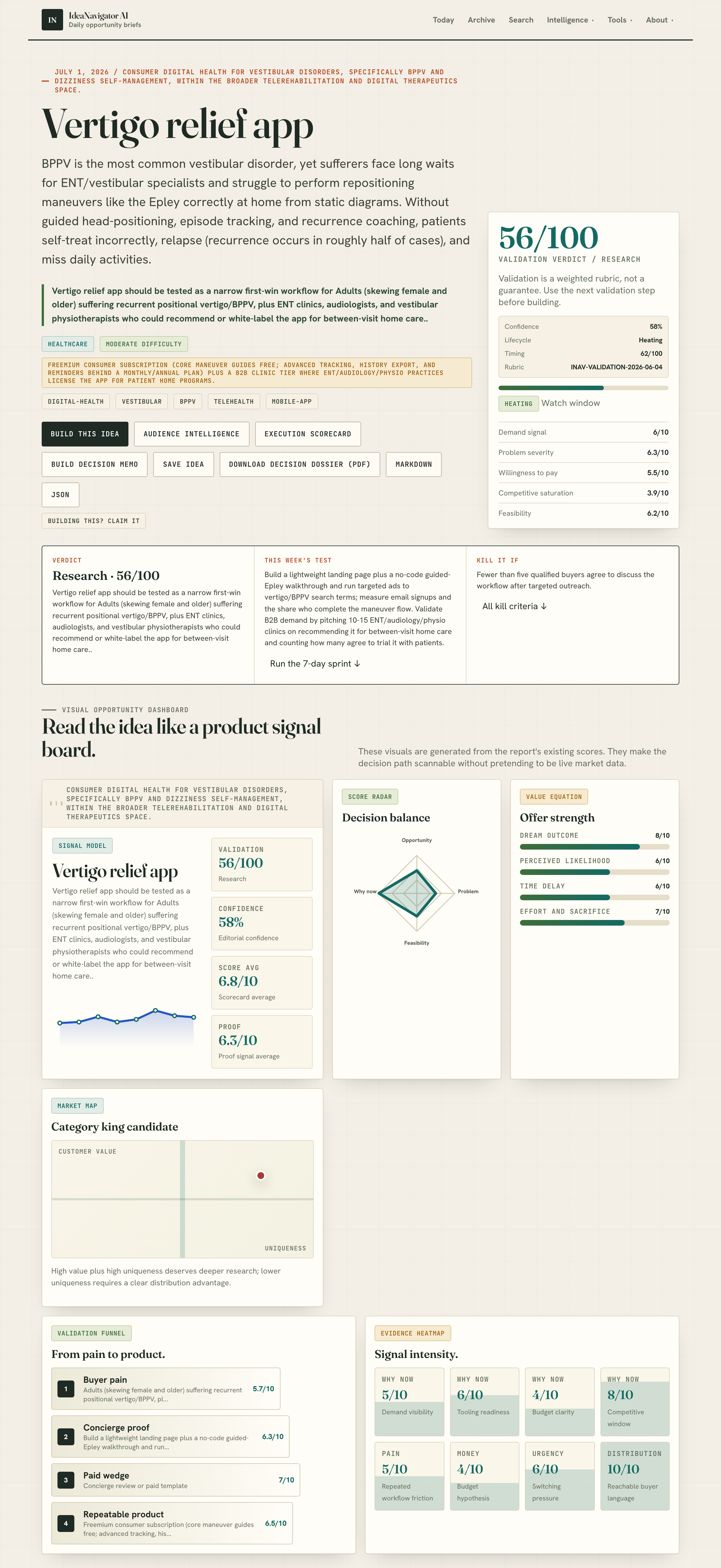
A proposed vertigo relief app for adults with BPPV aims to enhance self-treatment through guided maneuvers and symptom logging. It targets ENT clinics and physiotherapists for integration into patient care. Validation efforts are underway via targeted ads and clinician outreach.
A new vertigo relief app is being developed to assist adults suffering from benign paroxysmal positional vertigo (BPPV), offering guided repositioning maneuvers and symptom tracking. This digital tool aims to address the long wait times for specialist care and improve self-treatment accuracy, potentially transforming home-based vestibular rehabilitation. You can learn more about sunburn relief options for related skin sensitivities.
The app is designed for adults, primarily women and older individuals, experiencing recurrent BPPV episodes. For more on managing health conditions, see our guide on digital health tools. It will feature animated step-by-step guidance for maneuvers like the Epley and Brandt-Daroff, with real-time gyroscope-based head-angle feedback using smartphone sensors. Users will be able to log dizziness episodes, triggers, and severity over time, creating a personalized symptom history.
The app is intended to be offered as a freemium service, with basic maneuver guidance free and advanced features such as detailed tracking, history export, and reminders available through subscriptions. It also presents an opportunity for ENT clinics, audiologists, and vestibular physiotherapists to white-label the app for patient home care, integrating it into clinical workflows.
Development is motivated by the shift toward telehealth accelerated by COVID-19, the increasing accuracy of smartphone motion sensors, and a maturing reimbursement landscape for digital therapeutics. For more insights into telehealth trends, visit our telehealth coverage page. The digital vestibular rehab market was valued near USD 498 million in 2024, with a projected annual growth rate of approximately 13.5% through 2033.
Potential Impact on Self-Management of Vertigo
This app could significantly improve self-treatment accuracy for BPPV, reducing relapse rates and enabling patients to manage symptoms more effectively at home. It also offers clinicians a new tool for monitoring patient progress remotely, potentially shortening wait times for specialist care and expanding access to vestibular rehabilitation services.
By integrating real-time motion feedback and structured guidance, the app aims to address common challenges patients face with static diagrams and unassisted maneuvers, which often lead to incorrect self-treatment and recurrence. If successful, it could set a precedent for digital therapeutics in vestibular care and broader telehealth applications.
As an affiliate, we earn on qualifying purchases.
Rise of Digital Tools in Vestibular Care
Benign paroxysmal positional vertigo (BPPV) is the most common vestibular disorder, affecting a broad demographic, especially older adults. Traditionally, treatment involves manual repositioning maneuvers performed in clinics or at home with guidance from static diagrams, which can be difficult to execute correctly.
The COVID-19 pandemic accelerated the adoption of telehealth and remote rehab tools, prompting developers and clinicians to seek digital solutions. Smartphone sensors now reliably measure head movements, making app-based guidance increasingly feasible. The digital vestibular rehabilitation market is estimated to be nearing USD 500 million in 2024, with strong growth prospects as acceptance among providers and payers increases.
“The app aims to bridge the gap between clinical treatment and home self-management, leveraging smartphone sensors for accurate guidance.”
— an anonymous researcher
vestibular rehabilitation exercises DVD
As an affiliate, we earn on qualifying purchases.
As an affiliate, we earn on qualifying purchases.
Validation and Adoption Challenges Remaining
It is not yet clear how effectively the app will perform in real-world settings, including user adherence, accuracy of motion feedback, and clinical acceptance. Validation through user testing, clinician trials, and feedback from early adopters remains ongoing.
Further, questions remain about reimbursement pathways, regulatory approval, and integration into existing clinical workflows, which could influence widespread adoption.
As an affiliate, we earn on qualifying purchases.
Planned Testing and Clinical Outreach in 2024
Development teams plan to launch a lightweight landing page and a no-code guided Epley maneuver demo to gauge user interest and collect feedback. They will run targeted advertising campaigns focused on vertigo and BPPV search terms, measuring signups and maneuver completion rates.
Simultaneously, outreach to 10-15 ENT, audiology, and physiotherapy clinics will test clinician interest in recommending the app for home use, with a goal of establishing a trial phase for broader validation and potential commercialization later in 2024.
As an affiliate, we earn on qualifying purchases.
Key Questions
How does the app guide users through repositioning maneuvers?
The app provides animated, step-by-step instructions accompanied by audio cues, with real-time head-angle feedback from the smartphone’s gyroscope to ensure correct positioning.
Is the app a substitute for medical consultation?
No, the app includes a prominent disclaimer emphasizing that it is not a substitute for professional medical advice and encourages users to see a healthcare provider if symptoms worsen or red-flag signs appear.
Can ENT clinics white-label this app for their patients?
Yes, the app is designed with a white-label option, allowing clinics and therapists to customize and recommend it as part of their patient home care programs.
When will the app be available for download?
The development is ongoing, with initial validation efforts planned for 2024. A public release date has not yet been announced.
How will the app be monetized?
It will operate on a freemium model for consumers, with optional subscriptions for advanced features, and a licensing model for clinics to integrate into their patient care offerings.
Source: IdeaNavigator AI