When flying with food, pack in sturdy, leak-proof containers that are TSA-friendly and clearly labeled with contents and handling instructions. Use padding for fragile items and choose airtight seals to prevent spills. Check airline and customs rules about what foods are allowed, especially for international trips, and declare everything honestly. Proper packing helps avoid confiscation or damage, and if you keep these tips in mind, you’ll guarantee your snacks arrive safe and intact—keep going to discover more helpful advice.
Key Takeaways
- Use TSA-compliant, leak-proof containers that are clear, small, and sturdy to prevent spills and facilitate security screening.
- Wrap fragile items with padding like bubble wrap or foil to protect against damage during transit.
- Label all food items clearly, including ingredients and any special handling or storage instructions.
- Avoid liquids over 3.4 oz and messy foods to prevent confiscation and security delays.
- Pack foods securely in airtight, durable containers and cushion to minimize movement and spoilage.
What You Need to Know About Airport Food Security Rules
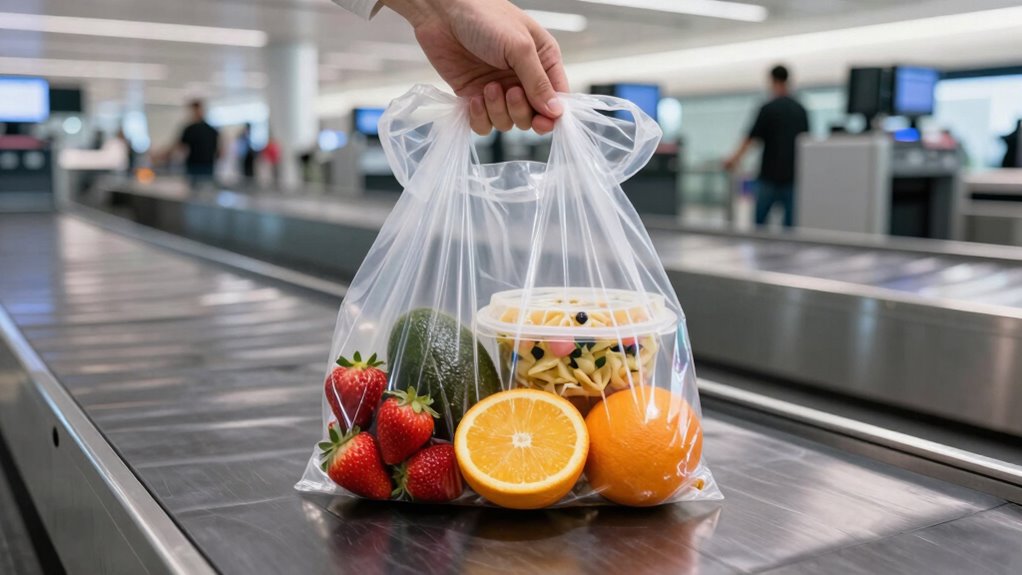
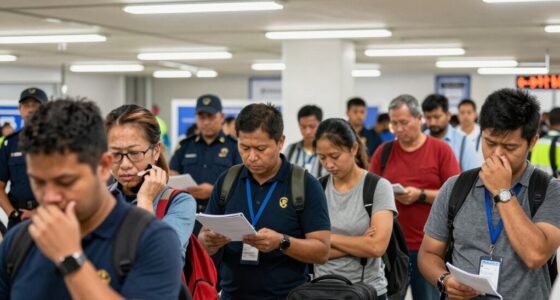
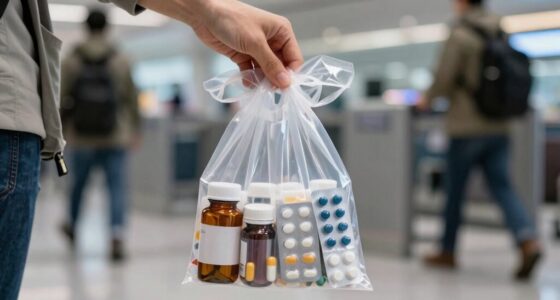
Understanding the airport security rules for food is crucial to guarantee smooth travel. You need to be aware that liquids, gels, and aerosols in your food items are subject to strict regulations, typically limited to containers of 3.4 ounces (100 milliliters). Solid foods are generally allowed, but they must be declared if requested. Food safety is a top priority; ensure your snacks are fresh and properly stored to prevent spoilage. If you have dietary restrictions, pack necessary items in advance, and be prepared to explain them to security officers. Remember, security personnel may inspect or request additional screening for certain foods. Planning ahead ensures your food complies with regulations, minimizes delays, and respects food safety standards. Additionally, familiarizing yourself with food safety standards can help you better prepare and avoid issues during security checks. Being aware of product packaging requirements can also streamline the screening process and prevent confiscation. To avoid unexpected issues, consider researching specific airline policies regarding food items, as these can vary between carriers. Knowing the permitted quantities of food items can further help you pack efficiently and avoid clearance problems. Being aware of packaging guidelines can help ensure your food remains secure and uncontaminated during transit.
How to Choose Leak-Proof Containers for Travel Snacks
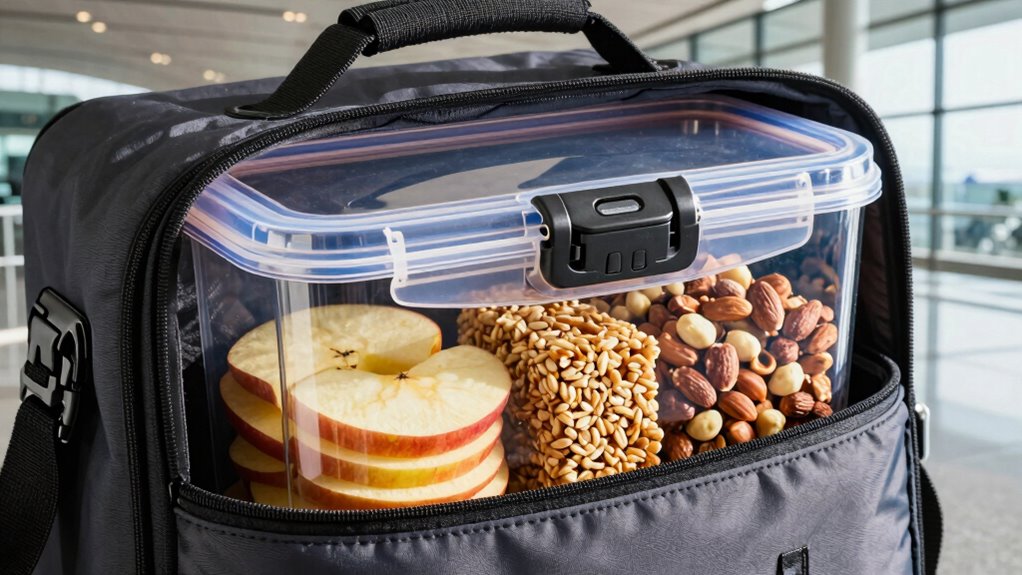
Choosing the right leak-proof containers can make a significant difference in maintaining your snacks’ freshness and preventing messes during travel. Look for leak-proof containers designed specifically for travel snack packaging, with secure screw-on lids or locking mechanisms. Silicone seals or rubber gaskets enhance their ability to keep liquids and powders contained. Consider containers made from durable, BPA-free plastic or stainless steel to withstand rough handling. Transparent containers help you quickly identify contents, saving time at security checkpoints. Test the seal before packing, ensuring it’s airtight and leak-proof. Compact sizes are ideal for fitting into carry-on bags, while stackable designs maximize space. Investing in reliable travel snack packaging ensures your food stays fresh and your belongings stay clean throughout your journey. Properly designed containers can also help prevent spill hazards and reduce waste from damaged packaging. Additionally, selecting containers with durable materials can further prevent leaks and breakage during transit. Look for containers that have undergone leak resistance testing to ensure maximum security and peace of mind. Moreover, opting for containers with secure locking mechanisms can provide extra assurance against accidental openings during travel.
Packing Tips to Keep Your Food Safe and Intact

To keep your food safe and intact during your flight, make sure you’re using proper packaging that prevents spills and spoilage. Clearly label your food, especially if it needs refrigeration or special handling. These simple steps help guarantee your snacks arrive in perfect condition. Additionally, understanding content formats can help you choose the best way to present and protect your food during travel. Being aware of dream symbolism related to clocks and time can also help you interpret any unexpected disruptions or delays during your journey. Proper packaging materials can further enhance the safety and durability of your food during transit. Incorporating attention to detail in packing ensures that every item is secured properly, reducing the risk of damage or contamination. Also, selecting eco-friendly disposal options for packaging can contribute to reducing waste and environmental impact.
Use Proper Packaging
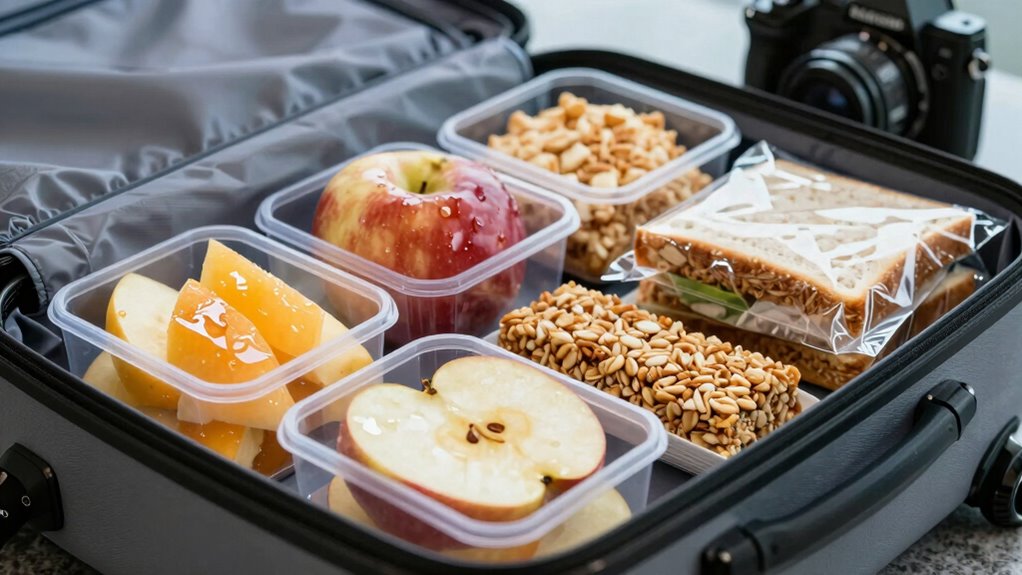
Ensuring your food stays fresh and intact during a flight starts with proper packaging. Use airtight seals to prevent leaks and spills that can cause messes or confiscation. Invest in reusable containers with secure lids—they’re durable and eco-friendly, and they keep your food protected from crushing or contamination. Wrap delicate items in bubble wrap or foil for extra cushioning. Avoid overfilling containers, which can cause pressure and leaks, and always double-check that lids are firmly closed. Proper packaging not only preserves freshness but also helps your food withstand the rigors of travel. Incorporating proper packing techniques can further enhance your food’s safety during transit. Additionally, selecting durable, travel-friendly containers can make a significant difference in safeguarding your food throughout the journey, especially when considering airline regulations on carry-on items. Planning your food transportation methods carefully can help prevent mishaps and ensure your meals arrive in perfect condition. For extra assurance, consider using electric bikes or other innovative transportation methods to carry your food securely if traveling over long distances.
Label Food Clearly
Label your food clearly with descriptive tags or labels to prevent mix-ups and guarantee proper handling. Effective food labeling helps security and airline staff quickly identify your items, reducing the risk of confiscation or unnecessary inspection. Use waterproof markers or pre-printed labels for clarity. Remember to include details like contents, date, and any special instructions. Proper container sealing complements food labeling by preventing leaks and keeping your food fresh. Seal each container securely to avoid spills during transit, especially if the packaging gets jostled. Clear labels combined with tight container sealing make it easier for handlers to recognize and treat your food appropriately. Additionally, understanding food safety principles can help ensure your packed items remain safe throughout travel. Following proper packing techniques can further minimize the risk of damage or spoilage during your journey. Being aware of transportation regulations concerning food items can also prevent delays or confiscation at security checkpoints. This simple step helps your food arrive intact, safe, and ready to enjoy once you reach your destination. Incorporating proper storage methods can further enhance food safety and quality during transit. Paying attention to temperature control is also essential to prevent spoilage during travel.
Understanding Food Restrictions for Airport Security and Customs
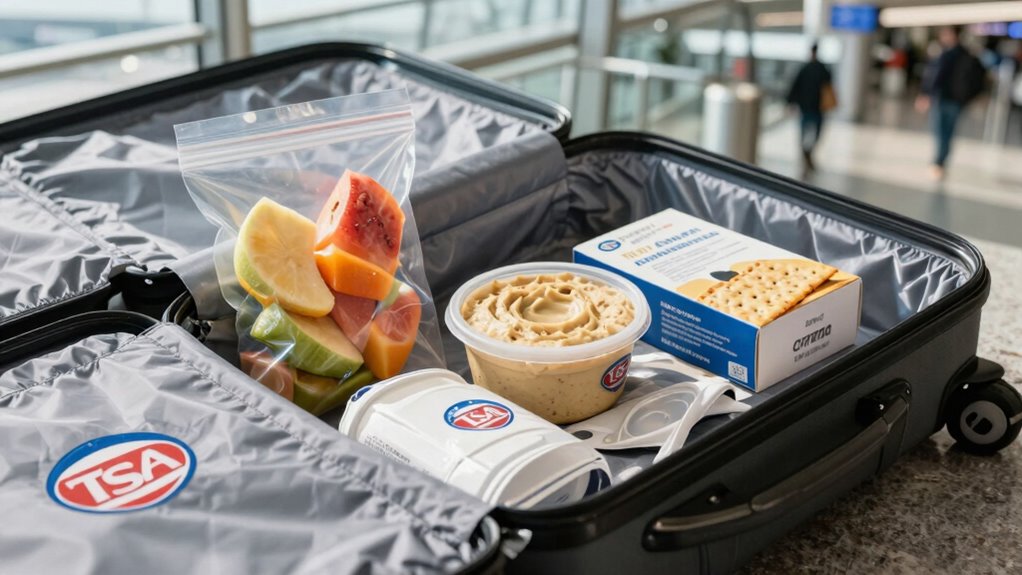
When traveling through airport security and customs, understanding food restrictions is essential to avoid delays or confiscation. Many countries have strict international customs guidelines that limit or prohibit certain foods, especially fresh produce, meats, and dairy. If you have food allergy management concerns, be aware that some foods may be flagged for inspection, even if allowed. Always check the specific rules of your destination country before packing. Pack non-perishable, sealed items and avoid bringing fresh or homemade foods unless you’re sure they comply with regulations. Declaring your food items honestly at customs can prevent issues and ensure a smoother process. Being informed about restrictions helps protect your food, prevents confiscation, and keeps your travel plans on track. Additionally, understanding the bioluminescent organisms and their ecological importance can inspire more mindful packing choices, especially for eco-conscious travelers. Recognizing the role of pollination and hive health can also encourage responsible sourcing and packaging of food products.
Label and Seal Your Food Properly for Smooth Security Checks
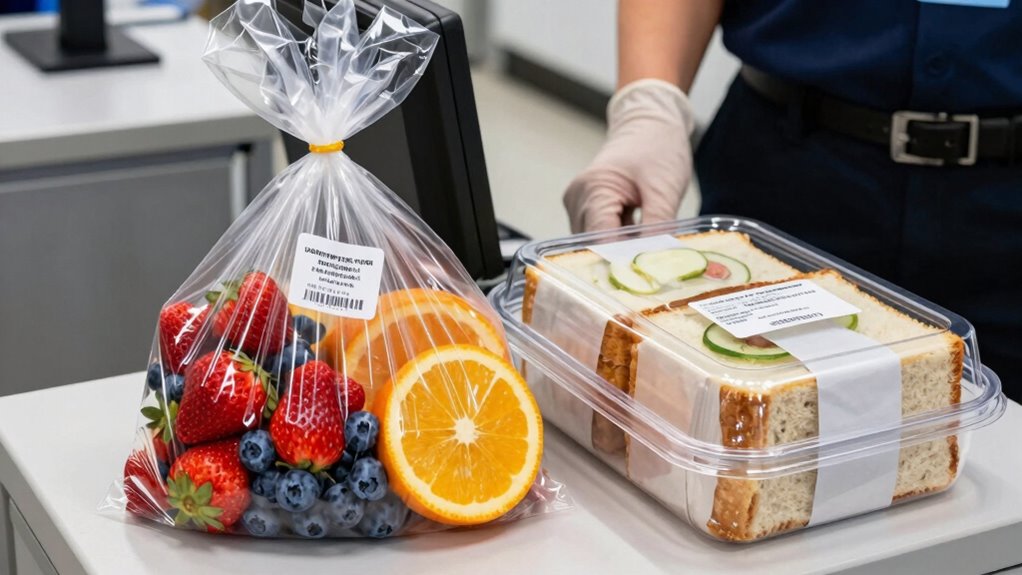
To keep your food items moving smoothly through security, it’s important to properly label and seal them before your trip. Clear labels help security personnel identify contents quickly, especially if you have food allergy awareness needs. Use eco friendly packaging to reduce environmental impact while guaranteeing durability. Here are three tips to ensure your food passes security effortlessly:
- Clearly mark ingredients and potential allergens on the label.
- Seal containers tightly with tamper-evident seals or eco friendly wraps.
- Include your contact info in case security needs to reach you about your food.
Proper labeling and sealing prevent confusion or suspicion, helping you avoid delays and confiscation. Plus, it promotes eco-conscious choices and keeps everyone informed about your food’s contents.
Best Practices for Storing Food During Your Flight
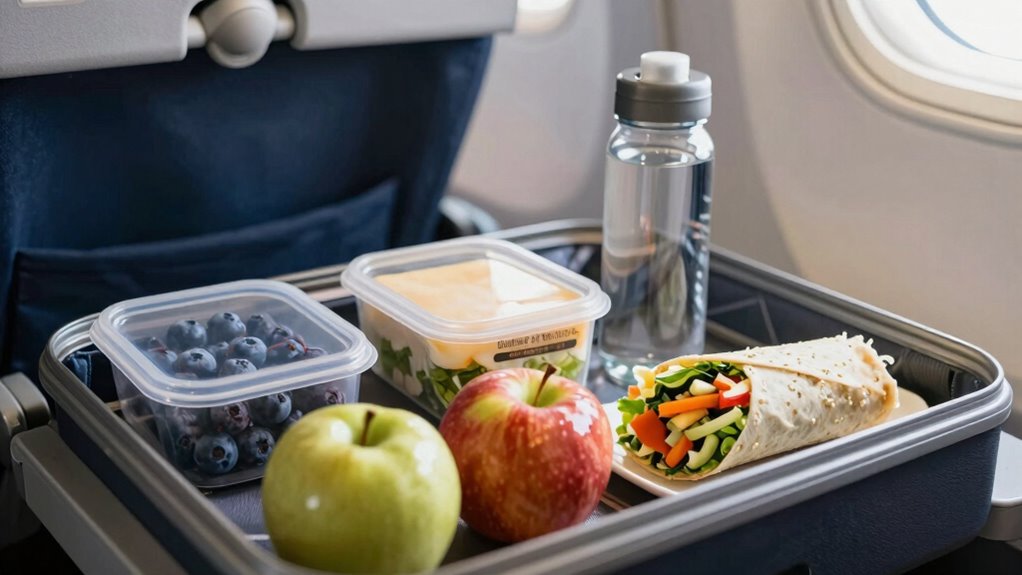
To keep your food fresh and secure during your flight, you need to choose the right containers that prevent leaks and preserve freshness. Pack everything carefully to guarantee safety and avoid spills that could cause messes or delays. Make sure to follow TSA regulations so your food stays compliant and easy to pass through security.
Choose Appropriate Containers
Ever wondered how to keep your food fresh and secure during a flight? Choosing the right containers is key. First, consider container selection—opt for sturdy, leak-proof options like BPA-free plastic or glass to prevent spills. Second, pay attention to packaging materials; use airtight lids and sealable bags to keep everything fresh and avoid messes. Third, ensure containers are TSA-friendly: small, clear, and compliant with liquid restrictions to pass security easily. Avoid flimsy or overly bulky options that can get crushed or cause delays during screening. Proper containers protect your food from damage and contamination, making your travel snack hassle-free. Select wisely to maintain freshness and stay within airline regulations, ensuring your food arrives intact and ready to enjoy.
Pack Properly for Safety
Wondering how to guarantee your food stays safe and intact during your flight? The key is proper packing to assure food safety and prevent damage. Use high-quality containers that are airtight and durable, which helps keep your food fresh and prevents leaks. Pack foods in insulated bags or containers with secure lids to avoid spills and maintain the correct temperature. Place fragile items, like sandwiches or baked goods, in sturdy containers to avoid crushing. Keep liquids in spill-proof bottles or containers to prevent messes. Additionally, consider layering items to cushion them from bumps during travel. Proper packing minimizes the risk of spoilage and damage, ensuring your food arrives in perfect condition and remains safe to eat throughout your journey.
Follow TSA Regulations
Are you aware of the TSA regulations that govern carrying food on a plane? To ensure your food arrives intact and safely, follow these key tips:
- Keep liquids and gels under 3.4 ounces, especially sauces or dressings, to pass through security.
- Pack solid foods in clear, resealable bags for easy inspection.
- Label foods clearly, noting any items for food allergies or dietary restrictions to inform security staff.
If you have specific dietary restrictions or food allergies, carry documentation or notes to clarify your needs. Remember, TSA officers may need to inspect your food, so packing neatly and within regulations helps prevent delays or confiscation. Being prepared guarantees your food stays safe and compliant throughout your journey.
Troubleshooting: Avoiding Confiscation and Damage to Your Food
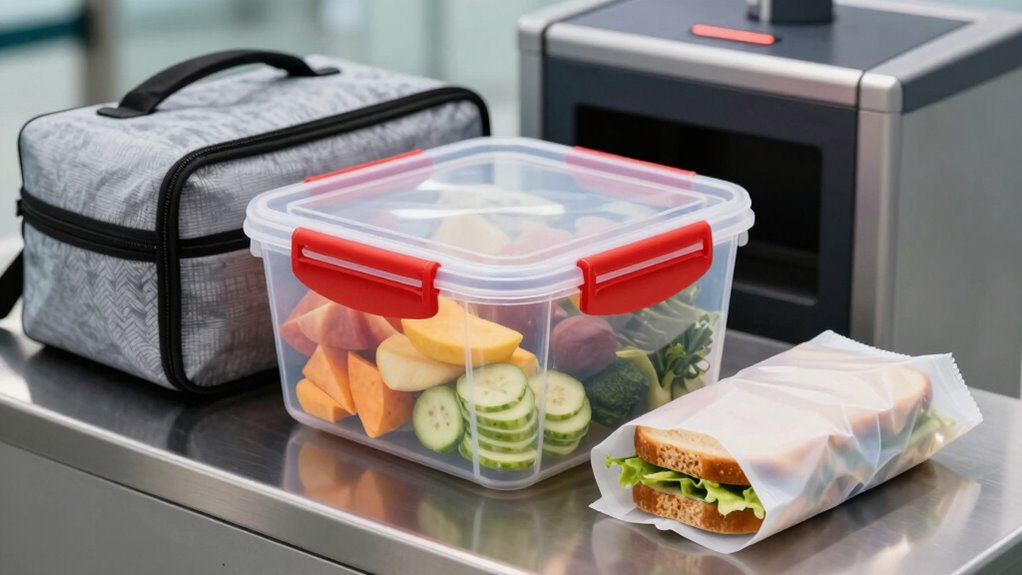
To prevent your food from being confiscated or damaged during security checks, it is vital to pack thoughtfully and follow airline and customs regulations carefully. Proper food presentation helps prevent spills and squashing, so choose containers that are sturdy and well-sealed. Use individual portions or compact packaging to minimize movement and crushing. If you have dietary accommodations, clearly label your meals to avoid confusion and guarantee they meet airline policies. Keep fragile items like fruits and baked goods cushioned with padding or bubble wrap. Avoid overly liquid or messy foods that could leak or cause issues during screening. By paying attention to presentation and labeling, you reduce the risk of confiscation and damage, making your travel experience smoother and more enjoyable.
Final Tips for Traveling With Homemade Meals and Snacks
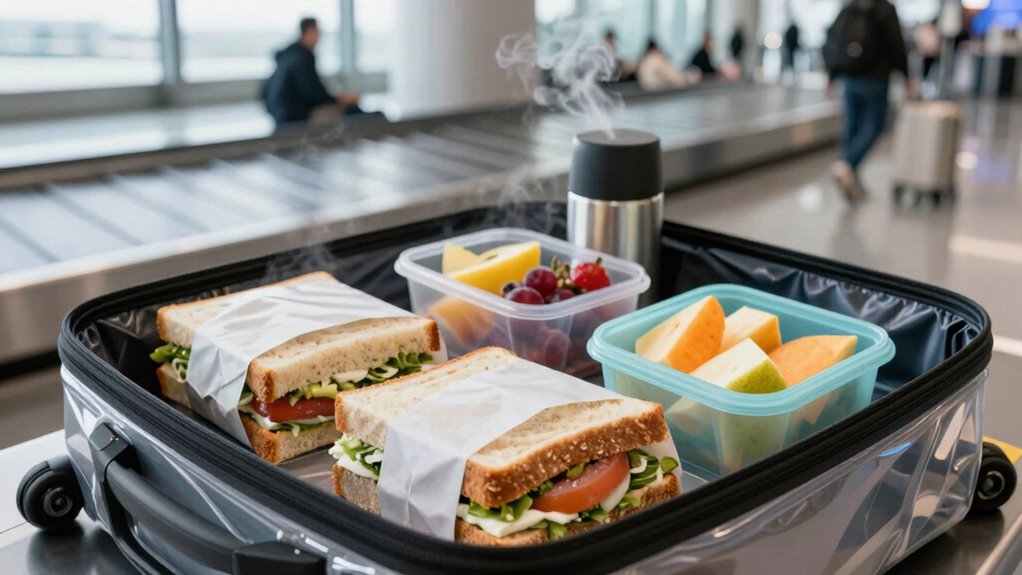
Traveling with homemade meals and snacks requires careful planning to guarantee they arrive fresh and intact. To ensure success, consider these final tips:
- Use eco-friendly packaging to protect your food and reduce waste. Reusable containers or beeswax wraps work well.
- Pack creative snack ideas that withstand travel, like sturdy fruit slices or homemade granola bars.
- Keep items chilled with insulated bags or ice packs to prevent spoilage during transit.
Label your containers for easy identification and quick access. Avoid overly fragile items and double-check TSA regulations for homemade foods. By focusing on eco-friendly packaging and creative snack ideas, you’ll keep your food fresh, intact, and ready to enjoy at your destination. Proper preparation makes all the difference in hassle-free travel with homemade meals.
Frequently Asked Questions
Can I Bring Homemade Meals Through TSA Security?
Yes, you can bring homemade meals through TSA, but you need to follow food packaging regulations. Pack your food in clear, resealable containers to make security screening easier. Be prepared to declare your food during customs declaration if traveling internationally. TSA may inspect your food, so verify it complies with regulations to avoid confiscation. Keep perishable items cold or hot, and consider labeling homemade dishes for smooth processing.
Are There Specific Sizes for Snack Containers Allowed?
Surprisingly, there are indeed size limits for snack containers, even if they seem tiny. TSA prefers portable food storage to fit comfortably in your carry-on, typically under 3.4 ounces (100 milliliters), just like your liquids. Stick to small, clear containers for snacks, avoiding oversized or opaque ones. This way, your snack container sizes stay within regulations, preventing delays or confiscation, and ensuring your snacks arrive intact and ready to enjoy.
How Do I Prevent Liquids From Leaking During Transit?
To prevent liquids from leaking during transit, use leak-proof containers designed for travel. Make certain they’re tightly sealed and placed in resealable bags for extra protection. Double-check the lids and closures before packing, and consider wrapping containers in a towel or padding for added security. This way, even if a container leaks slightly, it won’t affect your other belongings, keeping everything tidy and intact throughout your flight.
What Are the Airline Policies on Bringing Perishable Food?
Imagine your food as a delicate bouquet, needing careful handling. Airlines generally allow perishable food in checked or carry-on baggage, but you must follow airline baggage restrictions. Keep items well-packed and avoid liquids over limits. Customs regulations vary; some countries restrict fresh produce. To avoid issues, check specific airline and destination rules beforehand. Handle your edible treasures like fragile blooms, ensuring they arrive fresh and intact, ready to enjoy.
Can I Carry Fresh Fruits and Vegetables on International Flights?
You can carry fresh fruits and vegetables on international flights, but you should focus on fruit preservation and vegetable storage to avoid issues. Keep produce in airtight containers or resealable bags to prevent spills and contamination. Be aware of destination restrictions, as some countries ban certain produce. Properly packing and labeling your items helps guarantee they stay fresh and secure during transit, reducing the risk of confiscation or damage.
Conclusion
So, next time you sneak that homemade sandwich past security or try to prevent your snacks from turning into a gooey mess, remember—it’s all about playing the game. Follow the rules, pack smart, and keep a sense of humor handy. After all, nothing says “adventure” quite like risking confiscation or smashing your carefully crafted snack. Happy travels, and may your food stay intact—if only just enough to make it worth the hassle!