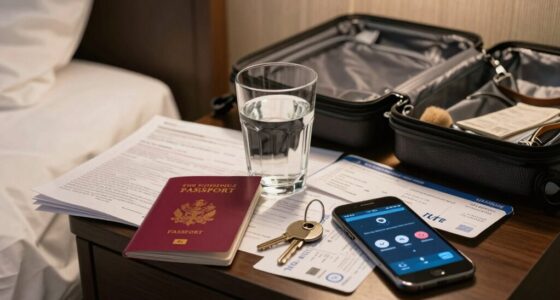
Before leaving your hotel, establish a daily safety routine: lock all doors and windows, store valuables in safes or discreet spots, and carry only essential items in secure, hidden pouches or crossbody bags close to your body. Plan your routes carefully, stay aware of your surroundings, and watch out for pickpocket tactics like distractions or crowds. If you want to learn more about staying safe and avoiding theft, keep exploring these useful tips.
Key Takeaways
- Lock all doors and windows, and activate security features like deadbolts or door jammers.
- Store valuables securely in hotel safes or hidden compartments before leaving.
- Carry only essential items in anti-theft bags close to your body.
- Plan and familiarize yourself with safe routes and crowded areas prior to outings.
- Stay alert, trust your instincts, and monitor your belongings constantly during your stay.
Why You Need a Pickpocket-Proof Routine Before Leaving the Hotel
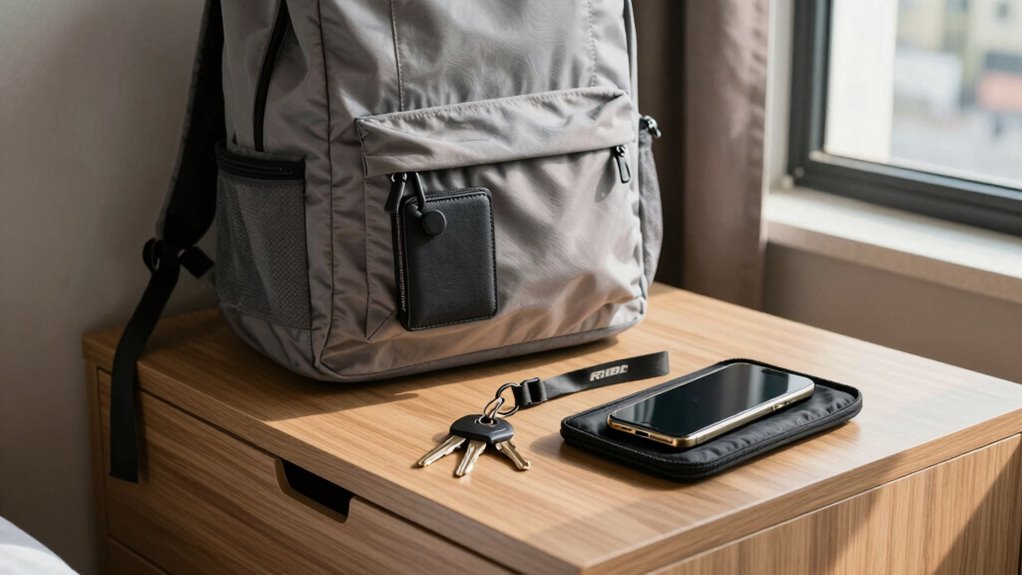
Leaving your hotel without a pickpocket-proof routine can leave you vulnerable to theft and unnecessary stress. Hotel security measures vary, and thieves often target travelers who appear distracted or careless. Managing your valuables properly is essential to avoid losing important items like passports, cash, or electronics. Developing a secure routine ensures your belongings stay safe, whether you’re heading out for a quick walk or exploring the city. Simple steps like using hotel safes and keeping valuables out of sight reduce temptation for pickpockets. Without this routine, you risk becoming an easy target. Prioritize your valuables management and stay alert. Establishing consistent pre-departure checks can further enhance your security. A well-established plan not only safeguards your belongings but also allows you to enjoy your trip with peace of mind. Additionally, understanding the common tactics used by thieves can help you stay one step ahead. Being aware of the best security practices can make a significant difference in preventing thefts. Regularly reviewing security tips tailored for travelers can help you adapt your routine to different environments and reduce risks. Incorporating personal safety strategies into your routine further strengthens your defenses against theft.
Decide Which Valuables to Keep Close at All Times
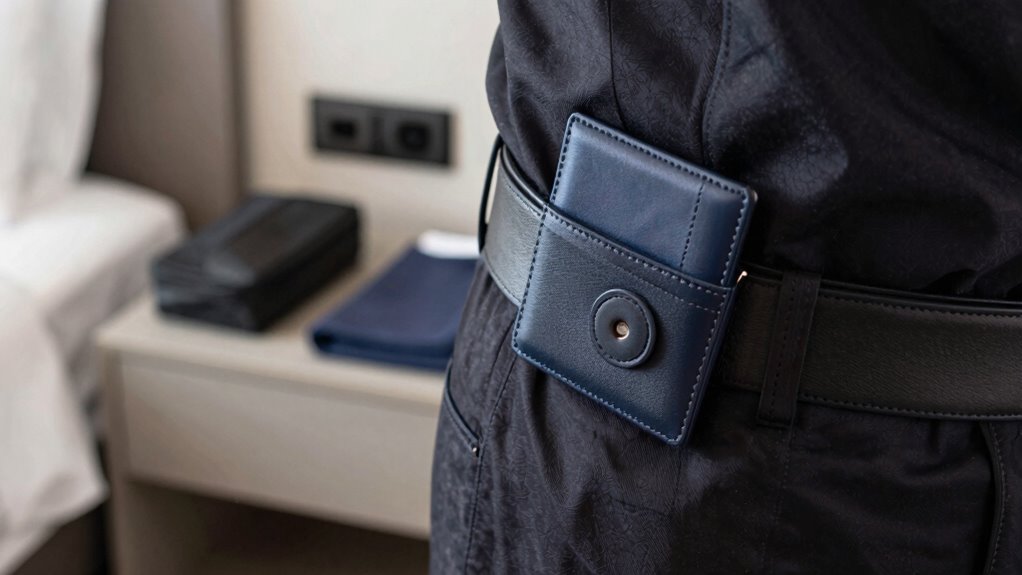
Once you’ve established a routine for safeguarding your valuables, the next step is deciding which items you should keep close at all times. Conduct regular security checks to guarantee your essentials are secure and organized. Focus on valuables like your passport, cash, credit cards, and any important documents. Keep these in a designated, secure spot, such as a hotel safe or a hidden pocket. Avoid carrying unnecessary items that could slow you down or attract attention. Additionally, being aware of discreet storage can significantly enhance your personal security while traveling. Incorporating anti-theft accessories, such as secure money belts or hidden pouches, can further protect your belongings from theft. Being aware of microplastic contamination in dust can also be beneficial in maintaining overall health, especially in unfamiliar environments. Remember that valuables organization helps you stay vigilant and respond quickly to suspicious activity. Developing a personal security routine can help you stay alert and prepared for potential threats.
Choose Discreet and Secure Ways to Carry Your Essentials
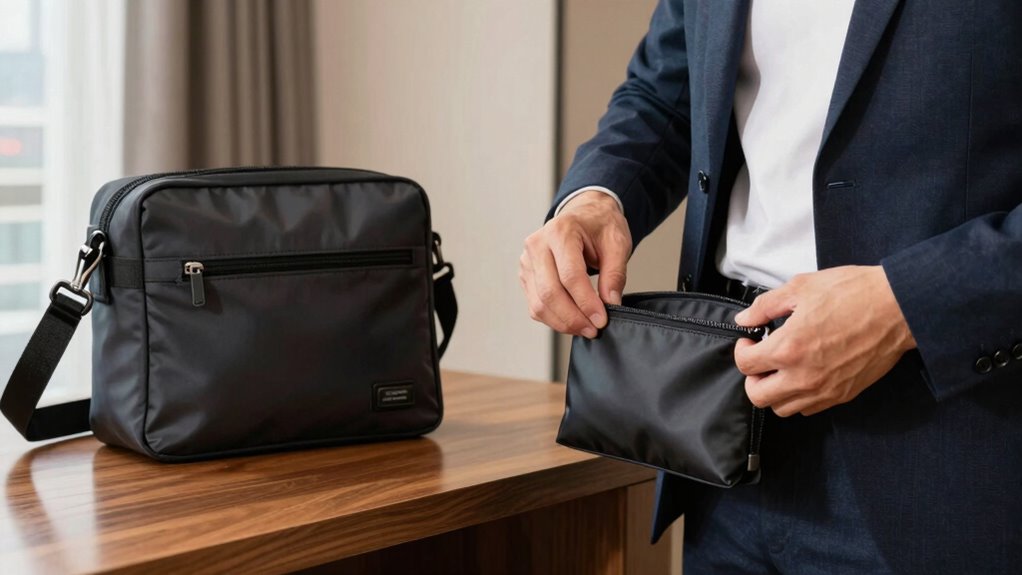
To keep your valuables safe, choose discreet and secure ways to carry them. Use hidden pouches or opt for crossbody bags that stay close to your body. Limit the visible items you carry to reduce attracting unwanted attention.
Use Hidden Pouches
Using hidden pouches is one of the most effective ways to keep your valuables safe from pickpockets. They provide discreet theft prevention, especially in crowded areas. Consider these options:
- Wear a waist pouch under your clothes for maximum concealment.
- Use a neck pouch tucked inside your shirt to keep important documents close.
- Opt for a money belt that wraps around your waist, hidden beneath your clothing.
- Place essentials in a secret compartment in your backpack, out of sight from prying eyes.
- Ensure your survival gear is stored securely to be prepared for unexpected situations.
- Be aware of cybersecurity tactics such as avoiding digital footprints that could compromise your physical safety.
- Familiarize yourself with DIY safety tools and techniques to enhance your personal security when traveling.
- Regularly assess your personal security practices to adapt to changing environments and threats.
- Keep aware of environmental risks that might affect your safety, especially in unfamiliar settings.
Opt for Crossbody Bags
Opt for crossbody bags that keep your valuables close and secure while blending seamlessly with your outfit. Look for bags with secure straps that stay close to your body, making it harder for pickpockets to snatch your belongings. Choose discreet designs that don’t scream “expensive” or “valuable,” reducing the temptation for thieves. A well-fitting crossbody keeps your hands free and your essentials in easy reach, but still secure against theft. Avoid bulky or flashy styles that draw attention. Instead, opt for sleek, understated bags made from durable materials. Always make sure the bag’s zipper or flap is closed when not in use. Incorporating secure attachment methods in your accessories can also enhance safety and prevent accidental loss. Selecting bags with anti-theft features such as lockable zippers or RFID blocking pockets further improves security. By choosing a crossbody with secure straps and discreet design, you minimize risk and keep your valuables safe while exploring new places. Incorporating sustainable textile care practices in your accessories can also prolong their lifespan and reduce environmental impact. Additionally, understanding the importance of energetic alignment can help you stay calm and focused while traveling, which can enhance overall safety and well-being.
Limit Visible Items
When carrying your essentials, choosing discreet and secure options helps prevent attracting unwanted attention. Limiting what you carry makes theft prevention easier. Here are four ways to limit visible items:
- Keep cash in a hidden money belt or inside your shoe for added cash security.
- Carry only the essentials—ID, a credit card, and a small amount of cash—avoid bulky wallets.
- Use a small, lockable pouch or hidden pocket for valuables.
- Avoid displaying expensive gadgets or jewelry that can tempt pickpockets.
- Being aware of global outages and their impact can help you prepare contingency plans for your travel needs. Additionally, selecting secure carrying methods can further enhance your safety during transit, especially if you stay informed about security risks in your destination. Staying alert to local theft tactics can also help you recognize and avoid common scams, while understanding theft prevention techniques can provide extra peace of mind.
Prepare Your Hotel Room to Minimize Theft Risks
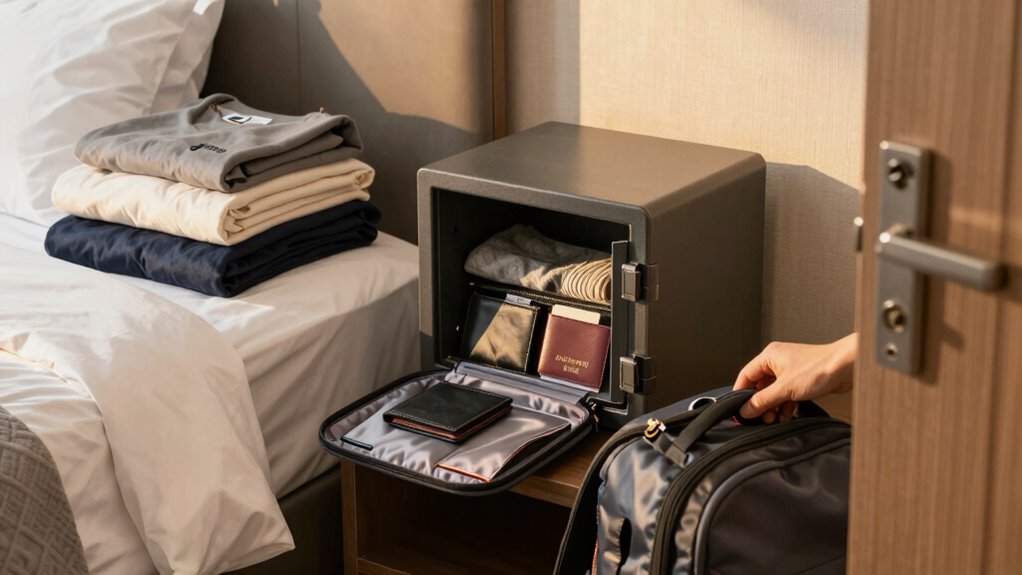
To reduce the risk of theft during your stay, taking proactive steps to secure your hotel room is essential. Start by locking all doors and windows when you’re inside or leaving, even if you’re just stepping out briefly. Use the deadbolt or security chain for added protection. Keep valuables in the hotel safe if available; if not, stash them in a discreet, hard-to-reach spot. Avoid leaving belongings unattended or in plain sight. Check that the room lock functions properly before settling in. Clear clutter from surfaces to avoid tempting thieves. Consider using a portable door lock or door jammer for extra security. These simple measures enhance hotel safety and make theft prevention easier, giving you peace of mind during your stay. Additionally, fostering a digital-friendly environment at home can help families develop proactive safety habits beyond the hotel setting. Incorporating preventive safety measures, such as secure storage practices, can further protect your belongings and ensure a worry-free trip. Being aware of security vulnerabilities in your environment can also help you identify potential risks before they occur. Regularly updating your security awareness can empower you to act swiftly if issues arise.
Pack Smarter: Keep Your Belongings Organized and Light
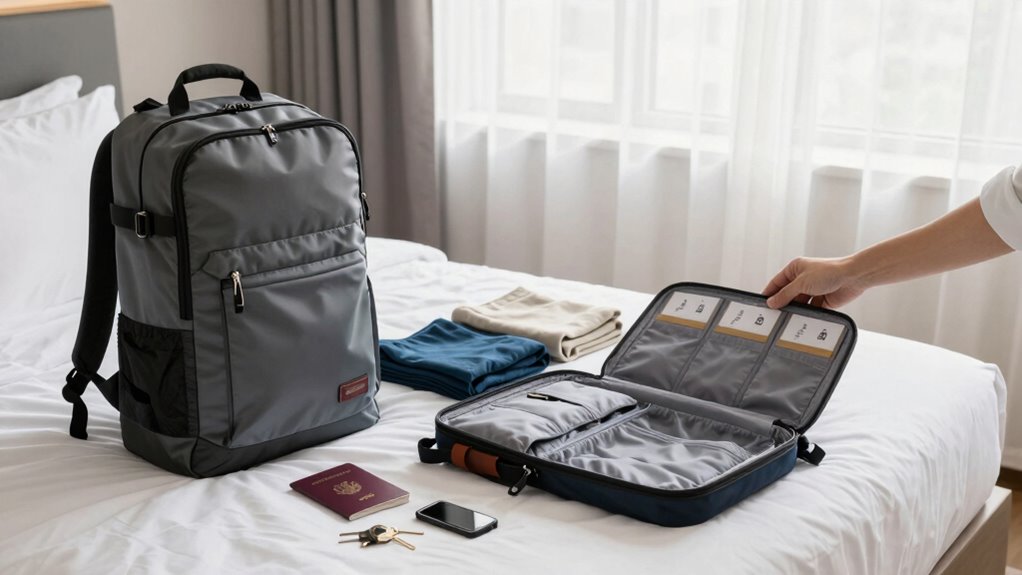
Packing efficiently can make a big difference in keeping your belongings organized and your load manageable; it helps prevent clutter and reduces the risk of losing or forgetting items. Use effective packing techniques and smart luggage organization to stay streamlined. Here are four tips:
- Roll clothes instead of folding to save space and minimize wrinkles.
- Use packing cubes to separate items by category, making everything easier to find.
- Limit your carry-on to essentials, keeping valuables close and reducing bulk.
- Pack a small, lightweight bag for day trips to avoid overloading your main luggage.
Additionally, understanding best laundry detergents can help you keep your clothes fresh and well-maintained during your trip.
Create a Routine for Your Outings to Stay Safe
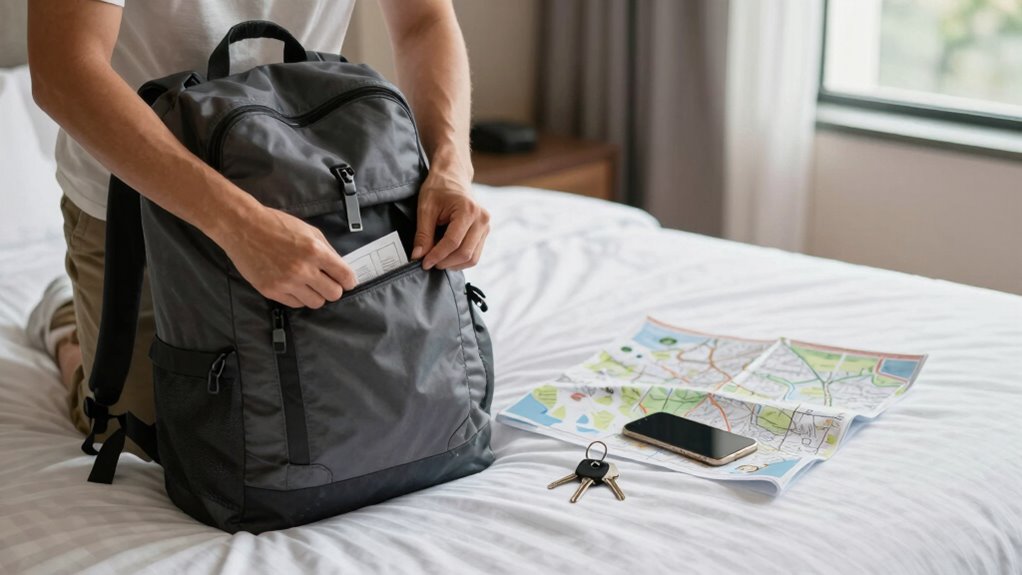
Staying organized with your belongings is a great start, but developing a consistent routine for your outings is key to maintaining safety. Before heading out, plan your route and identify safe, well-populated areas. This helps improve your travel safety and reduces the risk of theft. Be aware of local customs and cultural awareness; understanding social norms can help you avoid unwanted attention or misunderstandings. Keep your valuables in secure, easily accessible spots, like a zippered bag close to your body. Establish a habit of checking your belongings frequently and staying alert to your surroundings. Creating this routine keeps you prepared and aware, making it harder for pickpockets to target you. Consistency and cultural awareness are your best defenses when exploring new environments.
Recognize Common Pickpocket Tactics and How to Avoid Them
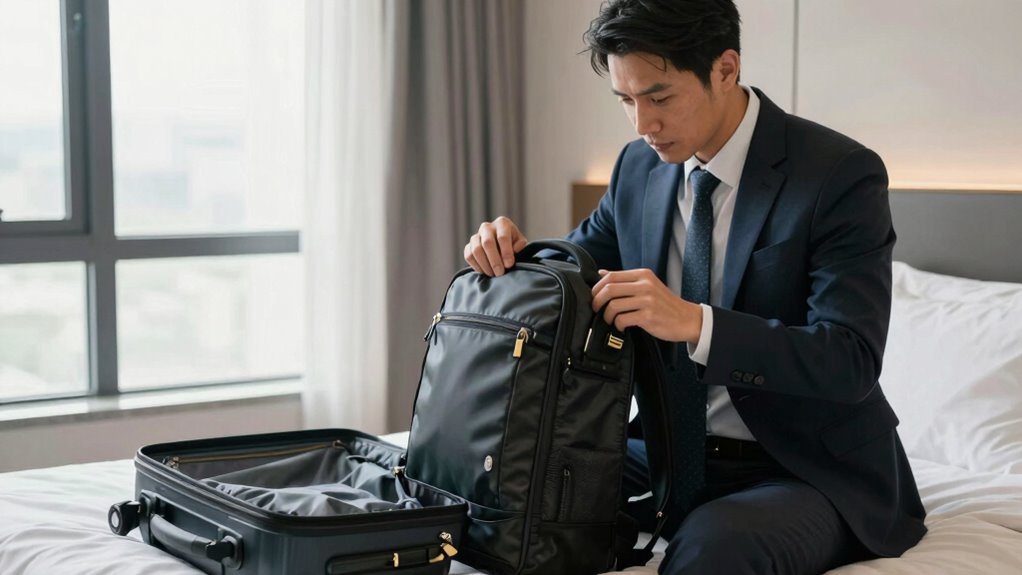
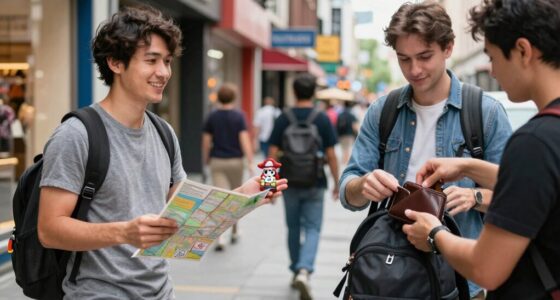
Many pickpockets rely on distraction techniques to divert your attention and make their move. In crowded environments, they use quick, sneaky tactics to steal your valuables. To recognize these tactics, watch out for:
- Someone bumping into you unexpectedly
- An individual asking for directions or help
- A distraction caused by loud noises or commotion
- People suddenly gathering around you in a tight space
These tricks aim to split your focus or create confusion, making it easier for them to snatch your belongings. Stay alert in busy settings, keep your valuables close, and avoid getting caught up in the chaos. Recognizing these common tactics helps you stay one step ahead and avoid falling victim to pickpocketing.
Stay Alert and Know What to Do If You Suspect You’re Being Watched
If you feel like someone’s watching you, trust your instincts and stay calm. Keep your eyes open and be aware of your surroundings at all times. Knowing what to do can help you stay safe and avoid becoming a target.
Trust Your Instincts
Trust your instincts when you notice anything unusual around you, because your gut is often the best warning system. If you suspect someone is watching or trying to distract you, trust that feeling. Here’s what to do:
- Stay calm and avoid panic, which can cloud your judgment.
- Use distraction techniques to divert attention away from your valuables or actions.
- Increase your confidence building by maintaining a strong posture and steady eye contact.
- Move to a safer area if you feel uncomfortable, trusting your instincts to guide your next move.
Listening to your intuition helps you stay alert and prevents potential threats. Remember, your instincts are there to protect you—don’t dismiss that nagging feeling.
Maintain Situational Awareness
Staying alert is essential when you’re in unfamiliar or crowded areas, especially if you suspect someone may be watching you. Urban safety depends on your personal awareness; paying close attention to your surroundings helps you identify suspicious behavior early. Keep your eyes scanning the environment, noting anyone lingering or acting oddly. If you notice someone watching you repeatedly or making you feel uneasy, adjust your route or seek a safe space. Avoid distractions like your phone, which can make you an easier target. Trust your instincts—if something feels off, don’t hesitate to change direction or seek help. Maintaining situational awareness empowers you to respond quickly and confidently, reducing your vulnerability to pickpockets or scams in unpredictable urban settings.
Review and Adjust Your Routine Based on Your Experiences

Have you ever reflected on how well your routine works in real-world situations? Regularly reviewing and adjusting your routine is essential. After each trip, consider these steps:
- Perform security drills to test your awareness and responses.
- Evaluate what worked and what didn’t during your routine.
- Identify any vulnerabilities or gaps in your current method.
- Adjust your routine accordingly, incorporating lessons learned.
Routine evaluations help you stay alert and prepared, ensuring your pickpocket-proof habits stay effective. If something felt awkward or risky, refine it. Remember, your routine should evolve with your experiences and surroundings. Staying proactive with these adjustments keeps you one step ahead of potential thieves and maintains your confidence and safety throughout your travels.
Frequently Asked Questions
How Can I Identify Suspicious Behavior in Crowded Areas?
You can spot suspicious behavior in crowded areas by paying attention to people who act nervously or seem overly focused on others’ belongings. Watch for individuals who linger near groups without a clear purpose or frequently look around, as if checking for potential targets. Keep an eye out for people who avoid eye contact or try to blend in while subtly reaching into their pockets. Staying alert helps you recognize suspicious behavior quickly.
What Should I Do if My Valuables Are Stolen?
If your valuables are stolen, act quickly by notifying hotel security right away. File a police report to document the theft, which can help with insurance claims. Contact your travel insurance provider to report the incident and see what coverage they offer. Remember, staying calm and taking prompt action guarantees you’re protected and can recover or replace your stolen items efficiently.
Are There Specific Clothing Items That Deter Pickpockets?
Clothing with hidden pockets and anti-theft features is like a fortress for your valuables, making them harder for pickpockets to access. Look for jackets, pants, and shirts designed with secure zippers, RFID blocking pockets, or concealed compartments. These items deter pickpockets by keeping your belongings close and hidden, so you stay protected without sacrificing style. Always choose practical, secure clothing for peace of mind during your travels.
How Can I Recover Stolen Items After the Incident?
If your items get stolen, act quickly by contacting local authorities and filing a report. Use security gadgets like tracking devices or RFID-blocking wallets to help recover your belongings. Also, check if your travel insurance covers theft; it can reimburse your losses. Keep copies of important documents, and stay alert for any signs of fraud or identity theft. Taking these steps increases your chances of recovery and peace of mind.
What Are the Legal Steps to Take After a Theft Abroad?
You should immediately file a police report and obtain a copy for your records. Contact your travel insurance to start an insurance claim, providing all necessary documentation like the police report and receipts. Follow up with local authorities if needed, and keep detailed records of all communications. Reporting promptly helps protect your rights and increases your chances of recovering stolen items or getting compensation.
Conclusion
By following these steps, you’ll stay one step ahead of pickpockets. Imagine you’re exploring a busy market; keeping your valuables close and staying alert helps you avoid trouble. For example, a traveler who organized her belongings and stayed vigilant avoided a theft attempt. When you adopt a pickpocket-proof routine, you protect your belongings and enjoy your trip with confidence, knowing you’re prepared for any situation.