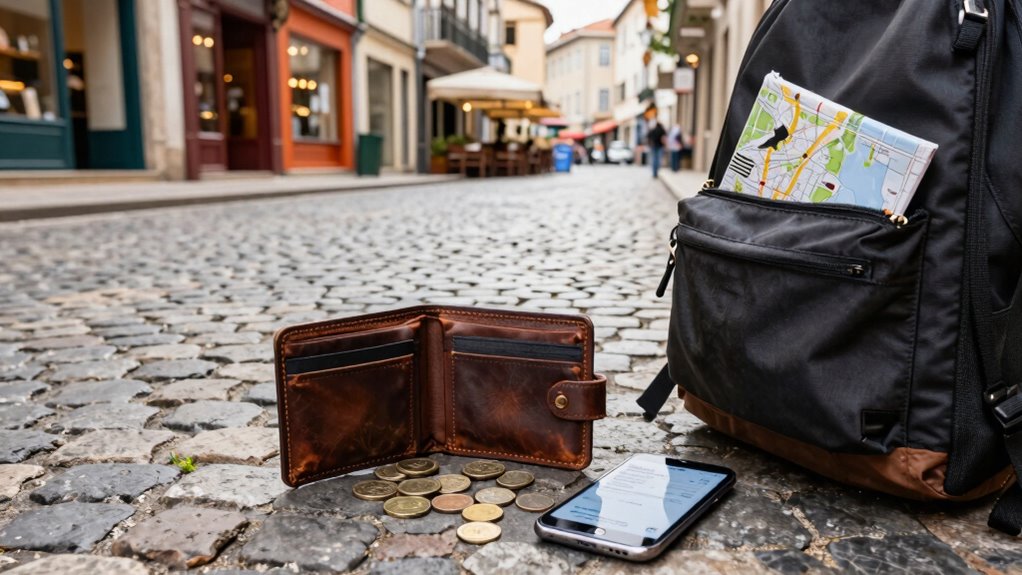
If you lose your wallet abroad, act quickly by contacting your bank or credit card companies to cancel or freeze your cards. Report the loss to local authorities and your embassy for help with documents and official records. Retrace your steps and search thoroughly in recent locations. Consider applying for emergency funds or replacement documents. Staying vigilant for signs of identity theft is essential. Continue exploring options to protect your finances and personal info effectively.
Key Takeaways
- Immediately report the loss to local authorities and your embassy to document the incident and seek assistance.
- Cancel or freeze all bank and credit cards to prevent unauthorized transactions.
- Retrace your steps and thoroughly search nearby areas where you might have lost it.
- Contact your travel insurance for guidance on emergency funds, document replacement, and support services.
- Keep detailed records of reports, police reports, and communications for future reference and claims.
What Are the First Steps to Take Immediately After Losing Your Wallet Abroad?

Losing your wallet abroad can be stressful, but acting quickly can minimize the damage. First, contact your travel insurance provider to understand your coverage and start the claims process. They can guide you on replacement procedures and may assist with emergency funds. Next, report your lost baggage if your wallet was inside it, especially if airlines or transport companies are involved. Notify local authorities to file a police report; this documentation can help with insurance claims and replace IDs. Cancel your credit and debit cards immediately to prevent unauthorized use. Keep a list of important contacts, like your embassy and bank, handy for quick reference. Additionally, consider privacy policies and the use of cookies that can help prevent theft or unauthorized access to your personal information in the future. Taking these steps promptly helps protect your finances and ensures you’re on your way to resolving the situation.
How Do I Secure My Bank Accounts and Protect My Identity?

To effectively secure your bank accounts and protect your identity after losing your wallet abroad, you should act immediately to prevent unauthorized access and potential fraud. Here are four vital steps:
- Contact your bank or credit card companies instantly to report the loss and freeze your accounts.
- Monitor your bank statements and credit reports for suspicious activity.
- Change your online banking passwords and enable two-factor authentication if available.
- Consider placing a fraud alert or credit freeze with credit bureaus to prevent identity theft.
- Utilize a centralized dashboard to track and manage your financial security measures efficiently.
- Stay informed about current U.S. tax laws that could impact your financial recovery and identity protection efforts.
- Be aware of halal financial practices to ensure your financial management aligns with your values and prevents potential complications.
- Remember that maintaining a calm and rational approach can help you make clearer decisions during stressful situations, aligning with the principles of Stoic wisdom.
Taking these actions helps safeguard your personal security and minimizes the risk of unauthorized transactions or identity theft. Acting quickly is essential to maintaining control over your financial information and protecting your identity abroad.

When you lose your wallet abroad, it’s important to know who to report it to first—local authorities or your embassy. Understanding their reporting procedures and timelines can help you act quickly and avoid further issues. Your embassy can also provide valuable support and guidance during this stressful situation. Additionally, knowing the appropriate content formats for reporting lost items can streamline your communication with authorities. Proper documentation methods, such as providing detailed descriptions and official identification, help expedite the process, especially when you are familiar with the regional customs related to lost property. Being aware of the support services offered by your embassy can make navigating this situation more manageable, as they often have resources tailored to lost property procedures and can assist in recovering your belongings more efficiently.
Reporting Procedures and Timelines
If your wallet goes missing abroad, acting quickly is vital. Timely reporting helps prevent identity theft and minimizes financial loss. Here’s what you should do:
- Contact local authorities immediately to file a police report. This document is essential for insurance claims and identity theft protection.
- Notify your bank and credit card companies to freeze or cancel your accounts. Doing this within 24 hours reduces fraud risk.
- Report the loss to your embassy or consulate. They can assist with replacement documents and provide guidance.
- Keep a record of all reports and communications, including police reports and official confirmations, to stay organized and meet any deadlines.
- Consider top rated vacuums of 2024 to ensure your belongings and space are thoroughly cleaned once you recover, promoting peace of mind during stressful times.
- Stay positive and trust in the guidance of your spirituality read, which encourages maintaining a positive mindset during stressful situations. Additionally, understanding the importance of identity theft protection can help you take further steps to safeguard your personal information. Familiarizing yourself with privacy policies can also help you understand how to better protect your data in the future.
Prompt action ensures you’re protected and helps recover your lost luggage and identity.
Embassy Assistance and Support
You should report your lost wallet to both local authorities and your embassy to guarantee complete support. Local authorities can help you file a police report, which is often needed for passport renewal and insurance claims. Your embassy can assist with replacing your passport, which is vital if your ID was in your wallet. They can also provide guidance on travel insurance claims, ensuring you get reimbursed for lost valuables. Additionally, your embassy offers support in emergency situations, such as contacting family or arranging emergency travel documents. Reporting to both ensures you cover all bases, speeding up replacements and minimizing disruption. Keep copies of reports and documents handy—they’ll be essential for your next steps in recovery and travel safety. Be aware that understanding cryptocurrency risks and maintaining proper documentation can help in various recovery scenarios abroad. Moreover, being familiar with local legal procedures can facilitate smoother interactions with authorities and expedite the resolution process. Familiarity with emergency protocols can also make a critical difference during urgent situations, helping you respond effectively. Being aware of local laws and customs can further aid in avoiding complications during your interactions with authorities.
How Can I Find My Wallet or Search the Area Effectively?
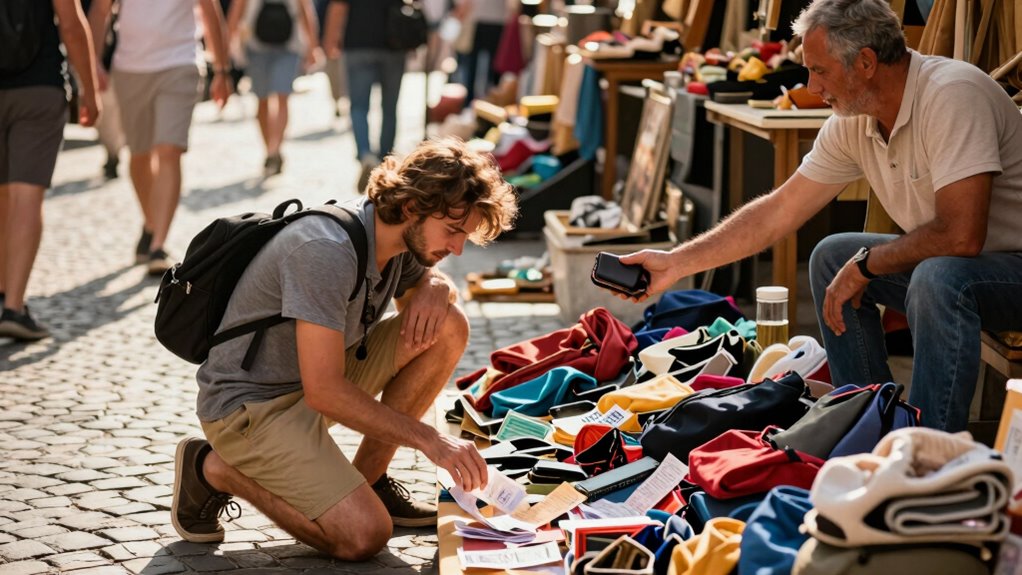
To maximize your chances of finding a lost wallet abroad, start by thoroughly retracing your steps and searching the immediate area where you last had it. Focus on your search area and look carefully around common spots like tables, counters, or seats. To streamline your search, consider these steps:
- Scan the surrounding area methodically, covering every inch.
- Check pockets, bags, and nearby surfaces for the wallet.
- Ask nearby people if they’ve seen it.
- Revisit places you’ve recently been, including restrooms or seating areas.
- Remember that public awareness of lost items can increase your chances of recovery.
Stay calm and attentive during your search. Remember, quick and organized item retrieval increases your chances of success and reduces stress in this situation.
How Do I Quickly Cancel and Replace My Credit and Debit Cards?
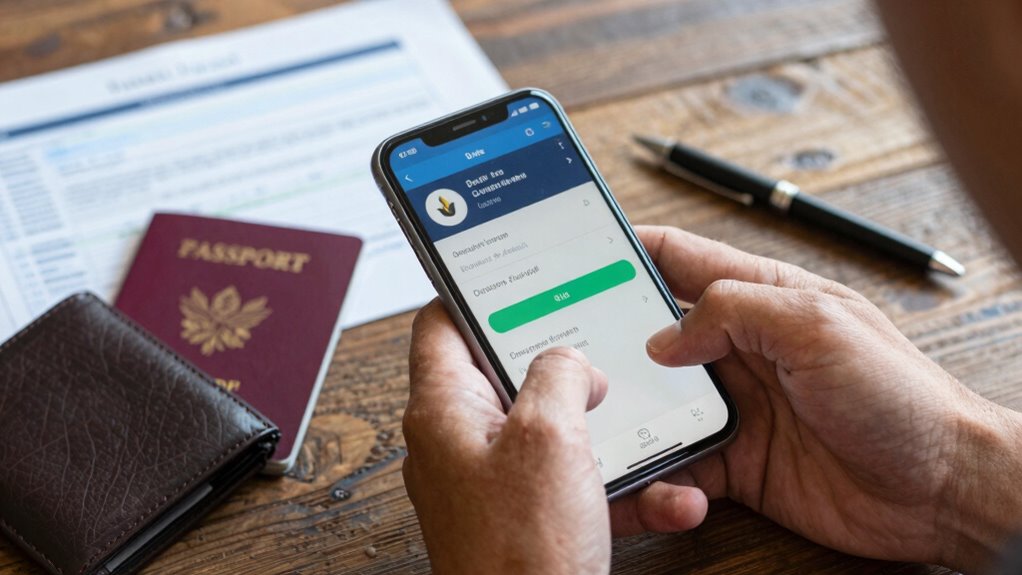
When you realize your wallet is lost abroad, act quickly to cancel your credit and debit cards to prevent unauthorized use. Contact your bank immediately using the emergency contact numbers provided on their website or your bank app. If you have travel insurance, check if they offer assistance with card cancellations or replacements. Keep a record of your card numbers and notify your bank about any lost luggage that may contain alternative payment methods. Many banks can expedite a replacement card, often within a few days, especially if you’re traveling. Some financial institutions also provide virtual cards temporarily. Acting swiftly diminishes the risk of fraud and ensures you can access funds while sorting out your financial situation abroad. Additionally, being aware of your wave and wind options for payment can help you adapt quickly in unfamiliar environments. Familiarizing yourself with Indonesian decor masks and local currency options can also be advantageous in certain regions. Staying informed about the sector performance metrics of local financial institutions might aid in assessing the safety of using certain banking services during your trip. To better understand your financial options, consider utilizing tools like the Easy Conversion Tool for Crores and Popular Units, which can help you quickly convert large numbers and understand financial figures in your local context.
How Can I Get Emergency Funds While Traveling?
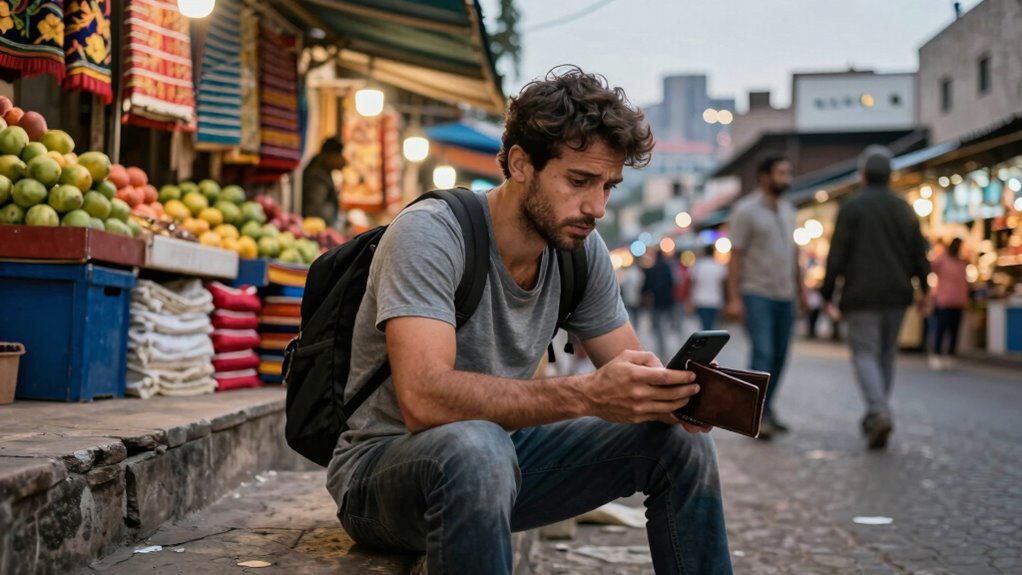
Having access to emergency funds is essential if your wallet goes missing abroad. To get emergency cash quickly, consider these options:
- Contact your bank or credit card issuer for immediate financial assistance or emergency card replacement.
- Use your travel insurance, if you have it, to request emergency cash or reimbursement.
- Reach out to local embassies or consulates—many offer short-term financial assistance or help you access funds.
- Borrow from trusted friends or family back home who can wire money via services like Western Union or MoneyGram.
Having these options ready guarantees you’re not stranded without funds. Always keep a backup plan, like a prepaid card or emergency cash stash, to handle unexpected situations confidently.
How Do I Replace My ID Documents and Travel Papers Abroad?
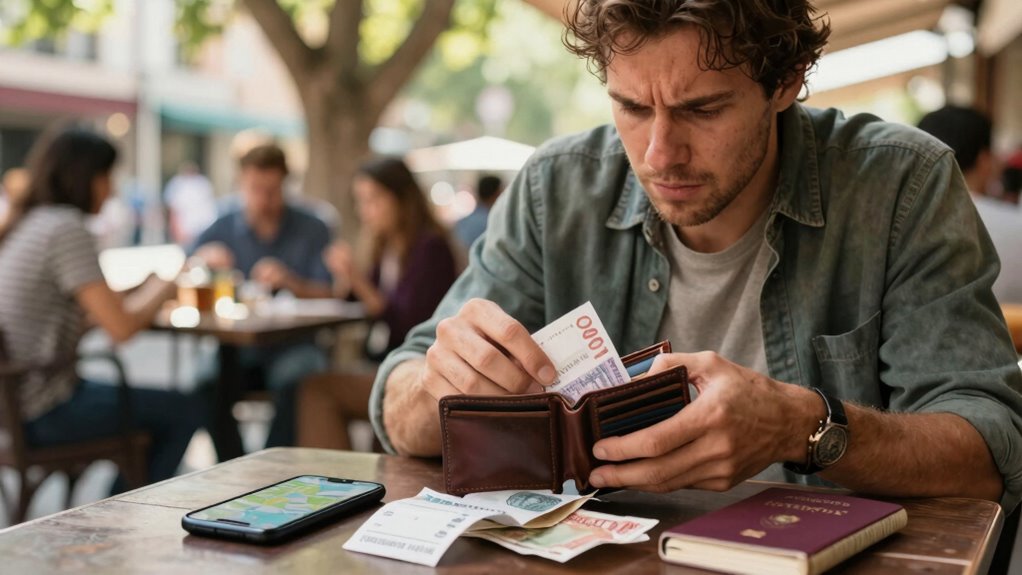
Losing your ID documents and travel papers abroad can be stressful, but acting quickly is crucial. First, report the loss to local authorities to create an official record, which can help prevent identity theft. Contact your country’s embassy or consulate immediately—they can assist with document replacement or issue temporary travel papers. Be prepared to provide proof of identity, such as a photocopy of your lost documents or other ID. If someone else tries to use your documents, swift reporting helps protect you from identity theft. Keep copies of your passport, driver’s license, and travel visas stored separately, so you can expedite the document replacement process. Acting promptly ensures you secure new identification and minimizes the risk of fraud.
How Can I Monitor My Accounts for Fraud and Unauthorized Activity?

After reporting your lost documents and contacting your embassy, it’s important to keep a close eye on your financial accounts to catch any signs of fraud or unauthorized activity. Effective account monitoring helps with fraud detection and can prevent further issues. Here’s what you should do:
- Regularly check your bank and credit card statements for unfamiliar transactions.
- Set up alerts for large or suspicious purchases.
- Use your bank’s online or mobile app to review recent activity frequently.
- Contact your bank immediately if you notice anything suspicious.
Frequently Asked Questions
What Should I Do if My Wallet Contains Multiple Foreign Cards?
If your wallet has multiple foreign cards, act quickly by contacting each bank to report the loss and request card replacement. Keep track of your multiple currencies and inform your banks about your travel plans to avoid any issues. Use emergency contact numbers provided by your banks and consider using a backup payment method. Stay alert for any suspicious activity, and once you secure replacements, update your wallet with new cards.
How Can I Prevent Identity Theft After Losing My Wallet Abroad?
Sure, losing your wallet is a masterclass in trust exercises, but to prevent identity theft, take quick action. Immediately contact your bank for credit monitoring and report the loss to assist with identity verification. Consider freezing your credit reports and changing passwords for online accounts. Stay vigilant, because in this game of chance, your swift response is your best defense against the sneaky thieves lurking behind that lost wallet.
Are There Specific Apps to Track or Lock Lost Cards Internationally?
Yes, many banks and credit card companies offer tracking apps and card lock features you can access internationally. You should download your bank’s app before traveling, enabling you to monitor your accounts and quickly lock your cards if lost. These apps often include real-time alerts and remote locking options, helping you prevent unauthorized transactions. Make sure to familiarize yourself with these tools so you can act swiftly if your wallet goes missing abroad.
What Are the Best Steps if My Wallet Contains Valuable Items Besides Money?
Did you know that nearly 60% of travelers lose more than just money? If your wallet contains valuable items, act quickly to secure everything. Contact your bank for wallet recovery options and cancel cards immediately. Use your travel insurance to cover lost valuables and replace essential documents. Keep a record of serial numbers and photos of valuables to speed up claims. Stay calm, act fast, and prioritize your safety.
How Do I Handle Losing My Wallet in a Non-English Speaking Country?
If you lose your wallet in a non-English speaking country, stay calm and try to communicate your issue. Use translation apps or basic phrases to explain your situation, and seek help from locals or nearby businesses. Contact your embassy for assistance—they can guide you through the process of replacing your documents and offer support. Remember, staying polite and patient helps overcome language barriers and speeds up the help you receive.
Conclusion
Losing your wallet abroad feels like being caught in a storm without a compass, but you can find your way again. Act quickly, stay calm, and follow these steps as your lighthouse guiding you to safety. Remember, most travelers bounce back stronger, just like a ship weathering rough seas and reaching calm waters. With prompt action, you’ll navigate this setback and continue your journey, stronger and more prepared than ever.