Fake help scammers often work in crowds, disguising themselves as trustworthy helpers or officials. They may approach you with uniforms, employ distractions, or work in groups to divert your attention. These scammers use persuasive language and urgent tactics to pressure quick donations or personal info. Staying alert about their signs can protect you, and if you stay cautious, you’ll better understand how to avoid falling for their tricks—keep going to learn more.
Key Takeaways
- Scammers often wear uniforms or official-looking attire to appear trustworthy and gain your confidence.
- They use distractions in crowded areas to approach individuals unnoticed and target specific victims.
- Fake helpers may work in groups, with one creating a commotion while another approaches discreetly.
- They employ persuasive language, claiming to offer free or discounted health devices or services.
- Scammers insert themselves into personal space suddenly, exploiting urgency and emotional appeals to pressure victims.
How Do Fake Help Scammers Approach Crowds?

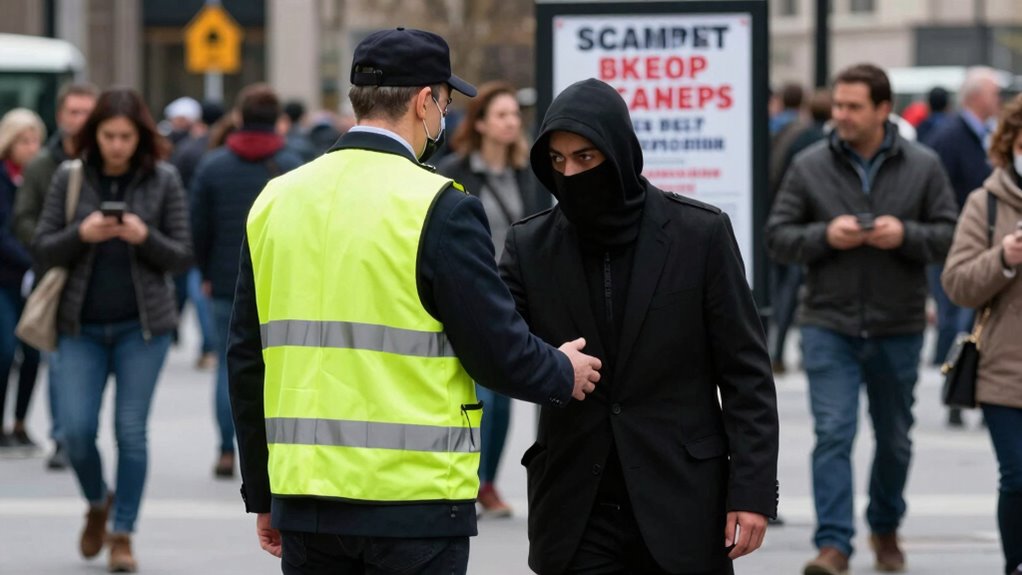
Fake help scammers often target crowds by blending in as genuine helpers. They rely on scammer tactics that make them appear trustworthy, such as wearing uniforms or carrying official-looking materials. To avoid suspicion, they use crowd distractions to divert your attention, making it easier to approach unnoticed. These scammers often work in groups, with one person engaging the crowd or creating a commotion while another targets individuals. They might pretend to offer assistance, ask for directions, or claim to need help themselves, all to gain your trust. Their goal is to insert themselves into your space when you’re least expecting it. By understanding these tactics, you can stay alert and recognize when someone is using crowd distractions to approach you with fake help. Being aware of scammer tactics helps you stay cautious and protect yourself from potential scams. Awareness of crowd dynamics can further enhance your ability to detect suspicious behavior and stay safe in busy areas. Additionally, recognizing distraction techniques that scammers use can be crucial in maintaining your awareness and avoiding falling victim to their schemes. For example, scammers may also use emotional appeals to gain sympathy and lower your guard.
How Can You Recognize Fake Help Scam Signs?

Recognizing scam signs is key to protecting yourself from fake help attempts. Genuine charities, especially trustworthy charities, are transparent about their goals and how donations are used. Be cautious if someone pushes for immediate donations or avoids providing official identification or credentials. Scam awareness helps you spot inconsistencies, like vague explanations or reluctance to share detailed information. Pay attention to how volunteers or organizers present themselves—if they seem overly hurried or evasive, that’s a red flag. Always verify the legitimacy of the organization before offering help. Trustworthy charities typically have official websites and contact info. Additionally, understanding the evolution of portable restrooms can help you recognize reputable organizations involved in event support. Being aware of the types of piercings and their care requirements can also assist in identifying legitimate medical or support personnel at events. Developing scam detection skills can further enhance your ability to distinguish authentic aid efforts from scams and avoid falling victim to fake help scams in crowded environments. Knowing how to identify authentic organizational credentials can also be a valuable part of your scam detection toolkit. Being familiar with projector technology and its features can help you identify legitimate organizations involved in event setups or support.
What Are the Best Ways to Protect Yourself From Fake Help Scams?

To protect yourself from fake help scams, remaining cautious and verifying the legitimacy of anyone asking for donations or assistance is essential. Building community awareness about common scam tactics can greatly enhance scam prevention. Always ask for identification or official credentials before offering help, and trust your instincts—if something feels off, take a step back. Avoid giving cash directly; instead, use secure donation channels or official websites. Keep an eye out for inconsistent stories or pressure tactics that rush your decision. Sharing information about scams within your community helps prevent others from falling victim. Staying informed and vigilant creates a collective shield against fake help scams, making it harder for scammers to succeed and empowering everyone to recognize and avoid these deceptive tactics. Vetted sources and official channels can further help confirm legitimacy. Additionally, understanding scam tactics used by fraudsters can help you better identify and avoid potential threats. Being aware of community-driven efforts to combat scams can also strengthen your defenses against these deceptive schemes, especially when they involve trust and verification practices that protect consumers. Recognizing the importance of family photoshoot fails can also prepare you to stay alert for potential scam scenarios that prey on emotional appeals.
What Should You Do if You Suspect a Fake Help Scam?

If you suspect a help request might be a scam, your first step should be to pause and assess the situation carefully. Don’t rush into giving assistance; instead, rely on community vigilance. Observe the person’s behavior, look for inconsistencies, and consider whether the request feels genuine. Remember, awareness campaigns can help you recognize common signs of fake help scams and guide your response. If something seems off, don’t hesitate to ask for additional proof or contact authorities if necessary. Sharing your suspicions with others can also prevent potential victims. Staying alert and informed is key to protecting yourself and your community from these scams. Trust your instincts, and always prioritize safety over quick help. Additionally, understanding battery capacity and watt-hours can help you better evaluate the legitimacy of technical help claims related to generators or energy devices. Being familiar with precious metals investment options can also help you recognize legitimate financial advice versus scams that may attempt to exploit your interests. Developing media literacy skills is essential for identifying fake online requests and avoiding deception. Moreover, staying updated on common scam tactics can empower you to spot and prevent such attempts before they escalate. Familiarity with large number conversions can also assist in recognizing exaggerated or suspicious claims often used in scams.
How Can Communities Help Prevent Fake Help Scams?
Communities play a vital role in preventing fake help scams by fostering awareness and encouraging vigilance among residents. You can help by sharing information about common scam tactics and warning signs, boosting overall community awareness. Organize local workshops or distribute flyers to educate neighbors on how to recognize and avoid these scams. Encourage residents to report suspicious behavior or scam attempts promptly, creating a safer environment for everyone. Establishing a clear scam reporting system guarantees that authorities can track patterns and respond quickly. When your community stays informed and proactive, it becomes harder for scammers to succeed. Additionally, understanding criminal investigation techniques can aid residents in recognizing when they are being targeted or manipulated. Building community resilience through quality assurance practices ensures that residents are better prepared to identify and thwart scams before they escalate. Engaging in community-based crime prevention initiatives further strengthens collective defenses against such deceptive schemes. Promoting knowledge about wellness technology safety and best practices also empowers residents to avoid falling victim to scams involving health devices. Your involvement helps build a united front against fake help scams, making your neighborhood a more secure place for all residents.
Frequently Asked Questions
Are Fake Help Scams Limited to Specific Locations or Times?
Fake help scams aren’t limited to specific locations or times; you can encounter location-based scams anywhere crowds gather, like busy streets or tourist spots. Time-specific scams also happen during busy events or holidays when scammers exploit the increased chaos. Stay alert regardless of where or when, and be cautious if someone offers unsolicited assistance, especially if they ask for personal information or seem overly enthusiastic to help.
What Psychological Tactics Do Scammers Use to Manipulate Victims?
Scammers use emotional manipulation and authority exploitation to manipulate you. They often pretend to be authority figures or distressed individuals, making you feel responsible or empathetic. You might be pressured to act quickly, believing you’re helping someone in need. By playing on your emotions and pretending to hold authority, they make you lower your guard, increasing the chances you’ll fall for their scam without realizing it.
How Effective Are Reporting Systems for Fake Help Scams?
Reporting systems act like a net catching scammers before they strike again. Their effectiveness depends on how quickly you report and how well authorities respond. Scam detection improves when you alert authorities early, helping prevent others from falling for fake help scams. While no system is perfect, prompt reporting increases the chances of shutting down scammers faster, making the community safer and reducing the chances of future victims.
Can Fake Help Scammers Target Online or Only in Person?
Fake help scammers can target you both online and in person. They often use virtual assistance tactics and online impersonation to deceive you through emails, social media, or messaging platforms. In online impersonation, they mimic trusted sources to gain your trust and extract personal information. Stay vigilant across all platforms, and verify identities before sharing sensitive info, whether you’re approached virtually or face-to-face.
What Legal Actions Are Taken Against Fake Help Scam Offenders?
Think of law enforcement as vigilant guardians in a bustling marketplace, ready to catch the thief. When you report fake help scams, authorities pursue legal consequences like fines, probation, or even jail time for offenders. They investigate, gather evidence, and prosecute under laws against fraud and deception. These actions aim to protect innocent people and maintain order, ensuring scammers face justice for their deceitful actions.
Conclusion
While genuine helpers aim to assist, scammers disguise their intentions behind fake kindness. Trust your instincts and stay alert in crowds—what looks like help could hide a scam. Protect yourself by staying aware and cautious, even when someone seems friendly. By recognizing the signs, you prevent harm and preserve your safety. Remember, in a world full of masks, your awareness is your best shield against the “fake help” trick. Stay vigilant, stay safe.