To take better food photos while traveling without annoying anyone, be discreet and respectful by waiting until the food arrives and choosing quiet times to shoot. Use small, unobtrusive equipment and natural light to keep photos authentic. Be mindful of local customs and fellow diners, avoid blocking views, and keep noise to a minimum. Adding simple props and focusing on angles helps create appealing shots. Keep these tips in mind to capture stunning images without disrupting your surroundings and discover more ways to do so seamlessly.
Key Takeaways
- Be discreet and respectful by asking permission and avoiding disruptive camera noises or flashes.
- Choose quiet, less busy times and locations to photograph food without disturbing others.
- Use compact, unobtrusive equipment and natural light for candid, authentic shots.
- Focus on food details and angles that highlight the dish, keeping equipment and setup simple.
- Limit the number of shots and prioritize patience to prevent annoyance and maintain a positive atmosphere.
How to Respectfully Photograph Food While Traveling
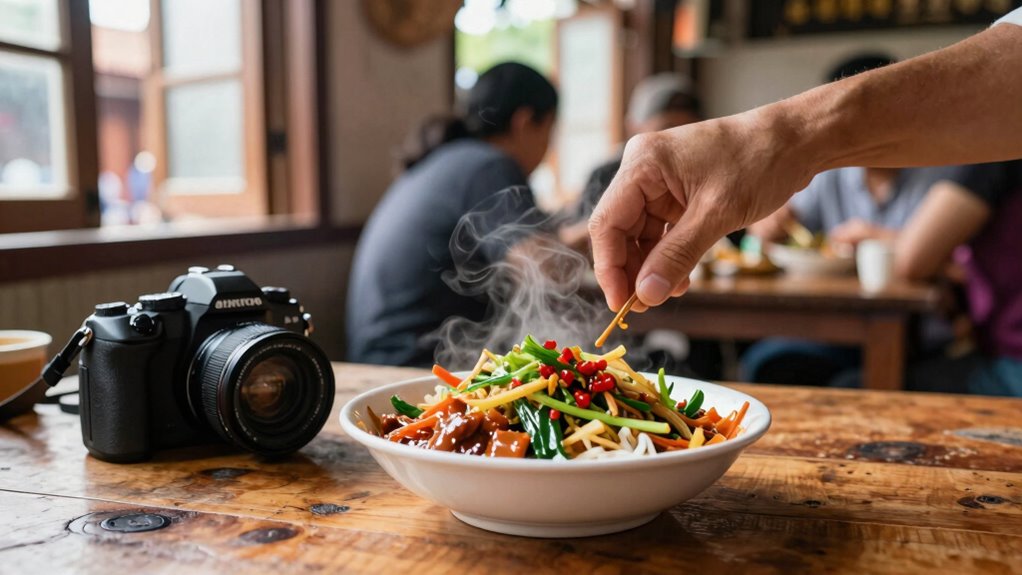
When traveling, it’s important to be mindful and respectful when photographing food. You want to capture stunning images without disrupting the dining experience. Focus on food styling—arrange the dish neatly and remove excess clutter—so your photos look appealing. Use natural lighting techniques, like shooting near a window or outdoors, to highlight colors and textures without using harsh flashes. Avoid blocking servers or fellow diners, and ask permission if necessary, especially in intimate or busy settings. Keep your camera steady to prevent blurry shots, and don’t linger too long at one table. Respecting the restaurant’s atmosphere ensures you can enjoy your meal while still getting great photos. Being considerate helps you preserve good relationships and enhances your travel experience. Additionally, being aware of water conservation practices in restaurants can contribute to more sustainable travel habits. Practicing discreet photography also helps maintain a peaceful dining environment for everyone. Being mindful of restaurant policies regarding photography is essential, as some establishments may have restrictions to consider. Using a compact camera or smartphone can make the process even more unobtrusive and efficient. Remember that understanding the lighting conditions within the restaurant can significantly improve your food photos.
When and Where Is It Okay to Take Food Photos Without Disrupting Others
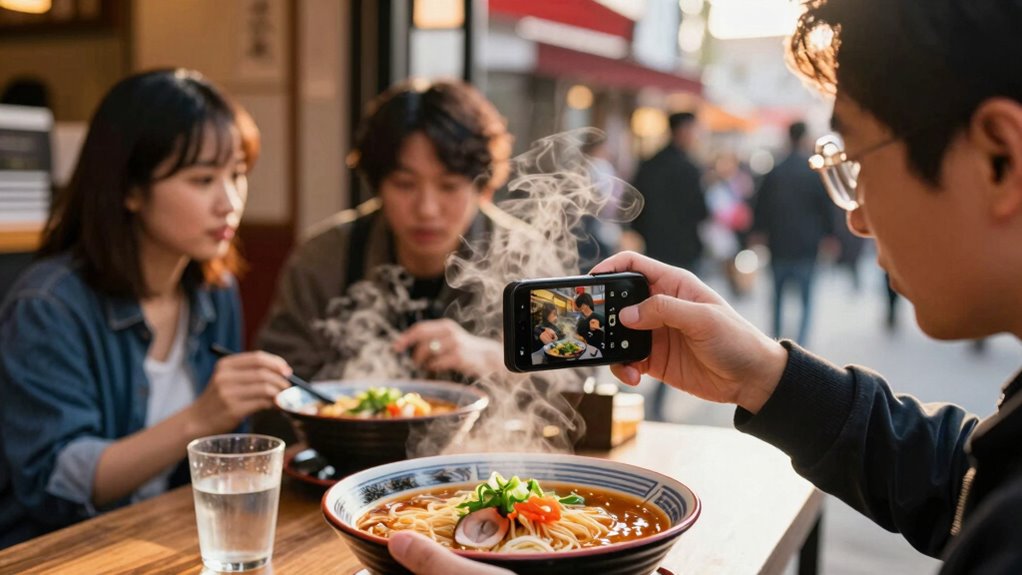
Knowing the right moments and places to photograph food can help you avoid disrupting others’ dining experiences. Respect restaurant etiquette by waiting until your food arrives or asking permission before snapping photos. Choose less busy times, like early mornings or weekdays, to reduce the risk of interrupting the flow of service. Be mindful of cultural sensitivity; in some cultures, taking photos during meals may be inappropriate or offensive. Observe how locals or staff handle similar situations, and follow their lead. Keep your phone or camera discreet, and avoid blocking other diners’ views. Additionally, consider the Free Floating concept to ensure your photography does not interfere with the natural flow of the environment. Being aware of restaurant etiquette and practicing discretion can help you capture beautiful food photos without disturbing others. Consider the timing carefully to ensure your photography aligns with the comfort of others around you. Being aware of the importance of AI ethics in technology and social interactions can also remind you to be respectful and considerate while capturing moments. By being considerate of timing and setting, you ensure your food photos capture the moment without disturbing the enjoyment of others around you.
Choose Discreet Equipment for Natural-Looking Food Photos
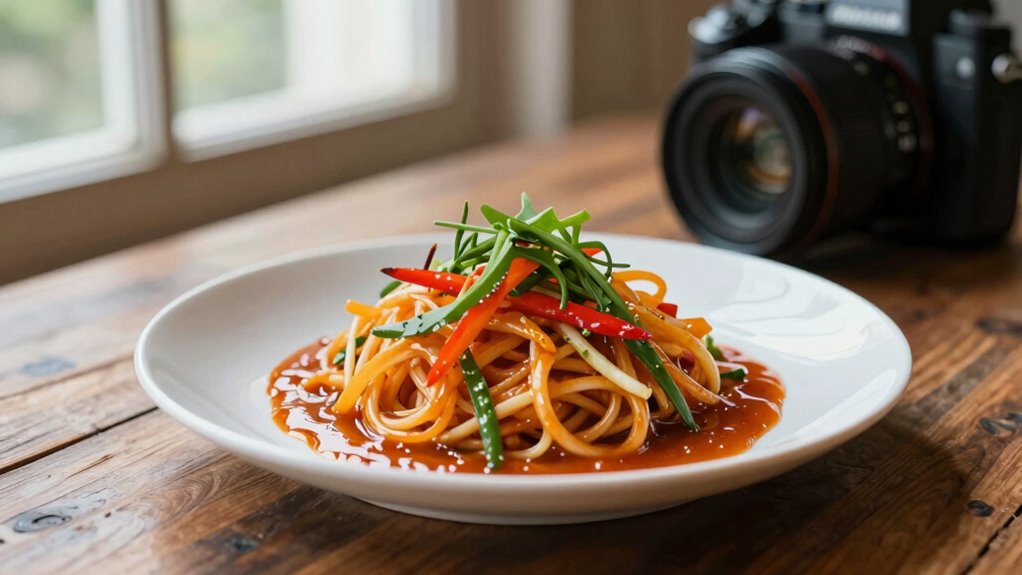
Choosing discreet equipment is vital for capturing food photos that look natural and unposed. Opt for compact cameras or smartphones with quality lenses, so you can blend into your surroundings without drawing attention. Avoid bulky gear that may make others uncomfortable or cause disruptions. Using natural lighting is essential; shoot near windows or outdoors to get soft, even light that highlights the food’s textures and colors. A small, portable reflector can help bounce light into shadows without attracting notice. Keep your equipment simple and unobtrusive, so you can focus on capturing authentic moments without interrupting the flow of your meal or drawing unwanted attention. Being aware of media literacy can help you identify genuine moments and avoid over-posing or staged shots. This approach guarantees your photos feel genuine and unforced, perfectly capturing the essence of your culinary experience.
Capture Food at Its Best With the Right Timing and Angles
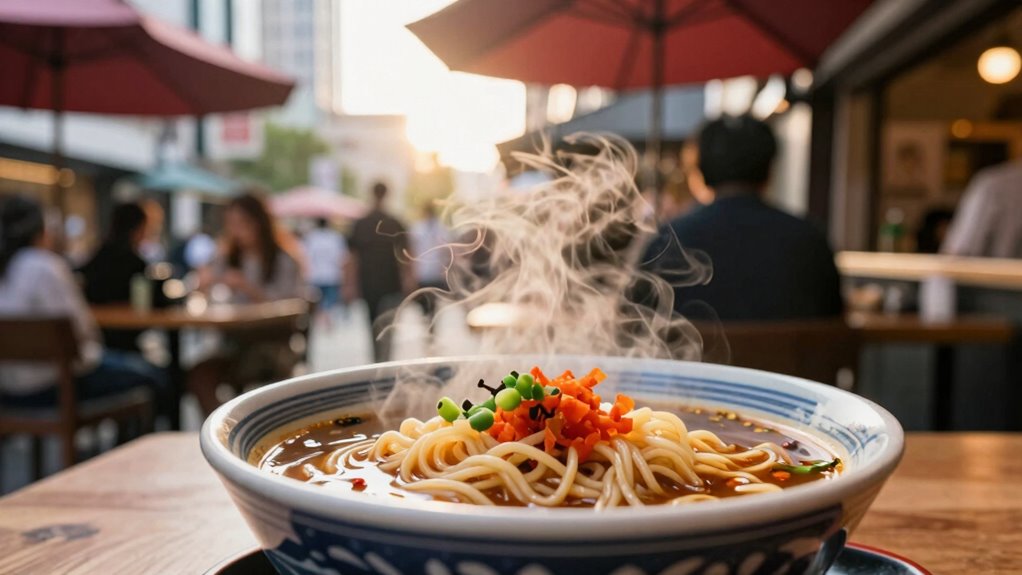
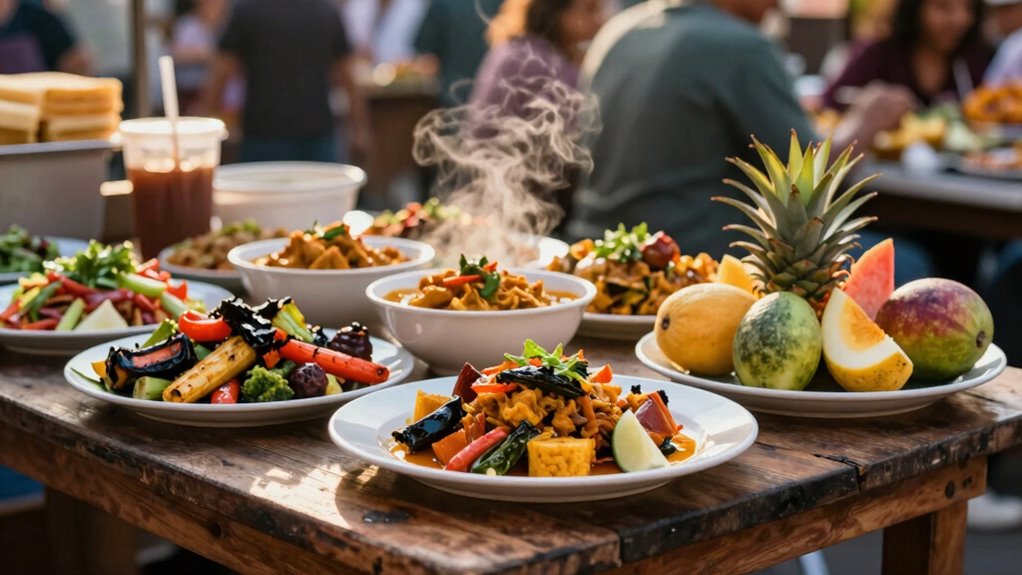
Capturing your food at its freshest and most appealing moment requires paying close attention to timing and angles. Wait until the dish is just served or perfectly plated for ideal food styling, ensuring colors and textures look vibrant. Experiment with different angles—overhead shots work well for flat lays, while a 45-degree angle highlights layers and depth. Use natural lighting whenever possible, applying lighting techniques like diffusing harsh sunlight or bouncing light to reduce shadows and glare. Adjust your position to find the best perspective that emphasizes the dish’s best features. Remember, the right timing and angles can turn an ordinary meal into a mouthwatering photo, showcasing its appeal and making viewers almost taste it.
Be Mindful of Local Norms and Fellow Travelers When Taking Photos
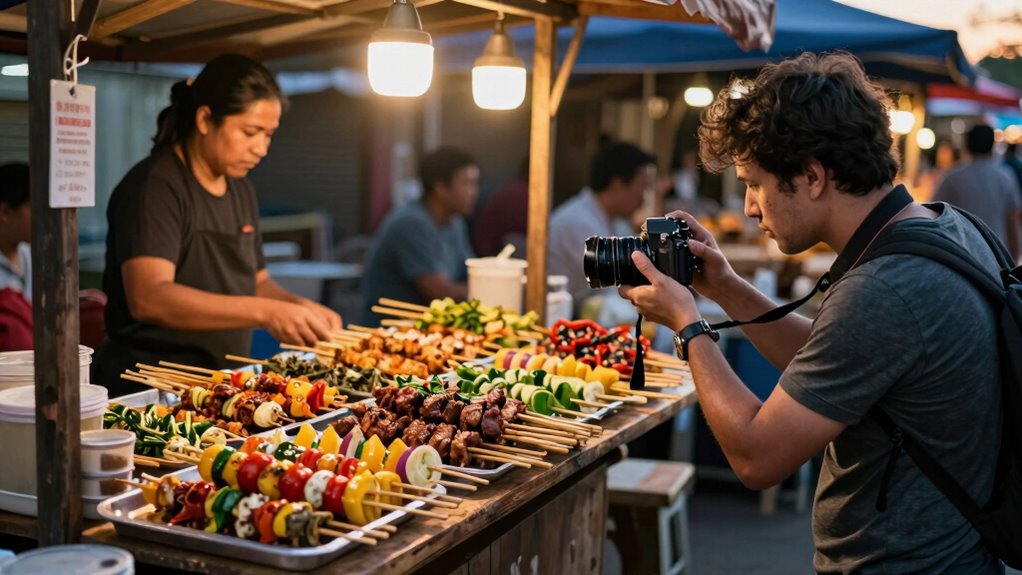
When taking food photos abroad or in busy places, respect local customs and be aware of your surroundings. Avoid using flash photography excessively, as it can disturb others or harm delicate items. Always show consideration for fellow travelers and cultural practices to guarantee everyone enjoys the moment. Being mindful of your environment not only enhances your experience but also aligns with maintaining a respectful and enjoyable atmosphere for everyone involved style and etiquette. Additionally, understanding cultural sensitivities related to photography can prevent unintended offenses and help you better connect with your hosts. Recognizing local norms ensures your photos are respectful and appropriate within different cultural contexts. Incorporating awareness of sound healing science can also remind you to keep noise levels down, ensuring a peaceful environment for everyone. Practicing environmental mindfulness can further enrich your travel experience by fostering greater respect for the local setting and its inhabitants.
Respect Cultural Practices
Being mindful of local norms and fellow travelers while taking food photos shows respect for different cultures and communities. Cultural sensitivity and photography etiquette are essential to avoid offending locals or disrupting the environment. Before snapping, observe how others behave around food and take cues from their actions. If you’re unsure, ask for permission—it’s polite and shows respect. Remember, some places may have restrictions or customs about photographing food or people. To emphasize this, consider this table:
| Respect Cultural Practices | Be Mindful of Local Norms | Avoid Offending Others |
|---|---|---|
| Ask permission first | Follow signage | Keep noise low |
| Respect religious sites | Observe local customs | Be discreet |
| Don’t photograph sensitive subjects | Practice patience | Respect privacy |
Additionally, understanding photography etiquette can help you navigate complex situations more confidently. When dealing with Borderline Syndrom, being patient and considerate of others’ comfort levels is especially important to avoid misunderstandings or causing distress. Recognizing cultural practices related to food and photography can foster better interactions and enrich your travel experience.
Mind Your Surroundings
To show respect for your surroundings, always stay aware of local norms and the presence of other travelers while taking food photos. Being mindful of local customs and restaurant etiquette helps prevent misunderstandings or discomfort. Here are four tips to keep in mind:
- Observe if photography is allowed before snapping pictures.
- Avoid blocking the view or disturbing others at shared tables.
- Steer clear of taking photos during busy or sensitive moments.
- Respect any signs or requests from staff regarding photography restrictions.
- Consider the support breakfast options available at local accommodations to enhance your experience and avoid unnecessary disruptions.
Limit Flash Photography
Using flash while taking food photos can be be disruptive, especially in busy restaurants or cultural settings where bright lights are frowned upon. To respect photo etiquette and your surroundings, avoid using flash photography whenever possible. Instead, rely on natural light or the restaurant’s ambient lighting to capture the dish’s true colors and textures. Flash can cause glare, wash out details, and disturb other diners. Be mindful of local norms—what’s acceptable in one place might be considered rude in another. Keep your camera steady and adjust your settings to maximize available light. Utilizing battery inverter generators can help ensure your devices stay powered for extended photography sessions in remote locations. This approach not only produces better photos but also shows consideration for fellow travelers and staff, making your food photography experience enjoyable for everyone involved. Additionally, understanding local cultural norms can help you navigate appropriate photography behaviors and ensure respectful interactions with locals and dining staff.
Use Subtle Props and Backgrounds to Enhance Your Food Shots

Choosing backgrounds that complement your food makes your photos more appealing without overpowering the dish. Incorporating natural elements like herbs or wooden surfaces adds authenticity and texture. Subtle decorative props, when used thoughtfully, enhance your shot without distracting from the main focus. Additionally, paying attention to emotional well-being and maintaining a positive mindset can help you enjoy the photography process more and reduce stress. Incorporating tracking gear such as discreet GPS or Bluetooth tags can also help you organize and review your travel photos efficiently. Practicing mindful habits during your trip can further support your metabolic health, boosting your overall mood and confidence during your travels.
Choose Complementary Backgrounds
Selecting the right background can make your food photos stand out, but it’s important to keep it subtle enough not to overpower the dish. To achieve this, focus on choosing backgrounds that complement your food through color coordination and texture contrast. Consider these options:
- Use neutral tones or muted colors that highlight your dish’s vibrant hues.
- Incorporate surfaces with subtle textures, like matte wood or soft fabric, to add depth.
- Match the background’s color scheme with the food’s main colors for harmony.
- Select backgrounds with differing textures to create visual interest without distraction.
- Understanding hive stability can inspire the use of natural, organic textures that subtly enhance your presentation.
These choices help your food pop while maintaining a balanced and appealing shot. Keep backgrounds simple and intentional to let your dish shine naturally.
Incorporate Natural Elements
Incorporating natural elements into your food photos can subtly enhance the scene and add a sense of freshness. Use food styling techniques that highlight natural textures and colors, like placing herbs, fruits, or flowers nearby. These elements create a more inviting and organic vibe, making your shot feel lively and authentic. Rely on natural lighting to illuminate your scene softly, avoiding harsh shadows and dullness. Position your food near windows or outdoor settings where natural light pours in gently. Keep backgrounds simple, such as wooden boards or linen cloths, that complement but don’t compete with your dish. By thoughtfully integrating these natural elements, you’ll craft images that feel vibrant, genuine, and appealing—without overwhelming the main focus. Additionally, understanding emerging trends in digital content can help you stay current and creative in your food photography approach. Incorporating Indonesian decor masks or Balinese crafts as subtle background accents can also add cultural richness and visual interest to your food shots. Using natural lighting techniques can further elevate your photos, making them more appealing and professional. To enhance your setup, consider using simple props like rustic utensils or textured linens that complement your natural theme. Experimenting with natural textures like burlap or woven mats can also add depth and warmth to your images.
Use Subtle Decorative Props
Subtle decorative props can especially elevate your food photos by adding visual interest without distracting from the main dish. Effective food styling involves careful prop selection that complements your dish’s colors and textures. To enhance your shots, consider these tips:
- Use small, unobtrusive items like a sprig of herbs or a tiny bowl of sauce to add context.
- Opt for neutral or muted backgrounds that don’t compete with your food.
- Incorporate textured textiles, like a linen napkin, to add depth without overpowering the scene.
- Keep props minimal; the goal is to subtly guide the viewer’s eye toward the dish.
Choosing the right props helps create a cohesive, appealing image while keeping the focus on your food.
Quick Tips for Taking Great Food Photos Without Holding Up the Line
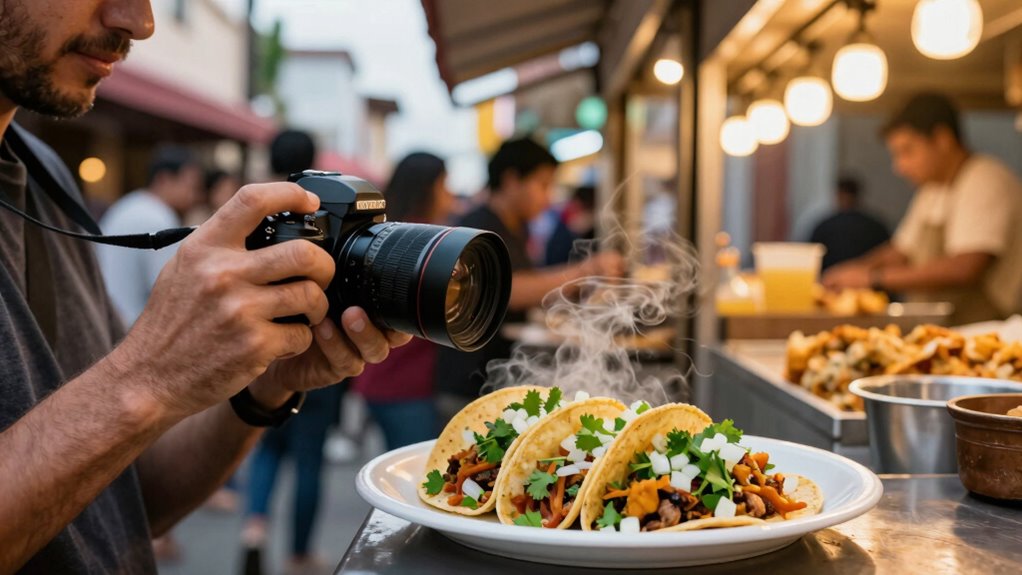
To capture great food photos quickly without holding up the line, focus on preparation and efficiency. Before ordering, visualize your shot and plan your angles. Use simple food styling, like neatly arranged ingredients or a clean plate, to make the dish look appealing fast. Pay attention to lighting techniques; natural light from a nearby window or open space offers the best results. If indoors, position your plate near a bright light source and avoid harsh shadows. Keep your phone or camera ready to minimize delays. Practice quick adjustments, like tap-to-focus and adjusting exposure, to speed up the process. With a little prep and attention to lighting and presentation, you’ll snap impressive food photos without causing delays or frustration.
Edit Your Food Photos Thoughtfully to Make Them Pop
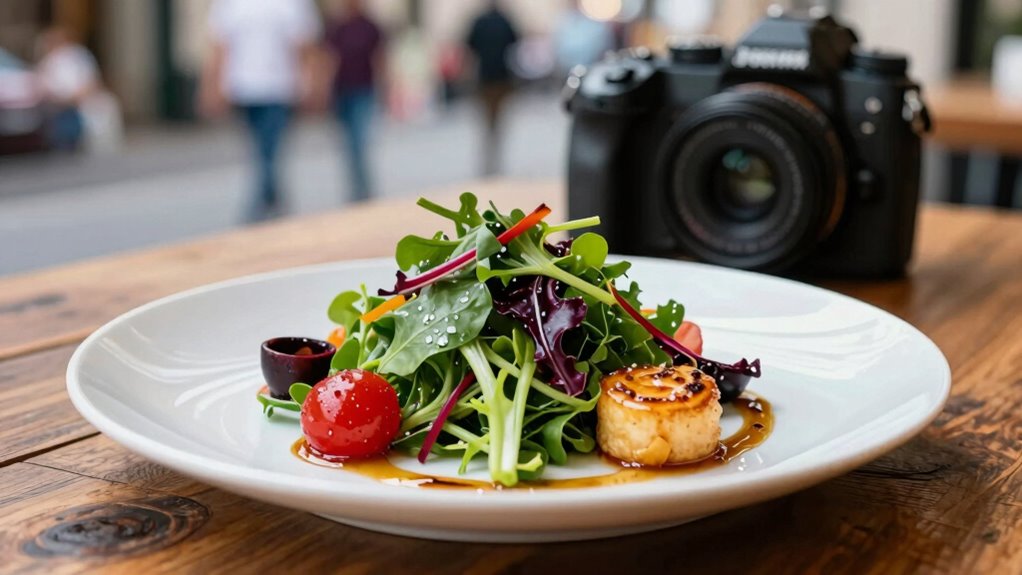
Editing your food photos thoughtfully can turn an already good shot into a stunning one. Focus on enhancing the natural appeal with effective editing techniques. First, adjust brightness and contrast to highlight textures and colors. Second, crop your image to improve composition and emphasize the food. Third, fine-tune the saturation to make the colors pop without overdoing it. Fourth, consider subtle sharpening to bring out details. Remember, good food styling starts before editing, but thoughtful edits can elevate the final image. Use editing tools to enhance the visual appeal naturally, avoiding over-editing that can make photos look fake. With these techniques, your food photos will look more appetizing and professional, capturing the essence of your travel culinary adventures.
Frequently Asked Questions
How Can I Take Appealing Food Photos With Limited Equipment?
You can take appealing food photos with limited equipment by mastering small phone tricks, like adjusting focus and exposure manually. Use natural lighting whenever possible, like taking photos near windows or outdoors, to make your food look fresh and vibrant. Keep your shots simple, capture from flattering angles, and hold your phone steady. These tips help you maximize your phone’s capabilities and make your food look irresistible, even with minimal gear.
What Are Some Polite Ways to Ask Permission Before Photographing Food?
You should make polite requests by approaching people with a friendly smile and saying, “May I take a photo of your food?” or “Would it be okay if I snapped a quick shot?” Following permission etiquette, always respect their response, whether yes or no. Keep your tone courteous and considerate, showing appreciation afterward. This approach guarantees you’re polite, respectful, and avoid causing inconvenience while capturing great food photos.
How Do I Avoid Disturbing Others While Capturing Food Images?
To avoid disturbing others, use discreet angles that don’t block views or invade privacy. Keep your camera low and shoot from a respectful distance to minimize disruption. When needed, make respectful requests for permission beforehand, showing consideration for others’ comfort. By staying mindful of your surroundings and using discreet angles, you can capture beautiful food photos without causing inconvenience or annoyance to those nearby.
Are There Specific Times When Food Photography Is More Acceptable?
You’ll find that early mornings or less busy hours are more acceptable for food photography, especially in social settings. Respect cultural sensitivities by observing local customs and cues—some cultures may find certain times or approaches inappropriate. Wait for natural pauses, like when everyone’s ready, and avoid interrupting conversations or meals. Being considerate helps you capture great shots without disturbing others or crossing social boundaries.
How Can I Enhance My Food Photos Quickly Without Advanced Editing Skills?
Think of your camera as a window into a story; improve your food photos instantly with simple lighting techniques like natural light or a soft reflector. Use prop styling to add context—place utensils, napkins, or fresh herbs around the dish. These small touches and lighting tricks brighten your shot and create visual interest, requiring no advanced editing skills. Just focus on enhancing what’s already there for delicious, eye-catching photos.
Conclusion
So, next time you’re about to snap that perfect shot, remember: patience is a virtue—unless you want to become that tourist who’s more interested in pixels than people. Respect local norms, use discreet gear, and keep your camera’s flash in check. With a little tact and a good eye, you’ll capture stunning food photos without turning your trip into a behind-the-scenes documentary of restaurant chaos. Happy snapping—quietly, of course!