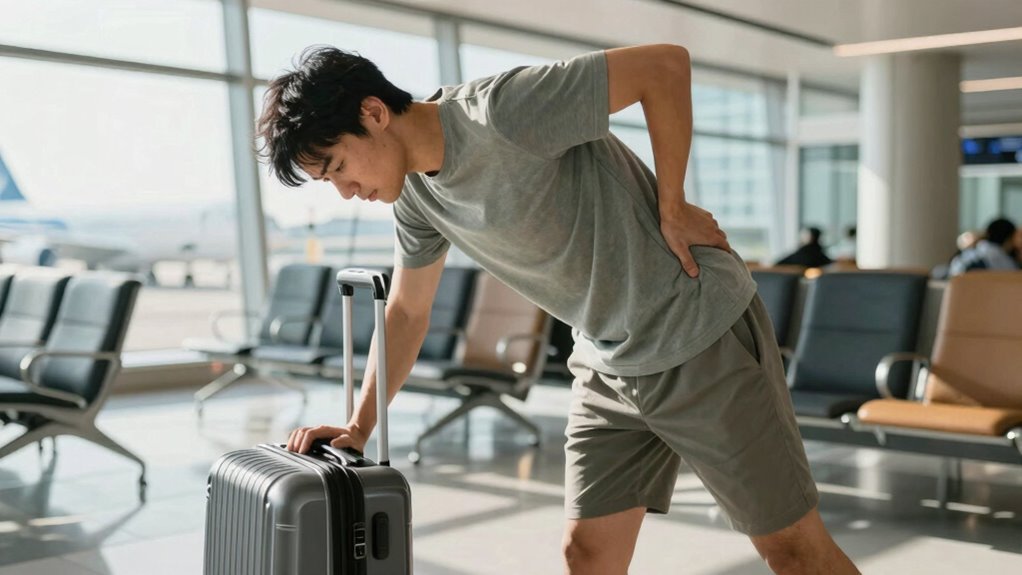

If you’re experiencing back pain while traveling, try a quick 5-minute mobility routine to ease discomfort. Start with gentle spinal twists, shoulder rolls, and hip circles to loosen tight muscles. Always maintain good posture by sitting upright and taking breaks to stretch. These simple exercises help relieve tension, improve flexibility, and prevent stiffness during long journeys. Keep practicing these moves, and you’ll discover even more ways to stay comfortable on the go.
Key Takeaways
- Perform quick mobility exercises like spinal twists and shoulder rolls to release back tension during travel.
- Maintain proper posture by sitting upright with feet flat and using lumbar support to prevent strain.
- Take regular breaks to stretch and move around, promoting muscle relaxation and flexibility.
- Use supportive cushions or adjustable chairs to keep your spine aligned and reduce discomfort.
- Stay hydrated and practice gentle stretches to keep muscles flexible and minimize back pain on the go.
Recognize the Signs Your Back Is Struggling During Travel

When you’re traveling, it’s easy to overlook the signs that your back is starting to struggle. Paying attention to your posture awareness helps you catch early issues before they worsen. Notice if you feel tightness or discomfort in your muscles, especially around your lower back and shoulders. Muscle tension is a clear indicator that your back is under stress, often caused by prolonged sitting or awkward positions. You might also feel stiffness after sitting for a long time or when changing positions. Regularly checking in with how your body feels allows you to identify these signs early. Recognizing these subtle cues can prevent more serious pain later, enabling you to adjust your posture or take quick movement breaks to keep your back healthier during travel. Incorporating body awareness techniques can further help you stay in tune with your body’s needs. Additionally, understanding how contrast ratio and other visual factors affect your environment can help reduce strain on your eyes and overall posture.
Why Travel Causes Back Pain and How It Affects You
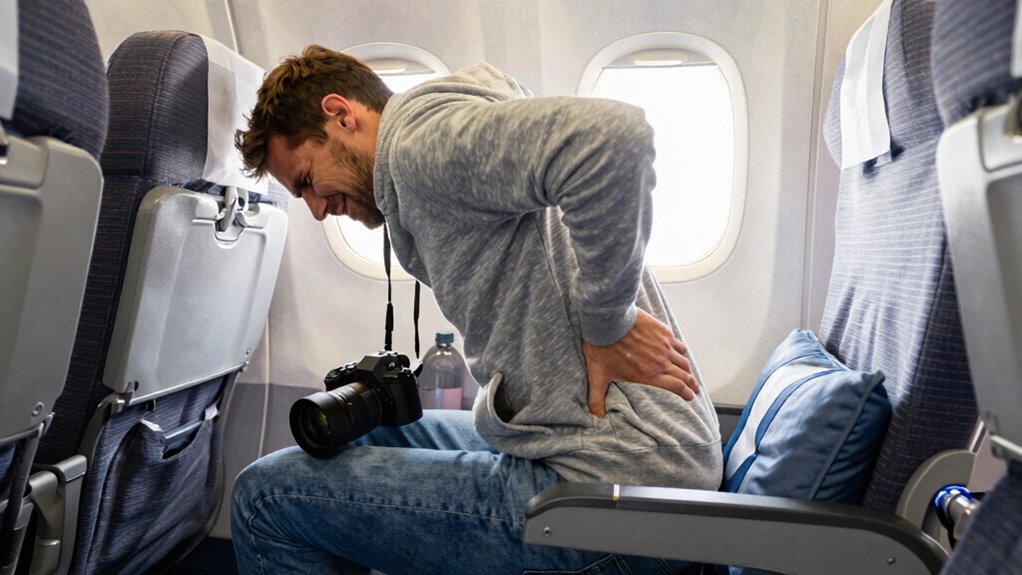
Travel often involves prolonged sitting, awkward positions, and limited movement, all of which put stress on your back. When you don’t practice proper posture correction, your muscles tighten, and your spine strains, leading to discomfort or pain. Sitting hunched over or slouching compresses your lumbar discs and weakens supporting muscles. This persistent strain causes muscle fatigue and tightness, making it harder to maintain good posture over time. Travel also reduces opportunities for muscle relaxation, which is essential for easing tension and preventing stiffness. Without regular movement, your muscles remain tense, increasing the risk of back pain. Recognizing how travel impacts your back emphasizes the importance of maintaining proper posture and incorporating muscle relaxation techniques to reduce discomfort during your journey. Regular movement and stretching can help counteract the effects of prolonged sitting and keep your back healthier during travel. Additionally, understanding LiFePO4 battery maintenance can ensure your devices stay powered, so you can follow your routine without interruption. Incorporating herbal remedies like Valerian or Chamomile can also promote relaxation and relieve tension during travel. Staying mindful of muscle flexibility is essential for preventing stiffness and supporting your back health throughout your trip. Regularly practicing simple mobility exercises can significantly decrease the likelihood of back pain and improve overall comfort.
Quick Mobility Exercises to Relieve Travel Back Pain in 5 Minutes

Quick mobility exercises can offer fast relief. These routines help with posture correction and stretch tight muscles, easing discomfort in just five minutes. Incorporating proper ergonomics into your sitting habits can also prevent back pain during travel. Engaging in these exercises regularly can help maintain flexibility and reduce the risk of discomfort over time. Consistent movement is key to preventing stiffness and promoting better posture during long journeys. Incorporating soundproofing solutions at your travel destination or during rest periods can further enhance comfort and relaxation. Here’s a quick guide:
| Exercise | Benefit |
|---|---|
| Spinal Twist | Releases lower back tension |
| Shoulder Rolls | Relieves upper back tightness |
| Hip Circles | Loosens hips and reduces strain |
| Cat-Cow Stretch | Improves spinal flexibility |
How to Perform These Exercises Correctly for Maximum Relief
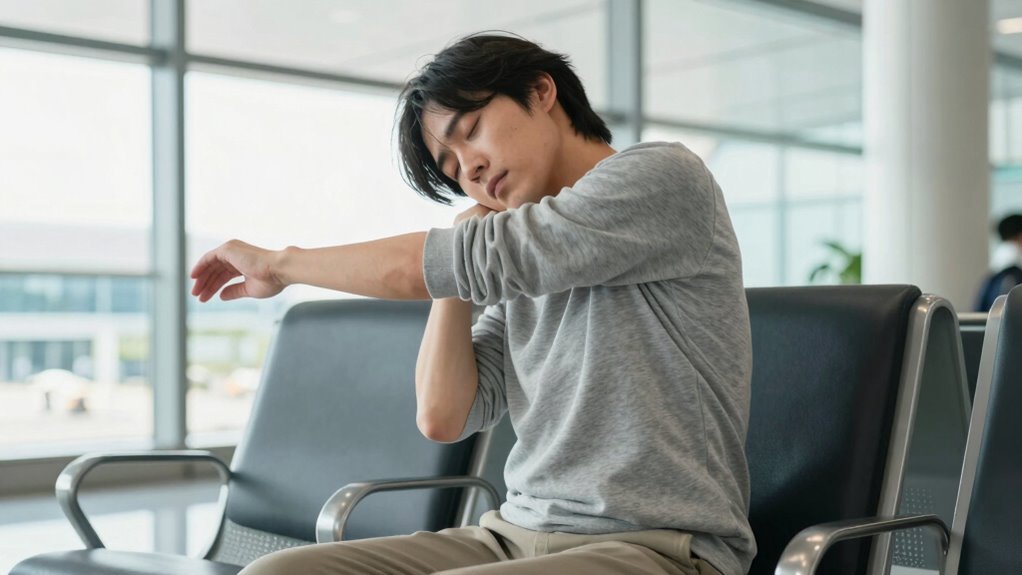
Performing these mobility exercises correctly guarantees you get the maximum benefit and avoid potential strain or injury. Focus on maintaining proper form throughout each movement, such as keeping your back straight and engaging your core. Move slowly and deliberately to ensure you’re executing each exercise effectively. If any stretch feels uncomfortable, adapt it with exercise modifications—like reducing the range of motion or supporting your body with a prop. For example, if a stretch strains your neck, lower the intensity or perform a gentler version. Pay attention to your body’s signals, and never push into pain. Incorporating proper technique during each exercise is essential for safe and effective relief. Additionally, being mindful of body alignment can help prevent compensatory movements that might cause strain. Using correct posture awareness can further enhance your safety and effectiveness during these exercises. Focusing on movement control ensures that you perform each stretch intentionally, reducing the risk of injury. Developing an understanding of muscle engagement can also improve your overall exercise effectiveness. Consistent focus on proper form and appropriate modifications will optimize relief and help prevent new discomfort, ensuring these exercises work to alleviate your back pain while traveling.
Tips for Staying Comfortable and Maintaining Good Posture While Traveling

Maintaining good posture and staying comfortable during travel can considerably reduce back pain and fatigue. Choose ergonomic seating whenever possible, such as supportive cushions or adjustable chairs, to keep your spine aligned. Sit upright with your feet flat on the floor and avoid slouching. Remember to take regular breaks to stretch and move around, which helps prevent stiffness. Hydration tips are essential—drink plenty of water to keep your muscles flexible and reduce fatigue. Limit alcohol and caffeine, which can dehydrate you. Use lumbar support pillows if available, and adjust your seat to maintain natural spinal curves. Staying mindful of your posture and hydration not only enhances comfort but also protects your back during long journeys. Understanding credit card terms can also help you manage expenses related to travel. Additionally, incorporating simple mobility exercises during breaks can further alleviate tension and improve circulation. Incorporating preventative measures like these can significantly enhance your overall travel experience. Paying attention to proper body mechanics during your journey can further reduce strain and discomfort.
Frequently Asked Questions
Can These Mobility Exercises Prevent Future Back Pain During Travel?
Yes, these mobility exercises can help prevent future back pain during travel. By incorporating posture correction techniques and core strengthening, you improve spinal support and reduce strain. Regularly practicing these routines keeps your muscles flexible and engaged, making it easier to maintain proper posture during long trips. Over time, you’ll notice less discomfort, better stability, and a lower risk of back pain when traveling.
Are There Specific Stretches Recommended for Different Types of Back Pain?
Yes, specific stretches can target different back issues. For herniated discs, gentle stretches like child’s pose and knee-to-chest can help alleviate pressure. If you have muscle strain, focus on exercises that gently stretch your lower back and hamstrings, like piriformis stretches. Always listen to your body, and consult a healthcare professional before starting new stretches or exercises to ensure they’re safe for your condition.
How Often Should I Perform These Exercises During Long Trips?
You should perform these exercises at least once every hour during your travel, especially if your trip lasts several hours or more. This exercise frequency helps keep your back mobile and reduces stiffness. If your travel duration is longer, consider doing the routine every 30 minutes. Staying consistent with these movements prevents back pain and improves comfort, making your trip more enjoyable and less tiring.
Can These Routines Be Adapted for Seated or Confined Spaces?
Yes, you can adapt these routines for seated or confined spaces. Seated modifications involve gentle twists, shoulder rolls, and seated leg lifts to keep your back active without standing. Confined space adaptations focus on small, controlled movements like ankle circles or neck stretches. These modifications help reduce back pain and improve mobility during travel, so you stay comfortable even in tight quarters. Just be mindful of your limits and move gently.
Are There Any Signs Indicating I Should See a Doctor Instead?
Think of your body as a finely tuned instrument; if certain warning signals sound, you should seek help. If you notice symptoms like severe pain that worsens, numbness, tingling, or loss of bladder control, these are emergency signs signaling you need a doctor. Don’t ignore persistent or intense discomfort, as these symptoms could be a red flag. Trust your symptom awareness — when in doubt, get checked to keep yourself safe.
Conclusion
By incorporating these quick mobility exercises into your travel routine, you can prevent or ease back pain on the go. Imagine Sarah, a frequent traveler who used these tips and noticed her discomfort vanished after just a few days. Staying proactive and mindful of your posture makes all the difference. So next time you hit the road, take five minutes to move—your back will thank you for it!