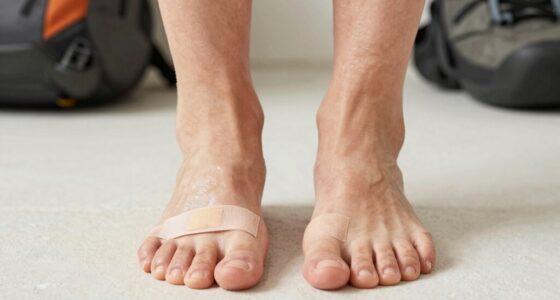

To reset your sleep schedule on the road practically, start by evaluating your current routine and comparing it to your destination’s time zone. Gradually shift your sleep and wake times in 15-30 minute steps daily. Maximize natural light exposure—seek sunlight in the morning to advance your clock or in the evening to delay it—and create a dark, quiet sleeping environment. Incorporate relaxation techniques and consider sleep-supporting supplements. Stay patient and consistent, and you’ll find it’s easier to adapt faster. Keep going to master the process.
Key Takeaways
- Gradually shift sleep times in 15-30 minute increments toward your destination’s schedule.
- Optimize your sleep environment with blackout curtains, earplugs, and familiar comfort items.
- Maximize natural light exposure at appropriate times to regulate your circadian rhythm.
- Practice relaxation techniques like guided imagery or progressive muscle relaxation to fall asleep faster.
- Maintain consistent sleep routines and avoid screens and caffeine before bedtime for better sleep quality.
Why Resetting Your Sleep Schedule Matters When Traveling

When you travel across time zones, your internal clock can become out of sync with the local schedule. This mismatch often leads to jet lag, making it harder to adjust quickly. Without resetting your sleep schedule, you risk ongoing sleep deprivation, which affects your energy, mood, and focus. You might find yourself feeling exhausted during the day or struggling to fall asleep at night. Resetting your sleep schedule helps your body adapt faster to the new time zone, reducing the severity of jet lag. It also minimizes the negative effects of sleep deprivation, so you stay alert and enjoy your trip more. Taking steps to align your internal clock with your destination’s schedule is essential for a smoother, more invigorating travel experience. Understanding your internal clock can help you make more informed adjustments to your sleep habits before and during travel. Additionally, being aware of circadian rhythms can optimize your sleep strategies for better adjustment. Recognizing the importance of sleep hygiene practices can further improve your ability to reset effectively and enjoy a refreshed start upon arrival. Incorporating light exposure strategies can also significantly aid in resetting your internal clock to match your new environment. Being mindful of sleep environment factors such as noise and temperature can further enhance your sleep quality and help your body adjust more quickly.
How to Evaluate Your Current Routine and Destination Time Zone

To effectively reset your sleep schedule, start by evaluating your current routine and understanding the time zone of your destination’s Free Floating schedule. Begin with a routine assessment: note your sleep pattern, wake times, and daily habits. This helps you identify how your current schedule aligns with your travel plans. Knowing your baseline allows you to see how much adjustment is needed. Next, research the destination’s time zone and typical daily rhythms. Comparing your sleep pattern with the new time zone reveals the gaps you need to bridge. Incorporating simple recovery routines like foam rolling can support your overall adaptation process and reduce stress during travel. Understanding the role of circadian rhythms is also crucial, as it helps you tailor your adjustments for more effective realignment. Additionally, being aware of your biological clock can help you optimize your sleep strategies during this transition. Recognizing how light exposure influences your internal clock can further enhance your adjustment efforts. By understanding both your existing routine and the target time zone, you can develop a clear plan for gradual adjustments. This initial evaluation is vital for making the transition smoother and more effective, minimizing jet lag and ensuring better rest upon arrival.
How to Adjust Your Sleep and Wake Times Gradually
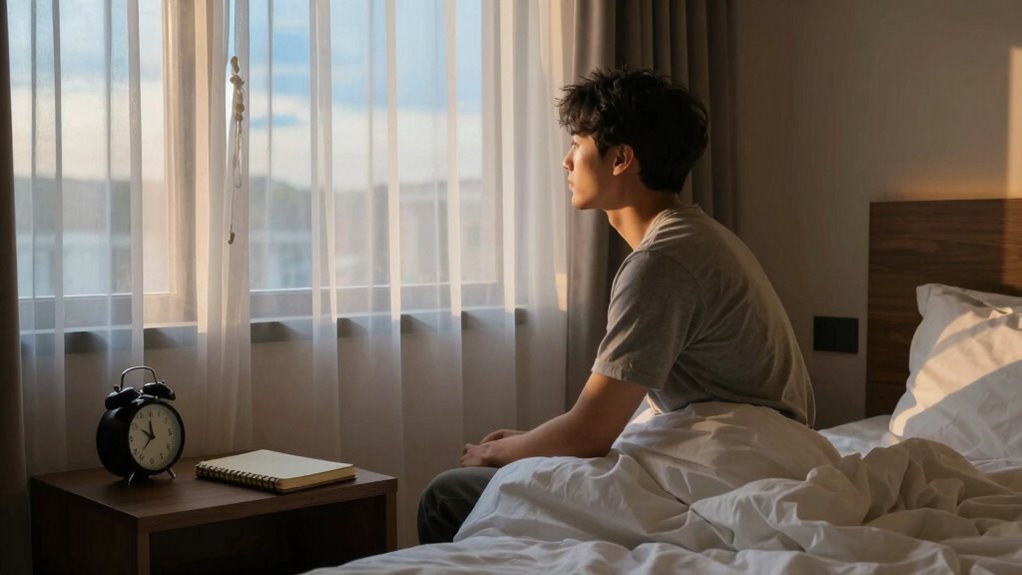
Adjusting your sleep and wake times gradually is the most effective way to minimize jet lag and ease into your new schedule. To do this, focus on improving your sleep hygiene by establishing consistent sleep routines and creating a relaxing environment. Shift your bedtime and wake time in small, 15- to 30-minute increments each day, aligning with your destination’s time zone. This allows your circadian rhythm to adapt more smoothly, reducing sleep disruptions. Avoid drastic changes, which can throw off your body’s internal clock and make adjusting harder. Prioritize regular sleep patterns, limit screen time before bed, and create a dark, quiet space. Incorporating sleep environment optimization can further enhance your ability to adapt quickly. These steps help your body naturally sync to the new schedule, ensuring better rest and a quicker adjustment. Additionally, understanding and managing auditory processing challenges can support a more comfortable sleep environment, especially for sensitive sleepers. Recognizing the importance of circadian rhythm regulation can also aid in making smoother transitions across time zones. Being aware of your body’s natural alertness patterns can help you plan your sleep adjustments more effectively.
How to Use Light Exposure to Reset Your Body Clock

Light exposure is one of the most powerful tools for resetting your body clock and adapting to a new time zone. Your circadian rhythm relies on natural light cues to regulate sleep and wake cycles. To shift your internal clock, get sunlight in the morning if you’re trying to advance your schedule or in the evening to delay it. Using light therapy devices can be especially effective, especially in situations where natural light is limited. Consistent, timed exposure helps signal to your brain that it’s daytime, reinforcing your new schedule. Be mindful to avoid bright light close to bedtime, as it can interfere with melatonin production. Proper light exposure aligns your circadian rhythm with your destination’s time, making jet lag less disruptive and helping you sleep better on the road. Incorporating natural light cues can further enhance your adjustment process by supporting your body’s own circadian regulation. Additionally, managing light intensity and timing with portable devices allows you to customize your exposure even in suboptimal lighting conditions. Understanding your body’s internal clock can help optimize your light exposure schedule for better adaptation. Recognizing the impact of sky conditions and weather can also aid in planning your light exposure for optimal results.
How to Create a Sleep-Friendly Environment on the Road
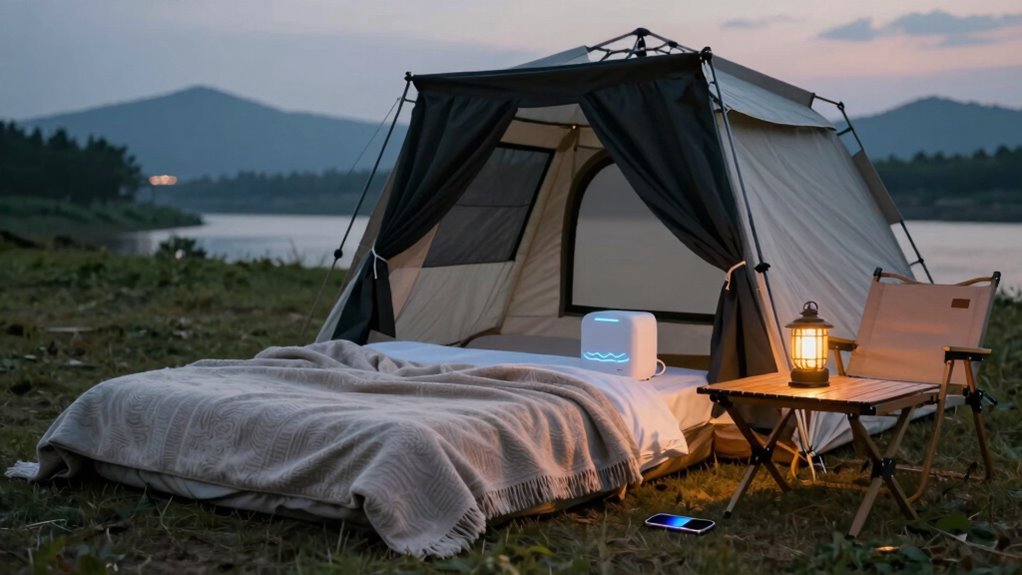
Creating a sleep-friendly environment on the road can substantially improve your chances of getting restful rest despite disruptions outside your control. Focus on maintaining good sleep hygiene by creating a comfortable, dark, and quiet space. To control noise and light:
Creating a restful sleep environment on the road boosts your chances of quality rest despite external disruptions.
- Use earplugs or a white noise machine to block out sound.
- Bring a sleep mask to eliminate light and promote melatonin production.
- Set up your sleeping area with familiar items like a pillow or blanket to enhance comfort.
- Consider home safety products, like secure window coverings or noise-reducing devices, to further improve your sleep environment.
- Being aware of sleep environment factors can help you make adjustments that maximize rest quality during travel.
- Choosing materials with soundproofing qualities can also significantly reduce noise disturbances and enhance sleep quality.
- Understanding the sleep cycle can help you time your rest periods more effectively during travel. Additionally, selecting appropriate sleep environments can make a notable difference in sleep quality while on the move.
These steps help create a consistent sleep environment, even in unfamiliar places. Reducing noise and light disturbances supports your body’s natural sleep cycle, making it easier to fall asleep and stay asleep. Prioritize these strategies for better sleep on the road.
What Relaxation Techniques Help You Fall Asleep Faster?

Struggling to fall asleep quickly while on the road? Relaxation techniques like guided imagery and progressive relaxation can help. With guided imagery, you picture calming scenes—like a peaceful beach or a quiet forest—to distract your mind from stress. This mental escape eases your shift into sleep. Progressive relaxation involves tensing and then relaxing each muscle group, releasing physical tension and signaling your body it’s time to rest. Both methods are effective when your environment isn’t ideal or your mind is racing. Practicing these techniques regularly can improve your overall sleep quality and help you fall asleep faster over time. They help slow your breathing, relax your muscles, and quiet your thoughts, making it easier to drift off faster, even in unfamiliar surroundings. Incorporating relaxation techniques into your routine can enhance their effectiveness and support better sleep habits. Understanding sleep hygiene practices can further optimize your rest, especially when traveling.
Which Supplements Can Support Better Sleep While Traveling?

Travel-friendly melatonin supplements can help regulate your sleep cycle when you’re on the move. Herbal sleep aids, like valerian or chamomile, offer natural support to relax your mind and body. Considering these options can make it easier to fall asleep and stay rested during your trip. Additionally, choosing herbal teas like chamomile or raspberry leaf tea ensures you get effective and safe support for better rest.
Travel-Friendly Melatonin Supplements
When you’re on the go and trying to adjust to a new time zone, melatonin supplements can be a convenient way to support better sleep. Travel-friendly options are compact, easy to pack, and effective when used correctly. To choose the right supplement, consider these factors:
- Dosage – Start with low doses to minimize side effects and find what works for your body.
- Ingredients – Opt for products free from unnecessary additives, keeping dietary considerations in mind.
- Cultural differences – Be aware of supplement regulations in your destination country, as ingredients and quality standards vary.
Selecting the right melatonin supplement helps align your sleep schedule without disrupting your dietary habits or cultural sensitivities, making your journey more comfortable.
Herbal Sleep Aids for Travel
Herbal sleep aids can be a natural and effective option to support restful sleep while traveling, especially when adjusting to new environments and time zones. Herbal remedies, particularly sleep herbs like valerian root, chamomile, and lavender, have calming properties that promote relaxation and help you fall asleep more easily. These herbs work gently on your nervous system, reducing stress and easing your shift into sleep. You might consider taking a herbal tea before bed or using supplements containing these sleep herbs to enhance your sleep quality. Unlike some synthetic options, herbal sleep aids often have fewer side effects and can be a safe way to support your sleep routine on the road. Just ensure you choose high-quality products and follow recommended dosages.
How to Stay Patient and Consistent During Your Sleep Adjustment
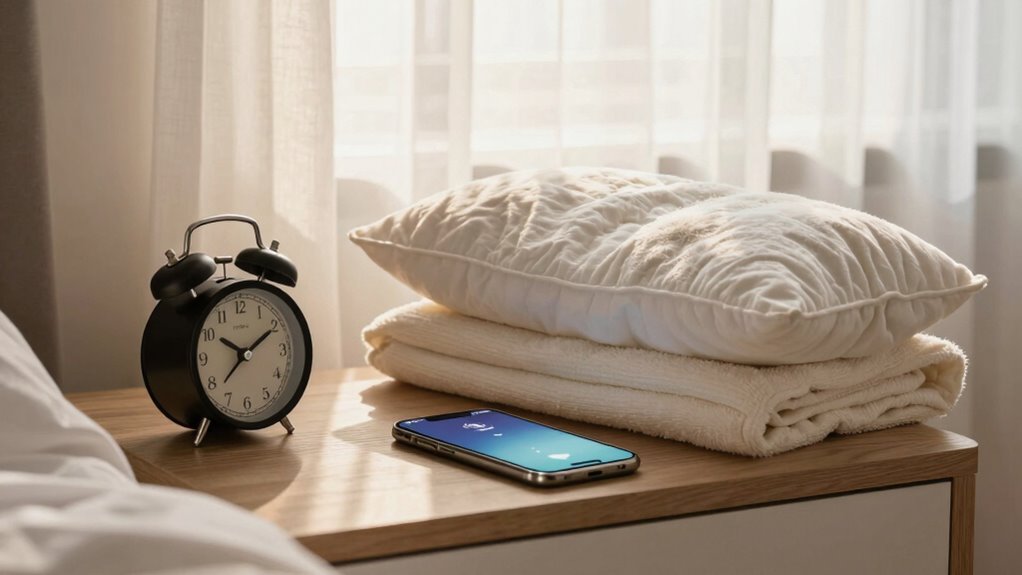
Adjusting your sleep schedule can be tough, especially when personal challenges pop up. Practicing mindful patience helps you stay calm and focused, even when progress feels slow. Keeping consistent routines will reinforce your efforts and make the shift smoother.
Acknowledge Personal Challenges
Changing your sleep schedule can be frustrating, especially when progress feels slow or setbacks happen. Recognizing your personal challenges helps you stay grounded. You might face personal setbacks like irregular work hours or social commitments that disrupt your plan. Emotional hurdles, such as frustration or impatience, can also make progress feel tougher. To manage these, consider these steps:
- Acknowledge setbacks without judgment.
- Adjust your expectations to stay realistic.
- Practice self-compassion when things don’t go perfectly.
Practice Mindful Patience
Practicing mindful patience is essential because sleep adjustments often take time, and progress can feel slow or unpredictable. By staying patient, you build sleep resilience, which helps you bounce back from setbacks and maintain your focus. Remember, small improvements add up, even if they don’t happen overnight. Avoid getting frustrated if your sleep schedule doesn’t shift as quickly as you’d like. Instead, acknowledge your efforts and trust the process. Cultivating mindful patience keeps you grounded and prevents you from rushing or making hasty changes that could backfire. Staying consistent and gentle with yourself ensures you’re more likely to succeed in resetting your sleep pattern. Over time, your persistence will pay off, and restful sleep will become a natural part of your routine again.
Maintain Consistent Routines
Maintaining consistent routines is key to supporting your sleep adjustments, especially when patience is tested. Good sleep hygiene depends on routine consistency, which helps regulate your internal clock. To stay on track, focus on these steps:
- Stick to a regular bedtime and wake time, even on days off.
- Follow a calming pre-sleep routine, like reading or stretching, to signal your body it’s time to wind down.
- Limit exposure to screens and caffeine in the hours before bed to reinforce healthy sleep habits.
Frequently Asked Questions
Can I Reset My Sleep Schedule if I Have Jet Lag?
Yes, you can reset your sleep schedule with jet lag. Focus on good sleep hygiene by maintaining a consistent sleep routine and creating a sleep-friendly environment. Use light therapy by exposing yourself to natural light during the day to help adjust your internal clock. Avoid screens before bed, stay hydrated, and consider taking short naps if needed. These strategies help your body adapt faster and minimize jet lag’s effects.
How Long Does It Typically Take to Adjust to a New Time Zone?
Adjusting to a new time zone usually takes about a day per hour of time difference, but your sleep cycle and circadian rhythm can make it feel like an eternity. You might notice changes within a few days, yet full adaptation can take a week or even two. To speed this up, expose yourself to natural light, stay active during daylight hours, and stick to a consistent sleep schedule.
Are There Specific Foods That Help Improve Sleep During Travel?
You can improve sleep during travel by choosing sleep-inducing snacks like almonds, bananas, or cherries, which contain natural sleep-promoting compounds. Herbal teas such as chamomile, valerian root, or lemon balm are also great options to relax your mind and body before bed. Avoid caffeine and heavy meals close to bedtime. Incorporate these foods into your routine to help you rest better and adapt more quickly to new time zones.
Is It Better to Nap or Stay Awake When Adjusting to a New Schedule?
You should prioritize power napping over staying awake when adjusting to a new schedule. A quick 20-minute nap can boost your alertness and help reset your internal clock, making it easier to adapt. Use alertness strategies like exposure to natural light and hydration to stay awake if needed. Combining power napping with these strategies helps you manage jet lag effectively and maintain your energy levels.
How Do Medications Impact Sleep Schedule Adjustments on the Road?
Think medications won’t mess with your sleep? Think again. Medication interactions can disrupt your sleep schedule more than jet lag, making sleep aid effectiveness unpredictable. Some medicines might make you drowsy, while others keep you wired, complicating your efforts to reset your sleep pattern on the road. Always check with your doctor about how your meds could affect your sleep, and never rely solely on sleep aids for adjustment.
Conclusion
So, there you have it—your foolproof plan to conquer jet lag and sleep like a pro on the road. Just remember, patience is key, and your body probably won’t love you for messing with its schedule. But hey, who needs consistent sleep anyway? With a little effort and a dash of stubbornness, you’ll be snoozing soundly no matter what time zone you’re in. Sweet dreams—you’ve earned them!