
To stay blister-proof on your big walk, start by choosing well-fitting, supportive shoes with breathable materials and wear moisture-wicking socks to keep your feet dry. Break in new shoes beforehand, use blister barriers like moleskin or powders, and keep your feet clean and moisturized. Adjust your walking style to reduce friction and pack essentials like tape and extra socks. If you want to master these tips and walk pain-free, continue with the expert advice below.
Key Takeaways
- Choose well-fitting, supportive footwear with breathable materials and proper lacing to minimize friction and movement.
- Wear moisture-wicking, seamless socks that fit snugly to keep feet dry and reduce chafing.
- Apply blister barriers like moleskin or lubricants to high-friction areas before activity.
- Keep feet dry, maintain good hygiene, and regularly inspect for early signs of irritation or hotspots.
- Prepare with routine foot care, including moisturizing, trimming nails, and addressing any discomfort promptly.
What Causes Blisters When You Walk and How to Prevent Them

Blisters typically form when friction between your skin and your footwear causes the outer layer to break down. This repeated rubbing creates a pocket of fluid beneath your skin, often starting at the foot pad. To prevent this, you can use a blister barrier like moleskin or specialized pads to reduce direct contact and friction. These barriers act as a cushion, absorbing some of the pressure and preventing the skin from rubbing raw. Keeping your feet dry and ensuring a snug but not tight fit also helps minimize movement that causes blisters. Pay attention to areas prone to chafing, and consider applying lubricants or powders to reduce friction further. Additionally, understanding how Free Floating can impact your walking experience may help you choose footwear that minimizes unnecessary movement and friction. Recognizing foot biomechanics can further inform your choice of supportive footwear and prevent discomfort. Being aware of proper footwear fit can also help you avoid areas of excess pressure that lead to blisters. By understanding how friction affects your foot, you can take simple steps to keep blisters at bay.
How to Choose Shoes That Help Prevent Blisters
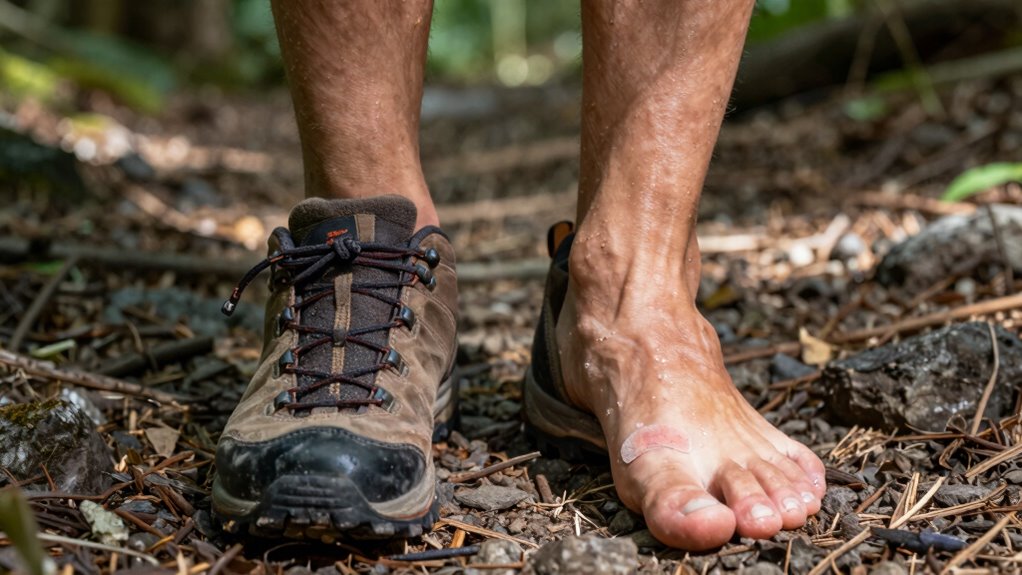
Choosing the right shoes is key to preventing blisters, starting with ensuring they fit well and don’t rub your skin raw. Pay attention to the materials—breathable and smooth linings reduce friction, while supportive soles keep your feet stable. Prioritize shoes with adequate support and cushioning to keep your feet comfortable on long walks. Additionally, selecting shoes that incorporate proper sole construction can help distribute pressure evenly and minimize hot spots that lead to blisters.
Proper Fit Matters
Ever wonder why your shoes sometimes cause painful blisters? It’s often because they don’t fit properly. Shoes that match your foot arch and fit snugly without squeezing are key. When trying on shoes, focus on these points:
- Right size and width to prevent unnecessary rubbing
- Secure laces that keep your foot stable without tightness
- Proper heel fit to avoid slipping and friction
A shoe that fits well around your foot arch helps distribute pressure evenly. Loose shoes cause friction, while tight shoes pinch and create hot spots. Adjust your shoe laces so they hold your foot firmly in place without cutting off circulation. Remember, a proper fit minimizes movement inside the shoe, reducing blister risk and making your walk more comfortable. Ensuring the right shoe materials can also improve comfort and prevent blisters. Additionally, choosing shoes with proper cushioning can absorb shock and further reduce blister formation.
Material Selection Tips
Selecting the right materials for your shoes can make a significant difference in blister prevention. Opt for shoe materials that are breathable and flexible, such as mesh or lightweight leather, which help reduce friction and moisture buildup. Avoid stiff, rigid materials that can cause rubbing and pressure points. When choosing socks, focus on sock fabrics like moisture-wicking synthetics or merino wool, which keep your feet dry and minimize chafing. Seamless or flat-seam socks can also prevent hotspots. Prioritize shoe materials that fit well and move with your foot, reducing the risk of blisters during long walks. Incorporating appropriate footwear materials that adapt to your foot’s movements can further enhance blister prevention. Using moisture management techniques in your footwear choices helps keep your feet dry and comfortable. Additionally, selecting shoes with proper fit and design tailored to your activity level can significantly decrease blister formation. Being mindful of foot biomechanics can also help you choose footwear that minimizes strain and friction, further preventing blisters. Choosing shoes with cushioning and support can also provide extra comfort and reduce pressure points. Combining the right shoe materials with suitable sock fabrics creates a comfortable environment, helping your feet stay blister-free even on the longest days.
Support and Cushioning
Proper support and cushioning are essential for preventing blisters, especially during long walks or extended periods on your feet. Look for shoes with good arch support to stabilize your feet and reduce friction. Gel cushioning absorbs shock and adds comfort, preventing hotspots that cause blisters. Imagine stepping into shoes that mold to your foot like a gentle hug, providing steady support without pressure points. Visualize a soft gel layer that cushions every step, reducing impact and friction. Consider shoes with:
- Firm arch support that keeps your foot aligned
- Thick gel inserts that dampen shock
- Padded collars and insoles for extra comfort
Choosing footwear with these features helps distribute pressure evenly, minimizes rubbing, and keeps your feet comfortable during your big day. Proper support and cushioning are your best defense against blister formation. Additionally, ensuring the right piercing care and hygiene can prevent irritation that might lead to discomfort during extended activity. Paying attention to foot health overall can further enhance comfort and prevent issues. Being mindful of proper footwear fit can also significantly reduce the risk of blisters and foot discomfort.
Break in New Shoes Before Your Big Day

Before your big day, it’s essential to break in your new shoes to prevent blisters and discomfort. Start with shoe stretching by wearing them around the house for short periods, which helps loosen tight spots. Focus on areas like the toe box and heel, where pressure often builds. Incorporate shoes with good arch support or add insoles to keep your feet comfortable during extended wear. Proper arch support reduces strain and prevents friction that can cause blisters. Avoid rushing the process—wear your shoes gradually, increasing duration each day. This prep allows the material to mold to your feet, reducing hotspots. Employing AI-powered data analytics can help you track your foot’s response and optimize your break-in routine. Additionally, selecting shoes made from breathable materials can enhance comfort and prevent excessive sweating that may lead to blisters. Choosing shoes with moisture-wicking properties can further help keep your feet dry and comfortable during long periods of wear. Using proper footwear fit techniques ensures your shoes are neither too tight nor too loose, which can significantly impact blister formation. To further improve comfort, consider using shoe stretchers to gently expand tight areas without damaging your footwear. Taking these steps ensures your shoes fit perfectly and your feet stay blister-free, ready for the big day.
Keep Your Feet Dry With Moisture-Wicking Socks

Choosing the right moisture-wicking socks starts with material, as this directly affects how well your feet stay dry. A proper fit is also vital, preventing excess movement that can cause blisters. When both factors align, your feet stay comfortable and blister-free during long walks. Additionally, understanding the chemical properties of fabrics can help you select materials that effectively wick moisture away from your skin. Recognizing the fiber composition of your socks can further optimize moisture management and durability. Knowing the performance characteristics of different fabrics can also guide your choice toward more durable and efficient moisture-wicking options. Exploring floating on water concepts, like water resistance and breathability, can further enhance your sock selection for various conditions. Being aware of breathability levels in fabrics can improve airflow and reduce sweat buildup during extended activities.
Material Matters Most
Keeping your feet dry is essential for blister-proof walking, and the right socks make all the difference. The key lies in choosing sock materials that wick moisture away from your skin, keeping your feet comfortable and dry throughout your hike. Look for socks made from synthetic fibers like polyester or nylon, which excel at moisture management. Avoid cotton, as it traps sweat and increases friction. Additionally, consider how sock materials interact with your shoe uppers; breathable fabrics work best with lightweight, well-ventilated shoes. Imagine:
- A snug fit that moves seamlessly with your foot.
- Soft, smooth fabric preventing chafing.
- Moisture-wicking fibers pulling sweat away from your skin.
Choosing the right socks isn’t just about comfort—it’s about preventing blisters before they start, ensuring your feet stay dry and happy on even the longest walks. Moisture management is crucial to maintaining dry feet and avoiding discomfort during extended hikes. Proper sock material can also help prevent blisters, especially during long durations of walking. Incorporating moisture-wicking socks can also contribute to reducing friction, which is a key factor in blister formation. Selecting socks with appropriate fabric blends enhances overall moisture control and comfort.
Proper Fit Ensures Comfort
A proper fit is essential for moisture-wicking socks to keep your feet dry and comfortable. When socks fit well, they support your foot arch, reducing unnecessary movement that can cause friction and blisters. Make sure your shoes aren’t too tight or too loose, as improper shoe lacing can lead to hotspots and rubbing. Adjust your lacing to secure your heel and midfoot, preventing slipping inside the shoe. Pay attention to the fit around your toes—there should be enough room to wiggle without excess space. Well-fitted socks and shoes work together to keep moisture away from your skin, reducing the risk of blisters and discomfort during long walks. Properly fitted footwear is your best defense for blister-proof walking. Aromatherapy can also play a supportive role in soothing tired feet and reducing discomfort. Additionally, ensuring your footwear provides adequate supportive features can further prevent blisters and foot fatigue.
Use Tapes and Powders to Protect Your Feet From Friction

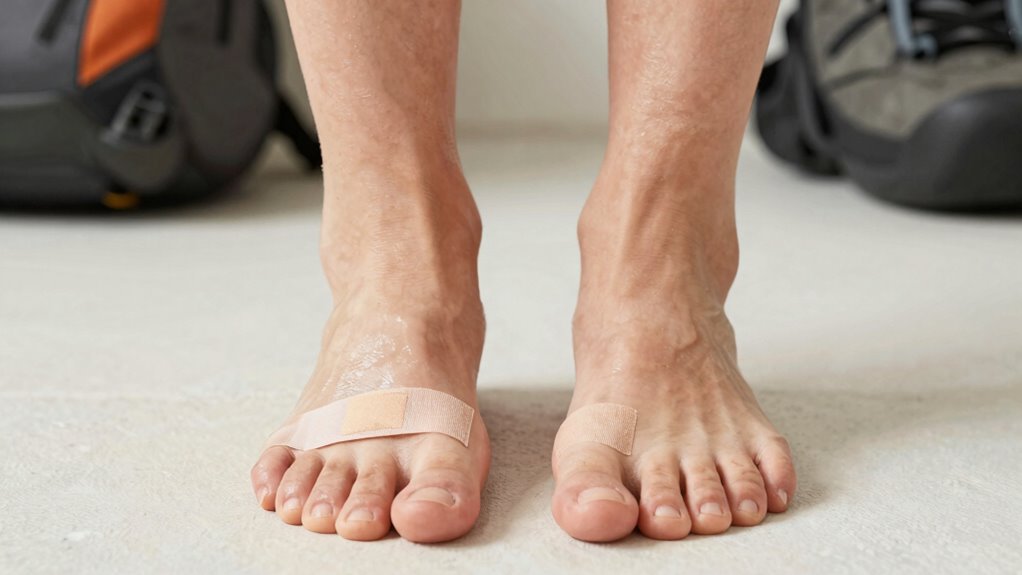
To prevent blisters caused by friction, applying tapes and powders to your feet can be highly effective. Tape protection helps reduce skin movement, minimizing blister risk during long walks. For powder application, choose a talc or antiperspirant to keep feet dry and reduce moisture that causes rubbing. Before putting on your shoes, consider these steps:
Protect your feet from blisters with tape and powder for a dry, comfortable walk.
- Wrap problem areas with medical tape to create a barrier against friction.
- Dust your feet with powder to absorb sweat and keep skin dry.
- Focus on common hotspots like heels, toes, and the ball of your foot for targeted protection.
- Using specialized foot powders formulated for athletic use can provide extra moisture control and comfort during extended wear.
Imagine smooth, dry skin gliding inside your shoes, with tape acting like a shield and powder preventing moisture buildup. These simple steps can keep your feet blister-free on even the longest days.
Skin Care Tips to Keep Your Feet Blister-Free

Proper skin care is essential for preventing blisters, especially when you’re on your feet for extended periods. Regular foot massage can improve circulation and keep skin supple, reducing the risk of friction and hotspots. Be gentle but thorough, focusing on areas prone to rubbing. Toenail care also plays a vital role; keep nails trimmed straight across to prevent pressure points and ingrown nails that can cause blistering. Moisturize daily to maintain soft, resilient skin, but avoid applying lotions between toes, as excess moisture can increase friction. Check your feet regularly for signs of irritation or redness, and address any issues promptly. These simple skin care habits help keep your feet healthy, resilient, and blister-free during your busiest days.
Walk Smart: Adjust Your Technique to Reduce Friction
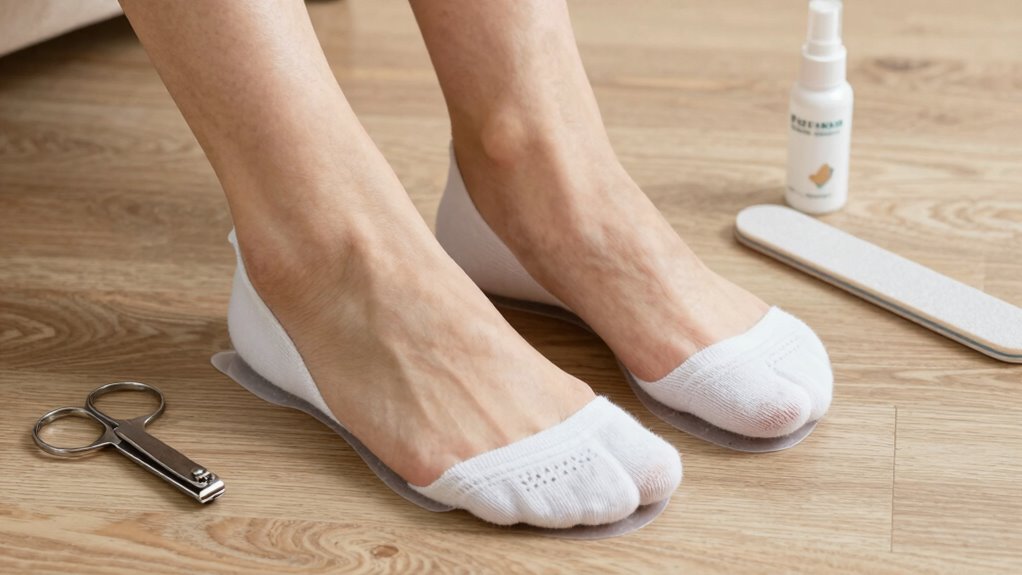
Adjusting your walking technique can considerably decrease friction and prevent blisters. Focus on a natural foot rolling motion, where your heel strikes first, then smoothly shift to the toe. Pay attention to your stride adjustment—shorten your steps if you notice overstriding, which creates unnecessary rubbing. This helps distribute pressure evenly and minimizes hotspots.
Adjust your walking style to reduce friction and prevent blisters by maintaining a smooth, natural stride.
Imagine:
- Your heel gently touching down, rolling smoothly forward
- Your foot maintaining a relaxed, fluid motion with each step
- A balanced stride that feels comfortable and controlled
Pack the Essentials to Prevent Blisters on the Go
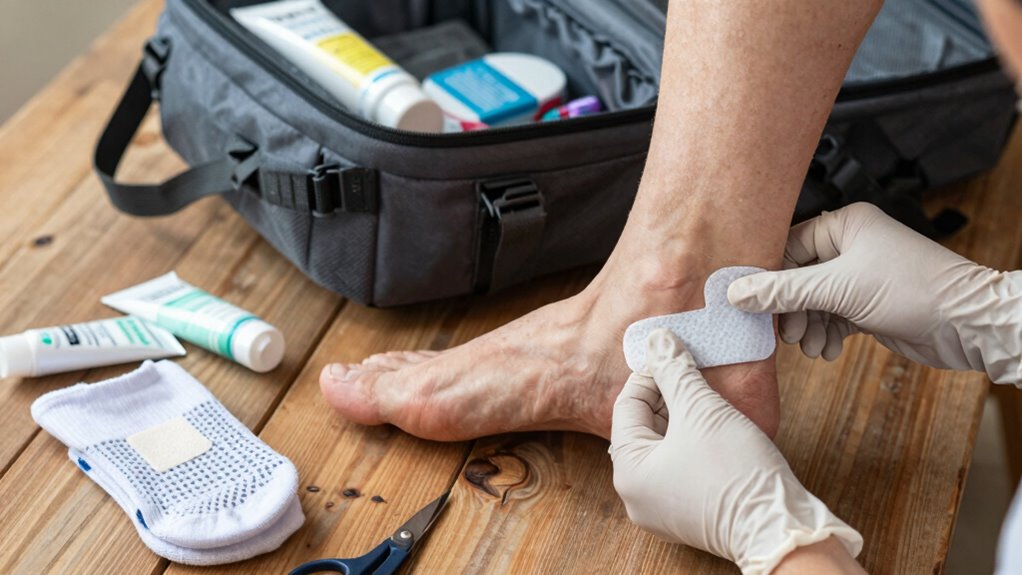
Carrying the right essentials can make all the difference in preventing blisters during your walk. Pack items like blister pads or moleskin to protect hotspots, and bring an extra pair of socks to keep your feet dry and reduce foot odor. Consider carrying an antiseptic spray or wipes to clean your feet if needed, which helps maintain toenail health and ward off infections. Don’t forget foot powder or antiperspirant to control sweat and minimize moisture that can lead to blisters. Proper footwear maintenance, like a small brush or cloth, can also keep your shoes clean and comfortable. Staying prepared ensures you can address any foot discomfort early, preserving toenail health and preventing blisters, so you stay comfortable and confident on your big day.
Recognize Early Signs of Blisters and How to Treat Them
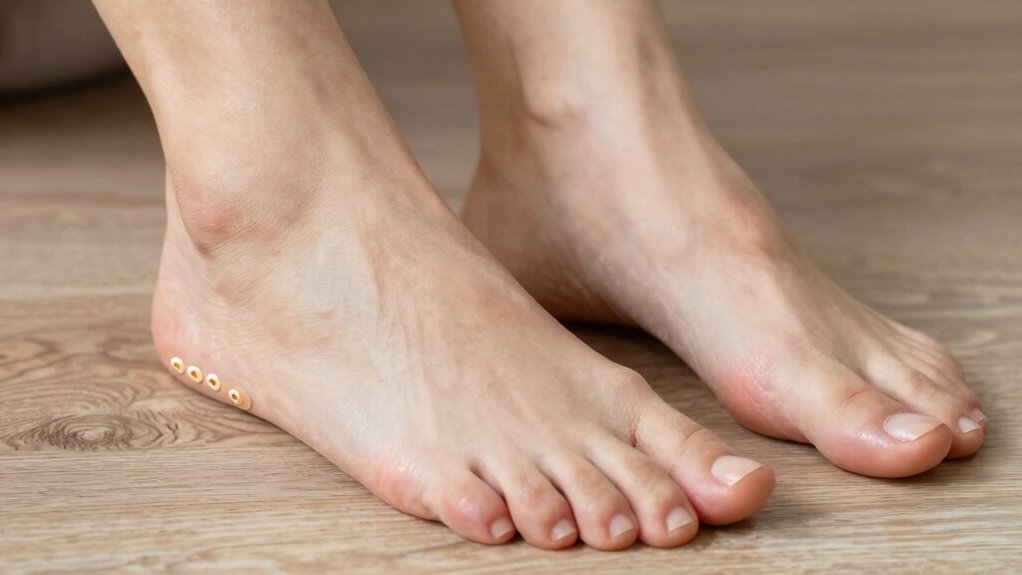
Knowing how to spot early signs of blisters can save you from painful discomfort later on. Pay attention to subtle hints like tingling, tenderness, or a slight warmth on your skin. These signs often appear before a blister fully forms, so catching them early is key to blister prevention. Good foot hygiene helps keep your skin healthy and less prone to blistering. To treat early signs, gently clean the area, avoid friction, and keep it dry. If you notice:
Spot early blister signs like tingling and warmth to prevent pain and discomfort later.
- A small, reddened patch that feels warm or tender
- Slight swelling or numbness in your foot
- A feeling of chafing or rubbing where your shoes touch
take action immediately. Applying a protective barrier or moleskin can prevent the blister from worsening and ensure your feet stay blister-proof during big days.
Frequently Asked Questions
What Are the Best Remedies for Painful Blisters?
When you have painful blisters, start by cleaning the area gently with soap and water, then apply a blister pad or foot padding to reduce friction and prevent infection. If the blister is large, consider draining it carefully with a sterilized needle, then cover with an antibiotic ointment and a sterile bandage. Always prioritize blister prevention by wearing well-fitting shoes and using blister-resistant socks.
How Do Humidity and Weather Affect Blister Formation?
Imagine you’re walking on a humid day, and your feet sweat more than usual. Humidity and weather considerably impact blister formation because excess moisture increases skin friction, making blisters more likely. Wet conditions soften your skin, causing chafing and irritation. Weather considerations like rain or heat elevate moisture levels, so always choose moisture-wicking socks and keep your feet dry to prevent blisters on big days.
Can Diet Influence Skin Resilience and Blister Prevention?
Yes, your diet can influence skin resilience and blister prevention. By adopting good nutrition strategies, you strengthen your skin’s ability to withstand friction and pressure. Stay consistent with hydration habits, as well-hydrated skin is more elastic and less prone to damage. Incorporate foods rich in vitamins C and E, zinc, and healthy fats to support skin repair and toughness. Proper nutrition and hydration are key to keeping your skin resilient during long walks.
Are There Specific Foot Exercises to Strengthen Skin?
Yes, you can do foot strengthening exercises to boost skin resilience. Try toe curls, toe spreads, and heel raises regularly to improve your foot muscles. These exercises enhance circulation and help toughen the skin, making it more resistant to blisters. Incorporate them into your daily routine, and you’ll notice stronger, more resilient skin over time, better prepared for long days of walking or hiking.
How Often Should I Check My Feet During Long Walks?
During long walks, you should check your feet every 1 to 2 hours. This helps you spot any hotspots or blisters early. Make sure your footwear selection supports blister prevention techniques, like well-fitting shoes and moisture-wicking socks. Regularly inspecting your feet guarantees you catch issues before they worsen, keeping your feet comfortable and blister-free on big days. Don’t wait too long—early detection is key!
Conclusion
Think of your feet as the foundation of your journey. When you prepare them well—like breaking in shoes, keeping them dry, and staying aware—you build a sturdy base that can handle anything. I once underestimated a long hike and ended up with blisters, but now I know the secret: prevention is your best gear. Invest in your feet, and they’ll carry you smoothly through every adventure, no matter how big the day.