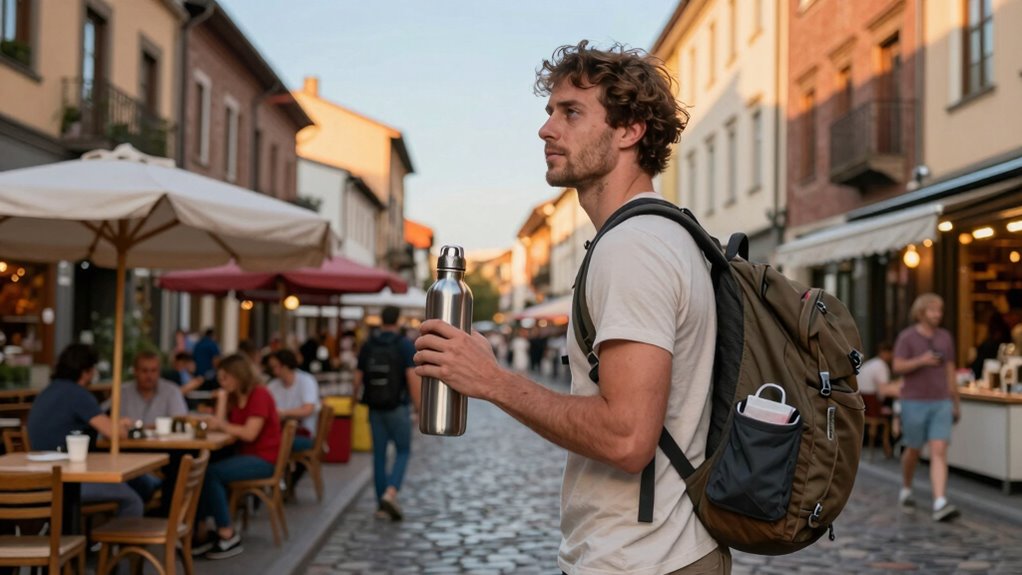

To stay hydrated while traveling without spending too much time in bathrooms, carry a reusable water bottle and sip regularly. Focus on hydrating foods like fruits and vegetables, and monitor your urine color—pale yellow means you’re good. Limit caffeine and alcohol, and consider electrolyte drinks if you’ll be sweating or in hot climates. Establish simple habits and use hydration tools to stay on track. Keep learning how to balance hydration with your journey effortlessly.
Key Takeaways
- Carry a reusable, filtered water bottle and sip regularly to maintain hydration without frequent bathroom visits.
- Include hydrating foods like fruits and vegetables to boost fluid intake naturally.
- Balance electrolyte-rich drinks with water to stay hydrated efficiently and reduce the need for excessive bathroom breaks.
- Monitor urine color (pale yellow) to ensure proper hydration without overhydrating.
- Plan hydration around activities and environment to prevent dehydration while minimizing bathroom trips.
Why Staying Hydrated Is Critical During Travel
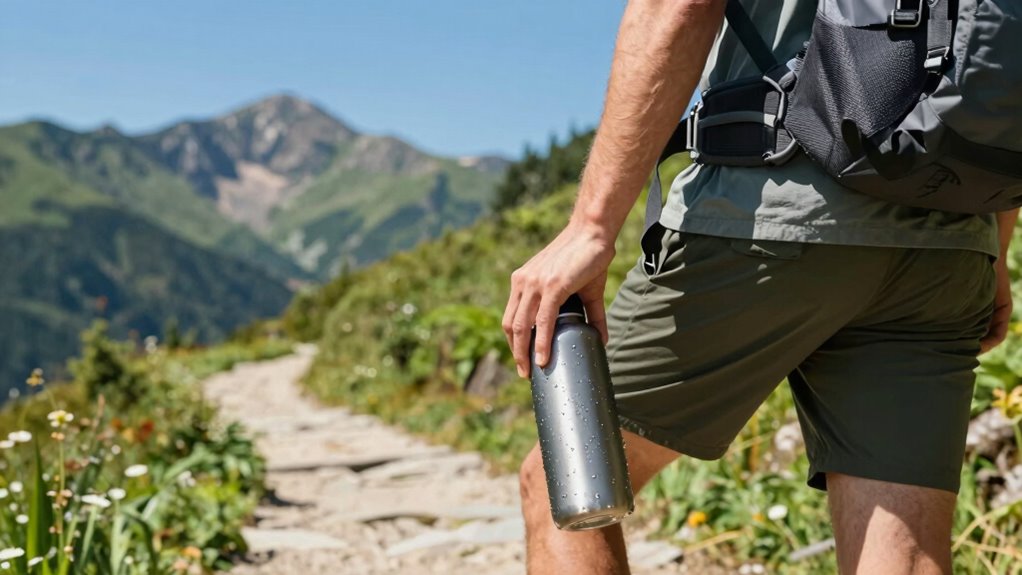
Traveling can quickly lead to dehydration because your body loses fluids through activities like walking, flying, or spending time in dry environments. Many hydration myths suggest you need to drink large amounts of water, but quality matters just as much as quantity. Relying solely on bottled or filtered water doesn’t guarantee safe or clean water, especially in areas with questionable water quality. Staying hydrated helps maintain your energy, keeps your skin healthy, and supports digestion—all essential for enjoying your trip. Dehydration can cause fatigue, headaches, and impair your concentration, making travel less enjoyable. So, don’t fall for hydration myths that oversimplify hydration needs. Instead, pay attention to your water quality and drink regularly to stay energized and healthy throughout your journey. Additionally, being aware of water safety guidelines ensures you make informed choices about staying hydrated in unfamiliar environments. Proper hydration also involves understanding the impact of indoor air quality on your overall health during travel, especially in confined spaces like airplanes or hotels. Changes in air quality can influence hydration needs and overall comfort, making it even more important to stay properly hydrated. Maintaining good hydration practices can also help mitigate the effects of dry or recycled air, making your travel more comfortable. In some cases, water filtration devices or purification methods can be beneficial when access to clean water is limited.
How to Determine Your Hydration Needs on the Go
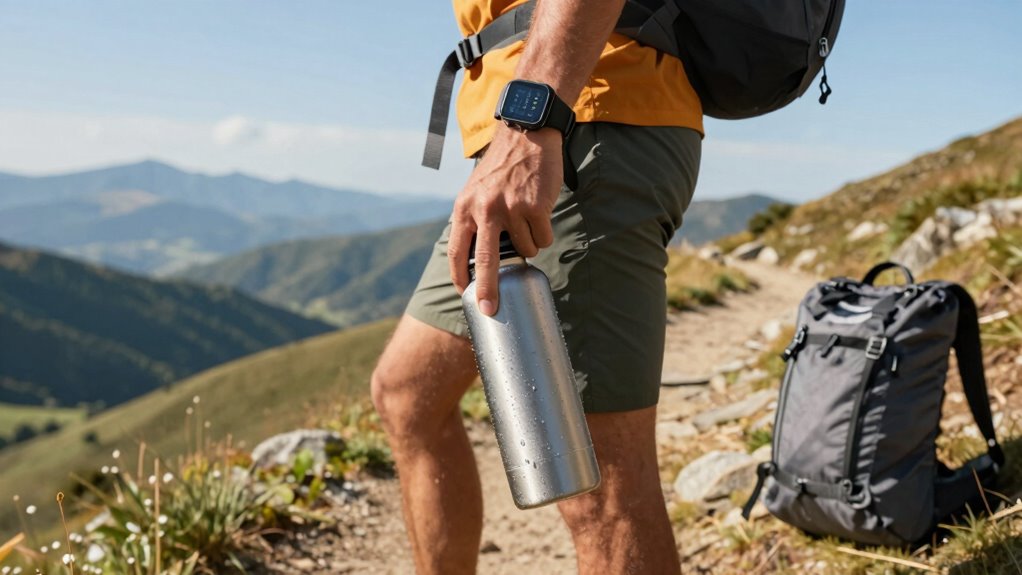
Understanding how much water you need while on the move helps prevent dehydration and keeps you energized. To do this, start with hydration tracking—monitor how much fluid you’re drinking throughout the day. Pay attention to your body’s signals, like thirst and the color of your urine, which should be pale yellow. A simple fluid intake calculation can guide you: divide your weight in pounds by two to estimate how many ounces you should aim for daily, then adjust based on activity level and climate. Carry a reusable water bottle and note your intake regularly. This way, you stay aware of your hydration needs without overdoing it. Incorporating hydration tracking and mindful hydration practices can also help you listen to your body’s hydration cues more effectively. For outdoor activities, choosing water-resistant bottles or containers can make it easier to stay hydrated without worry. Additionally, being aware of hydration needs based on your environment and activity level ensures you maintain optimal hydration. Consistent hydration tracking and fluid intake calculation make staying hydrated manageable, even during busy travel days.
Essential Travel Hydration Tools You Should Pack
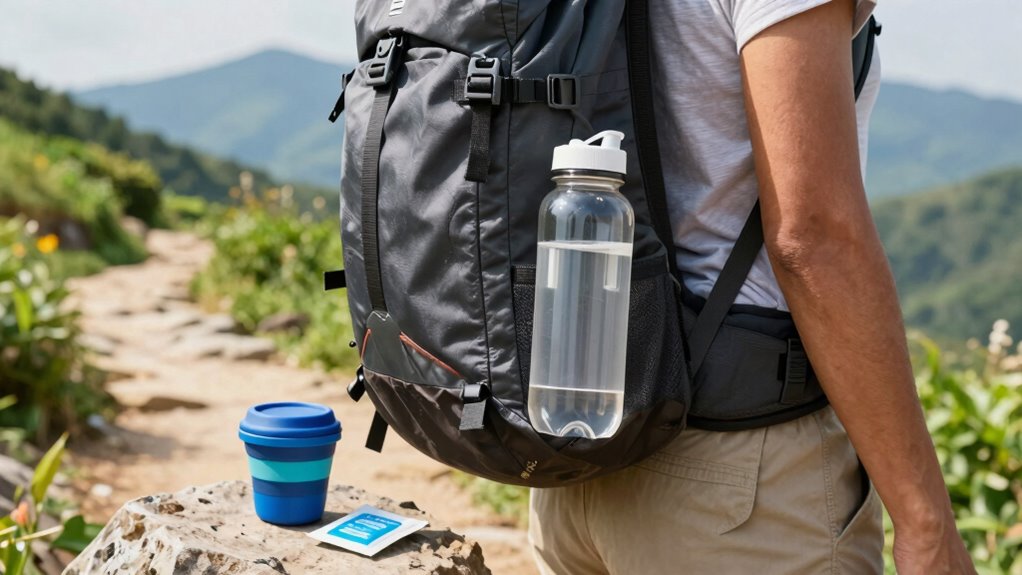
Having the right hydration tools packed can make all the difference during your trip. Don’t fall for hydration myths that suggest you need constant water intake; instead, focus on effective hydration technology like reusable water bottles with filters and portable hydration packs. A durable, leak-proof water bottle ensures you stay hydrated without frequent bathroom stops, while a collapsible cup or bottle saves space in your bag. Consider a hydration tracker app or smart water bottles that monitor your intake to keep you on schedule. These tools help you stay informed and avoid overhydration or dehydration. Additionally, choosing reliable sealing gear can help keep your food fresh and prevent leaks in your luggage. Using hydration monitoring devices can further optimize your intake, ensuring you stay properly hydrated without overdoing it. Understanding home hydration protocols can also help you maintain a balanced fluid intake while on the go, and incorporating personal hydration devices can further customize your hydration plan to suit your activity level. Staying aware of your environment and activity level is essential for maintaining effective hydration strategies. This way, you can stay comfortably hydrated without frequent bathroom visits, making your trip more enjoyable and stress-free.
Easy Habits to Keep Hydrated Throughout Your Trip

Staying consistently hydrated during your trip requires establishing simple, everyday habits that fit seamlessly into your routine. First, drink a glass of water with every meal and snack, turning hydration into a natural part of your day. Don’t fall for hydration myths that suggest you need to drink excessive amounts; instead, listen to your body’s thirst cues. To conserve water, carry a reusable bottle and sip regularly, avoiding unnecessary bathroom stops. Set reminders on your phone to prompt hydration, especially if you’re busy exploring or traveling. Incorporate hydrating foods like fruits and vegetables into your meals, which boost your fluid intake without extra effort. Being aware of Essential DIY Tools and Safety Tips for Your Projects can also help you find reliable hydration tips and products to support your journey. Additionally, staying mindful of ambient noise levels that might distract you from your hydration goals, and consider using soundproofing solutions to create a quieter environment. Properly maintaining your environment with smart home safety devices can also help you stay informed about your surroundings, ensuring a comfortable and safe trip. These small habits help you stay properly hydrated without overdoing it or living at the bathroom sink.
Recognizing and Quickly Addressing Dehydration Signs
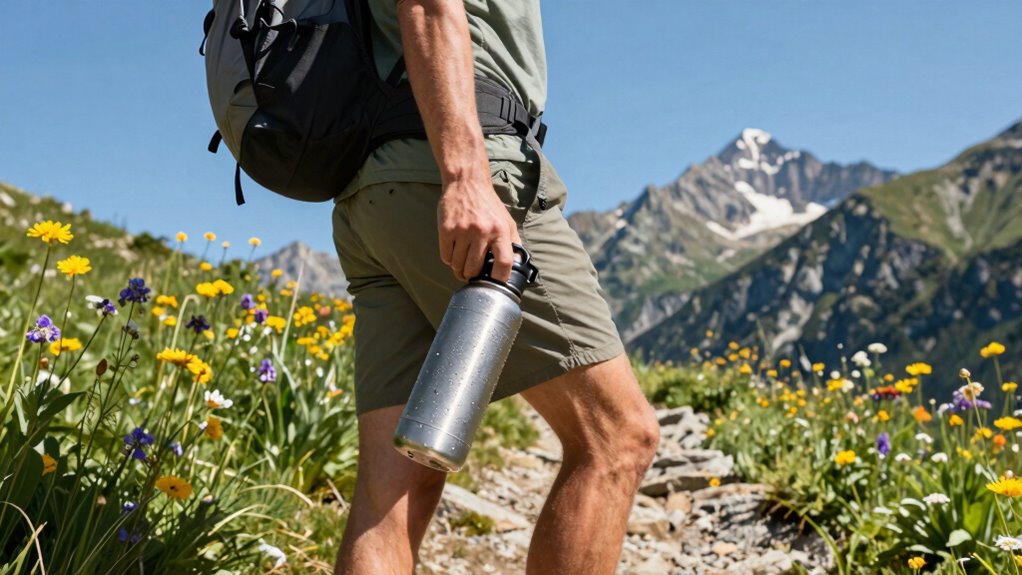
Dehydration can sneak up on you, especially when you’re busy exploring or adjusting to a new environment. Recognizing dehydration signs early is key to preventing serious issues. Many hydration myths suggest you’ll feel thirsty right away, but sometimes, symptoms like dry mouth, fatigue, dizziness, or dark urine appear before thirst kicks in. Keep an eye on these cues. Quick action involves rehydrating with fluids that help maintain electrolyte balance, not just water. Imbalanced electrolytes can worsen dehydration symptoms and slow recovery. Pay attention to your body’s signals, and don’t ignore persistent or worsening symptoms. Staying alert ensures you can address dehydration promptly, keeping you energized and safe during your travels. Remember, quick response makes all the difference in staying hydrated and healthy on the go. Proper hydration maintains electrolyte balance, which is essential for recovery.
Best Drinks and Foods to Boost Your Fluid Intake
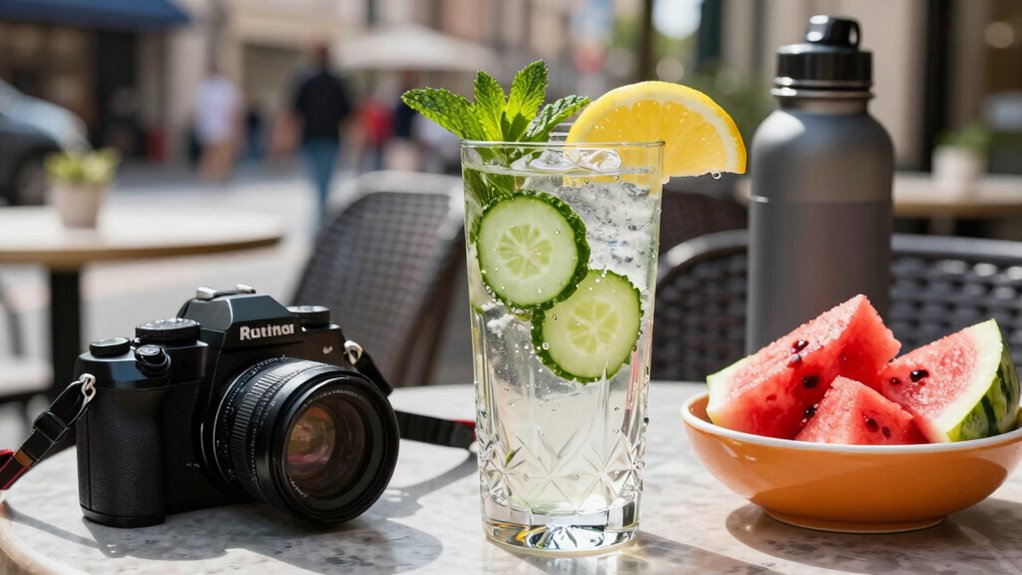
Choosing the right drinks and foods can make a big difference in maintaining your hydration levels while traveling. Many hydration myths suggest that only water counts, but beverage alternatives like herbal teas, coconut water, and flavored waters also hydrate effectively. Incorporate water-rich foods such as watermelon, cucumbers, oranges, and strawberries into your diet—they provide hydration along with essential nutrients. Avoid sugary sodas and caffeinated drinks, which can dehydrate you. Instead, opt for electrolyte-infused drinks if you’re sweating heavily or in hot climates. These help replenish lost minerals without forcing you to live in bathrooms. Additionally, maintaining consistent hydration habits is vital for preventing dehydration symptoms and ensuring your body stays balanced during travel. Staying mindful of your electrolyte balance can further optimize hydration and support overall health. By selecting the right combination of drinks and foods, you’ll boost your fluid intake naturally and stay hydrated without overdoing it. Vetted — best vacuum expert practices remind us that staying consistent with hydration is key to avoiding dehydration symptoms. Furthermore, understanding hydration strategies can help you adapt to different environments more effectively.
Managing Bathroom Breaks Without Disrupting Your Journey
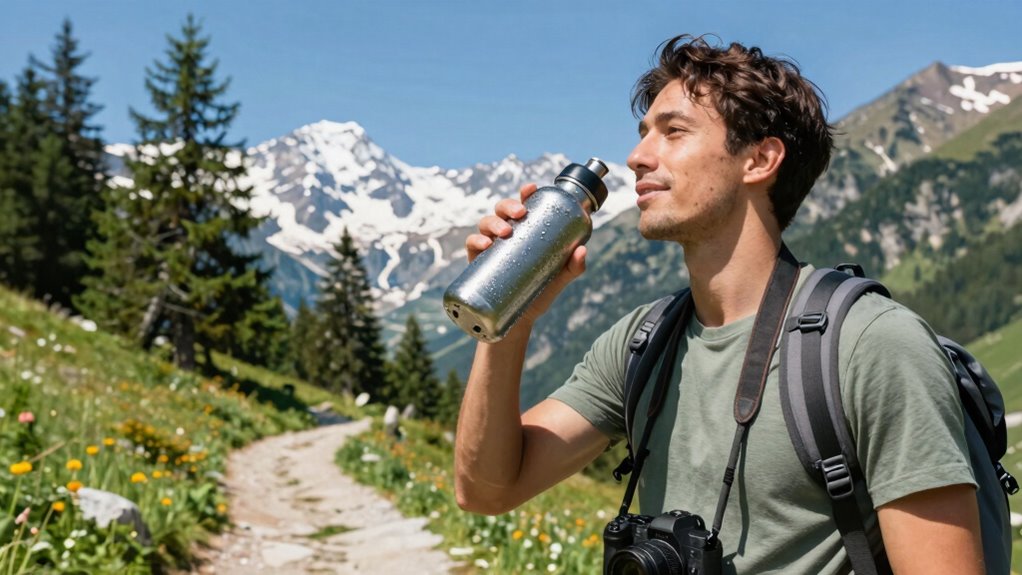
To keep bathroom breaks from disrupting your travel plans, plan ahead by scheduling regular stops and choosing convenient locations. This approach helps you stay hydrated without fear of overdoing it. Many hydration myths suggest you should limit fluids to avoid bathroom trips, but proper hydration is essential for comfort and focus. Be mindful of bathroom etiquette—knock, wait your turn, and keep the space clean. When you arrive at a rest stop, head straight to the facilities rather than lingering, so others aren’t delayed. If you’re traveling with others, communicate your needs politely. Efficiently managing bathroom breaks is comparable to selecting the right hydration strategy, ensuring a smooth and enjoyable journey while maintaining hydration as a top priority. Being aware of your hydration needs helps you plan your fluid intake and breaks more effectively. Incorporating hydration planning into your travel routine can significantly reduce the stress of bathroom management on the road. Staying organized during travel can help you maintain your routine and reduce unnecessary delays.
Tailoring Your Hydration Plan for Different Travel Scenarios
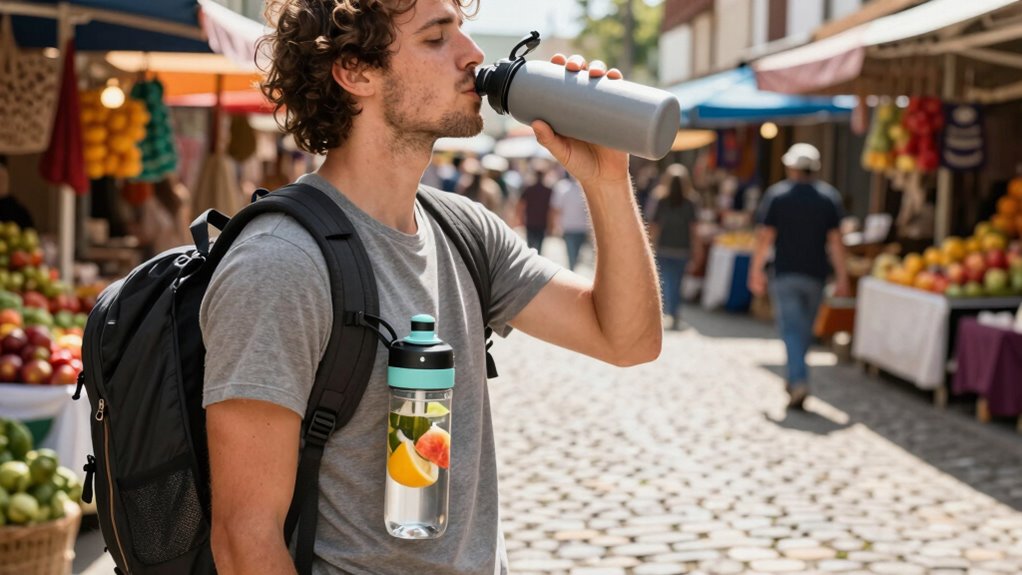
When traveling by plane, you should increase your water intake to counteract dry cabin air, but avoid overdoing it to prevent frequent bathroom stops. If you’re heading outdoors, boost your hydration to replace fluids lost through sweating and sun exposure. Adjusting your hydration based on your travel situation helps keep you comfortable and energized throughout your journey. Being mindful of indoor air quality and humidity during travel can help prevent dehydration and improve your overall experience.
Adjust Hydration for Flights
Since airplane cabins have low humidity levels, maintaining your hydration plan accordingly is vital. To stay properly hydrated during flights, increase your fluid intake slightly above your usual daily amount. This helps counteract the effects of cabin humidity, which can dehydrate you quickly. Keep a water bottle handy and sip frequently, especially as airline hydration can diminish your body’s moisture levels.
| Hydration Tip | Why It Matters |
|---|---|
| Drink water often | Combat low cabin humidity |
| Limit caffeine and alcohol | Avoid additional dehydration |
| Use oral rehydration solutions | Restore electrolyte balance |
Adjusting your hydration for flights ensures you arrive refreshed and minimizes discomfort caused by dry cabin air. Proper planning helps you stay hydrated without frequent bathroom stops.
Adapt Intake for Outdoors
Whether you’re hiking in the mountains or exploring a busy city, adjusting your hydration intake to suit outdoor conditions is essential. Different scenarios present unique outdoor hydration challenges, especially in extreme climates. In hot, dry environments, you’ll sweat more, so increase your fluid intake and include electrolytes to replenish lost salts. Cold climates can dull your thirst, so stay proactive with regular water consumption. When hiking or engaging in physical activities, carry portable water sources and sip consistently. Be mindful that hydration in extreme climates may require more frequent intake than usual. Planning ahead ensures you stay hydrated without overdoing it or frequent bathroom stops. Adapting your hydration plan keeps you energized, safe, and comfortable, no matter where your outdoor adventures take you.
Frequently Asked Questions
How Can I Stay Hydrated During Long Flights Without Frequent Bathroom Stops?
To stay hydrated during long flights without frequent bathroom stops, you should monitor your hydration tracking closely. Opt for a reusable water bottle with a secure lid and fill it up after passing security, then sip regularly throughout the flight. Avoid caffeine and alcohol, which can dehydrate you. Drinking small amounts often helps maintain hydration levels without overfilling your bladder, making your journey more comfortable.
What Are Some Discreet Ways to Hydrate in Public or Crowded Places?
You can practice discreet hydration by using a collapsible water bottle or a reusable cup with a lid, perfect for public drinking without drawing attention. Sip slowly and casually, maybe while pretending to check your phone or bag. Keep a small, portable water spray or misting bottle handy for quick refreshes. These methods let you stay hydrated discreetly in crowded places without standing out or needing obvious bathroom breaks.
Are There Any Hydration Methods Suitable for Outdoor Adventures or Remote Travel?
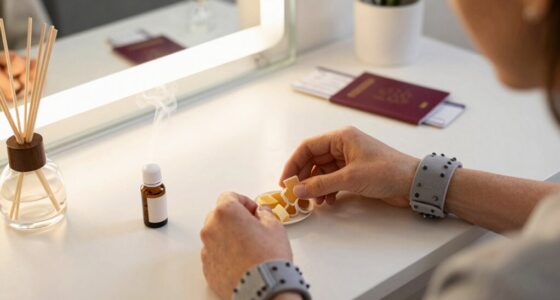
For outdoor adventures or remote travel, you don’t need to become a camel. Grab a portable hydration pack and sip discreetly on the go—no awkward bathroom stops required. Supplement with electrolyte gummies for a quick boost of hydration without fuss. These methods keep you energized, hydrated, and ready to conquer nature’s challenges, all while maintaining your dignity and avoiding the hydration equivalent of a bathroom marathon.
Can Hydration Supplements Replace Drinking Water Effectively During Travel?
Hydration supplements can effectively replace water during travel if they contain electrolytes to maintain your electrolyte balance and support nutrient absorption. These supplements are convenient and help replenish lost minerals from sweating or activity. However, they shouldn’t completely replace water, as hydration depends on consistent intake. Use them as a supplement, not a substitute, to stay properly hydrated and guarantee your body maintains ideal electrolyte and nutrient levels during your journey.
How Do Climate and Altitude Affect My Hydration Needs While Traveling?
You’ll need more hydration when climate adapts to heat or dryness, and altitude effects kick in, making you sweat more and lose fluids faster. Picture yourself adjusting to a higher elevation, feeling thirstier and more exhausted. To stay hydrated, increase your water intake, use electrolyte supplements, and pay attention to your body’s signals. Proper climate adaptation and understanding altitude effects help you avoid dehydration and keep your energy up during travel.
Conclusion
Staying hydrated on the go isn’t just about avoiding discomfort; it’s your passport to vibrant energy and well-being. By tuning into your body’s signals and packing the right tools, you become the captain of your journey’s health. Remember, hydration is a dance—balancing fluid intake with bathroom breaks—ensuring your adventure remains seamless. So, embrace these habits and let your well-hydrated self lead the way—your journey’s true compass.