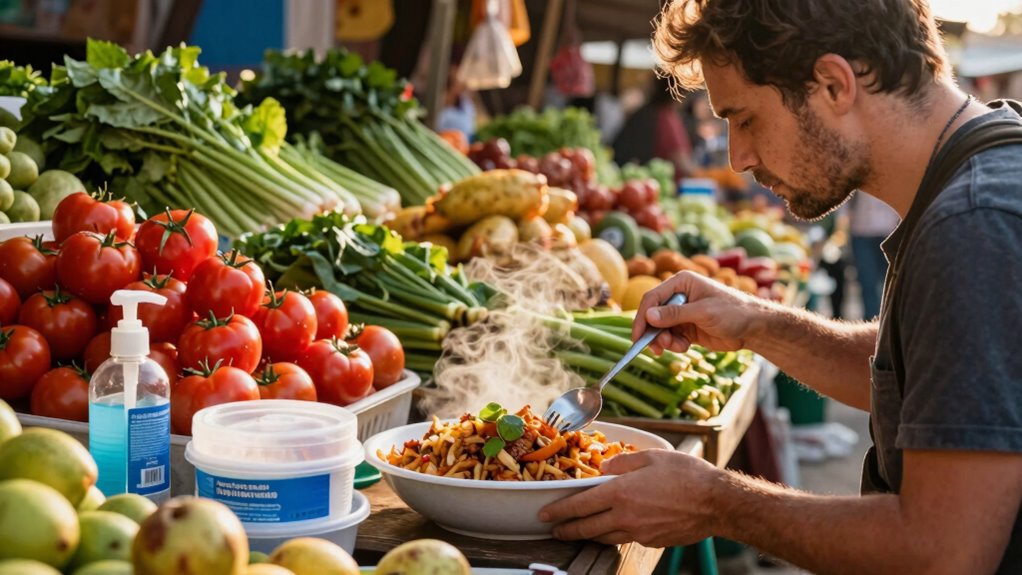

To reduce food safety risks while traveling, choose reputable vendors and restaurants with good hygiene ratings, and look for cleanliness and proper food handling practices. Opt for thoroughly cooked foods served hot, and drink bottled or boiled water. Maintain good hand hygiene and use personal utensils when possible. Avoid risky foods like raw seafood and unpasteurized dairy. If you keep these tips in mind, you’ll feel more confident to enjoy local cuisine safely. Discover more ways to travel safely by staying informed.
Key Takeaways
- Choose reputable restaurants with visible hygiene standards and proper certifications.
- Opt for thoroughly cooked, hot, and freshly prepared foods to minimize contamination risk.
- Drink bottled or boiled water from trusted sources; avoid ice or unverified beverages.
- Practice frequent handwashing with soap or use sanitizer when hygiene facilities are unavailable.
- Be aware of local food safety customs and avoid high-risk foods like raw seafood or unpasteurized dairy.
What Food Safety Risks Are Common When Traveling Abroad?
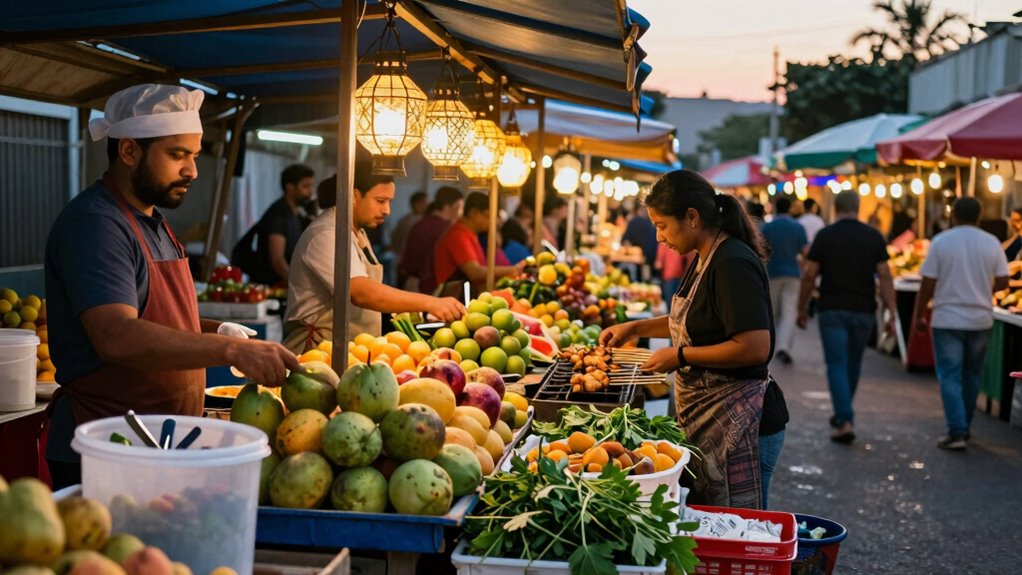
When traveling abroad, you’re often exposed to new foods and unfamiliar eating environments that can increase your risk of foodborne illnesses. These illnesses result from consuming contaminated food or drinks, often due to poor hygiene or unsafe preparation methods. Common risks include bacteria like Salmonella and E. coli, viruses such as Norovirus, and parasites found in undercooked or improperly handled foods. To reduce these risks, contamination prevention is key. Practice good hygiene by washing your hands frequently, especially before eating. Be cautious with street food—observe cleanliness and how food is prepared. Avoid raw or undercooked items, and opt for thoroughly cooked dishes. Staying vigilant about food safety helps you enjoy your travels without the unnecessary worry of falling ill. Incorporating Free Floating techniques, such as choosing shaded or well-ventilated eating areas, can also help minimize exposure to contaminants.
How to Find Reputable Food Vendors and Restaurants
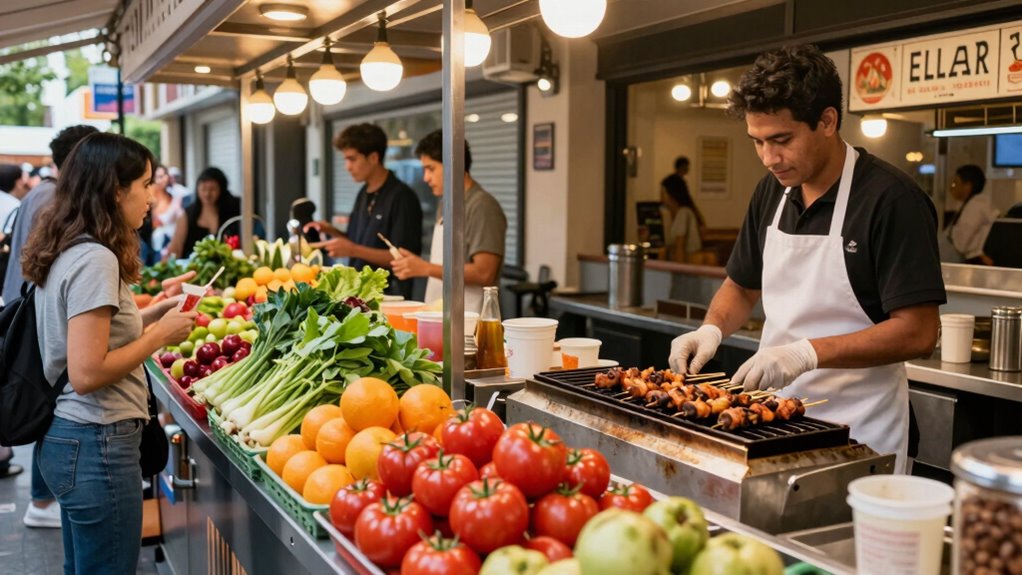
To find trustworthy food vendors and restaurants, start by asking locals for their recommendations. Keep an eye on how food is handled and look for places that follow proper hygiene practices. Also, check if the establishment displays hygiene certifications to make certain they’re committed to safety. Paying attention to food safety standards can further help identify reputable vendors. Additionally, choosing establishments that utilize proper food handling techniques reduces the risk of foodborne illness. Being aware of quality assurance measures can also assist in selecting safer dining options. Furthermore, understanding the horsepower of electric dirt bikes can be useful if you’re considering eco-friendly transportation options during your travels, ensuring you have reliable and sustainable mobility choices.
Look for Local Recommendations
Seeking out local recommendations is one of the best ways to find reputable food vendors and restaurants while traveling. Talk to locals, hotel staff, or tour guides to discover trusted spots for authentic local dining and cultural cuisine. These sources often know which places prioritize cleanliness and quality, reducing your risk of foodborne illness. Look for busy restaurants with many patrons, as high turnover suggests fresh ingredients and good hygiene. Review online travel forums or apps for recent traveler feedback. Avoid places that appear unclean or overly touristy, as these can sometimes compromise food safety. By relying on trusted local recommendations, you’ll enjoy genuine flavors while minimizing health risks. This approach helps you experience the true culinary essence of your destination safely. Food safety practices are essential to keep in mind when choosing where to eat while abroad.
Observe Food Handling Practices
You can often gauge a restaurant’s cleanliness and hygiene by observing how they handle and prepare food. Pay attention to food handling practices, such as whether the staff uses gloves or tongs and keeps raw and cooked foods separate. Look for signs that hygiene standards are maintained, like clean surfaces, proper food storage, and staff wearing hairnets or caps. If the kitchen appears dirty or disorganized, it’s a red flag. Trust your instincts—places that prioritize good food handling and maintain high hygiene standards are more likely to serve safe food. Reputable vendors often display visible signs of cleanliness and follow proper procedures, so choose those spots to minimize your risk of foodborne illness while traveling.
Check for Hygiene Certifications
Hygiene certifications serve as a reliable indicator of a food vendor’s commitment to cleanliness and safety. When you’re choosing where to eat, look for establishments with high hygiene ratings, which reflect adherence to certification standards. These ratings are often displayed visibly and can quickly help you identify reputable places. Certification standards vary by country, but they generally ensure regular inspections and strict sanitation practices. Trust vendors with official certifications, as they demonstrate a consistent effort to maintain safe food handling environments. You can also look for visible certification signs or inquire directly about their sanitation practices. Don’t hesitate to ask staff about their hygiene certifications or check online reviews for their ratings. Incorporating inspection protocols into your selection process further reduces your risk of foodborne illness and helps you enjoy your travel experience with greater confidence. Additionally, understanding local food safety regulations can help you better assess the safety standards of the establishments you visit. Being aware of water safety standards in the region can also prevent you from consuming contaminated water or ice that may carry health risks. Paying attention to proper food storage practices is also essential in avoiding contamination and ensuring food freshness during your trip.
Practice Proper Hand Hygiene and Food Handling While Traveling

Practicing proper hand hygiene and food handling is essential to staying healthy while traveling. To minimize the risk of illness, follow these key steps:
- Wash your hands frequently with soap and clean water, especially before eating or after using the restroom.
- Use hand sanitizer with at least 60% alcohol when soap isn’t available.
- Handle food carefully by avoiding raw or undercooked items, and use utensils or gloves when preparing or serving food.
Being aware of inclusive casting and diverse standards in the food industry can also help you make safer choices when selecting restaurants or markets.
Additionally, maintaining awareness of sustainable weight loss practices can support overall health and resilience during your travels.
Maintaining good hand hygiene reduces the spread of germs, while proper food handling prevents contamination. Be mindful of cleanliness in restaurants and markets, and always wash fruits and vegetables thoroughly. For added safety, consider checking the air quality of your environment, especially in crowded or unfamiliar places, to help prevent respiratory issues. Regularly monitoring measurement tools such as pH or ORP meters can also be useful in assessing food or water safety when available. Incorporating proper sanitation practices can further decrease the risk of foodborne illnesses. Staying vigilant about hand hygiene and food handling helps you enjoy your trip safely.
Which Foods Are Safer to Eat and Which Should Be Avoided?
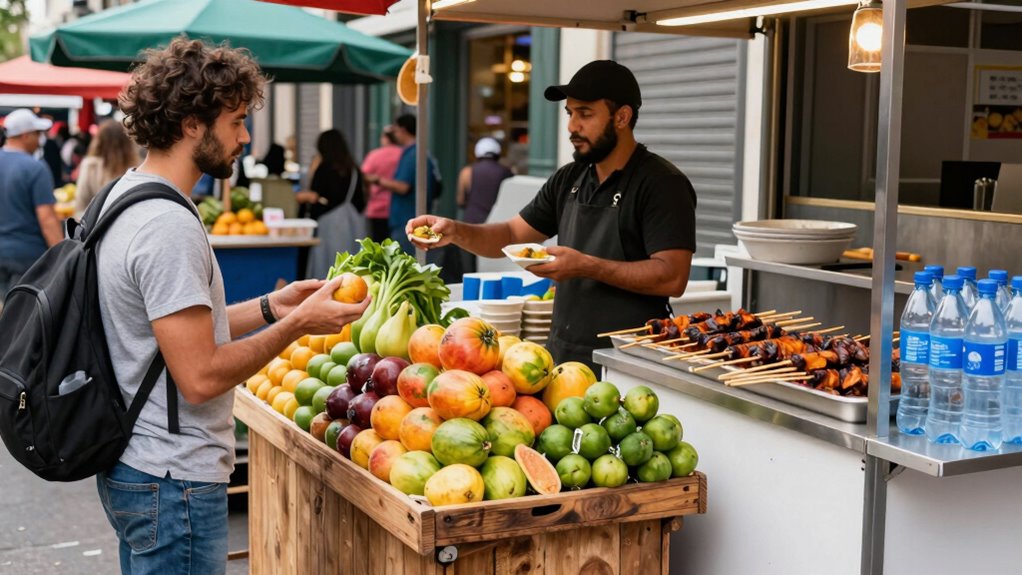
When choosing what to eat abroad, opt for foods that are cooked thoroughly and served hot, as they’re less likely to carry bacteria. Avoid high-risk items like raw seafood, unpasteurized dairy, and street-vended salads that may have been washed with contaminated water. Being selective helps you enjoy local flavors safely without risking illness. Incorporating Victorian etiquette can also help you navigate unfamiliar dining settings more confidently. Additionally, paying attention to food safety practices can further reduce your risk of foodborne illness while traveling, especially by understanding how contingency plans are essential when unexpected issues occur. Staying informed about hygiene standards in the region can further help you make safer food choices and avoid common pitfalls. Recognizing the importance of proper food handling can also contribute significantly to reducing health risks during your travels.
Safe Food Choices Abroad
Choosing safe foods while traveling can markedly reduce your risk of foodborne illness. To make smart choices, focus on foods that are less likely to cause issues, especially if you have food allergies or dietary restrictions. Here are three tips:
- Opt for thoroughly cooked dishes, such as grilled meats or steamed vegetables, which are less likely to harbor harmful bacteria.
- Choose foods served hot and fresh, avoiding leftovers or foods that sit at room temperature.
- Select reputable restaurants with good reviews, where ingredients are more likely to be handled safely.
Always communicate your food allergies and dietary restrictions clearly to staff. Ensuring your food handling practices in reputable establishments can further minimize health risks. Additionally, paying attention to food storage methods can prevent contamination from improper temperatures. Being aware of proper food temperatures is especially important when assessing the safety of prepared foods. Maintaining awareness of local food safety standards can also help you identify safer dining options. Sticking to these guidelines helps you enjoy your trip without unnecessary health risks.
High-Risk Foods to Avoid
Certain high-risk foods can increase your chances of getting sick while traveling, so it’s vital to know which ones to avoid. Foods like raw or undercooked seafood, unpasteurized dairy, and street-vended meats often don’t meet strict hygiene standards, raising the risk of food poisoning. Fresh salads, peeled fruits, and raw vegetables can also be risky if washed with contaminated water. Be cautious with buffets, as food may sit out too long or be improperly stored. To stay safe, choose cooked foods served hot and reputable establishments with good hygiene standards. Avoid anything that looks or smells suspicious, and trust your instincts. Staying vigilant about high-risk foods helps you prevent illness and enjoy your trip more fully. Understanding food safety can further help you make informed choices while traveling.
How to Choose Safe Beverages and Drink Bottled Water
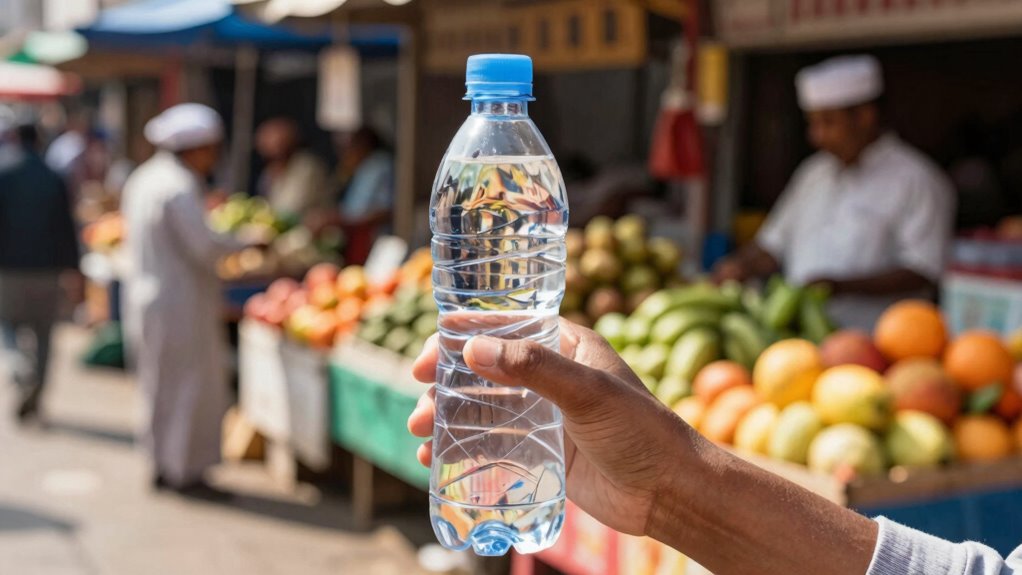
Ever wonder how to guarantee the beverages you drink abroad are safe? The key is choosing reliable options. First, always opt for bottled water from reputable brands; check that the seal is intact before opening. Second, stick to beverages that are commercially sealed, like canned sodas or pre-packaged juices, to avoid contamination. Third, if you prefer tap water, boil it for at least one minute or use a reliable water purifier. When in doubt, ask locals or hotel staff about safe sources. These simple steps help you select safe beverages and reduce the risk of illness. Prioritizing bottled water and trusted drinks ensures you stay hydrated without worry, allowing you to enjoy your travels safely.
What Are the Signs of Food Poisoning, and When to Seek Help?
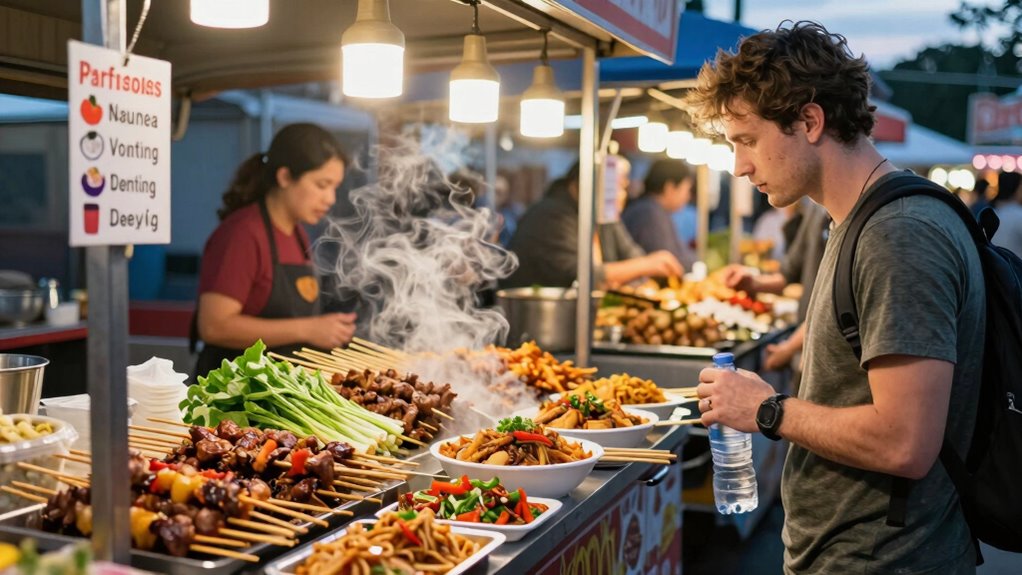
Food poisoning can strike quickly and unexpectedly, causing uncomfortable and even serious health problems. Recognizing the symptoms early is essential. Common signs include nausea, vomiting, diarrhea, stomach cramps, and fever. If these symptoms are severe or persistent—especially if you experience dehydration, blood in your stool, or high fever—you need to act fast. Your symptoms recognition helps determine if you require emergency response. Seek medical help immediately if you become unable to keep fluids down, experience confusion, or notice symptoms worsening. Don’t delay consulting a healthcare professional when symptoms escalate. Prompt treatment can prevent complications. Always trust your instincts—if something feels seriously wrong, get emergency medical attention without hesitation. Your health and safety come first when dealing with foodborne illness. Being aware of food safety practices during travel can also help reduce your risk of illness. Additionally, understanding symptom severity can guide you in deciding when immediate medical intervention is necessary. Recognizing early warning signs and acting promptly can make all the difference in recovery. Monitoring for infection risks such as prolonged symptoms or worsening condition is crucial to prevent severe health issues.
Essential Food Safety Supplies to Pack for Travel

When traveling, having the right food safety supplies on hand can make all the difference in preventing illness. Pack essentials like:
- Reusable, portable utensils to avoid contamination from shared items.
- Travel-friendly containers for storing snacks securely.
- Hand sanitizer or disinfectant wipes to clean surfaces before eating.
- Choosing safe eating practices can further minimize health risks during your trip.
These supplies help you enjoy travel snacks safely and reduce the risk of foodborne illnesses. Carrying portable utensils ensures you won’t need to rely on potentially unclean restaurant or street vendor utensils. Using disinfectant wipes or sanitizer before handling food or eating helps eliminate bacteria on surfaces. Properly storing travel snacks in containers prevents spoilage and cross-contamination. With these supplies, you can confidently enjoy your trip without worry about food safety issues.
Tips for Planning Your Meals to Stay Food Safe on the Go
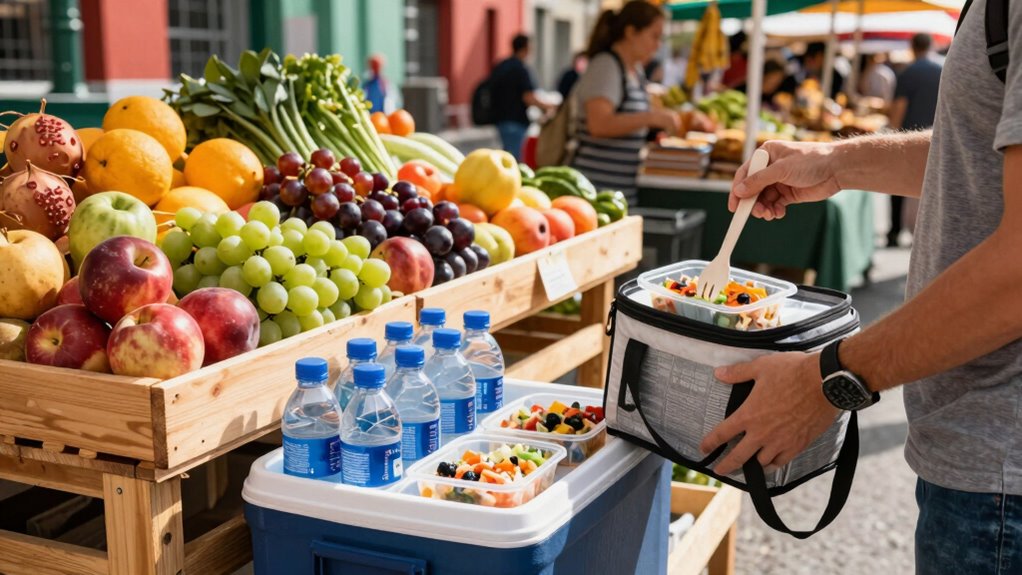
Planning your meals carefully is essential to staying food safe while on the go. Effective meal planning helps you choose safe, suitable options that meet your dietary restrictions and minimize contamination risks. Start by researching local eateries or grocery stores ahead of time, focusing on places that follow good hygiene practices. Pack portable, non-perishable snacks that align with your dietary needs, such as nuts or energy bars, to avoid unsafe street food. When dining out, ask about ingredients and preparation methods to ensure they’re safe for your diet. Always carry a small cooler or insulated bag for perishable items if needed. By planning your meals thoughtfully, you reduce the chance of exposure to unsafe food, giving you peace of mind during your travels.
How Staying Informed Builds Confidence in Food Safety
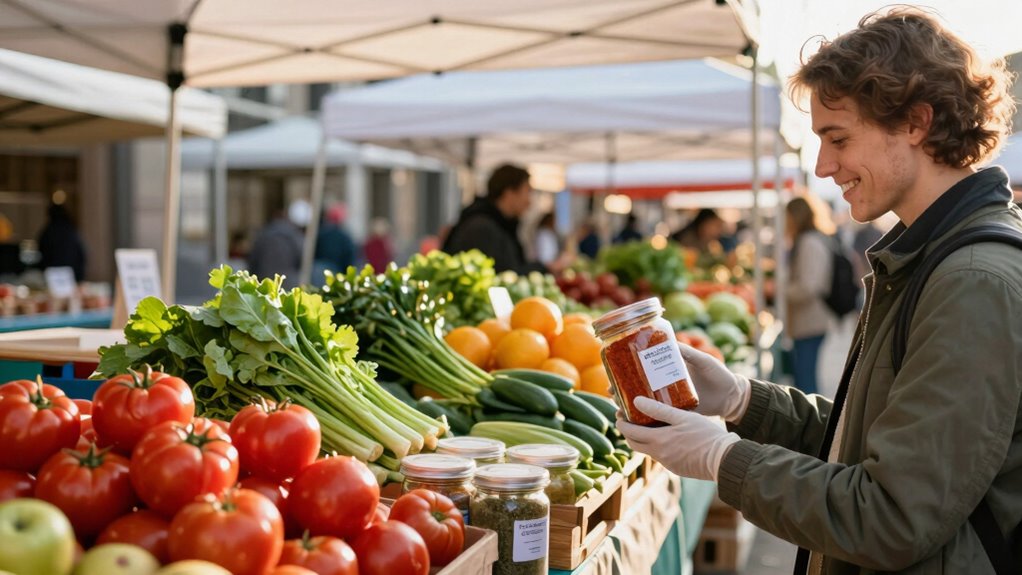
Staying informed about local food safety practices empowers you to make confident choices while traveling. Understanding cultural food customs helps you navigate unfamiliar dining scenes with ease. Additionally, developing local ingredient awareness allows you to identify safe options. To build your confidence, focus on these steps:
- Research local food customs to recognize safe eating habits and avoid risky practices.
- Learn about popular ingredients and dishes to spot freshness and quality.
- Stay updated on health advisories or common food safety issues in your destination.
Simple Steps to Enjoy Local Cuisine Safely
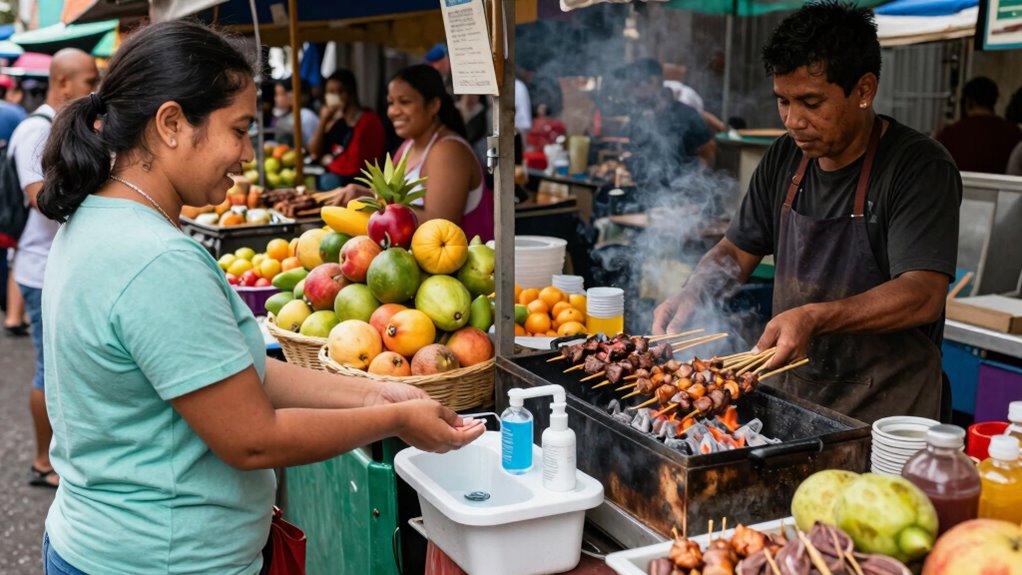
Once you’re familiar with local food customs and ingredients, you can take simple steps to enjoy the flavors of your destination safely. First, pay attention to food labeling; look for clear information about ingredients and expiration dates to avoid spoiled or contaminated food. When eating at markets or street stalls, observe kitchen sanitation practices—clean surfaces, proper food storage, and hand hygiene are key indicators of safety. Opt for vendors who prioritize cleanliness and proper food handling. Avoid raw or undercooked dishes if you’re unsure about local standards. Bringing your own utensils or napkins can also reduce contact with contaminated surfaces. By staying alert to food labeling and maintaining good kitchen sanitation habits, you can savor local cuisine without unnecessary risk.
Frequently Asked Questions
How Can I Identify Authentic Local Food Vendors?
To identify authentic local food vendors, look for those with good vendor reputation checks and local food certifications. Observe if the stall is busy, which indicates popularity and trust. Ask locals for recommendations, and check for cleanliness and proper food handling. Certified vendors often display signs or certifications visibly. Trust your senses—fresh smells and vibrant displays usually signal quality. These tips help guarantee you’re enjoying authentic, safe local cuisine.
Are Street Foods Generally Safe to Eat?
Street foods can be safe if you pay attention to food hygiene and vendor inspection. Look for vendors who cook food fresh in front of you, maintain clean stalls, and handle ingredients properly. Trust your senses—avoid anything with off smells or looks unclean. By choosing vendors with good hygiene practices and inspecting their setup, you minimize risks while enjoying authentic local flavors confidently.
What Are Quick Tips for Handling Food Allergies Abroad?
To handle food allergies abroad, prioritize allergy management by always carrying your medication and allergy ID. Use safe ingredient identification by learning key phrases in the local language to ask about allergens clearly. Communicate your allergies to restaurant staff, and opt for freshly prepared dishes to reduce cross-contamination risks. Stick to trusted restaurants or those with good reviews, and don’t hesitate to ask questions to make certain your meal is safe.
How Do I Store Leftovers Safely While Traveling?
To store leftovers safely while traveling, use a clean, airtight container for food storage. Keep leftovers refrigerated at or below 40°F as soon as possible, ideally within two hours of eating. If refrigeration isn’t available, consider using a cooler with ice packs. Always reheat leftovers thoroughly before eating, and consume them within a couple of days to guarantee leftover safety and prevent foodborne illnesses.
Can Eating in Popular Tourist Spots Be Riskier Than Off-The-Beaten-Path Eateries?
Eating at popular tourist spots can be riskier than off-the-beaten-path eateries because of tourist trap pitfalls, where hygiene standards might be lower to cater to tourists. You should always check restaurant hygiene standards before dining and look for busy, well-maintained places with fresh food. While popular spots are tempting, being cautious helps you enjoy local flavors safely without falling into common tourist pitfalls.
Conclusion
Traveling abroad doesn’t have to be risky if you stay informed and prepared. Did you know that foodborne illnesses affect over 600 million people worldwide each year? By following simple safety tips—like choosing reputable vendors, practicing good hygiene, and staying cautious with street food—you can enjoy local flavors confidently. With a little awareness, you’ll reduce your risks and create delicious memories, all while keeping your health a top priority.