To pack efficiently for two climates, adopt a versatile layer system. Use lightweight base layers, adaptable mid-layers, and protective outer shells that suit both hot and cold conditions. Organize with packing cubes and fold or roll clothing to maximize space. Focus on neutral, multipurpose pieces that mix and match easily, and include accessories that add warmth or cooling as needed. Keep your gear accessible and compact, and you’ll stay prepared for anything ahead. If you continue, you’ll discover more smart packing strategies.
Key Takeaways
- Use versatile, neutral-toned clothing that layers well for hot and cold conditions, reducing total wardrobe needs.
- Incorporate lightweight, moisture-wicking base layers and waterproof outer shells for quick adaptation.
- Organize clothing with packing cubes and rolling techniques to maximize space and access.
- Select multi-purpose pieces that can serve multiple functions across climates, like fleece mid-layers or convertible pants.
- Plan outfits and layers ahead based on weather forecasts to ensure flexibility and efficient packing.
Why a Layer System Simplifies Packing for Multiple Climates
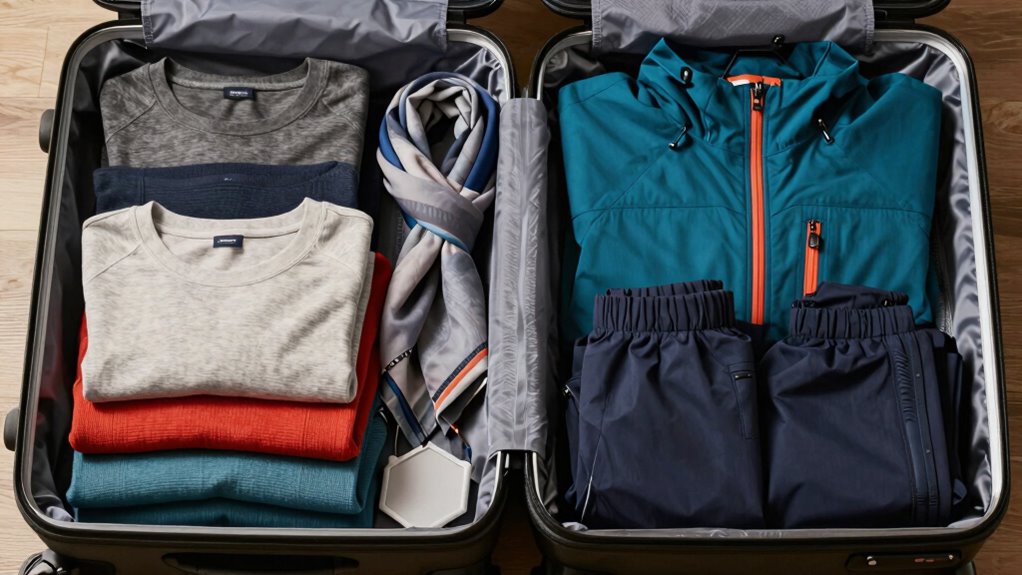
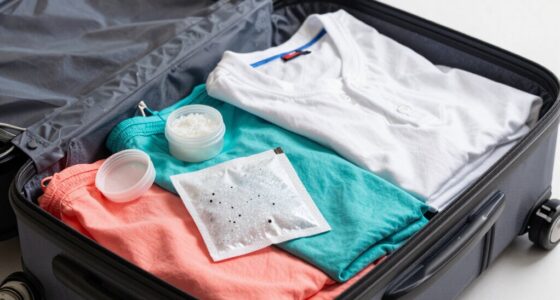
A layer system makes packing for multiple climates much easier because it allows you to adapt your clothing to varying temperatures without bringing an entire wardrobe. By using space-saving bags, you can compress each layer, maximizing your luggage space. This approach also encourages clothing versatility, enabling you to combine or remove layers based on the weather. Instead of packing bulky items for cold days or lightweight pieces for warmth, you carry a few key layers that serve multiple purposes. The flexibility of a layer system means you’re prepared for sudden temperature changes without overpacking. Plus, using space-saving bags keeps your clothes organized and reduces bulk, making your travel experience smoother. With this approach, you stay comfortable and efficient, no matter how the climate shifts.
Choosing Versatile Clothing for Hot and Cold Weather
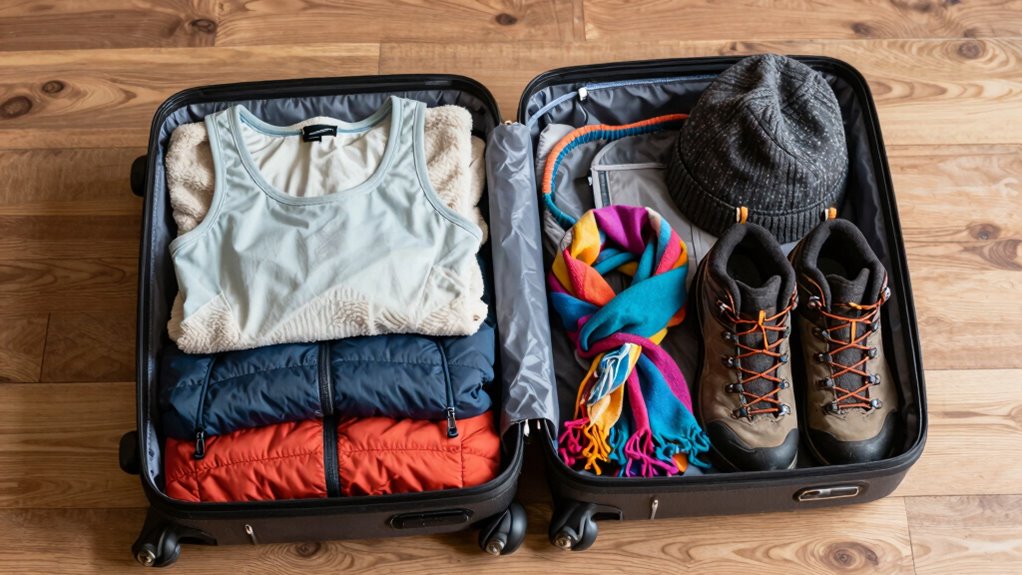
When packing for varying temperatures, choosing versatile clothing is essential to stay comfortable without overloading your luggage. Focus on fabric choices that adapt well to both hot and cold weather, like lightweight merino wool, moisture-wicking blends, and quick-drying synthetics. These fabrics regulate temperature and dry quickly, making them ideal for layered outfits. Additionally, color coordination plays a key role in maximizing versatility. Stick to neutral shades like black, gray, or beige, so your pieces can be mixed and matched effortlessly for different conditions. Lightweight, adaptable clothing allows you to create multiple outfits with fewer items, saving space and reducing clutter. Incorporating climate adaptability into your packing strategy can help you better anticipate weather changes and select items accordingly. Considering future-oriented planning and the importance of layering techniques in your wardrobe ensures your clothing remains functional across unpredictable weather patterns. By carefully selecting fabric choices and coordinating colors, you’ll stay comfortable and stylish regardless of the climate.
Organizing Your Clothes for Easy Access and Flexibility
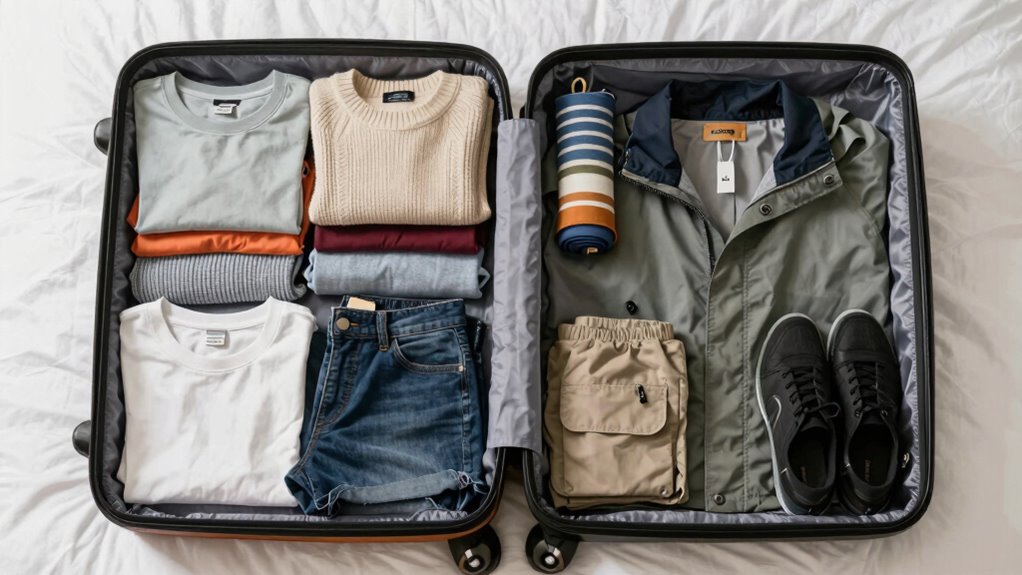
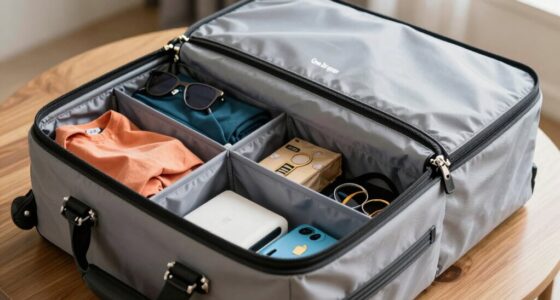
To make packing more efficient, organize your clothes in a way that allows for quick access and easy flexibility. Focus on creating a capsule wardrobe with versatile pieces that mix and match easily. Color coordination helps you streamline choices and reduces clutter. Use packing cubes or folders to categorize items, making retrieval simple. Keep frequently used items at the top or front of your luggage for quick access. Consider folding clothes uniformly to save space and maintain order. Incorporate clothing organization techniques to optimize your packing process. Here’s a helpful way to visualize your organization:
| Top Layer | Bottom Layer |
|---|---|
| Easy-access essentials | Bulkier items |
| Frequently worn pieces | Less used clothing |
| Capsule wardrobe basics | Extra layers or shoes |
This system ensures you stay adaptable and find what you need without hassle, supporting a flexible online platform that can accommodate various research or travel needs.
Layering Techniques to Save Space and Stay Comfortable
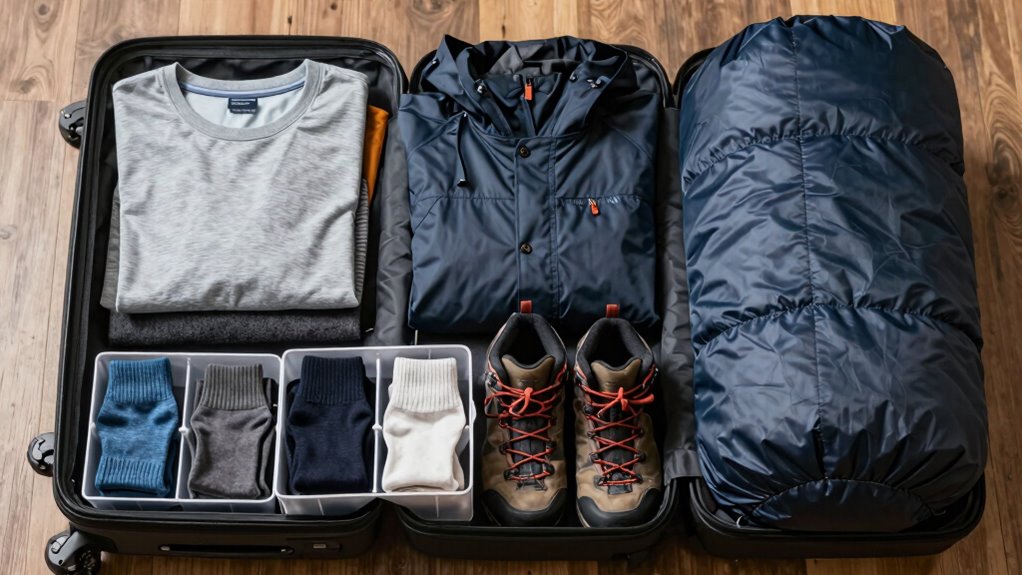
Layering your clothes effectively can considerably save space while keeping you comfortable in fluctuating temperatures. Focus on fabric care by choosing materials that dry quickly and resist wrinkles, making packing easier and maintenance simpler. Start with lightweight, moisture-wicking base layers that can be worn alone or under other garments. Use versatile mid-layers like fleece or thin insulation, which add warmth without bulk. Outer layers should be waterproof or windproof for protection against the elements. Color coordination is key—you’ll want to select a cohesive palette so pieces can mix and match effortlessly, reducing the number of items needed. Proper layering not only optimizes space but also ensures you stay comfortable across different climates. Additionally, selecting high-quality accessories can enhance your packing efficiency and overall comfort. Incorporating clothing care tips helps extend the lifespan of your garments, making your wardrobe more sustainable and cost-effective. Paying attention to fabric technology can further improve your clothing’s performance in varying conditions. For example, choosing fabrics with advanced moisture-wicking properties can keep you dry and comfortable longer. By combining fabric care and color coordination, your packing becomes more efficient and adaptable.
Packing Accessories That Maximize Space and Adaptability
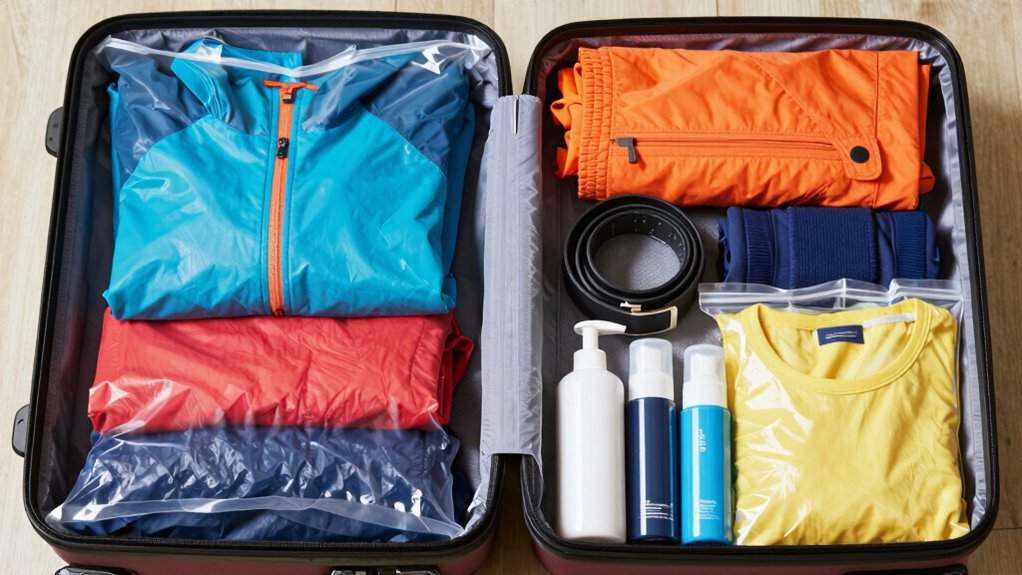
Maximizing space and adaptability in your packing often depends on choosing the right accessories. Compact packing tools, like zippered compression bags and packing cubes, help you organize and shrink your clothes, making more room for other essentials. Accessory essentials such as lightweight travel laundry bags, foldable toiletry kits, and multi-purpose chargers enhance your packing efficiency without adding bulk. These items streamline your essentials, reduce clutter, and keep everything accessible. By selecting versatile and lightweight accessories, you can easily switch between climates and activities while maintaining a minimal pack. Prioritize compact packing solutions that serve multiple functions, ensuring your gear remains adaptable and space-efficient. Incorporating electric bikes can also be a great way to travel efficiently between diverse terrains and climates, maximizing your mobility options without adding significant weight to your luggage. This approach lets you carry what you need without sacrificing comfort or convenience. Additionally, choosing multi-purpose gear helps you further optimize limited space and adapt to changing conditions on the go. Using space-saving solutions like collapsible containers or foldable items can further enhance your packing flexibility and efficiency. Implementing versatile gear can prepare you for unexpected weather changes or activity shifts during your trip, making your packing more resilient.
Building a Climate-Ready Packing List for Any Weather
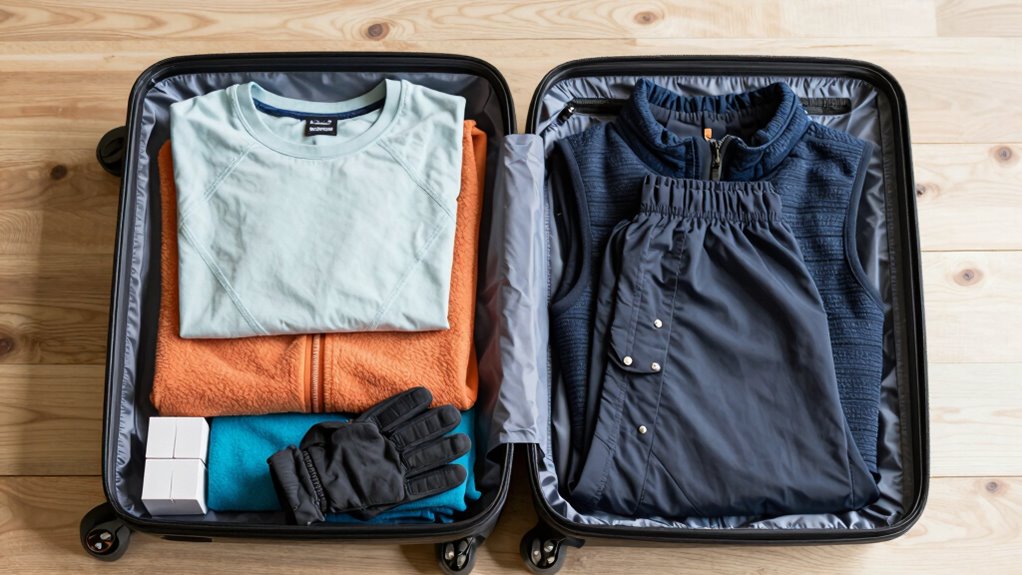
To stay prepared for any weather, focus on versatile layering that can be added or removed easily. Choose clothing that suits both hot and cold conditions without taking up extra space. Use compact packing techniques to keep your essentials organized and adaptable for changing climates. Incorporating educational resources and gear into your packing strategy can help you stay motivated and equipped for all weather scenarios. Additionally, selecting appropriate tracking gear can ensure your pets are safe and easily locatable in any environment. Regularly reviewing climate forecasts and understanding weather patterns can help you adjust your packing list proactively and stay one step ahead of weather changes.
Layering Essentials for Flexibility
When preparing for unpredictable weather, choosing versatile clothing layers becomes essential. Focus on fabric selection—opt for lightweight, moisture-wicking fabrics that dry quickly and insulate when needed. Incorporate pieces that can serve multiple purposes, like a long-sleeve shirt that doubles as a thermal layer or a soft shell jacket for wind and rain. Color coordination is also key; select neutral tones that mix and match easily, allowing you to layer without clashing. By sticking to a cohesive palette, you can create a variety of outfits from a few pieces, saving space and ensuring flexibility. Additionally, understanding personal finance planning principles can help you invest in quality versatile clothing that lasts longer, providing better value over time. These thoughtful choices let you adapt quickly to changing conditions, making your packing smarter and your travel more comfortable.
Weather-Appropriate Clothing Choices
Building a climate-ready packing list starts with selecting clothing suitable for a range of weather conditions. Focus on versatile pieces that adapt to outdoor sports and evening wear. Lightweight, moisture-wicking layers work well for outdoor activities, keeping you comfortable across varying temperatures. Pack a waterproof jacket or shell to handle rain or wind, ensuring you’re prepared for sudden weather shifts. For evening wear, choose a stylish but compact option that can be layered or dressed up with accessories. Consider packing neutral colors to mix and match easily. Prioritizing items made from appropriate clothing fabrics ensures your wardrobe remains adaptable and comfortable in any climate. Incorporating multi-functional and weather-appropriate clothing helps maximize space and efficiency in your luggage. Selecting clothing with climate-adaptable features is essential for staying comfortable and prepared. By choosing clothing designed for different weather scenarios, you’ll stay comfortable and look polished, no matter what the climate throws your way. Additionally, understanding how microplastics in dust can impact health emphasizes the importance of versatile, protective clothing options. Being aware of dust contamination can guide you in selecting protective fabrics that reduce exposure and promote well-being.
Compact Packing Techniques
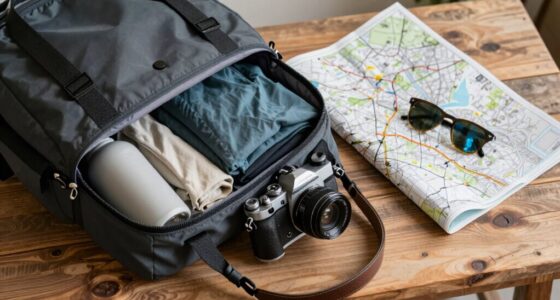
Mastering compact packing techniques guarantees you can fit everything you need for any weather into a manageable bag. One key method is compact folding, which reduces bulk and maximizes space. Fold clothes tightly along natural seams, using rolling or flat folding to minimize creases and bulk. Prioritize minimal packing by choosing versatile, lightweight items that serve multiple purposes. Use packing cubes or pouches to organize and compress your clothing, making it easier to fit everything neatly. Avoid overpacking by sticking to essential layers and accessories. This approach not only saves space but also keeps your belongings accessible and organized. Additionally, understanding media literacy helps you select the most appropriate clothing options based on reliable weather information. Being aware of climate patterns can further assist in preparing suitable clothing for diverse conditions. Familiarity with weather forecasts enables you to adapt your layers efficiently, ensuring comfort regardless of sudden changes. Recognizing climate variability allows you to anticipate and prepare for unexpected weather shifts, making your packing even more effective. Being mindful of body piercing jewelry materials and measurements can prevent discomfort or injury during travel, especially when packing items like titanium or surgical steel jewelry. With these compact packing techniques, you’ll be ready for diverse climates without sacrificing comfort or convenience.
Final Tips for Staying Organized and Prepared on Your Trip
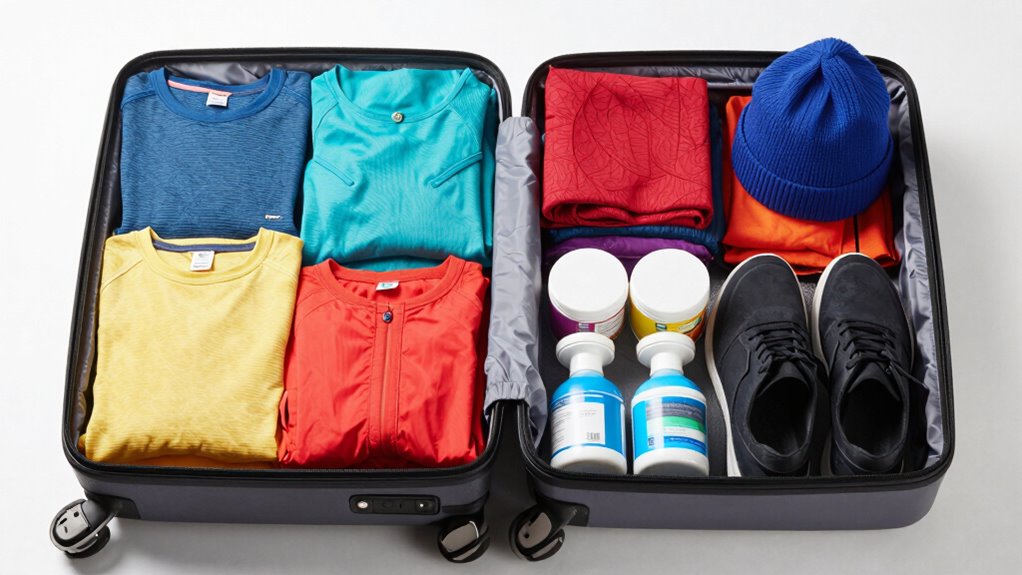
To stay organized and prepared, it’s essential to make a checklist of all your necessary items before packing. This helps guarantee nothing gets forgotten and makes packing more efficient. Keep travel safety in mind by securing valuables like passports, electronics, and medications in a lockable compartment or a personal security pouch. Regularly check your luggage security, especially during transit or layovers, to prevent theft or loss. Use TSA-approved locks for peace of mind and avoid overpacking, which can make luggage harder to manage. Staying organized with a dedicated packing cube for each climate and activity keeps things accessible. Finally, carry a small emergency kit with essentials like chargers, medications, and a first-aid kit to be fully prepared for any situation.
Frequently Asked Questions
How Do I Choose the Best Base Layers for Variable Climates?
You should choose base layers made from moisture-wicking fabrics to keep you dry and comfortable in variable climates. Look for options with thermal insulation properties for colder conditions, and lightweight, breathable materials for warmer weather. Consider layering pieces that can be easily added or removed, ensuring versatility. By selecting moisture-wicking and insulating fabrics, you’ll stay comfortable regardless of changing temperatures and climate conditions.
Can I Use the Same Packing Method for Both Winter and Summer Trips?
Think of your packing like a versatile wardrobe chameleon. You can use the same method for both winter and summer trips, but tweak your clothing color coordination and packing cube organization. Layer lighter, breathable fabrics for summer and include insulated pieces for winter. Organize carefully in packing cubes, so you access what you need quickly, regardless of the season. Adaptability keeps your packing efficient and stress-free.
What Are Some Lightweight Materials Ideal for Layering?
You should choose lightweight travel-friendly fabrics like nylon, polyester, or merino wool for layering. These moisture-wicking materials keep you comfortable by drawing sweat away from your skin, making them perfect for changing climates. They’re also durable and easy to pack, saving space in your luggage. Opt for these fabrics to stay comfortable and adaptable during your trip, whether you’re facing hot days or chilly evenings.
How Do I Prevent Clothing Wrinkles When Packing Tightly?
To prevent wrinkles when packing tightly, use proper garment folding techniques like rolling or folding clothes carefully to minimize creases. Opt for wrinkle-resistant fabrics such as polyester, nylon, or blends designed to resist wrinkles. Place delicate items on top or in separate compartments. Additionally, packing clothes flat and avoiding overstuffing your bag helps reduce wrinkles, ensuring your clothes stay neat and ready to wear.
Are There Specific Brands Known for Space-Efficient Travel Clothing?
Ever wonder which travel clothing brands excel in space-saving apparel? Brands like Unbound Merino, Encircled, and Outlier are known for their innovative, lightweight, and quick-drying options. These brands focus on space-efficient travel clothing, making packing easier and more organized. Their versatile pieces help you maximize luggage space while ensuring comfort and style. Isn’t it great to find brands that combine practicality with quality for your trips?
Conclusion
By using a versatile layer system, you’ll stay comfortable and organized no matter the weather. With thoughtful packing and strategic layering, you can easily adapt to hot or cold climates without overpacking. Are you ready to optimize your suitcase and enjoy stress-free travel? Embrace these tips, and you’ll be prepared for anything that comes your way—because smart packing isn’t just about space, it’s about peace of mind on your journey.