Your luggage wheels play a bigger role in smooth travel than you might think. Properly aligned, durable, and well-maintained wheels make it easier to roll your suitcase without wobbling or resistance, saving you arm strain and hassle. Regularly check for cracks, debris, and uneven wear, and keep them clean and lubricated. If you notice issues, replacing or repairing wheels promptly can prevent bigger problems. Keep these tips in mind to guarantee your luggage glides effortlessly—learn more to master wheel care.
Key Takeaways
- Inspect wheels for cracks, dents, or chunks indicating wear or damage.
- Test wheel alignment by rolling luggage straight to check for wobbling or resistance.
- Clean wheels regularly to remove debris and prevent buildup that can cause uneven wear.
- Listen for unusual noises or resistance when spinning wheels, signaling potential issues.
- Replace worn or damaged wheels promptly to maintain smooth maneuverability and prevent further damage.
Why Good Luggage Wheels Are Key to Stress-Free Travel
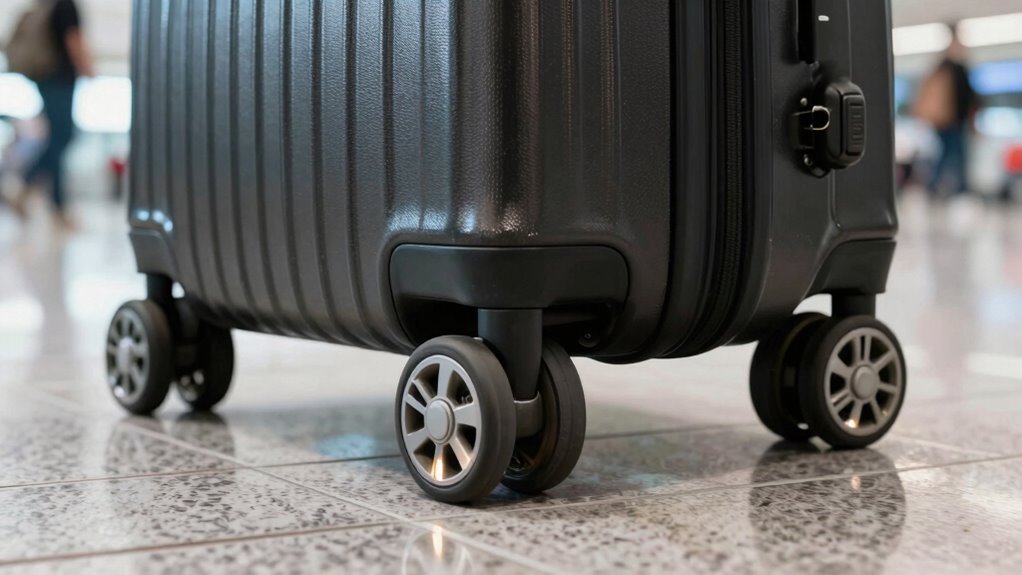
Good luggage wheels are more important than most travelers realize because they directly impact how smoothly your journey goes. Proper wheel alignment guarantees your suitcase rolls straight without pulling or wobbling, reducing strain on your arm and preventing awkward pulls. When wheels are misaligned, you’ll find yourself fighting against the suitcase — especially on uneven surfaces or crowded airports. The materials used in wheels also matter. Durable options like rubber or polyurethane provide smoother rides and better shock absorption, protecting your belongings. Cheap or poorly made wheels tend to wear out quickly or break, causing delays and frustration. Investing in high-quality wheels with the right materials and proper alignment helps your luggage glide effortlessly, making your travel experience less stressful and more enjoyable.
How to Inspect Your Suitcase Wheels for Damage
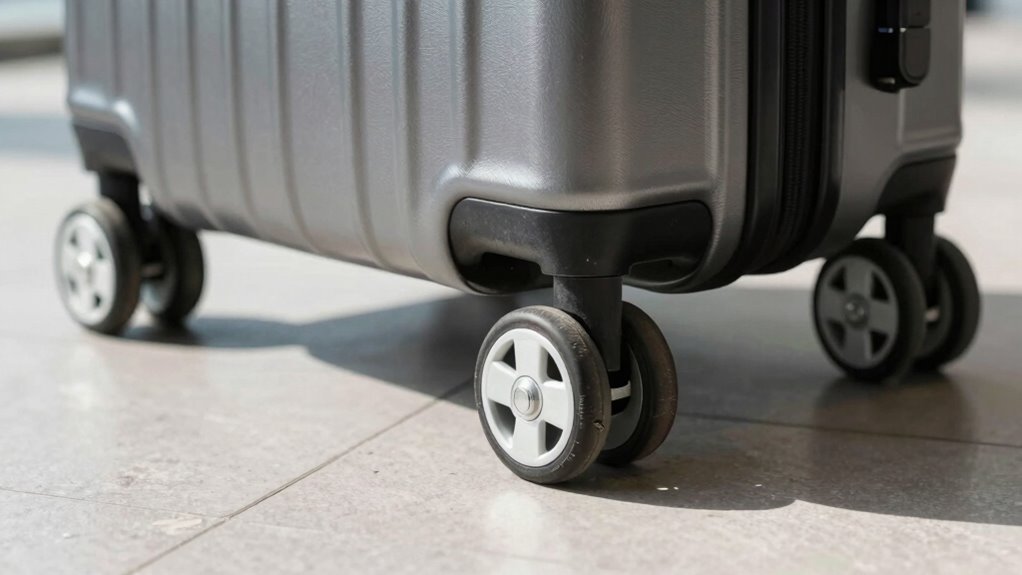
Regularly inspecting your suitcase wheels helps catch problems before they worsen. Start by checking the tire tread for uneven wear or cracks, which can affect smooth rolling. If the tread looks worn down or damaged, it’s time to think about replacing the wheel. Next, examine the wheel alignment by rolling the suitcase forward and backward; it should move straight without wobbling or pulling to one side. Misaligned wheels can cause strain on the axle and make handling difficult. Look for any debris lodged in the wheel or signs of wobbling when you spin it. Addressing these issues early prevents further damage and ensures your luggage rolls smoothly and reliably during your travels. Additionally, understanding wheel technology can help you choose more durable and reliable luggage options. Keeping an eye on durable materials used in wheel construction can extend the lifespan of your suitcase wheels and improve overall performance. Moreover, inspecting the bearing systems within the wheels can reveal early signs of wear that might otherwise cause failure. Regular maintenance and awareness of wheel design features can also enhance your luggage’s longevity and ease of use. Staying informed about innovative wheel designs can provide insights into the latest advancements that improve durability and rolling efficiency.
Signs Your Luggage Wheels Are Worn Out or Broken

If your luggage becomes difficult to maneuver or gets stuck, it’s a clear sign the wheels might be worn out. Excessive vibration or loud noises when rolling can also indicate damage or wear. Additionally, visible cracks, dents, or worn-down parts point to the need for a wheel replacement. Regularly inspecting your luggage wheels can prevent unexpected breakdowns and ensure smoother travels. Recognizing common luggage maintenance issues can help you make informed decisions when upgrading or maintaining your equipment. Being aware of Free Floating technology and how it influences wheel durability can also extend the lifespan of your luggage.
Difficult Maneuvering or Stuck
When your luggage suddenly becomes difficult to maneuver or gets stuck, it’s often a sign that the wheels are worn out or broken. You might notice steering difficulties or wheel jamming that makes pulling your bag a struggle. This frustration can delay your plans and increase stress. Check the following signs:
| Symptom | What It Means | Urgency |
|---|---|---|
| Hard to steer | Worn or misaligned wheels | High |
| Wheels jamming | Obstructions or damage in the wheel | Critical |
| Uneven movement | Wheel imbalance or debris | Moderate |
| Excessive resistance | Friction from worn components | High |
Ignoring these signs can lead to further damage, leaving you stranded. Regular luggage maintenance can help prevent unexpected breakdowns during travel. Being aware of wear and tear and addressing issues early can save you time and money. Recognizing signs of damage early allows for quicker repairs and avoids more costly replacements. Address issues early to keep your travels smooth, and understanding content formats can help you identify and fix such problems efficiently. Additionally, inspecting your wheels regularly for hidden damage can prevent sudden failures.
Excessive Vibration or Noise
Excessive vibration or noise while rolling your luggage is a clear sign that the wheels are worn or damaged. You might notice loud tire noise that’s louder than usual, or a disturbing wheel wobble that throws off your balance. These issues can make your journey stressful and unpredictable.
- The unsettling clatter of your wheels, signaling uneven wear.
- An increase in tire noise that feels harsh against smooth surfaces.
- Wobbly wheels that shake the entire luggage, risking further damage.
- Sudden, jarring vibrations that make pushing difficult and uncomfortable.
If you experience any of these signs, don’t ignore them. Excessive noise and wobble indicate your luggage wheels need attention before they break completely, leaving you stranded or risking damage to your belongings.
Visible Wear or Damage
Visible wear or damage on your luggage wheels is a clear sign they’re nearing the end of their lifespan. Look for tire discoloration, which indicates the rubber is degrading and may affect smooth rolling. Cracked casings are another red flag, revealing the protective outer layer has weakened or broken, risking further damage. If you notice chunks missing from the wheels or uneven surfaces, it’s time to replace them. Damaged wheels can make handling your luggage difficult and increase strain on the suitcase. Ignoring these signs can also lead to compromised safety, as damaged wheels can cause trips or falls during handling and travel. Damaged wheels can make handling your luggage difficult and increase strain on the suitcase. Regularly inspecting for visible damage helps ensure your luggage remains functional and prevents unexpected hassles at the airport. Ensuring wheel integrity is maintained can prevent costly repairs and prolong the lifespan of your luggage. Additionally, proper maintenance of your wheels can improve overall performance and ease of use during travel. Incorporating modern ceiling fan technology principles, such as proper alignment and choosing the correct size, can also enhance the longevity and efficiency of your luggage wheels. Replacing worn wheels promptly can also help maintain luggage durability and ensure a smoother, stress-free journey.
Tips to Maintain Your Luggage Wheels and Make Them Last
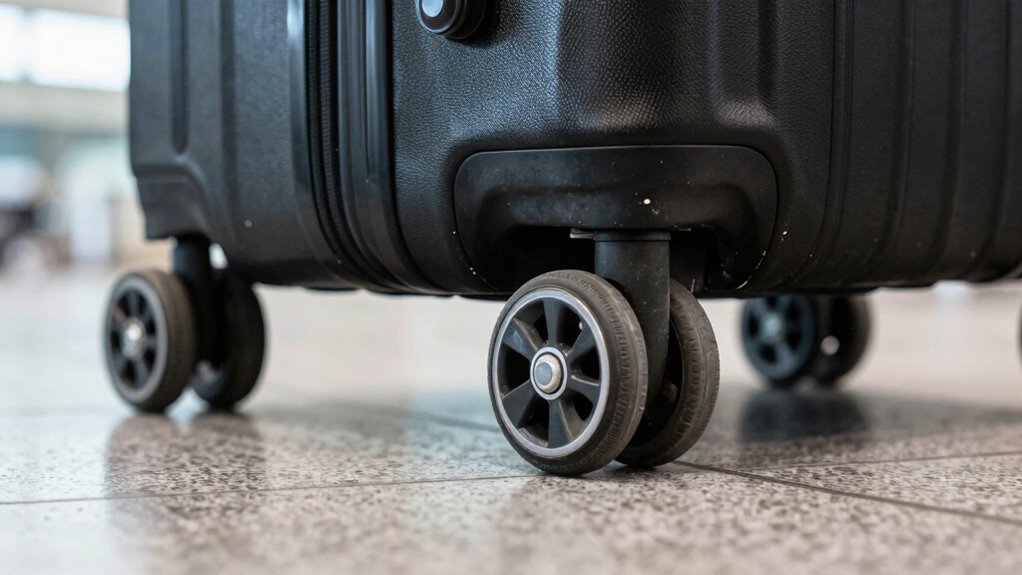
To keep your luggage wheels in top shape, start with regular inspections to catch issues early. Clean them properly to remove dirt and debris that can cause wear, and avoid overloading your bag to reduce strain on the wheels. Following these simple tips will help your wheels last longer and roll smoothly every time.
Regular Wheel Inspection
Regularly inspecting your luggage wheels is essential to keep them functioning smoothly and avoid unexpected breakdowns. Proper tire maintenance guarantees your suitcase rolls effortlessly, saving you frustration and time. Check for uneven wear or debris that could hinder rolling efficiency. Here’s what you should do:
- Examine the tires for cracks or flat spots—these signs indicate wear and may require replacements.
- Clean debris lodged in the wheels—dirt and small stones can impede smooth rotation.
- Test for wobbling or uneven spinning—these issues suggest misalignment or damage.
- Lubricate the axles if necessary—this reduces friction and prolongs wheel life.
- Remember that wheel design impacts overall durability and performance, so consider this when choosing replacement parts or maintenance routines. Additionally, selecting quality materials can enhance longevity and resilience. Using appropriate lubrication methods can further improve wheel functionality and extend their lifespan. Understanding the engine feel of your luggage wheels can help you better assess their condition and prevent wheel failure, ensuring your luggage stays reliable during travel.
Proper Cleaning Techniques
Maintaining clean luggage wheels is essential for ensuring they roll smoothly and last longer. Dirt buildup can cause wheels to wobble or stick, making travel more frustrating. To clean them effectively, start by removing debris with a brush or cloth. For stubborn dirt, use a damp cloth or a gentle brush with soap and water. Once clean, dry the wheels thoroughly to prevent rust. Applying a small amount of wheel lubrication helps keep them spinning freely and reduces friction. Avoid over-lubricating, which can attract more dirt. Regular cleaning and lubrication not only improve wheel performance but also extend their lifespan. Additionally, wheel maintenance routines can prevent common issues and ensure optimal function over time. Using proper cleaning techniques can further enhance the longevity and smooth operation of your luggage wheels. Keeping your wheels in top condition is also crucial for preventing damage, ensuring your travel experience remains hassle-free. By keeping your luggage wheels free of dirt buildup and well-lubricated, you ensure smoother rides and fewer maintenance issues down the line.
Avoid Overloading Luggage
Overloading your luggage puts unnecessary strain on the wheels, leading to faster wear and potential damage. To keep your wheels rolling smoothly, pay attention to your bag weight and packing tips. Here are four tips to avoid overloading:
- Weigh your bag before leaving home to verify it’s within airline limits.
- Distribute weight evenly to reduce pressure on individual wheels.
- Limit heavy items to essential items only, avoiding unnecessary bulk.
- Use lightweight packing organizers to maximize space without adding extra weight.
- Remember that luggage wheel maintenance can extend the lifespan of your suitcase and ensure safer travel. Additionally, understanding seasonal travel patterns can help you pack more efficiently and avoid overloading during peak times. Staying informed about current travel trends can also assist in better packing decisions and prevent unnecessary strain on your luggage wheels.
When to Replace Your Suitcase Wheels: What to Know
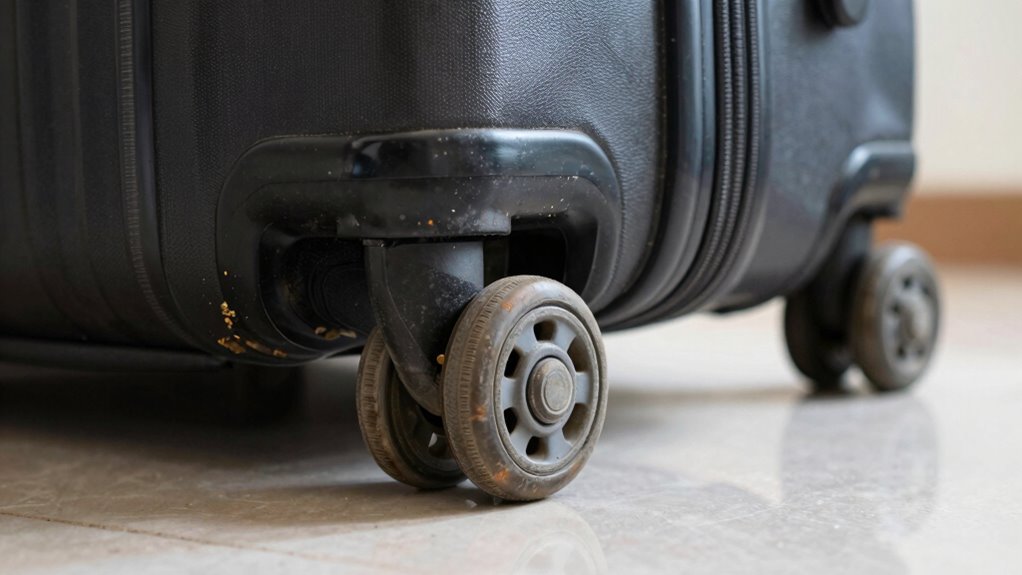
Knowing when to replace your suitcase wheels is essential to avoiding unnecessary hassle during travel. If your wheels are cracked, wobbling, or no longer roll smoothly, it’s time for a replacement. Damaged wheels can cause strain on your suitcase, increasing the risk of further damage that might not be covered by travel insurance. Also, keep airline restrictions in mind—worn or bulky wheels could make your luggage harder to stow or lead to size and weight issues. Regularly inspecting your wheels before packing helps you catch problems early. Replacing damaged wheels ensures smooth handling and prevents delays at airports. Don’t ignore signs of wear; taking action keeps your luggage in top shape and saves you headaches on your journey.
FAQs: Common Questions About Luggage Wheel Care
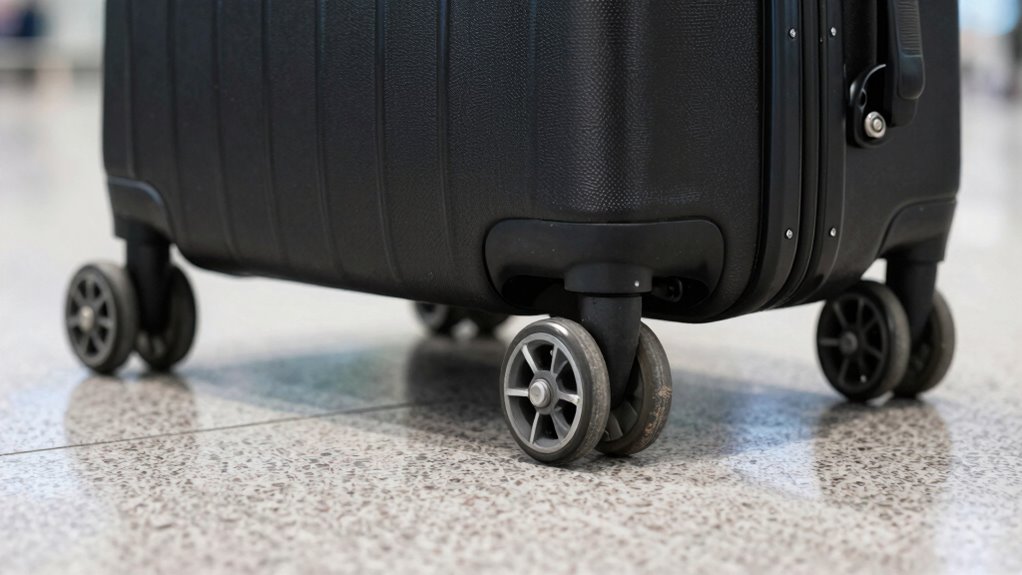
Caring for your luggage wheels is essential to guarantee smooth travel and avoid unexpected breakdowns. One common question is how to choose the right material—hard rubber, polyurethane, or metal—based on durability and weight. Another concern is luggage wheel customization; personal touches can make your suitcase truly yours. Here are four FAQs to guide you:
- How do I know if my wheels need replacing? Look for cracks or wobbling.
- What’s the best way to clean my wheels? Use a damp cloth and mild soap.
- How can I improve wheel longevity? Regular maintenance and avoiding rough terrains.
- Can I upgrade my wheels? Yes, choosing the right material and customization options can enhance performance.
Proper care keeps your luggage rolling smoothly, ensuring stress-free travel every time.
Frequently Asked Questions
Are Lightweight Luggage Wheels Less Durable Than Heavier Ones?
You might find lightweight luggage wheels less durable because they often use different wheel materials that may not withstand heavy or rough use as well as heavier, sturdier wheels. Lightweight durability depends on the quality of the wheel material, like rubber or polyurethane, which can impact longevity. So, if you’re traveling frequently or on rough terrain, opt for luggage with more robust wheels for better durability, even if they’re a bit heavier.
Can Luggage Wheels Be Repaired Instead of Replaced?
Yes, luggage wheels can often be repaired instead of replaced. If your wheel is damaged, you can look into wheel repair options, which might include fixing the axle or replacing the rubber tread. However, if the damage is extensive, luggage wheel replacement is usually more effective and durable. Assess the extent of the damage to decide whether a simple repair suffices or if replacing the wheel is the better choice.
Do All Suitcase Wheels Perform Equally on Uneven Terrain?
Not all suitcase wheels perform equally on uneven terrain; some are like a smooth sailing ship, while others struggle like a boat in choppy waters. Wheel design plays a vital role in terrain performance. Larger, rubberized wheels with sturdy axles handle bumps better, offering smoother navigation. Smaller, plastic wheels tend to get caught or stuck. So, when choosing luggage, consider its wheel design if you frequently traverse uneven surfaces.
How Do I Choose the Best Wheels for Frequent Travel?
You should pick wheels that are durable, smooth-rolling, and easy to maneuver, especially for frequent travel. Look for sturdy materials like rubber or polyurethane, which handle uneven terrain better and reduce the risk of damage. Consider luggage with larger wheels for easier navigation through busy airports or uneven surfaces. Also, choose lightweight wheels to help manage luggage weight, enhancing travel safety and making your trips more comfortable.
Are Spinner Wheels Better Than Inline Skate Wheels?
Spinner wheels are generally better than inline skate wheels for travelers who prioritize ease and versatility. While spinner comparison shows they glide smoothly in multiple directions, inline skate advantages include durability and stability on rough terrains. You’ll find spinners more convenient for maneuvering through crowded airports, but inline skate wheels excel on uneven surfaces. Ultimately, choose spinners for effortless maneuverability or inline skate wheels for rugged durability, depending on your travel needs.
Conclusion
Remember, your luggage wheels are the silent heroes of your travels, quietly carrying your hopes and dreams across busy airports and uneven sidewalks. When you give them a quick check, you’re ensuring your journey stays smooth and stress-free. Imagine gliding effortlessly through terminals, wheels whispering beneath you like trusted companions. Keep them in good shape, and they’ll keep your adventures rolling seamlessly—making every trip feel like a breeze, no matter the destination.